





 Portuguese
  English
  Spanish
  4 min of reading
  0 comments


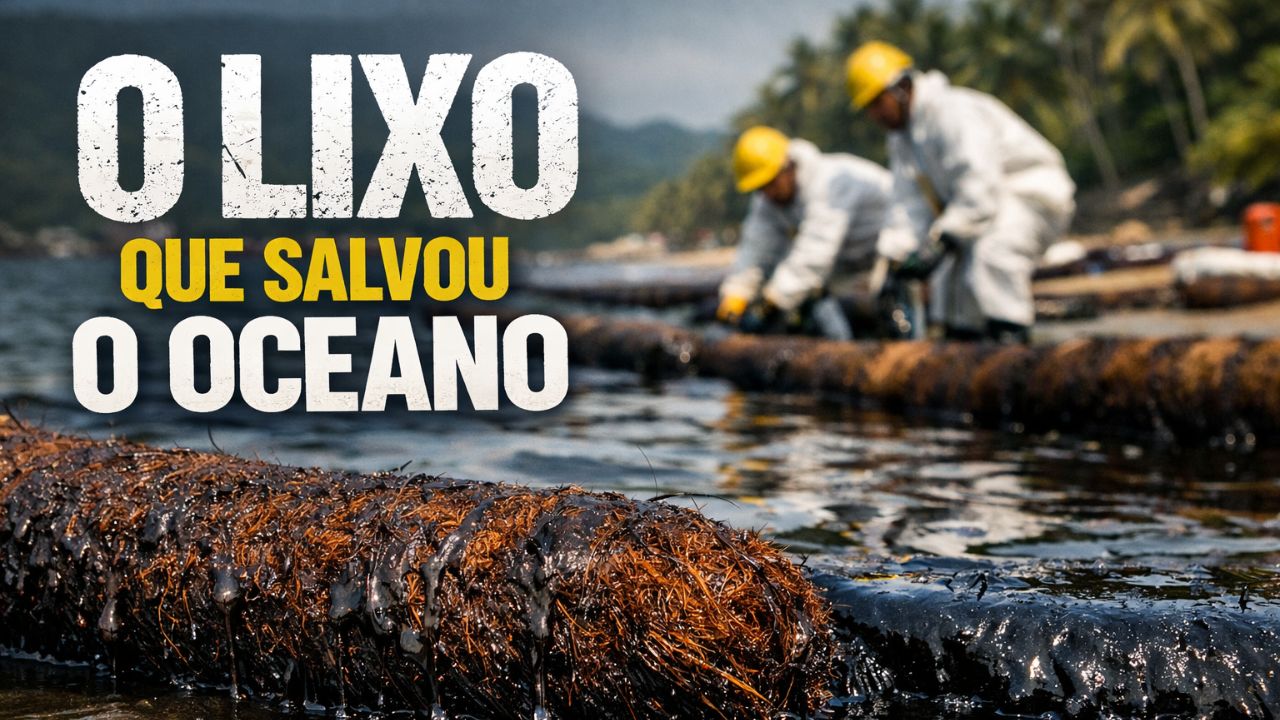
Coconut Shell Became A Green Weapon Because Coconut Fiber Absorbs Oil In The Sea, Replaces Plastic, Protects Reefs And Can Generate Local Income In Coastal Areas.
The coconut shell became a green weapon in a scenario where much of the spilled oil is never recovered and the damage spreads quickly: suffocated reefs, contaminated marine animals, and coastal communities without fishing and tourism.
In the Philippines, the most surprising response did not come from robots or expensive equipment. It came from an agricultural material discarded for years.
Coconut shell became a green weapon when engineers and locals began using coconut fiber to contain and absorb oil, reducing impact and speeding up cleanup in sensitive areas.
-
What if the Sun disappeared suddenly? Simulation shows Earth in darkness within minutes, extreme cold, and rapid collapse of life on the planet.

-
A 2,400-year-old iron foundry has been discovered in Senegal with 100 tons of slag, 35 furnace bases, and signs of nearly eight centuries of continuous metallurgical activity.

-
Four humans are flying towards the Moon inside the Orion capsule launched by the SLS rocket, and on April 6, Artemis II will disappear behind the far side of the Moon without communication with Earth for nearly an hour.

-
Worlds covered by water, atmospheres filled with hydrogen, and the possibility of life beyond Earth: ocean planets are rewriting the map of cosmic search and forcing scientists to rethink where to look.


The Disaster That Exposed The Limits Of Traditional Solutions
On August 11, 2006, the tanker MT Solar 1 sank in the seas of the Philippines carrying about 550,000 gallons of bunker oil, a thick, heavy, and highly toxic fuel.
The spill affected entire ecosystems, destroying mangroves, seagrass beds, and coral reefs, and directly impacting the income of thousands of fishermen.
The country activated classic emergency protocols, such as floating barriers, area isolation, and mechanical suction. The problem is that bunker oil does not behave like a light oil. It forms clumps, sticks to rocks and roots, mixes with sand, and turns removal into a slow and costly process.
Why “Absorbing Oil” Is Harder Than It Seems
On paper, absorbents and barriers solve the problem. In reality, the viscosity of the fuel and the moving sea undermine efficiency.
Even when containment works, recovery is often partial. Some sinks and remains on the bottom for years, posing a risk to marine life and the food chain.
It was this frustration that opened the way for solutions based on natural materials, starting with alternatives like human hair, which is oleophilic and hydrophobic. But the bigger leap came later.
How Coconut Shell Became A Green Weapon In Practice
In July 2023, faced with a new spill risk, the Philippine Coast Guard launched bags of dried coconut husk tied to containment buoys.
It wasn’t haphazard. Months earlier, locals had already created handmade buoys using collected shells and nets filled with fiber.
Here’s the key point: these are not “half coconuts” floating. It is the coconut fiber extracted from the shell, known as coir. Coconut shell became a green weapon because this fiber is lightweight, floats well, costs little, and is available in large quantities in producing countries.
The Science Behind Coconut Fiber
Coconut fiber has characteristics that make it highly effective against oil.
It is oleophilic and hydrophobic, meaning it attracts oil and repels water. Even after days submerged, it continues to float and absorb.
The material is also rich in lignin, which accounts for about 45% of its composition, functioning as a natural “glue” with a strong ability to adhere to oil.
In addition, the porous structure, with twisted fibers and microcapillaries, promotes stable retention. There are references to tests indicating retention for up to 72 hours and the ability to absorb many times more oil than common materials like straw. This changes the game in places where a quick and cheap response is needed.
What Happens Next: Reusing Oil And Reusing Fiber
The described process is simple and efficient.
The fiber forms containment buoys and absorbs the oil. Then, the material is collected, and the oil can be extracted for reuse.
The fiber, in turn, can be repurposed or used for other applications, such as organic compost, eco-bricks, construction materials, and even bioenergy.
This detail is crucial because it reduces a common side effect in operations: using buoys and plastic mats that later become waste and release microplastics.
The Economic Impact That Transforms An Environmental Solution Into A Productive Chain
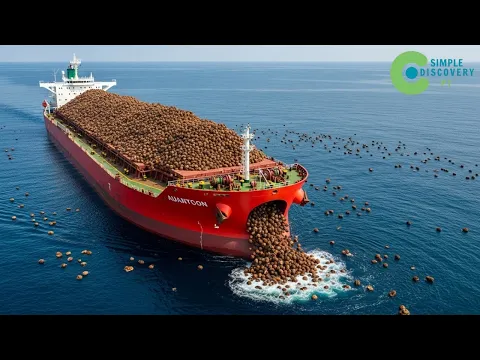

The husk has always been treated as waste, even though it is a significant part of the fruit’s weight. And this is not just happening in the Philippines.
Countries like Indonesia, India, Sri Lanka, and Vietnam also produce huge volumes, with much of the fiber being wasted.
When the coconut shell became a green weapon, disposal started to become a market. The base text cites a significant increase in fiber prices, the creation of factories, and the expansion of exports.
It is a type of solution that connects conservation and income, especially in coastal areas that depend on fishing and tourism.
Why The UN Got Involved And What This Story Teaches
The base material states that the solution was treated as one of the greenest ever seen, precisely because it transforms agricultural waste into technology for oil containment and absorption. What was “trash” becomes environmental infrastructure.
The message is clear: not every solution needs to be expensive to be effective. In emergencies, scale, availability, and ease of use can be more valuable than sophisticated innovation that doesn’t arrive in time.
If the coconut shell became a green weapon against oil spills, what other “common waste” do you think could become a true environmental solution?






-

-

-

4 pessoas reagiram a isso.