





 Portuguese
  English
  Spanish
  7 min of reading
  1 comment


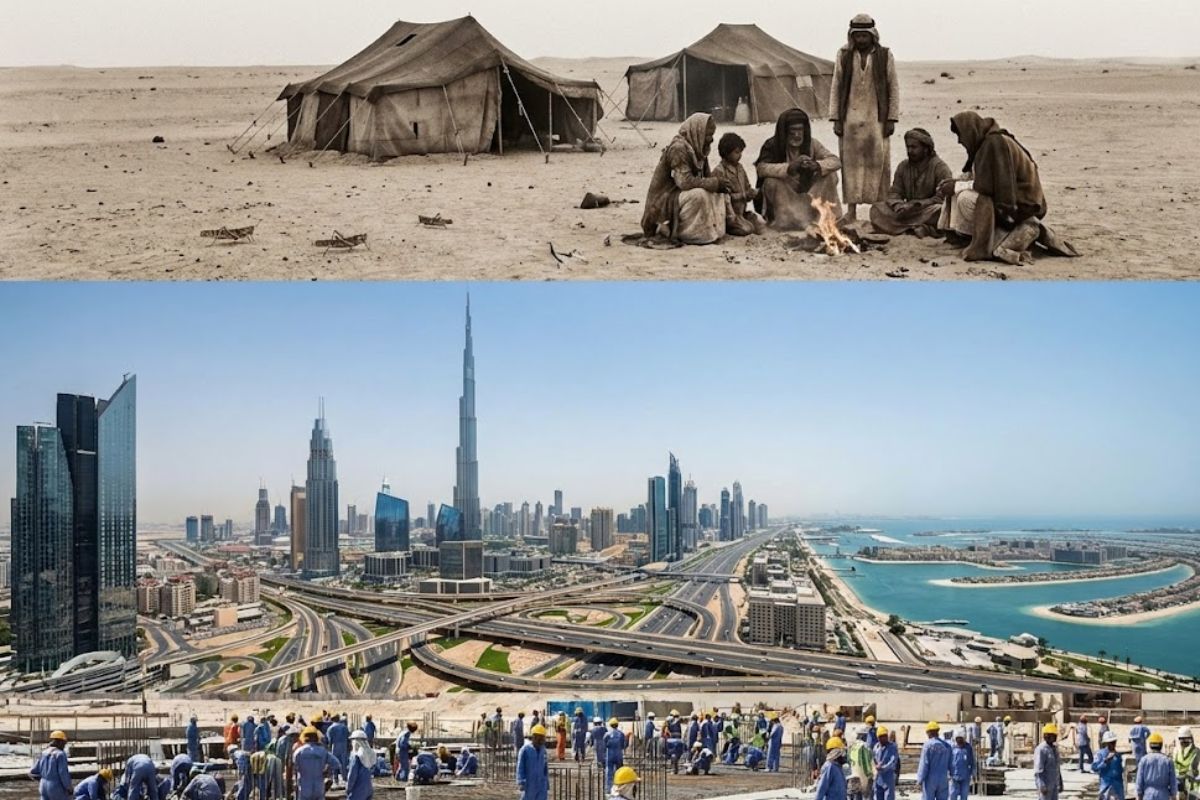


From A Poor Village In The Desert, Dubai Experienced Famine After The 1929 Crash And World War II, Ate Grasshoppers, Found Oil Only In 1966, And Soon Reduced Dependency To Less Than 1% Today. Ports, Airport, Smuggling, And Tourism Of 18.2 Million In 2024 Explain The Leap, With Global Records.
In Dubai, the turnaround started with tragedy: after the 1929 crash, the pearl trade collapsed and, during World War II, food imports were affected, pushing the city into famine. Then came decisive works, such as the start of projects in 1959, the airport’s inauguration in 1960, the discovery of oil in 1966, and the port’s opening in 1972.
What today seems like a “miracle” also has a dark side: with the population explosion and megaprojects, Dubai came to depend heavily on vulnerable immigrant labor. In the 2000s, there were protests linked to the Burj Khalifa construction, and in 2011, a worker reportedly jumped from the 147th floor after being prevented from returning to his country, according to Human Rights Watch.
Before The Brilliance, The Region Was A Trade Route And British Protectorate

The southwestern area of the Arabian Peninsula has been inhabited by nomadic peoples for around 2,700 years and maintained trade links with peoples from the Persian Gulf and beyond, including Pakistanis, Indians, Ethiopians, Turks, and Chinese.
-
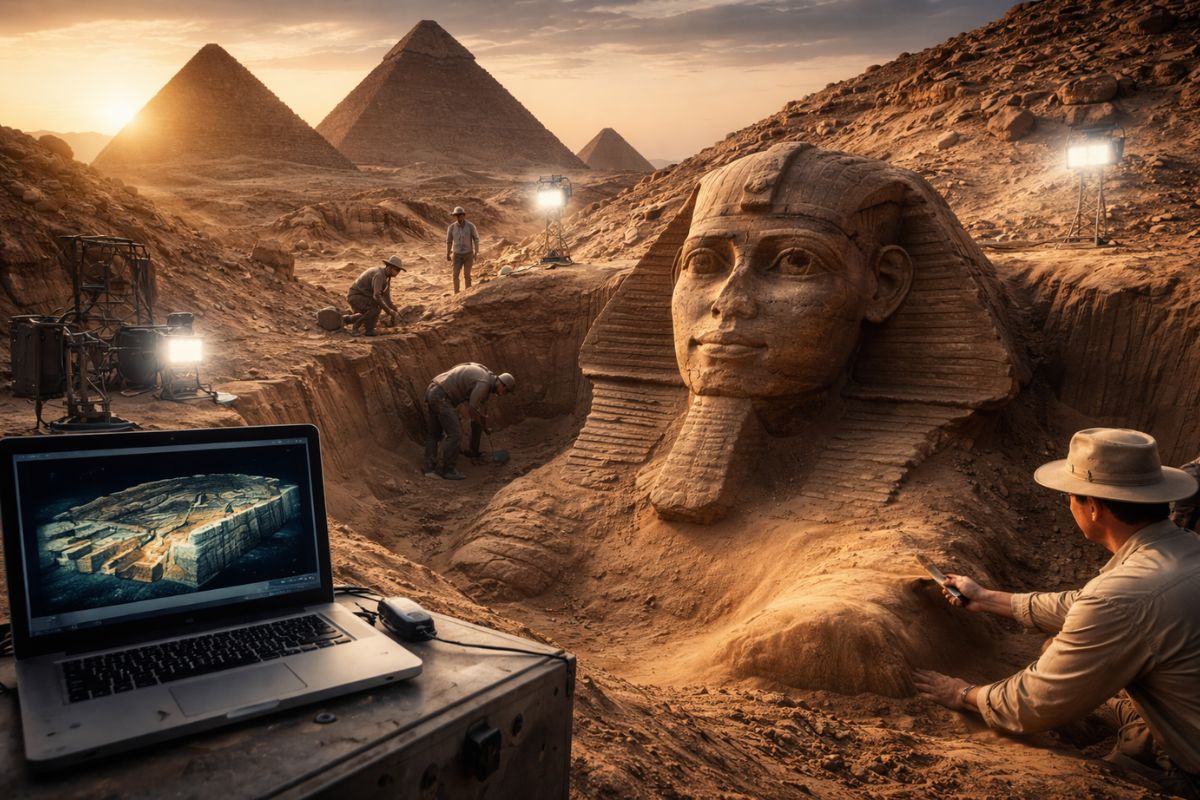
Italian researchers have detected what appears to be a second Sphinx buried under the sands of Egypt, and satellite scans reveal a gigantic underground megastructure hidden beneath the Giza Plateau for over 3,000 years.
-
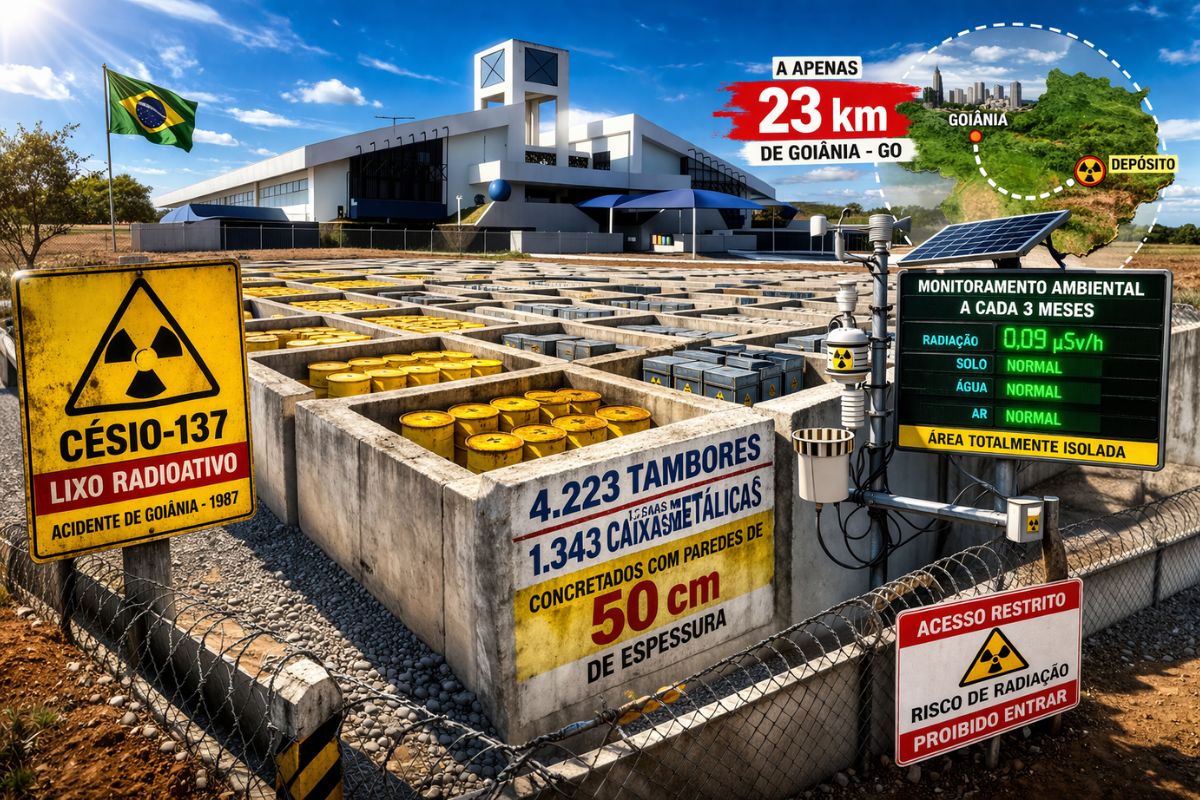
There are 4,223 drums and 1,343 metal boxes concreted with 50-centimeter walls that store the radioactive waste from Cesium-137 in the worst radiological accident in Brazil, just 23 kilometers from Goiânia, with environmental monitoring every three months.
-
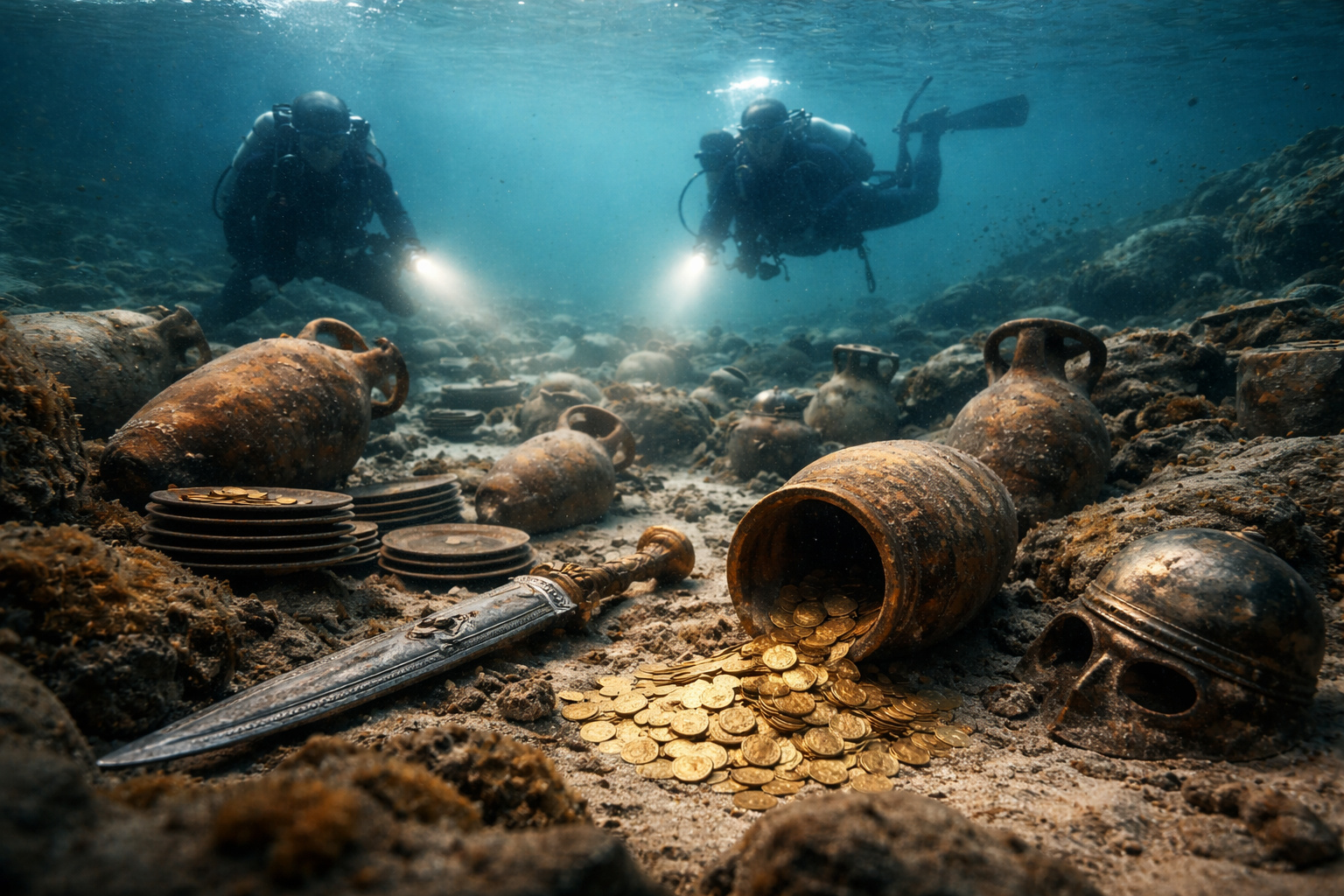
Giant Roman treasure found at the bottom of Lake Neuchâtel in Switzerland reveals an advanced trade system, circulation of goods, and armed escort in the Roman Empire about two thousand years ago.
-
He buried 1,200 old tires in the walls to build his own self-sufficient house in the mountains with glass bottles, rainwater, and an integrated greenhouse.


This dynamic gave rise to the emirates that now form the United Arab Emirates: Abu Dhabi, Sharjah, Dubai, Ajman, Umm Al-Quwain, and Ras Al-Khaimah.
Dubai, specifically, was a little-known fishing village, that belonged to Abu Dhabi until 1833. In the 16th century, the Portuguese arrived, followed by the Dutch, and finally the British, who were interested in protecting their sea routes to British India.
They established treaties with the coastal sheikhs, promising assistance in case of external threats. The idea of “Pirate Coast” is described by researchers as an exaggeration propagated by the British to legitimize domination, as explained by historian Johan Mathew from Rutgers University.
Pearls: The Economic Engine That Broke The City
Although the reputation for piracy is contested, the pearl trade was real and central. In the early 20th century, 95% of the Persian Gulf economy revolved around pearls.
There were about 1,200 ships dedicated to the trade, each with up to 80 sailors, and a quarter of those vessels were in Dubai, according to journalist Jim Krane.
The problem is that prosperity turned into collapse. The crash of 1929 devastated luxury markets and hit Dubai, which relied on pearls.
And, even without the stock market crash, the activity was already threatened: Japanese researchers discovered how to cultivate pearls, displacing the traditional Arab practice with an industrialized and standardized model.
Dubai went bankrupt, Indian merchants returned to Mumbai, international schools closed, and the emirate faced 17 years of misery.
Famine, Grasshoppers, And Lizards: Survival In Dubai 80 Years Ago
With the economic crisis and, later, the indirect impacts of World War II, the food import networks essential for survival in the desert were hit. Businesses went bankrupt, foreigners left, and famine set in.
Clouds of grasshoppers, once a plague, became relief, as people fried the insects to eat.
Another option was to hunt Uromastyx lizards, known in Arabic as dub, described as abundant in the desert.
Some linguists link this term to the etymology of the name Dubai, although more accepted theories suggest that “Dubai” comes from the Arabic verb for “to creep,” referring to the slow rhythm of the boats in the cove that gave rise to the settlement.
The central fact is brutal: there were people dying of hunger and eating insects to survive.
1971: A Poor Country Is Born, And Dubai Was Not The Land Of Oil
Since the 19th century, the British did little to develop the emirates, according to Krane. In 1971, they officially left the region and, being too small to become independent states, the emirates formed a federation: the United Arab Emirates (UAE) was born.
The new country was described as poor and backward: there were no universities, illiteracy exceeded 70%, and the life expectancy was around 50 years.
And, although oil exploration in the Emirates began in the 1950s in Abu Dhabi, Dubai drilled for years without finding any. The country’s fortune was oil, but the relative scarcity in Dubai forced a different strategy.
Port, Airport, And Smuggling: Infrastructure Came Before Ostentation
Sheikh Rashid bin Saeed al Maktoum wanted a port and an airport. The siltation in Dubai Cove kept large ships away, and the required investment was greater than local revenues.
To raise funds, he turned to donations from merchant families, bond sales, and, above all, a loan from Kuwait. Construction began in 1959, and the port named after the sheikh was inaugurated in 1972.
At the airport, the story is even more revealing of the “opportunism” described in the narrative. Rashid received a “no” from London to build the terminal, because there was a British airbase in Sharjah.
Dubai profited from gold imported from the UK and the US and smuggled into India, where it was prohibited.
Gold arrived via Sharjah, which kept part of the profits. Rashid hired an English firm to design the terminal and paid, on the side, a British pilot to carry loads to an improvised runway in Dubai.
Then, according to Frauke Heard-Bey, Rashid gave a Rolex to the pilot to present to the British administrator in charge to gain support. The Dubai International Airport was inaugurated in 1960.
1966: Oil, Rapid Dependency, And Even More Rapid Diversification
In 1966, Dubai finally found oil. Six years later, the local economy depended on it almost as much as in the pearl era: about two-thirds of the GDP came from oil.
At the same time, investments in infrastructure were already changing the city: in the 1960s, Dubai gained telephone lines and running water, and electricity arrived in 1961.
In the 1970s, after independence, Rashid’s prestige translated into two official visits from Queen Elizabeth II.
On the second visit, she inaugurated a new port, in 1979: Jebel Ali, described as the largest artificial port on the planet and one of the busiest terminals in the world.
The key point is that Dubai treated oil as a lever, not as a destination. In 1985, oil constituted half of the GDP; by the 2000s, it fell to 3%; and today it is less than 1%.
The necessity helped impose discipline: even with significant reserves, Dubai never had oil comparable to Abu Dhabi’s.
According to OPEC, the Emirates are major producers, but nine out of ten barrels in the country are in Abu Dhabi. Thus, Dubai consolidated a services-based economy, with finance, real estate, trade, and tourism leading diversification.
Forced Labor And Kafala: The Human Cost Behind The Megaprojects

The local history has a long connection with deregulated or illegal markets. In the 1950s, Dubai was described as strategic in the international trafficking of hashish and opium.
And the slave trade, an ancient practice connecting Arabia to Africa, accelerated at the height of the pearl trade. The British tried to curb it in the 19th century, but slavery was only officially banned in 1963.
The problem, according to the NGO Walk Free, reappears as “modern slavery”, with immigrant workers vulnerable to a restrictive system known as kafala, which binds them to employers.
In the 2000s, there were protests against working conditions during the construction of the Burj Khalifa, the tallest building in the world, standing 828 meters tall.
And there is the incident mentioned by Human Rights Watch: in 2011, a worker allegedly jumped from the 147th floor after being prohibited from returning to his home country.
Walk Free recognizes that the UAE is among the countries taking the most measures to combat modern slavery compared to others in the region, but the power imbalance described remains a central element of the debate.
Population, Tourism, And Records: Dubai Sells Superlatives But Carries Warnings
With diversification, the population skyrocketed: 40,000 inhabitants in 1960, 370,000 in 1985, 1 million at the beginning of this century, and 3.6 million today.
Dubai Airport is described as the largest in international passenger traffic: about 92 million in 2024, an increase of 6.1% compared to the previous year.
Dubai surpassed London, with 79 million. In total passengers, Dubai is behind Atlanta, with 108 million.
In tourism, the government declared the ambition of making Dubai the most visited city in the world by 2025. In 2024, Dubai ranked 7th in a survey by consulting firm Euromonitor, with 18.2 million foreign visitors, well behind Bangkok, the leader with 32.4 million, but almost three times that of Brazil as a whole, according to the presented comparison.
Today, Dubai also collects records cited as recognized by the Guinness World Records, including the tallest building, the largest public fountain, the largest shopping mall, and other superlatives.
Still, there are reminders of physical limits: the tallest Ferris wheel in the world closed in 2022, and speculations pointed to problems in the soil of the artificial island where it is located.
Quick Question: For you, what explains Dubai’s transformation more, strategic vision and infrastructure or the willingness to accept high social costs for such rapid growth?









Não precisa nem ler a matéria pra saber que escolhendo o caminho do socialismo e comunismo é que não foi