





 Portuguese
  English
  Spanish
  2 min of reading
  0 comments


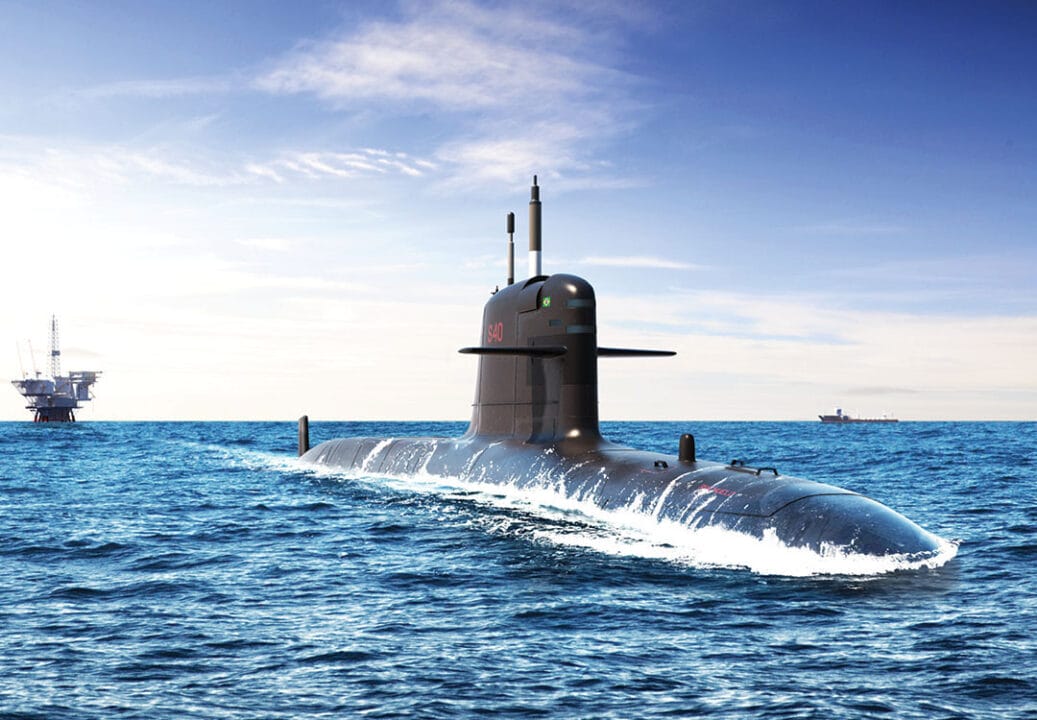
It May Seem Like a Simple Process for Submarines, However, There Is a Lot of Complexity and Technology Involved in the Processes of Surfacing and Diving These Giants of the Seas.
The surfacing (ascending to the surface) and diving (descending below the sea surface) process in submarines involves the use of the ballast system and some other control mechanisms. Although these processes are quite complex and require a truly skilled crew for execution, we can have a brief overview of how it works.
Check Out the Details of How the Surfacing Process of Submarines Works
The process begins with venting the ballast tanks. When the submarine wants to surface, the ballast tanks are filled with compressed air.
This air replaces the water in the tanks, making the submarine lighter, allowing it to ascend to the surface due to the loss of weight.
-
OceanPact Announces Acquisition of CBO and Creates One of Brazil’s Largest Maritime Support Structures with 73 Vessels, Annual Revenue Above R$ 4 Billion and R$ 14 Billion Backlog
-
With Extreme Winds, Giant Waves, and Unrestricted Currents, Drake Passage Is Considered the Most Violent Stretch of the Oceans
-
15th Century Merchant Ship Surprises Archaeologists
-
Odfjell Inaugurates First Operational Green Corridor Between Brazil and Europe Using Sustainable B24 on Maritime Routes and Reinforces Decarbonization Strategy

At the same time, the water in the ballast tanks is expelled out of the submarine. This contributes to the increase in buoyancy.
Next, we have the positioning of the controls, such as the depth rudders. They are adjusted to provide directional control during the ascent.
With the increase in buoyancy, the submarine will naturally surface.
During this process, the rudders and other controls are used to maintain stability.
The Diving Process
Initially, the filling of the ballast tanks occurs. When the submarine wants to dive, the ballast tanks are filled with seawater.
This increases the mass of the submarine, making it heavier and thus facilitating its descent into the water.
During the dive, the rudders and other control devices are used to maintain the desired direction and stability.
The submarine continuously adjusts the amount of water in the ballast tanks to control its depth. If it wants to descend further, it adds more water; if it wants to ascend, it releases water.


How Do They Move in the Ocean?
Once submerged, the submarine can travel beneath the surface using electric motors or nuclear propulsion, depending on the type of submarine.
Through the thrusters and controls, the submarines use propellers and directional controls to move underwater, being able to adjust depth as needed.
This process is complex, and modern submarines often use advanced computerized systems to automate and optimize the surfacing and diving process.









-

Uma pessoa reagiu a isso.