Portuguese
  Spanish


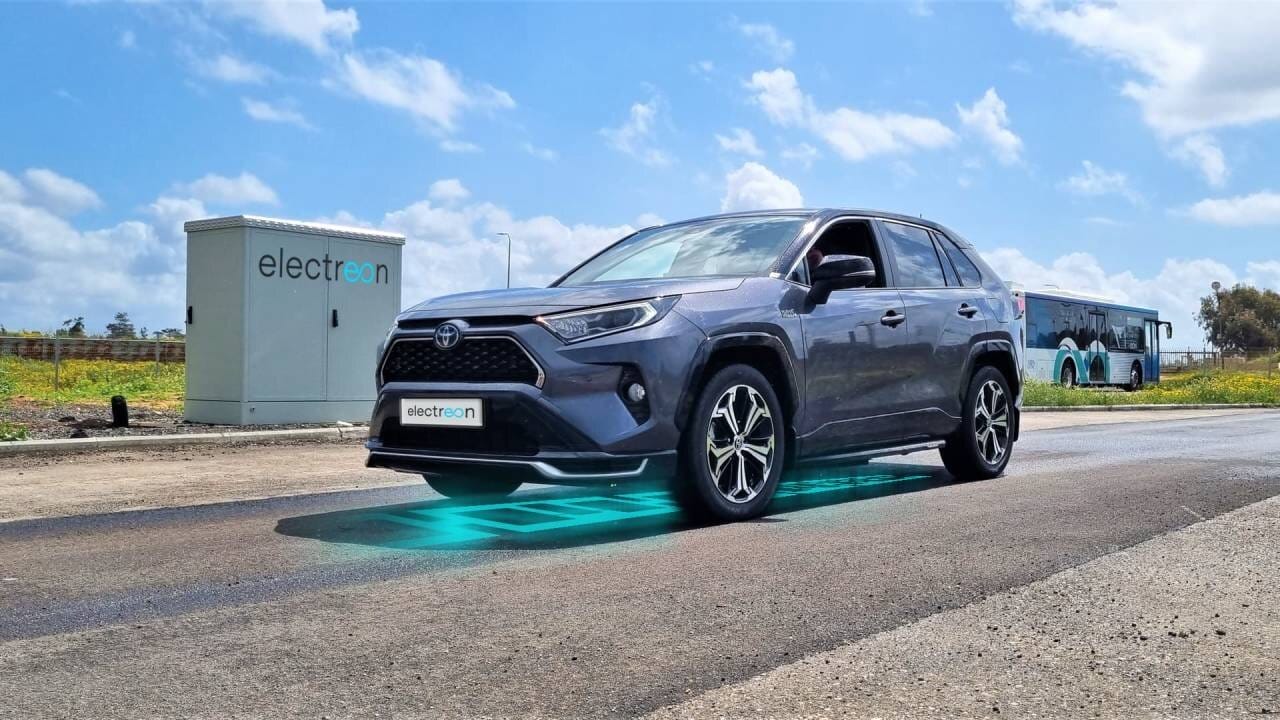

The Technology That Promises to Revolutionize the Automotive Sector! Detroit Inaugurates the First Induction Charging Street for Electric Cars.
In a significant advancement for electric mobility, Detroit, in the United States, celebrates the inauguration of the first street with induction charging for electric cars. With this technology, the pioneering stretch, located on 14th Street in the vibrant Corktown neighborhood, between Marantette and Dalzelle streets, marks an important step in the pursuit of innovative and sustainable solutions.
Discover the Crucial Role in Induction Charging Advancements
With a length of 402 meters, equivalent to a quarter mile, the street will serve as a testbed for induction charging technology.
This pilot test aims to enhance the efficiency of the system before its large-scale implementation in the coming years.
-
End of an era in Brazil: beloved sedan by Brazilians is discontinued despite having a 2.0 engine with 151 hp, CVT transmission, 466-liter trunk, and up to 650 km of range.

-
New Law Proposal in Brazil Could Heavily Penalize Drivers: Dangerous Overtaking May Become a Serious Offense with Fines Increased Tenfold and a 12-Month License Suspension; Update on 2026 Progress

-
Electric Revolution: Watts W125 Motorcycle Offers 160 km Range, 90 km/h Speed, and Affordable Price Starting at $3,000
-
General Motors Replaces Over a Thousand Workers with 50 Cobots at Electric Vehicle Plant, UAW Union Criticizes Move Amid Industry’s Automation Push


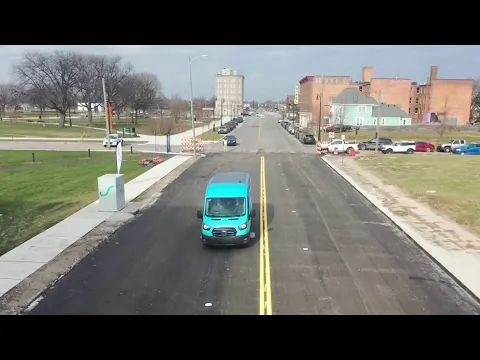
14th Street is just the starting point, as new testing segments are scheduled to be inaugurated next year.
Including expansions to iconic locations like Michigan Avenue.
In addition to cars and vans, the test will also cover public transport, reflecting the versatility of the technology in different urban contexts.
However, it is crucial to highlight that not all car models can be charged inductively; they must be equipped with Electreon receivers, the project’s partner company.
Partnership Between Electreon and Michigan Drives the Creation of Electric Streets in the U.S.
The five-year partnership between Electreon and the state of Michigan underscores the commitment to developing electric streets.
The inaugural vehicle for these tests is the Ford Transit van, equipped with the necessary receivers.
This project promises not only to transform individual mobility but also to offer solutions for public transport.

The Environmental Benefits of Wireless Charging for Electric Cars
The basis of the technology lies in the coupling between copper coils installed beneath the surface of the street and receivers in the vehicles.
The wireless energy transfer occurs through an induced magnetic field, allowing charging both in motion and when the vehicles are stationary.
This versatility may be key to extending the range of electric cars, enabling lighter and more efficient batteries.
It is noteworthy that to avoid energy waste, only the segment of the street encountered by the compatible vehicle will be energized.
This on-demand approach not only optimizes energy consumption but also eliminates the need for permanent electrification, contributing to a more efficient and sustainable system.
With strict safety measures in place, the technology ensures that there are no risks of shocks to pedestrians, animals, or objects.
The success of this innovative initiative could mark a turning point in the large-scale adoption of electric cars, offering a promising solution for charging infrastructure.
Source: Quatro Rodas