





 Portuguese
  English
  Spanish
  6 min of reading
  26 comments


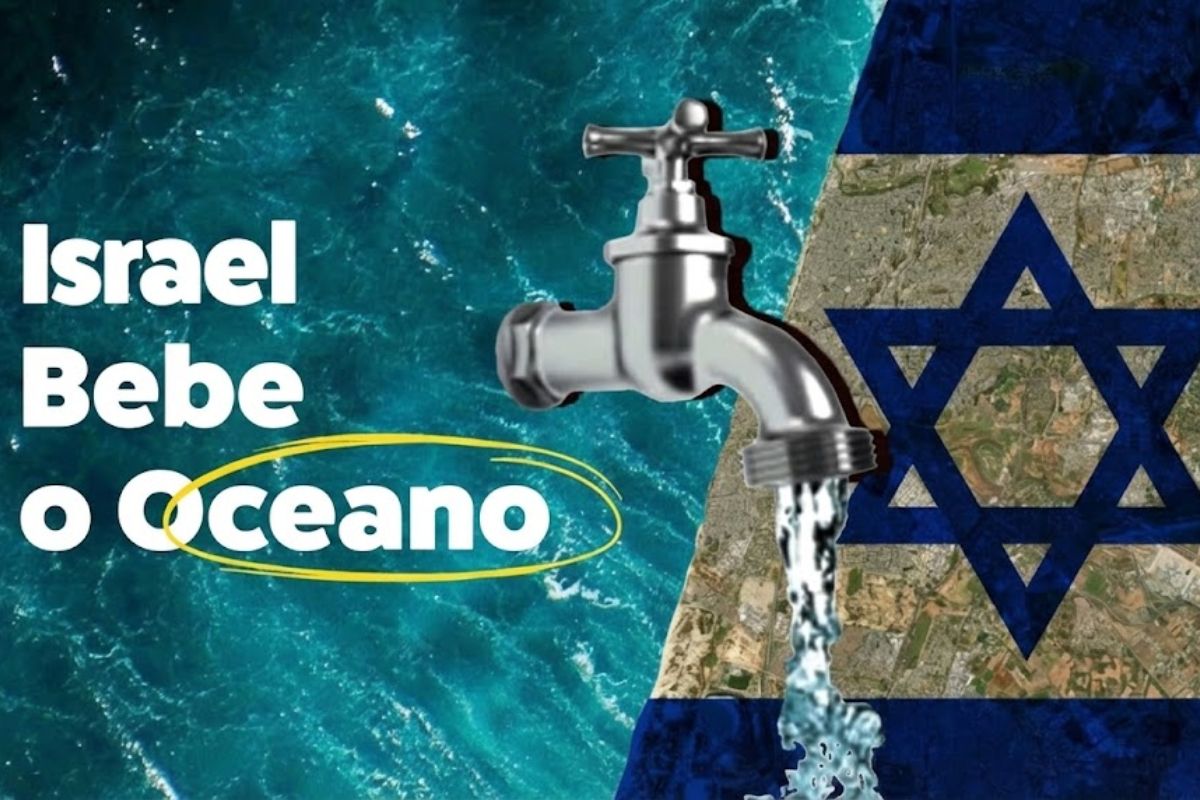


Tiny and Semi-Arid, Israel Became a Global Water Laboratory by Desalinating the Mediterranean, Recycling 94 Percent of Sewage, Irrigating the Desert with 87 Percent of Reused Water, and Pumping Excess from Plants to the Sea of Galilee Amidst a Water Crisis Affecting Neighbors Like Iran and Iraq.
In 2001 and 2002, Israel still heavily relied on the Sea of Galilee and limited aquifers, consuming around 513 million cubic meters per year from its natural sources. Starting in 2005, with the expansion of desalination plants and in 2013, with the commissioning of the Sorek plant, the country accelerated a historic shift and reduced this consumption to just 25 million cubic meters in 2018 and 2019.
Meanwhile, from 2010 onwards, the surrounding region deepened into a crisis: Iran, Iraq, Syria, Turkey, Jordan, and Yemen amassed nearly empty reservoirs, shrinking rivers, and cities on the brink of rationing. In this same context, Israel began desalinating about 2 million cubic meters of seawater per day, stabilized the level of the Sea of Galilee with a reverse pumping system inaugurated in 2023, and consolidated water as a national security priority.
A Desert Surrounded by Neighbors on the Brink of Drought

The Middle East records extreme heat, shrinking rivers, and disappearing lakes. In Iran, the president himself warned that without rain, Tehran could have to be evacuated.
-
Spain surprises the world by erecting 62 artificial dunes, mixing sand with natural remains of posidonia, and causing the structure to lose only 1.4% of its volume in 1 year.

-
With 16 Bulava missiles, improvements in acoustic stealth, and a design focused on silent patrols, Russia’s nuclear submarine was born to ensure Moscow’s invisible retaliation and has become one of the pillars of its maritime strength.

-
‘Populous’ city in Rio among the worst in Brazil in national ranking and exposes silent development crisis.
-
Couple buys house in the South Zone of São Paulo, opens a hidden door in the garage, and finds a secret wine cellar with dozens of old wines forgotten since the 1970s.
In Iraq, the waters of the Tigris and Euphrates do not reach even half of the historical volume, and residents of Basra are forced to drink salty water.
In Syria, after more than a decade of war, drought has turned former agricultural areas into dust fields.
In Turkey, the retreat of groundwater in the Konya plain has opened craters in the soil, while Istanbul and Izmir face imminent water scarcity.
Jordan ranks among the countries with the lowest per capita water availability, and in Yemen water has become more valuable than oil, highlighting the gravity of the crisis.
In this regional collapse scenario, Israel stands out as a water anomaly.
Instead of retreating, the country has increased its supply of potable water, stabilized reservoirs, and has even begun exporting desalination and reuse technology.
The difference lies not in geography, but in decades of investment in science, infrastructure, and regulation aimed at extracting the maximum from every drop available.
From a Country Dependent on the Sea of Galilee to the Brink of Scarcity

Half of Israel’s territory is under a semi-arid climate, and the south is dominated by a desert with an annual average of just 20 millimeters of rain.
In the north, precipitation averages around 800 millimeters, dropping to about 400 millimeters in the eastern interior.
Historically, Israel primarily relied on the Sea of Galilee and limited underground aquifers to meet the needs of its population, agriculture, and industry.
Population growth, intensified agriculture, and increasingly severe drought cycles pushed these sources to the limit by the end of the 20th century.
The levels of the Sea of Galilee approached what was considered dangerous markers, and the continuous extraction of water threatened both the supply and the lake’s ecosystem.
This context drove Israel to treat desalination not as an environmental option, but as a strategic necessity for survival and national security.
How Israel Transformed the Mediterranean into Potable Water

The shift began back in the 1960s when chemist Alexander Zarchin developed a desalination process based on vacuum freezing and founded IDE Technologies in 1965.
The initial technology was not efficient, but it paved the way for the later adoption of reverse osmosis, which now dominates Israel’s plants.
In 1997, Israel inaugurated its first seawater desalination plant in Eilat.
In 2002, during a severe drought, the government approved the construction of large plants along the Mediterranean coast, with goals of desalinating 305 million cubic meters per year by 2010 and 500 million cubic meters by 2015.
In 2005, Ashkelon came online; in 2009, Hadera followed. By the end of 2008, capacity had already reached 130 million cubic meters annually.
In 2012, only Ashkelon produced 15,000 to 16,000 cubic meters per hour, accounting for about 15 percent of the country’s total demand.
In 2013, the Sorek plant, one of the largest reverse osmosis plants in the world, began injecting 234 million cubic meters per year into the grid.
Today, Israel converts approximately 2 million cubic meters of seawater into fresh water daily, with most going to homes and cities.
Sewage Recycling That Irrigates the Desert
Desalination is only half of the equation.
The other half is the massive reuse of treated sewage.
According to data compiled by the authorities, about 94 percent of Israel’s wastewater is collected and treated, and over 87 percent of that volume is reused, primarily in agriculture.
It is by far the highest rate in the world.
The Shafdan station, near Tel Aviv, processes around 370 million liters of sewage per day, sending this water, after treatment and polishing, through underground pipes to irrigate farms in the Negev desert.
Since 2010, stricter regulations have limited salinity and heavy metals in recycled water, strengthening quality control for agricultural use.
As a result, Israel is able to supply a large part of its food needs through local production, even in a desert climate, reserving the majority of natural fresh water for human consumption.
This model creates a cycle where desalinated water serves cities and part of industry, while the sewage from those same cities, treated to high standards, returns to the field.
The combination reduces pressure on lakes and aquifers and transforms what would be an environmental liability into a productive asset capable of sustaining high agricultural productivity.
Pumping Desalinated Water Back to the Sea of Galilee
One of the most symbolic moves in Israel’s water policy is the National Reverse Water Transport System, which came into operation in 2023.
Instead of extracting water from the Sea of Galilee for the rest of the country, the system allows pumping excess from desalination plants back to the lake, turning it into a security reservoir.
In practice, when production from coastal plants exceeds immediate demand, part of the water is sent north, helping to stabilize the level of the Sea of Galilee and ensuring a strategic stockpile for periods of extreme drought.
As a result, Israel has dramatically reduced its long-standing reliance on this lake and now treats it as a long-term reserve, rather than as a primary source of daily supply.
How Much Does It Cost to Secure Water in an Arid Country?
Israel’s water freedom comes at a price.
The Ashkelon plant cost around 250 million dollars; Hadera, 425 million; Sorek, 450 million; and new facilities, like Sorek 2, exceed 500 million dollars.
In addition to the plants, the country invested approximately 500 million dollars in new east-west main pipelines, connecting the Mediterranean coast to more distant areas.
The production cost also affects the budget.
Large-scale reverse osmosis plants produce water for about 0.54 dollars per cubic meter, more than the natural fresh water, estimated at 0.10 dollars per cubic meter, but still competitive compared to other countries, where desalination ranges between 0.50 and 1.00 dollars per cubic meter and, in some cases, exceeds 3.00 dollars.
Israel pays more per cubic meter than it would by solely exploiting its natural sources, but in return, it secures supply even during severe drought.
What Israel’s Water Revolution Teaches Other Arid Regions
Israel’s experience shows that the path to survival in arid regions involves technological innovation, long-term investments, and strict regulations on every stage of the water cycle.
Large-scale desalination, near-total sewage recycling, and reverse transport to strategic lakes are solutions that do not eliminate the cost of water but drastically reduce the risk of collapse.
At the same time, the model highlights limits: desalination is expensive, requires energy and robust infrastructure, and does not replace policies for conservation, resource management, and urban planning.
Still, in a Middle East where rivers disappear from the map and cities consider evacuation due to lack of water, Israel has made water an explicit front of national security and a platform for technology export to other countries in water crisis.
In light of this contrast between neighbors on the brink of rationing and a desert country that transformed the sea into a strategic source, do you think other arid nations should follow Israel’s path of mass desalination or prioritize conservation and reduction of internal consumption first?







Brasil, um país abençoado tanto na geografia quando na topografia… Porém com fé superficial.( Da boca pra fora) Por isso vemos poucos milagres aqui, Deus age através da fé!!! Nosso país tropical tem tudo mais tem pouca fé, por isso reina a corrupção, violência, maldades inacreditáveis, precisamos buscar a fé… A fé é muito mais verdadeira na nossa fraqueza!!! Pois somos todos fracos!!! É Deus q nos sustenta!!! Obrigado o meu Deus por continuar olhando por nós apesar de todas as atrocidades q fazemos… Glória a Deus e a nosso salvador JESUS CRISTO!!!
Sem dúvidas Deus é com Israel… Eles melhores q as outras nações em tudo!!! A sabedoria de Salomão… Apesar de todas as provações e desafios Israel consegue vencer, se isso não é Deus o q é??? Precisamos ter a fé deles … É isso que Deus nos pede!!! Glória a Deus o nosso paí todo poderoso e misericordioso!!!
Incrível como Deus cuida de Israel. Um país minúsculo, mas com tecnologia militar e hídrica como poucos ou quase nenhum.
Me perdoe o choque de realidade mas esse pensamento infantil é o que faz Israel ser odiado por tanta gente, não tem nada de proteção divina, é trabalho duro, vontade ilimitada, investimento em ciencia e tecnologia, esforço puro e simples, eles não recebem nada de graça, que protecionismo é esse? Uma das regioes mais secas e improdutivas do planeta, clima extremo quase absurdo, que bênçãos são essas. Devemos parar de ser infantis, se Deus protege alguem, não são eles, as unicas bênçãos de Deus são nossos corpos, nossa inteligencia e nossa capacidade, o resto é resultado de esforço e trabalho duro.
Sem dúvidas Deus é com Israel… Eles melhores q as outras nações em tudo!!! A sabedoria de Salomão… Apesar de todas as provações e desafios Israel consegue vencer, se isso não é Deus o q é??? Precisamos ter a fé deles … É isso que Deus nos pede!!! Glória a Deus o nosso paí todo poderoso e misericordioso!!!
Isso não é Deus, isso é ciência. Eles bao ficam o dia inteiro rezando para que caia água do céu. Eles estudam e criam mecanismo para dessanilizar água.
Brasil, um país abençoado tanto na geografia quando na topografia… Porém com fé superficial.( Da boca pra fora) Por isso vemos poucos milagres aqui, Deus age através da fé!!! Nosso país tropical tem tudo mais tem pouca fé, por isso reina a corrupção, violência, maldades inacreditáveis, precisamos buscar a fé… A fé é muito mais verdadeira na nossa fraqueza!!! Pois somos todos fracos!!! É Deus q nos sustenta!!! Obrigado o meu Deus por continuar olhando por nós apesar de todas as atrocidades q fazemos… Glória a Deus e a nosso salvador JESUS CRISTO!!!