





 Portuguese
  English
  Spanish
 4 min of reading
  6 comments


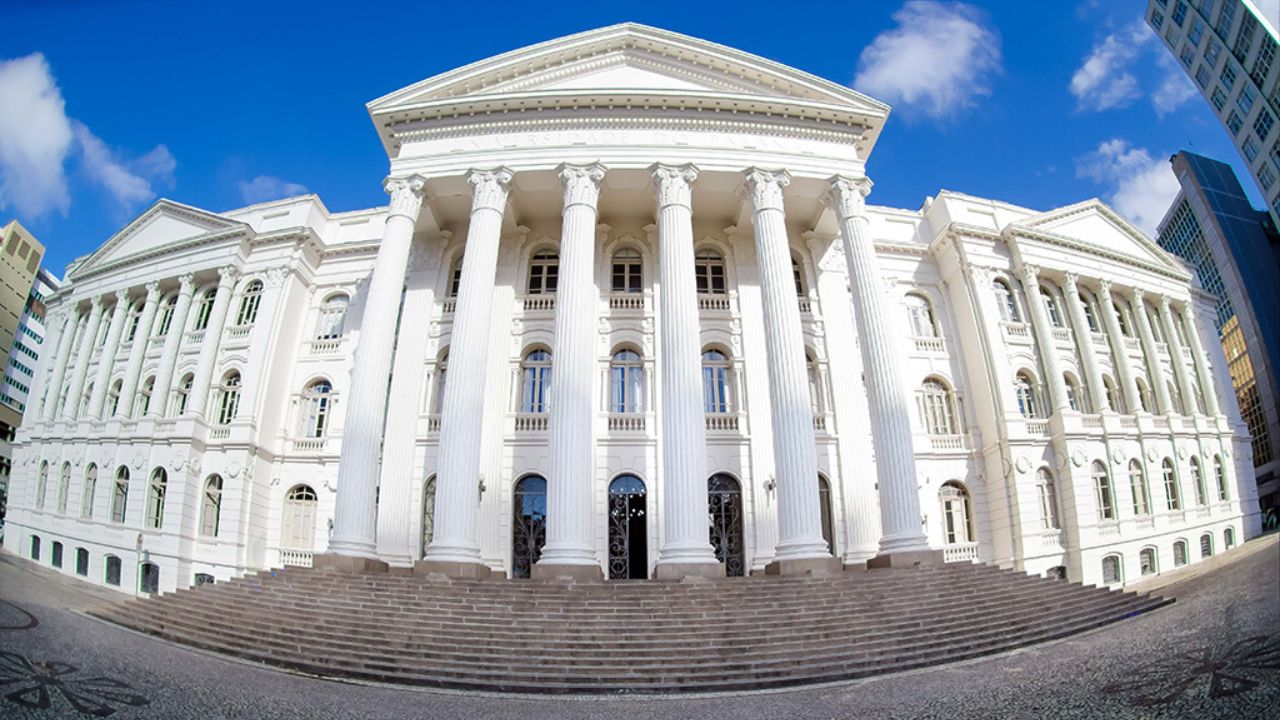


Discover the History of UFPR, Founded in 1912, That Challenges the Common Belief About Which Was the First University in Brazil and Reveals the Surprising Motivation of Its Founders.
When discussing the first university in Brazil, common thought immediately goes to Rio de Janeiro or São Paulo, homes to iconic institutions such as UFRJ and USP. However, the oldest historical record of a university conceived and founded as such points to the South: the University of Paraná, now Federal University of Paraná (UFPR), was officially founded on December 19, 1912.
Even before the University of Rio de Janeiro was formalized by the federal government in 1920, or before USP was structured in 1934, a movement by the Paraná civil society, led by Victor Ferreira do Amaral e Silva, brought the institution into reality. The most surprising thing, however, is not just the date, but the motivation. According to the official records of UFPR, the project originated from a profound desire for “intellectual emancipation” of the state, a declaration of cultural and strategic autonomy far beyond the capitals of the Southeast.
A State in Search of Intellectual Emancipation
In the early 20th century, Paraná was experiencing a robust economic cycle, primarily driven by mate and timber extraction. According to records of a speech in the Chamber of Deputies celebrating the institution’s 90th anniversary, this economy created an urgent demand for qualified professionals that the state simply did not possess. Engineers were needed for infrastructure, trade specialists to manage exports, and lawyers to mediate the complex commercial relations, which were already strongly extending to Argentina.
-
Church from 1888 becomes a mansion of over 330 m² in Canada after a renovation of R$ 3.4 million and is eventually sold for nearly R$ 4.3 million.

-
How an innovative city combines high technology, well-being, and sustainability to become the largest reference in clean energy on the planet.
-
Couple buys 1846 church in ruins for R$ 660,000, invests R$ 3.2 million in renovations, transforms it into a millionaire mansion, and even preserved a historic cemetery with over 300 graves.

-
He started running at 66 years old, broke records at 82, and is now a subject of study for having a metabolic age comparable to that of a 20-year-old, in a case that is intriguing scientists and inspiring the world.


The local elite felt compelled to send their children to study at colleges in Rio de Janeiro, São Paulo, or even in Europe, a costly model that drained talent from the region. Establishing a local university was not a luxury, but a strategic necessity for modernization. However, the motivation went beyond economic pragmatism. The project was articulated as the final chapter of Paraná’s autonomy. The most famous quote from its founder, Victor Ferreira do Amaral, preserved by the official UFPR website, summarizes the vision: “December 19 represented the political emancipation of the State and must also represent its intellectual emancipation”.
The Argentinian Inspiration and the Slogan “Science and Work”


The idea of a university in Paraná did not arise in 1912. A first attempt, led by the historian Rocha Pombo, occurred in 1892, but was frustrated by the political instability of the Federalist Revolution. Twenty years later, the scenario was more stable, and the idealizers had a tangible inspiration. According to the same records from the Chamber of Deputies, the intense commercial relationship with neighboring countries led the Paraná elite to look at the prestigious University of Córdoba, Argentina, as a model. The existence of a center of excellence outside the national capital proved that Curitiba could also have its own.
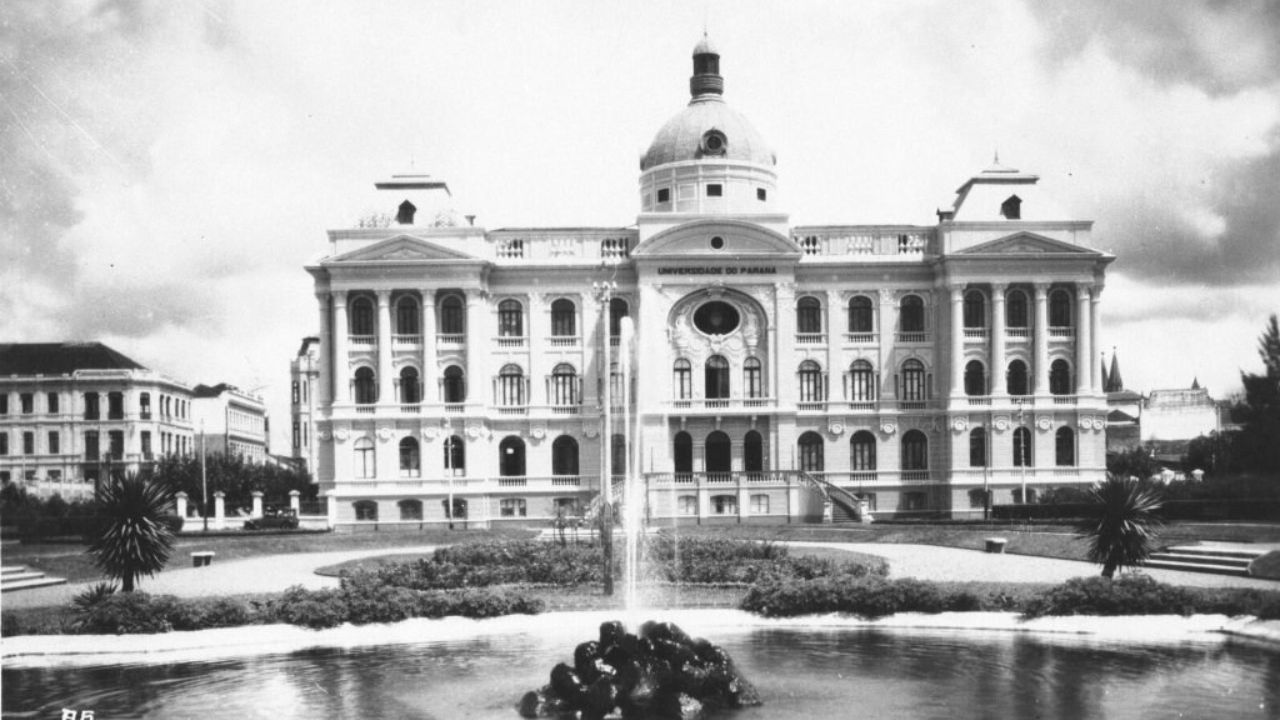
Under the motto Scientia et Labor (Science and Work), the university began its activities in March 1913. The pioneering courses, listed by UFPR, reflected this dual mission: Legal and Social Sciences, Engineering, Dentistry, Pharmacy, and Commerce. The institution was born as a private entity, a product of civil society, but received crucial support from the public authority, such as the donation of land for its iconic palace in Praça Santos Andrade, a symbol of the “Light” that knowledge would bring to the state.
The Historical Rivalry: Who Is Really the First?
The UFPR’s claim to the title of the first university in Brazil is not a consensus and fuels a complex “historical rivalry”, as detailed by the blog Ciências e Adjacências. The dispute fundamentally revolves around which criterion is used to define “university”. If the criterion is the date of a precursor school, the “Free University School of Manaus” was created in 1909. However, it only adopted the name “University of Manaus” in July 1913, months after the Paraná institution was already operational, and it ended up being dissolved in 1926.
On the other hand, if the definition requires a university created and maintained by the Federal Government, the honor goes to the University of Rio de Janeiro (now UFRJ), founded in 1920, which united existing higher schools. Some education historians, cited by the blog, further argue that the first “modern” university, with an integrated research project, would be the USP of 1934.
The strongest argument for UFPR lies in the criterion of original foundation with institutional continuity. It was the first to be conceived, named, and established as a university on December 19, 1912. And, although a change in federal law (Carlos Maximiliano Reform) forced it to administratively separate in 1918, its constituent faculties never ceased to function. This resilient spirit ensured its reunification in 1946 and definitive federalization in 1950, consolidating its pioneering legacy.
The Legacy of 1912
The story of the founding of UFPR is more than a dispute over dates; it is a fundamental chapter about the decentralization of knowledge in Brazil. It demonstrates how a regional initiative, driven by the desire for intellectual autonomy and economic needs, challenged the hegemony of the Southeast and established itself as a pillar of higher education, long before the institutions that today dominate popular imagination.
Did you know this story? In your opinion, what really defines the first university in Brazil: the date of foundation, the creation by the federal government, or the uninterrupted continuation of activities? Join the debate and leave your opinion in the comments!






A data de fundação 1912 faz da UFPR a primeira do Brasil.
Lógico que o wue define é a data da inauguração e funcionamento
Parabéns pela reportagem, mas creio que há um equívoco. Uma das primeiras escolas técnicas de ensino, que depois se tornariam universidades no Brasil estão na Bahia do século XIX. A escola de medicina de Salvador e a escola agrícola de Cruz das Almas são o embrião das primeiras universidades do Brasil.