





 Portuguese
  English
  Spanish
  6 min of reading
  0 comments


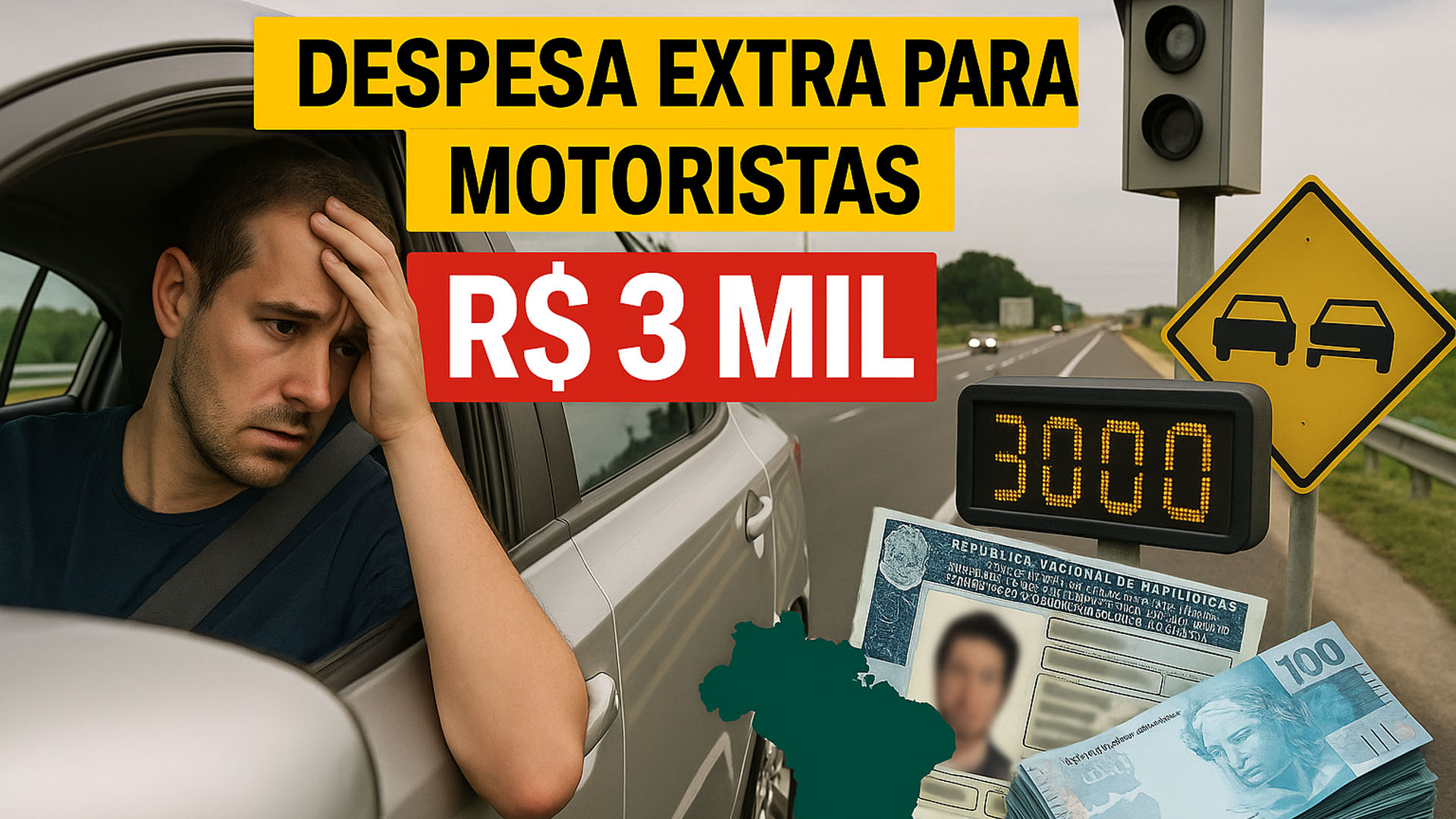
Bill Under Discussion in Congress Toughens Fines, Expands Suspension of Driver’s License, and Provides for Revocation for Repeat Offenders in Severe Violations, Potentially Generating Extra Costs of Up to R$ 3,000 for Drivers Who Persist in High-Risk Maneuvers.
Drivers across the country could face an additional expense of nearly R$ 3,000 if the Bill 1405/24 is approved in Congress. The proposal amends the Brazilian Traffic Code (CTB) to classify dangerous overtaking and reckless driving as severe violations with a fine of R$ 2,934.70 and immediate suspension of the right to drive.
According to the text, the new article 205-A of the CTB equates these behaviors to “street racing,” imposing a severe fine multiplied by ten, in addition to a 12-month suspension of the driver’s license, with the possibility of even harsher penalties in case of recidivism.
The tightening comes amid rising road violence rates. Data compiled by the Ministry of Health shows that Brazil recorded 34,881 traffic deaths in 2023, 2.9% more than in 2022, continuing a growing trend since 2020.
-
The Chamber opens a debate on driver’s licenses at 16 years old as part of a reform that includes around 270 proposals to change the Brazilian Traffic Code and may redesign rules for licensing, enforcement, and circulation in the country.

-
The new Civil Code could revolutionize marriages in Brazil with “express divorce” and changes that could exclude spouses from inheritance.
-
Banco do Brasil sues famous influencer for million-dollar debt and intensifies debate on delinquency, risks of seizure, and direct impact on Gkay’s credibility.

-
The Senate approves a bill that criminalizes misogyny, hatred, or aversion towards women, and includes the crime in the Racism Law with a penalty of up to 5 years.


Traffic safety experts and studies from Ipea remind us that traffic accidents generate not only deaths and injuries, but also a heavy economic cost for the public health system and the economy, with thousands of people off work every year.
Currently, the Bill 1405/24 is under discussion in the Chamber of Deputies, reviewed by the Committee on Transportation, and still needs to progress through the legislative stages before becoming law.
Why Bill 1405/24 Aims to Increase Traffic Penalties in Brazil
The starting point of the project is the recognition that Brazilian traffic remains one of the leading causes of death in the country, with tens of thousands of fatalities each year and a recent increase in official statistics.
According to analyses based on data from DataSUS and the Violence Atlas, the traffic mortality rate has risen again after several years of decline, driven by factors such as fleet growth and increased motorcycle circulation, which concentrates a large portion of the victims.
For lawmakers supporting the bill and for entities working in traffic safety, punishing high-risk behaviors more rigorously, such as forced overtaking on single-lane highways, is a way to deter the behavior of “betting” with one’s own life and that of others.
Studies from the National Traffic Safety Observatory and health agencies show that each traffic death is often accompanied by various injuries and disabilities, amplifying the social and economic impact of such incidents.
The underlying understanding is that mere educational campaigns have not been sufficient. Therefore, the bill relies on a combination of education, enforcement, and harsher penalties to attempt to change the culture of recklessness that is still very much present on Brazilian streets and roads.
Fine of Up to R$ 2,934.70 and Suspension of Driver’s License: How the New Penalties Work
Currently, the severe violation has a base value of R$ 293.47 and generates 7 points on the driver’s license. The legislation allows for applying multiplying factors, which can increase this fine by up to 60 times depending on the severity of the conduct.
Bill 1405/24 proposes that dangerous overtaking or reckless driving with imminent risk of serious accidents be punished with a severe fine multiplied by ten, reaching R$ 2,934.70, the same level currently applied today for street racing and some other extremely high-risk violations.
In addition to the direct financial impact, the proposal provides for suspension of the right to drive for 12 months upon the first offense, regardless of the total points accumulated. In case of repeat offenses within 12 months, the suspension period can double, reaching 24 months.
In practice, this means that a driver caught in a prohibited overtaking or a clearly irresponsible maneuver may lose their driver’s license for up to two years and have to bear the costs of retraining courses, exams, and fees to be able to drive again, which easily raises the total expense beyond R$ 3,000.
Another innovation discussed in versions of the text is the possibility of restricting the offender’s circulation on highways for a certain period, especially for those who persist in dangerous behaviors even after receiving penalties, enhancing the protection of the collective.
Who Can Have Their License Revoked Under the New Rules of Bill 1405/24
One of the most notable points is the focus on repeat offenders of severe violations. According to analyses of the bill, license revocation becomes applicable to those who, even if previously punished, insist on repeating high-risk behaviors.
Highlighted cases include drivers who drive under the influence of alcohol or drugs, participants in street races, drivers accumulating dangerous overtaking, and those who cause manslaughter while driving or are caught driving during a suspension period.
Revocation is a measure that is harsher than simple suspension. The driver loses their driving license and, to resume driving, must fulfill waiting periods, undergo new licensing processes, and pass psychological and driving evaluations, which can take years.
From the perspective of the project’s supporters, the message is clear: those who turn a car into a weapon will no longer have space on the roads. Critics, however, question whether the excessive focus on punishment, without equivalent reinforcement in enforcement, traffic engineering, and quality public transportation, is sufficient to change the scenario.
What Changes in Practice for Drivers and When the New Law Might Take Effect
If the Bill 1405/24 is approved in the Chamber and the Senate and sanctioned by the Presidency, the new article will be incorporated into the CTB and will take effect nationwide after the cooling-off period that will be defined in the law.
In drivers’ daily routines, the main change is the increase in the financial and legal risks involved in each risky maneuver. Overtaking “at the limit,” disrespecting danger signals, and irresponsibly advancing in critical sections will now carry a much higher immediate cost.
The project also relates to a broader movement towards the use of technology in enforcement, such as smart cameras, integration of databases between states, and improvement of ticketing systems, which is likely to increase the chances of offenders being identified and punished.
For those who drive within the law, nothing changes in terms of new obligations. However, experts note that, with harsher penalties, attention to speed limits, signage, and overtaking rules needs to be doubled, especially on single-lane highways, where a large portion of fatal accidents occur.
Society, Enforcement, and Education: What is Still Needed for Safer Traffic
Campaigns such as Yellow May, promoted by agencies like ANTT and the Ministry of Transportation, emphasize that reducing traffic deaths requires the involvement of drivers, pedestrians, cyclists, and authorities, not just stricter laws on paper.
International organizations and national studies insist that the ideal combination includes effective enforcement, proportional punishment, ongoing education, and improvement of road infrastructure, with special attention to motorcyclists and vulnerable users, who account for a significant portion of fatal victims.
Do you believe that fines of nearly R$ 3,000, a suspension of up to 24 months, and the possibility of license revocation are the best solutions to reduce traffic violence, or is Brazil relying too much on punishment and too little on education and road structure? Leave your comment, share if you have witnessed dangerous overtaking or abuses on the roads and tell us if, in your opinion, laws like Bill 1405/24 will really change drivers’ behavior or risk becoming just another financial burden without addressing the root of the problem.









Seja o primeiro a reagir!