





 Portuguese
  English
  Spanish
  6 min of reading
  1 comment


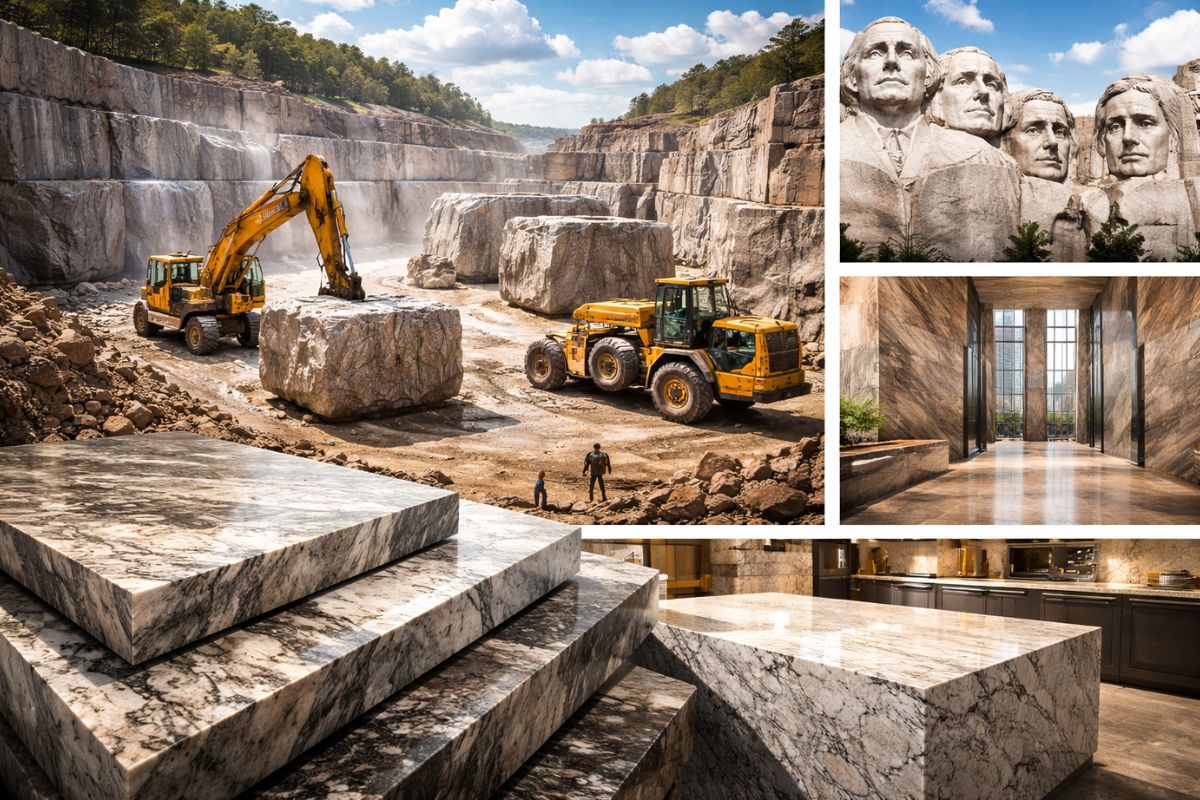


Granite Is Born From Magma, Passes Through Open-Pit Quarries, Is Cut Into High-Precision Slabs, and Ends Up as a Shiny Surface on Luxury Facades, Floors, Stairs, and Monuments That Seem to Defy Time.
Granite is so present in our daily lives that many people forget it began as molten rock, kilometers deep. From the controlled explosion in the quarry to the laser inspection in the factory, each step transforms a raw block of granite into perfect slabs, ready to clad buildings and iconic works around the world.
Granite: Frozen Memory of the Earth’s Interior
Long before becoming kitchen countertops, building facades, or monument cladding, granite was molten magma that cooled slowly over millions of years.
This slow cooling, under enormous pressure, allowed quartz, mica, and feldspar crystals to grow and form the characteristic pattern of granite, as if it were a geological memory frozen in time.
-
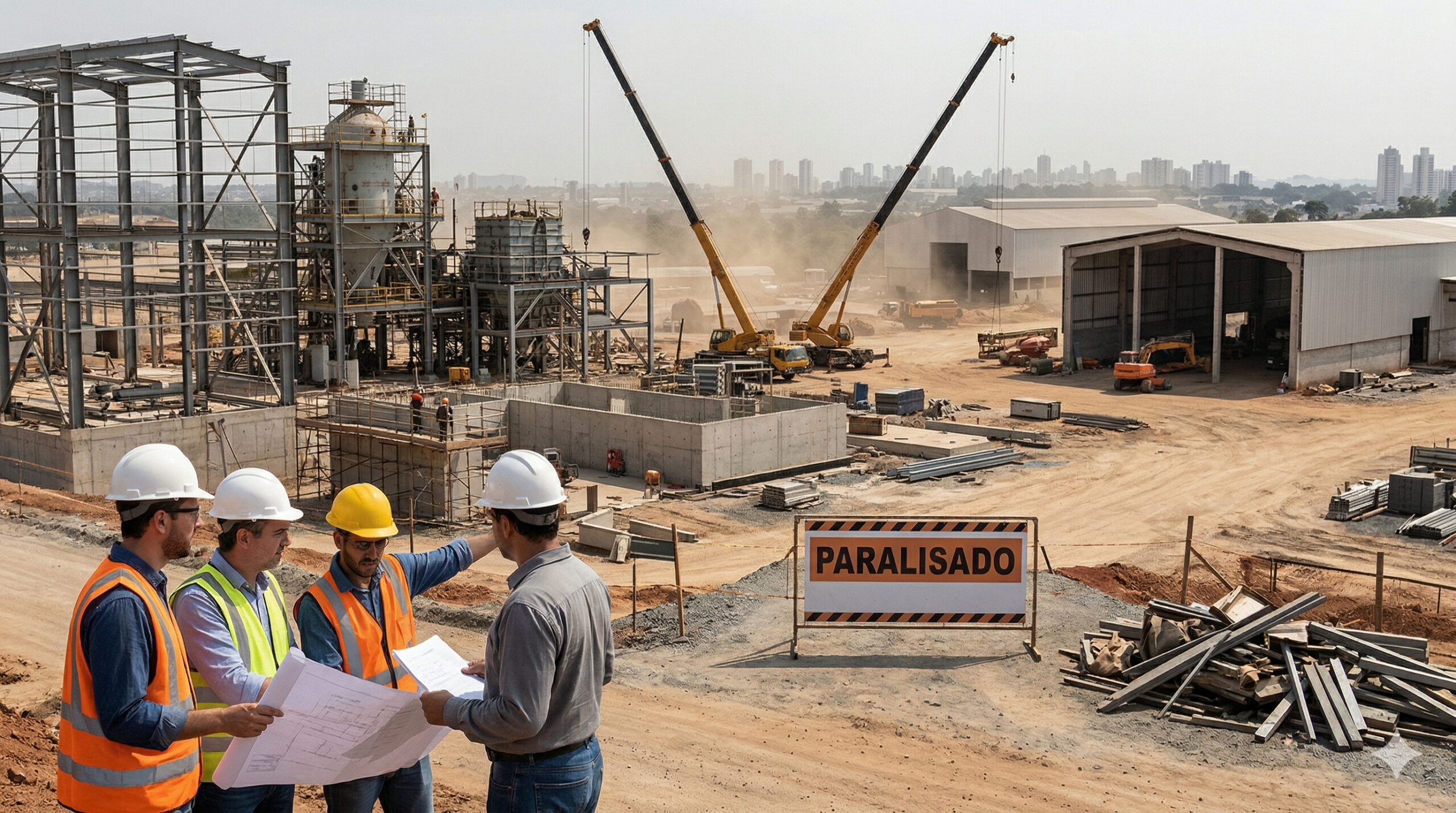
The lack of welders, electricians, and operators becomes a structural threat in 2025, with the construction industry and manufacturing already suffering from delays, cost pressures, and labor shortages in Brazil.
-
Brazil and Paraguay are just 46 meters away from a historic union on the bioceanic bridge that promises to revolutionize trade between the Atlantic and the Pacific.

-
With 55 km over the sea, a cost of US$ 20 billion, and enough steel to build 60 Eiffel Towers, China’s largest project has connected Hong Kong, Zhuhai, and Macau in a colossal bridge that defies the logic of engineering.

-
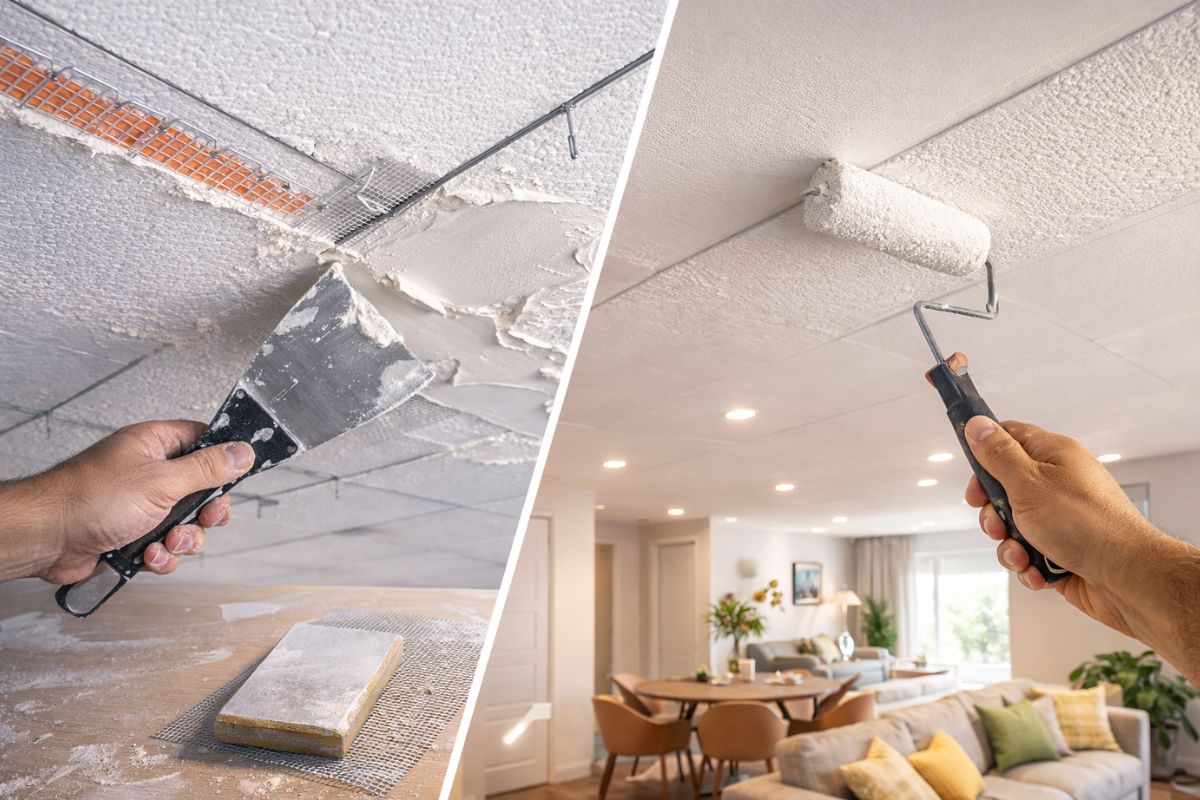
A trick with joint compound transforms a Styrofoam ceiling into a plaster-like ceiling: leveled panels, wires and mesh at the joints, sand, paint, and change the environment while spending little today.

That is why granite has been seen for millennia as a symbol of strength and permanence. From ancient temples in India to the carved face of mountains in other countries, humanity has transformed granite into a language of power, eternity, and status. Every slab installed on a facade is a way of saying that the work wants to be remembered for a long time.
From the Quarry to the First Solid Block of Granite

The practical journey of granite begins in open-pit quarries. There, colossal rock formations, millions of years in the making, are hidden under layers of earth, sand, and loose stones. Before touching the granite, teams remove this cover, level the ground, and expose the massive rock.
When granite appears, the heavy precision phase begins. Technicians mark the surface with drilling points forming a calculated grid.
Deep holes are opened in the granite and filled with explosives in the exact dosage to separate large blocks without cracking the stone’s interior. A rapid sequence of controlled detonations echoes through the quarry, releasing enormous slabs.
When the dust settles, excavators and trucks remove the rubble and reveal entire blocks of granite.
Next, the face of the quarry is scratched with parallel lines that define the size of each block, often more than 4.5 meters wide and about 1.8 meters tall, weighing dozens of tons.
The main cut is made with diamond wire or giant saws. In the diamond wire, a steel cable with synthetic diamond beads spins at high speed, cutting through granite without causing cracks.
In larger quarries, giant blade saws, up to 3.6 meters, move back and forth slowly, ripping the block from the wall. In both cases, water runs continuously, cooling the blade, washing away dust, and preventing harmful fine silica dust from entering the lungs.
After that, granite blocks weighing up to 80 or 100 tons are separated with metal wedges or hydraulic jacks and fall to the bottom of the quarry. High-capacity cranes and special trucks take over the work of transporting these blocks to the storage area and then to the factory.
How the Block of Granite Becomes Perfect Slabs
In the factory, raw granite undergoes high engineering treatment. Cranes position each block on reinforced platforms, anchored to concrete foundations to avoid any vibration. The granite block is secured with steel structures and hydraulic clamps because any minimal movement can compromise dozens of slabs.
The heart of the process is the multi-blade saw. A single machine can have between 40 and 80 parallel blades, each over 3 meters long, all coated with industrial diamonds.
As the assembly moves forward and backward, the blades descend a few millimeters per minute, opening dozens of parallel cuts within the same block of granite.
Vibration and pressure sensors monitor resistance in real time and adjust the effort according to the variations in granite density. High-pressure water jets cool the blades, carry the stone slurry to filtration systems, and help control the silica dust that could spread into the air.
A cutting cycle can take 15 to 24 hours. In the end, that massive block of granite is transformed into dozens of uniform slabs, with thicknesses ranging from just over half a centimeter to about 3 centimeters, all numbered, inspected, and stacked to dry.
Polishing: When Granite Reveals Its Final Design
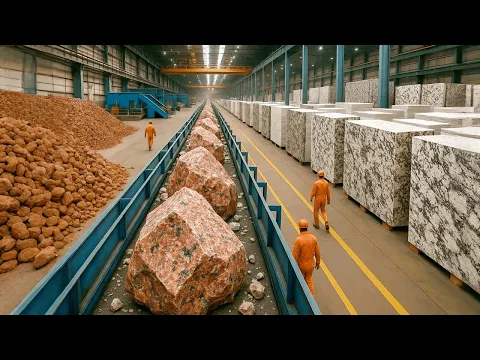

Coming out of the saw, granite is still rough, dull, and covered in dust. The slabs then move on to an automated polishing line that can stretch for dozens of meters inside the factory.
Each slab of granite enters a kind of “transformation conveyor,” passing through various grinding and polishing heads.
At first, coarse abrasives remove saw marks and level the surface. Then, heads with increasingly finer grains, also coated with industrial diamonds, refine the texture of the granite and remove microscopic layers of material with each pass. Sensors monitor pressure and rotation to avoid damaging the crystalline structure of the stone.
Water remains present, reducing friction, carrying away the slurry, and keeping the polishing discs in optimal conditions. Most of this water is recycled in settling tanks, making the process cleaner and more efficient.
As the granite advances along the line, the surface stops being merely smooth and begins to truly shine. The veins of quartz, mica, and feldspar appear with more contrast.
It is here that granite finally gains that mirror-like finish, widely used in entry halls, kitchen countertops, floors, and luxury facades.
In the final step, a clear sealant is applied over the granite. Formulated with compounds such as silanes or silicones, it penetrates the microscopic pores of the stone and creates an invisible barrier against water, oil, and weak acids from daily use.
After a curing period under controlled temperature and humidity, the granite is ready to withstand years of use without losing its shine.
Inspection, Packaging, and Journey of Granite to Buildings and Monuments
Before leaving the factory, each slab of granite undergoes a meticulous inspection. Laser scanning systems create a 3D map of the surface, analyzing flatness, thickness, and parallelism between the faces.
Microcracks, air pockets, or deformations invisible to the naked eye are detected and cause the slab to be rejected if they compromise durability.
The approved slabs move to the packaging area. Robotic elevators or gantry cranes use vacuum suction cups to lift granite vertically, avoiding scratches and chipped corners.
On reinforced pallets, each slab of granite is separated by rubber or foam pads, secured with steel structures and wrapped in protective film.
Labels record the type of granite, dimensions, batch, quarry of origin, and destination. From there, granite is loaded onto trucks or containers and begins the last phase of the journey, headed for residential works, corporate facades, hotels, shopping centers, or public monuments.
When you look at the hall of a building clad in granite or at a monumental staircase, you are seeing the result of a chain that began in magma, went through controlled explosions, millimeter cuts, high-precision polishing, and technological inspection.
This step-by-step process is inspired by a video from the Docs Fabricando channel, which follows this journey of granite from the quarry to the factory and shows how technology and nature come together in each slab.
After all, granite is more than just a luxury stone. It is a piece of the planet’s history placed on the wall of your living room, on the floor of a lobby, or on the skin of a monument intended to last for centuries.
And you, if you could choose any material to clad the facade or floor of your home, would you choose granite or would you bet on another type of stone?









Translúcido para bancada e mesa