





 Portuguese
  English
  Spanish
  4 min of reading
  2 comments


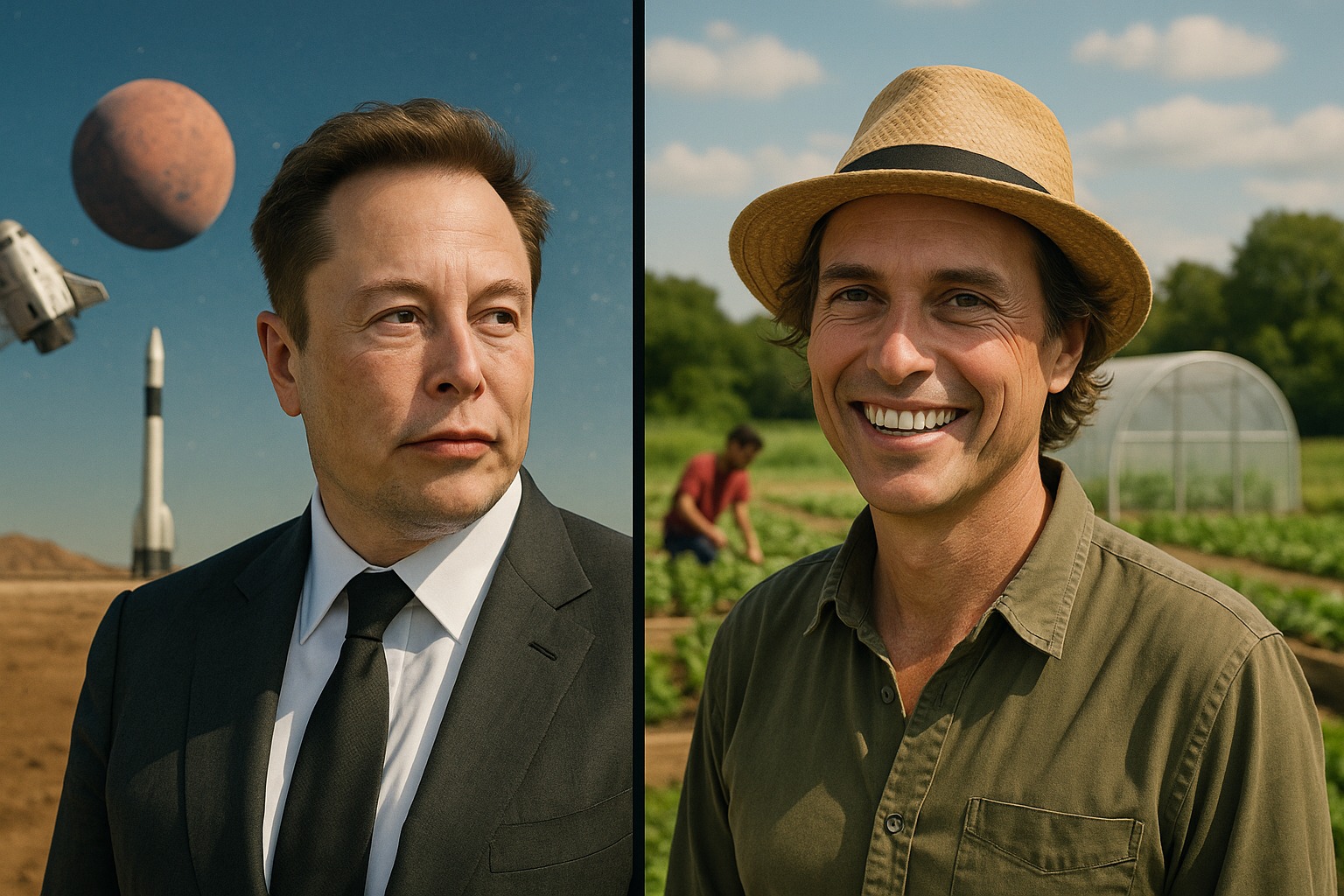


Kimbal Musk’s Journey Brings Together School Gardens, Vertical Farms in Containers, and Educational Projects Advocating Local Cultivation, Healthy Consumption, and Agriculture as a Tool for Continuous Social Transformation
Kimbal Musk’s journey brings together school gardens, vertical farms in containers, and educational projects advocating local cultivation, healthy consumption, and agriculture as a tool for continuous social transformation.
While Elon Musk dominates global debates on technology and transportation, younger brother Kimbal Musk takes a different path because he sees food as a way to create direct social impact. He prefers to work on local educational projects, connecting young people and communities to the production of fresh food.
This choice stemmed from childhood memories when cooking was the only time the family was together, something he repeats often because it marked his life profoundly.
-
While the world looks at oil, the war with Iran is already disrupting helium supply from Qatar, affecting car and iPhone chips, threatening AI expansion, and putting pressure on aluminum packaging at the highest value in four years.

-
Global warming will expose a treasure hidden under the ice of Antarctica and may spark an international dispute over gold and valuable minerals.

-
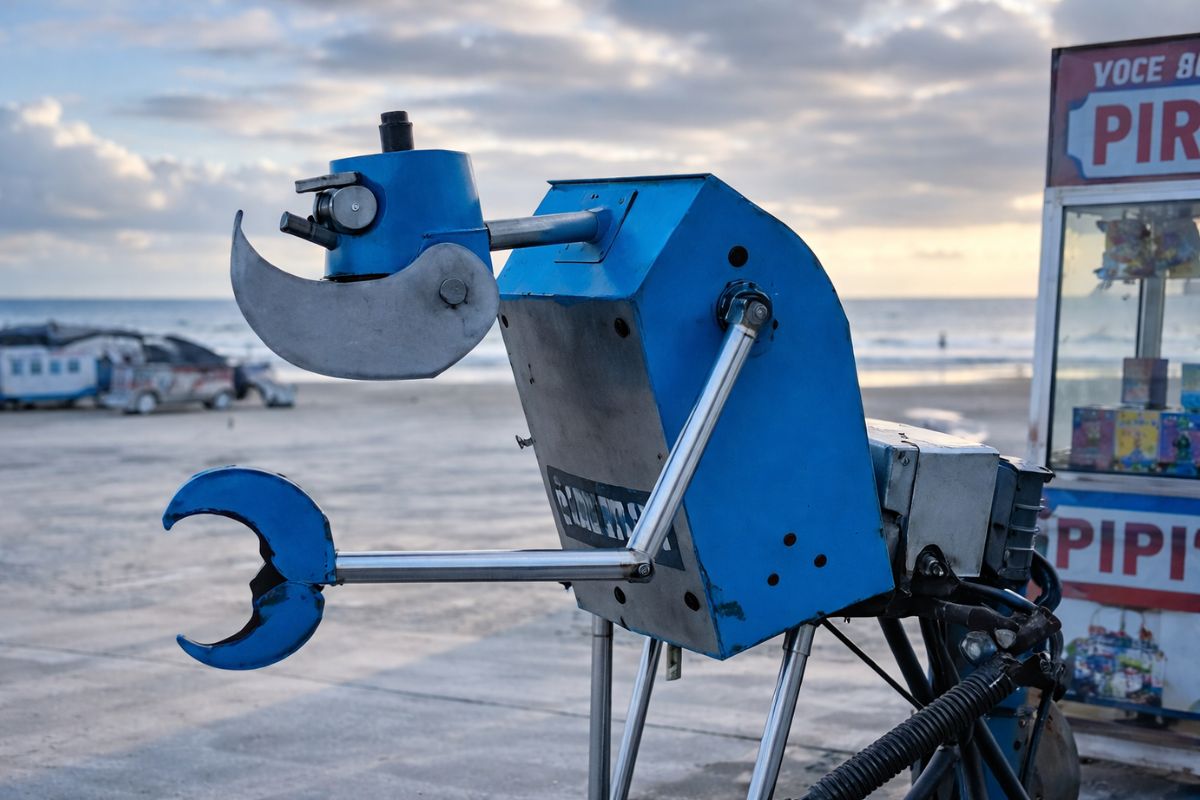
A street vendor from Praia Grande built a robot made of scrap from scooters and washing machines that pulls his popcorn cart on the beach, emits sounds, and interacts with customers, becoming an attraction on the coast of São Paulo.
-
The specifications of the Xiaomi 18 Pro Max have been leaked, and the highlight is a dual 200 MP camera with a new 22-nanometer technology that promises to consume less energy and capture details in shadows and bright areas using LOFIC HDR.


Kimbal gained traction in the tech sector by selling Zip2, created with Elon, but later decided to dedicate himself to another passion.
He left the startup environment and moved to New York. He wanted to learn to cook professionally, which is why he joined the International Culinary Center.
This transition opened new perspectives. He began to see food as a social element, not just as sustenance.
This realization led him to create initiatives aimed at transforming schools and communities. He advocates that teaching children to grow food can generate changes that last throughout their adult lives.
This reasoning has guided his work ever since, even if it sometimes sounds too simple for those accustomed to the glamour of technology.
Big Green and the Learning Gardens of Elon Musk’s Brother
Big Green was founded in 2011 with the mission of bringing gardens to public schools. The project aims to install one million vertical gardens and connect them to daily teaching.
The idea is to use cultivation as a classroom, integrating nutrition and agriculture into traditional learning.
According to Kimbal, this strategy is decisive because many children do not have regular access to fresh fruits and vegetables.
The project also seeks to combat childhood obesity and promote healthy habits. For him, every school, regardless of local income, should have an active garden.
Big Green has gained international visibility because it combines education and public health in a practical way. Additionally, it shows how small interventions can change the school environment.
Teachers report greater interest from students, even those who rarely participated in conventional classes.
Kimbal argues that a garden can inspire discoveries. He claims that vegetable consumption can double among students who engage with these spaces.
There are no promises of immediate solutions, but there is a clear path for social transformation.
Square Roots and Urban Agriculture
Kimbal’s work is not limited to schools. In 2016, he launched Square Roots, an incubator dedicated to vertical farms installed in climate-controlled containers.
The operation uses hydroponics and recycled water, allowing efficient urban cultivation.
The company has produced over 120 varieties of fruits, vegetables, and greens. The plan is to build a super farm with 25 containers and scale up production.
The goal is to bring food closer to the end consumer, reducing wide gaps in the industrial chain.
According to Tobias Peggs, CEO of Square Roots, there is a growing demand for local food because many consumers have lost confidence in traditional industry.
He states that produce harvested from vertical farms has quality comparable to the best organic produce grown in open fields.
The company highlights goals such as local production, transparency, sustainability, and education. These points help reduce food insecurity, reinforce trust in the production system, and stimulate new learning opportunities, especially among young people interested in technology.
Each container functions as an innovation lab. Additionally, the structure allows for strict control over temperature and nutrition.
The result is predictability, something difficult to obtain in conventional farming, which is subjected to weather and long distances.
From Earth to Mars
Interestingly, part of Square Roots’ research connects with Elon Musk’s space ambitions. The idea of bringing vertical farms to space has already emerged in studies related to the project.
The system could feed astronauts on prolonged missions and even serve future bases on Mars, should they materialize.
The connection between urban agriculture and space exploration may seem distant, but it shares a common principle.
Both scenarios require efficient production, using minimal resources and complete autonomy. Kimbal does not make this a primary focus, but he acknowledges the potential.
This intersection of ideas shows how the brothers’ paths converge, even when their goals seem to follow opposite directions. Elon seeks new worlds. Kimbal bets on the planet we have.
Elon Musk’s Brother Sees Agriculture as Social Transformation
Kimbal sees agriculture as a tool for inclusion. For him, a garden can teach responsibility, cooperation, and care.
It also creates opportunities for communities that rarely participate in innovative projects. It’s a way to democratize knowledge without relying on large structures.
He says that planting is not just about producing food. It’s about forming habits. It’s about building connections. It’s about providing access to something that often feels distant from urban routines. This message recurs because it’s central to his work.
While Elon Musk explores technological limits, Kimbal Musk stays focused on everyday life. He believes that real changes begin close to home.
And he emphasizes that a simple garden can indeed spark a silent, beautiful, and continuous revolution.
With information from Compre Rural.







Muito bom ver que este tipo de sala de aula ou laboratório também é validado pelos grandes deste mundo! Se queremos mais saúde nesta vida, vamos plantar e cultivar comidacomida
Isso sim é falar em sustentabilidade social.. Isso não é projeto e amor a desigualdade e sensibilidade humana. Esses caras não são desse planeta. Parabéns família Musk que Deus ilumine cada dias mais seus projetos e pensamentos .