





 Portuguese
  English
  Spanish
 3 min of reading
  2 comments


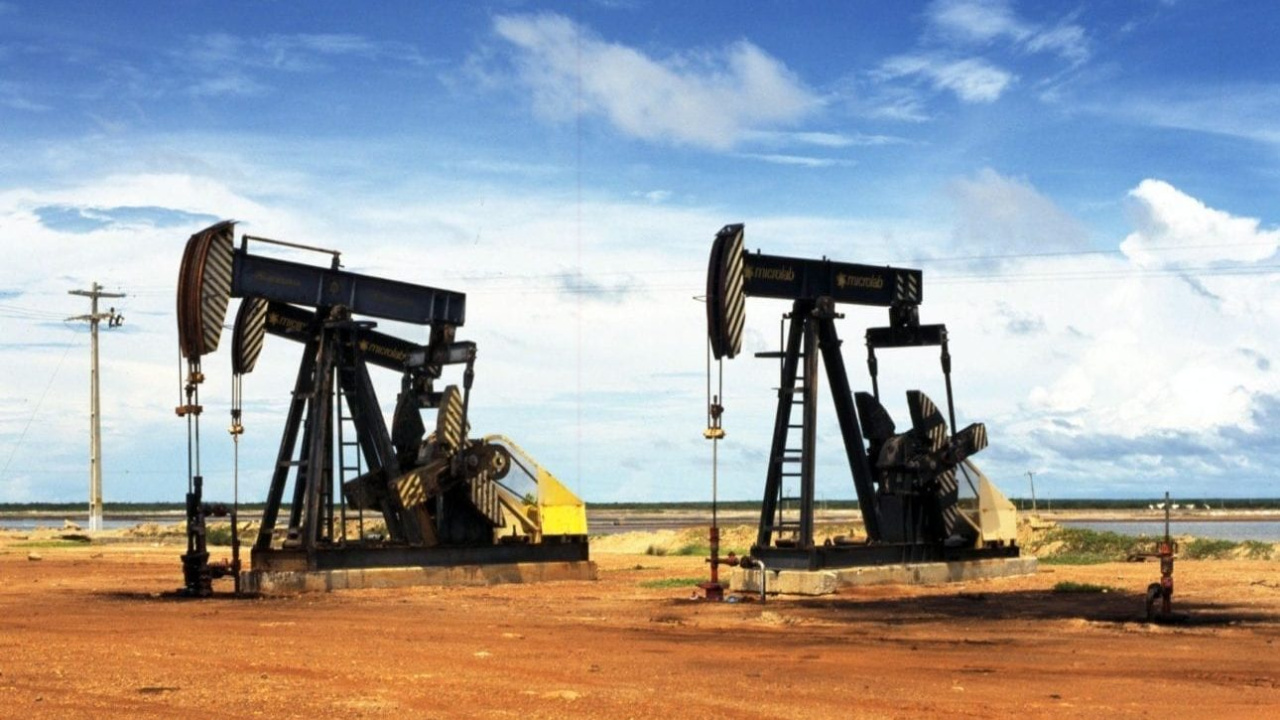


With The Advancement Of Pre-Salt, The Northeast Loses Space In The Production Of Oil And Gas. Bahia, Maranhao And Rio Grande Do Norte Still Lead In Onshore, But The Regional Participation Has Dropped To 4.7% Of The Total In The Country.
While the pre-salt sets records off the southeastern coast, the Northeast sees its weight in oil production shrink year after year. In December 2025, the region accounted for only 4.7% of all Brazilian oil and natural gas production, according to data from the National Petroleum Agency (ANP).
At the same time, Brazil produced 5.2 million barrels equivalent per day, with 79.5% coming from the pre-salt, located offshore, mainly in Rio de Janeiro. This means that almost all the oil fueling the country’s energy economy today comes from the ocean floor, rather than from the northeastern mainland.
Even so, five states remain active: Bahia, Maranhao, Rio Grande Do Norte, Sergipe, and Alagoas. Together, they maintain 268 producing fields and extract 145,19 thousand barrels equivalent per day, a small number compared to the national volume.
-
Petrobras evaluates suspension of sales to distributors and considers canceling the cooking gas auction following guidelines from the Federal Government.
-
Lula reveals a masterstroke by Petrobras to undo a deal made by Bolsonaro, which involves the return of an important refinery that currently produces less than half of what was expected and makes Brazil dependent on international diesel.
-
A study confirms that the natural gas sector will reduce greenhouse gas emissions in Brazil by 0.5% and accelerate the energy transition by 2026.

-
Petrobras implements a severe adjustment and confirms a 55% increase in the price of aviation kerosene with a proposal for installment payments for the companies.


Northeast Dominates On Land, But Loses In Total
Despite the decline in national relevance, the Northeast remains the heart of onshore oil production in Brazil. All production in the region occurs on land, known as the onshore model.
In December 2025, the country produced 248 thousand barrels equivalent per day on land. Of this total, 58.5% came from the Northeast, which shows that the region continues to dominate this type of exploration.

The problem is that onshore production has become something small within the whole. Today, the oil that comes from the ground represents less than 5% of the total Brazilian, while the pre-salt dominates almost everything.
Moreover, northeastern fields are mature, with old wells and lower productivity. They survive because the operating cost is lower and the infrastructure has been in place for decades.
Bahia, Maranhao And Rio Grande Do Norte Pull The Region
Bahia leads northeastern production. In December 2025, the state produced 45,820 barrels equivalent per day. Of that total, 19,854 barrels were oil and 4.128 million cubic meters of natural gas.
The strength of Bahia comes from the Recôncavo Basin, which has 72 active fields, the highest concentration in the region. However, its participation in national oil has dropped from 0.77% in 2021 to 0.55% in 2025.
Just behind is Maranhao, which practically lives off natural gas. The state produced 6.247 million cubic meters per day, which ensured 39,429 barrels equivalent daily. However, the oil from Maranhense is almost symbolic: only 136 barrels per day.

The gas comes from the Parnaíba Basin, with fields like Gavião Preto, Gavião Branco, Gavião Real, and Gavião Caboclo. Still, Maranhense’s share of national gas has dropped from 4.39% to 2.65% in four years.
Rio Grande Do Norte appears as the second-largest oil producer in the Northeast. In 2025, it was 27,967 barrels per day, plus 907 thousand cubic meters of gas, totaling 33,678 barrels equivalent.
The Potiguar Basin houses 58 fields, with a focus on Estreito, which operates 795 wells, and Canto do Amaro, which alone delivered 5 thousand barrels equivalent per day.
Sergipe And Alagoas Still Breathing Thanks To Gas
Sergipe produced 12,447 barrels equivalent per day, with 11,988 barrels of oil and 73 thousand cubic meters of gas. The Carmópolis field remains relevant, with 8 thousand barrels equivalent per day, representing 3.2% of the total terrestrial production in the country.
Alagoas closed December 2025 with 13,811 barrels equivalent per day, mainly driven by gas. The operator Origem Alagoas controls 77% of state production, with 13,436 barrels equivalent daily.
Ceará, Paraíba And Pernambuco Practically Out Of The Game
The Ceará still appears in the numbers, but with only 0.02% of the national oil production, an almost symbolic volume.
Paraíba And Pernambuco did not report production in ANP bulletins, indicating closed fields or volumes so low that they do not enter the statistics.
In light of this scenario, do you think the Northeast is at risk of becoming increasingly irrelevant on Brazil’s oil map?









Comparar produção do pré sal com produção em terra, é no mínimo inocente. Mas a pergunta é, por que a Petrobrás não coloca como prioridade a exploração do SEAP , Sergipe Águas Profundas? Petróleo e gás tem e muito, só falta direcionar um pouco dos investimentos pra região nordeste.
Exatamente isso amigo, o estado lá do Sergipe tem muito gás e Petróleo ainda não explorado, estima – se mais de 2 bilhões de barris