





 English
  Francês
  Alemão
  Italiano
  Japonês
  Norueguês
  Portuguese
  Spanish
  6 min of reading
  0 comments


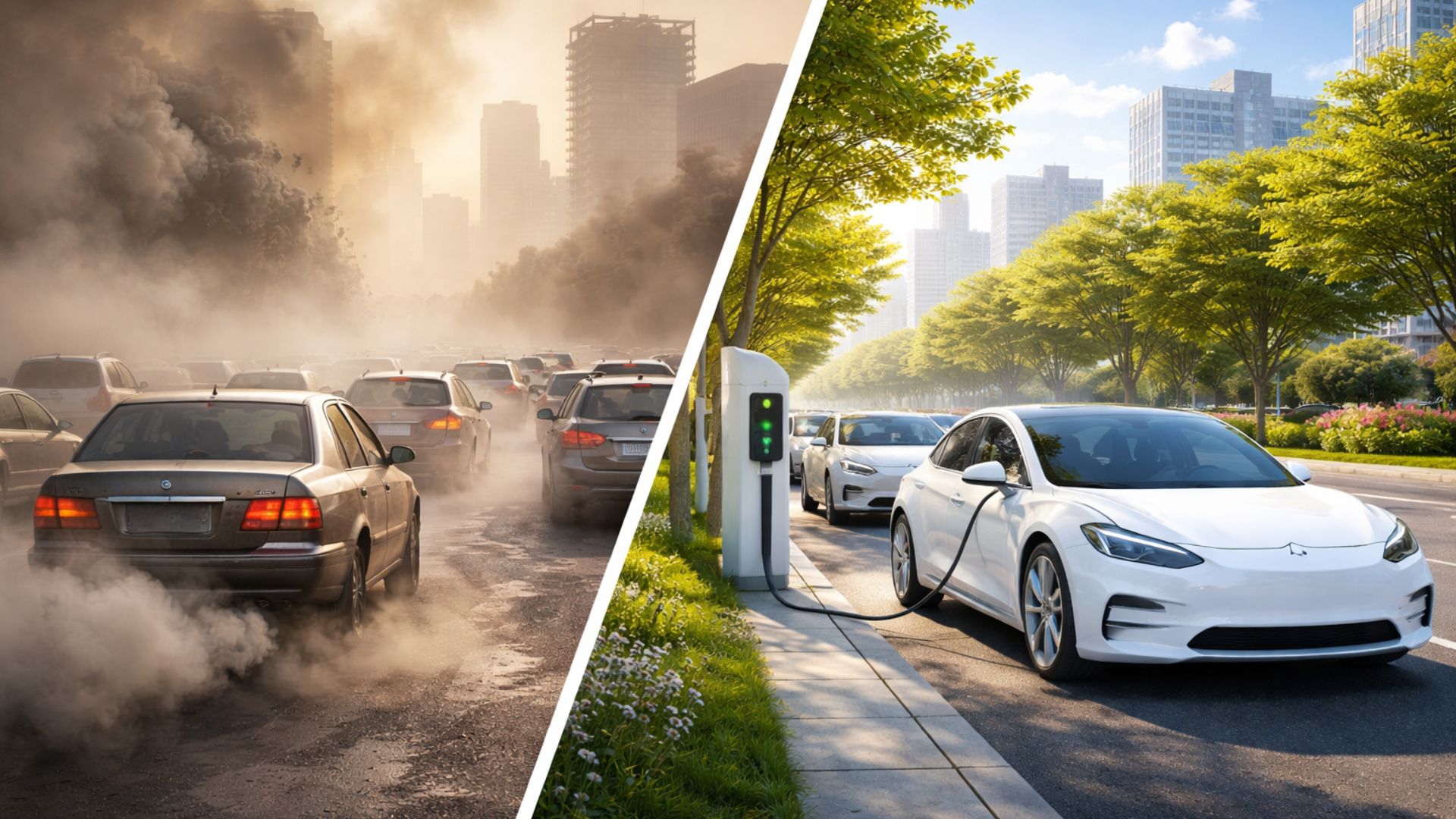
Study Published in The Lancet Planetary Health Reveals That the Expansion of Electric Cars in California Is Already Associated With Improved Air Quality and Reduced Urban Pollution
Electric cars have ceased to be merely an environmental promise and have begun to show concrete results. A study published in the scientific journal The Lancet Planetary Health revealed that the growth of the electrified fleet in California is associated with a measurable improvement in air quality and in urban pollution related to exhaust emissions.
The research analyzed data from 2019 to 2023 in 1,692 neighborhoods in the U.S. state. Using measurements from the Tropospheric Monitoring Instrument (TROPOMI), a sensor onboard the satellite, scientists identified an average reduction of 1.1% in nitrogen dioxide (NO₂) levels, a pollutant directly linked to the burning of fossil fuels in vehicles.
Although the percentage may seem small, the data has great scientific relevance. This is one of the first empirical pieces of evidence based on satellite observation that directly relates the increase in electrified vehicles to a concrete improvement in air quality on a local scale.
-
With earth, bamboo, straw, and lime mortar, a specialist builds a house for just over $460 and draws attention for its cost being much lower than traditional construction.

-
Rodrigo de Freitas Lagoon advances in environmental recovery with sanitation, elimination of irregular sewage, and the resumption of water sports in Rio de Janeiro.

-
Sustainable housing gains strength with a nationally awarded project in Campo Grande, highlighting innovative solutions that combine sustainability, urban integration, and efficiency in the use of natural resources.

-
City Where Residents Live Underground to Escape 52°C May Be a Picture of the Future on an Increasingly Hot Planet


How Electric Cars Are Transforming Air Quality in California
The expansion of electric cars in California has occurred consistently over the past few years. Between 2019 and 2023, the share of electrified vehicles — including fully battery electric models, plug-in hybrids, and fuel cell vehicles — rose from approximately 2% to about 5% of new vehicle sales. Even with this presence still considered initial compared to the total fleet, the effects are already detectable in air quality.
TROPOMI measures atmospheric nitrogen dioxide concentrations with high precision. NO₂ is one of the main indicators of vehicle pollution, especially in urban areas with heavy traffic. By analyzing 1,692 neighborhoods, researchers found that as the number of electrified vehicles increased, average NO₂ levels decreased.
On average, each neighborhood studied incorporated 272 new electrified vehicles over five years. This gradual replacement of combustion vehicles with electric cars was sufficient to generate a measurable impact on air quality.
The result demonstrates that policies incentivizing fleet electrification do not only produce long-term climate effects but also immediate local benefits related to pollution reduction.
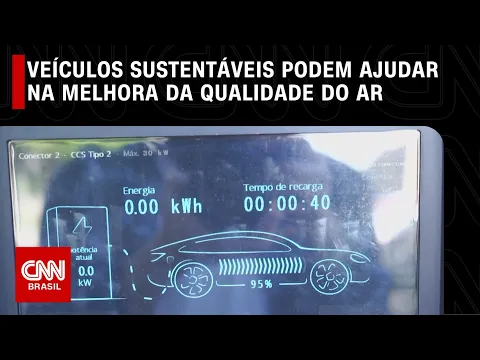

Urban Pollution, Public Health, and the Importance of Air Quality
The relationship between atmospheric pollution and public health is well documented by scientific institutions and international health organizations. Nitrogen dioxide is associated with respiratory problems, worsening asthma, lung inflammation, and increased risk of cardiovascular diseases.
In large urban centers, road traffic is one of the main sources of this pollutant. Therefore, any reduction in exhaust emissions can yield direct gains in air quality and public health.
In California, which houses metropolitan areas historically affected by smog and high levels of pollution, the detected improvement represents an important advance. Although the average reduction of 1.1% may seem modest, in population terms, it means thousands of people potentially less exposed to elevated pollutant concentrations.
Electric cars play a central role in this process as they do not emit gases through the exhaust during use. By circulating in cities, they no longer contribute directly to NO₂ concentration, improving air quality in areas where the impact is most critical.
Growth of Electric Cars in California and Measurable Decline in Pollution
One of the most relevant aspects of the study is that the decrease in pollution was detected even with a still limited share of electric cars in the total fleet.
Between 2019 and 2023, the presence of these vehicles was still relatively low compared to the total number of cars in circulation in California. Still, satellite monitoring technology managed to record statistically significant variations in nitrogen dioxide levels.
This result reinforces the idea that electrification of transport can generate gradual and cumulative impacts on air quality. As the share of combustion vehicles decreases, the trend is for environmental benefits to become more pronounced.
Furthermore, the study stands out for using real observed data rather than just mathematical models or theoretical projections. This strengthens the credibility of the conclusions and enhances the weight of the evidence for public policy formulation.
Limitations, Energy Matrix, and Other Sources of Pollution
Despite the positive results, it is important to understand that electric cars do not eliminate all forms of pollution associated with transport. There is the so-called non-exhaust pollution generated by tire and brake wear, which occurs in both electric vehicles and combustion models. This type of emission also contributes to suspended particles in the air.
Another relevant factor is the energy matrix used to recharge the vehicles. The overall environmental impact of electric cars depends on the source of electricity generation. In the case of California, the state has been increasing the share of renewable energy, which enhances the benefits of electrification.
Even with these considerations, when the focus is urban pollution caused by direct emissions from combustion engines, the data indicate that electric cars offer clear and measurable advantages for air quality.
The distinction is important to avoid excessive simplifications. The study specifically analyzed exhaust emissions, and in this respect, the benefits are evident.

The California Goal for 2035 and Future Impacts on Air Quality
California has set an ambitious target: starting in 2035, the sale of new exclusively combustion-powered vehicles will be banned. The measure was approved by the California Air Resources Board as part of the state strategy to reduce greenhouse gas emissions and improve air quality.
If the trend observed between 2019 and 2023 continues, the impact on urban pollution could be significantly greater in the next decade.
With the progressive increase of electric cars on the streets, the expectation is for an even more consistent reduction in nitrogen dioxide levels. This could provide additional health gains, especially in communities more exposed to heavy traffic.
The evidence published in the scientific journal reinforces that electrification of transport is not only a global climate strategy but also a concrete policy for improving air quality on a local scale.
What California’s Data Indicates for Other Cities
Although the study was conducted in California, its implications extend beyond the borders of the U.S. state. Large cities around the world face challenges related to vehicular pollution and degradation of air quality. The evidence that the increase in electric cars is associated with a measurable drop in NO₂ provides an important reference for public managers.
California’s experience demonstrates that even a relatively modest initial adoption can produce detectable satellite effects. This suggests that policies to incentivize electrification can generate progressive, cumulative, and measurable results.
It is essential to consider local contexts, such as energy matrix and the socioeconomic profile of the population. Still, the reduction of exhaust emissions is a direct benefit of replacing combustion vehicles with electrified models.

Real Evidence That Electric Cars Improve Air Quality and Reduce Pollution
For years, the debate over electric cars has been based mainly on projections and life cycle analyses. Now, there is empirical evidence observed by satellite that demonstrates a direct impact on air quality.
In California, the gradual increase of the electrified fleet between 2019 and 2023 was accompanied by a measurable reduction in nitrogen dioxide levels. Even with still limited participation, electric cars have already contributed to lowering pollution associated with urban traffic.
The data indicate that the transition to electrified vehicles has the potential to broaden its benefits as adoption grows. The improvement of air quality is no longer just a future projection, but a phenomenon already detected in atmospheric measurements.
By combining technological innovation, satellite monitoring, and consistent public policies, California provides a concrete example of how the electrification of transport can yield real results. For cities facing challenges related to pollution and public health, this evidence represents a relevant indication that investing in electric cars can produce noticeable and measurable changes in the air that the population breathes.









-

Uma pessoa reagiu a isso.