





 Portuguese
  English
  Spanish
  4 min of reading
  0 comments


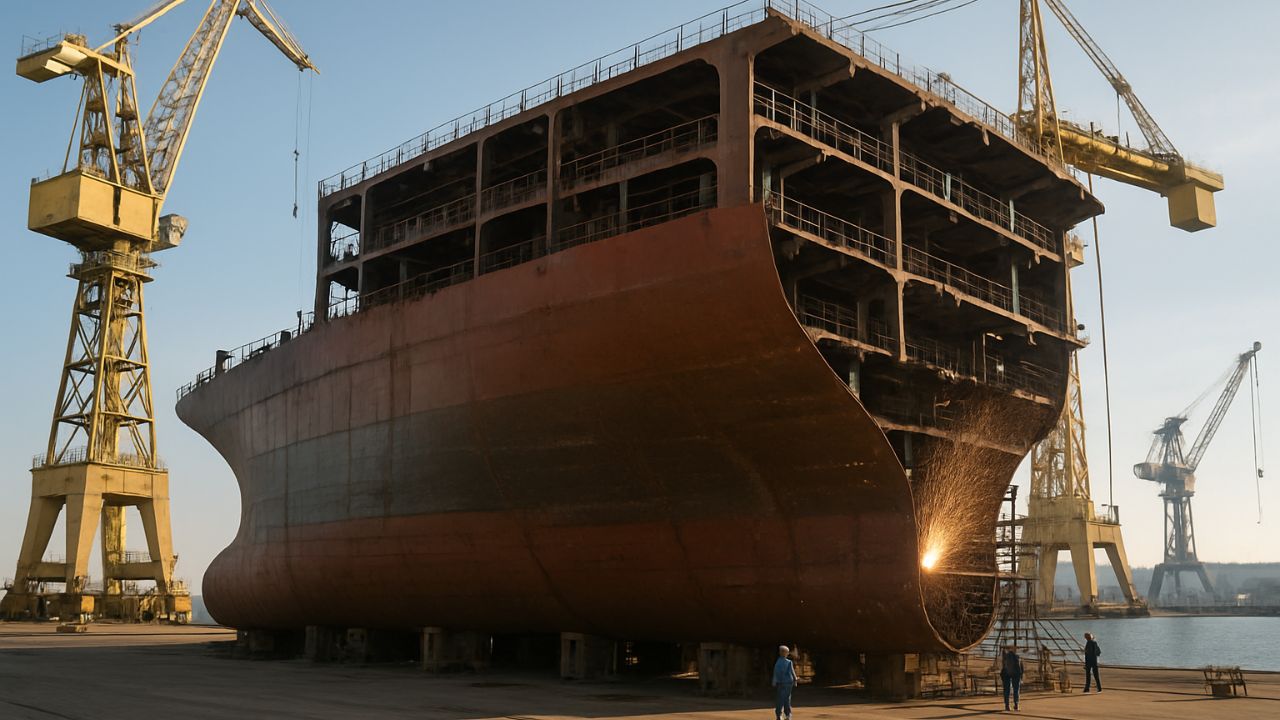
Discover The Fascinating Stages Of Manufacturing Colossal Vessels, From Steel Cutting To Block Welding And Launching Into The Sea, A Feat Of Modern Naval Engineering.
Large ships are designed to sail the seas safely and efficiently. But have you ever wondered how these imposing giants are built in the world’s largest shipbuilding industries? Let’s learn about the stages of manufacturing these vessels, from material cutting to block welding, system assembly, painting, testing, and the grand baptism in the waters. Cutting-edge technology and the precision of naval engineers transform raw steel into robust ships, ready to face the oceans.
Material Selection And Precise Cutting In Shipbuilding
Shipbuilding is a complex process that requires materials capable of resisting the harsh conditions of the marine environment. This includes corrosion, impacts, and temperature variations.
The first step is to choose the appropriate type of naval steel. Generally, high-strength, low-carbon steel is used. This choice ensures adequate durability and malleability for shaping and welding, which are fundamental in shipbuilding.
-
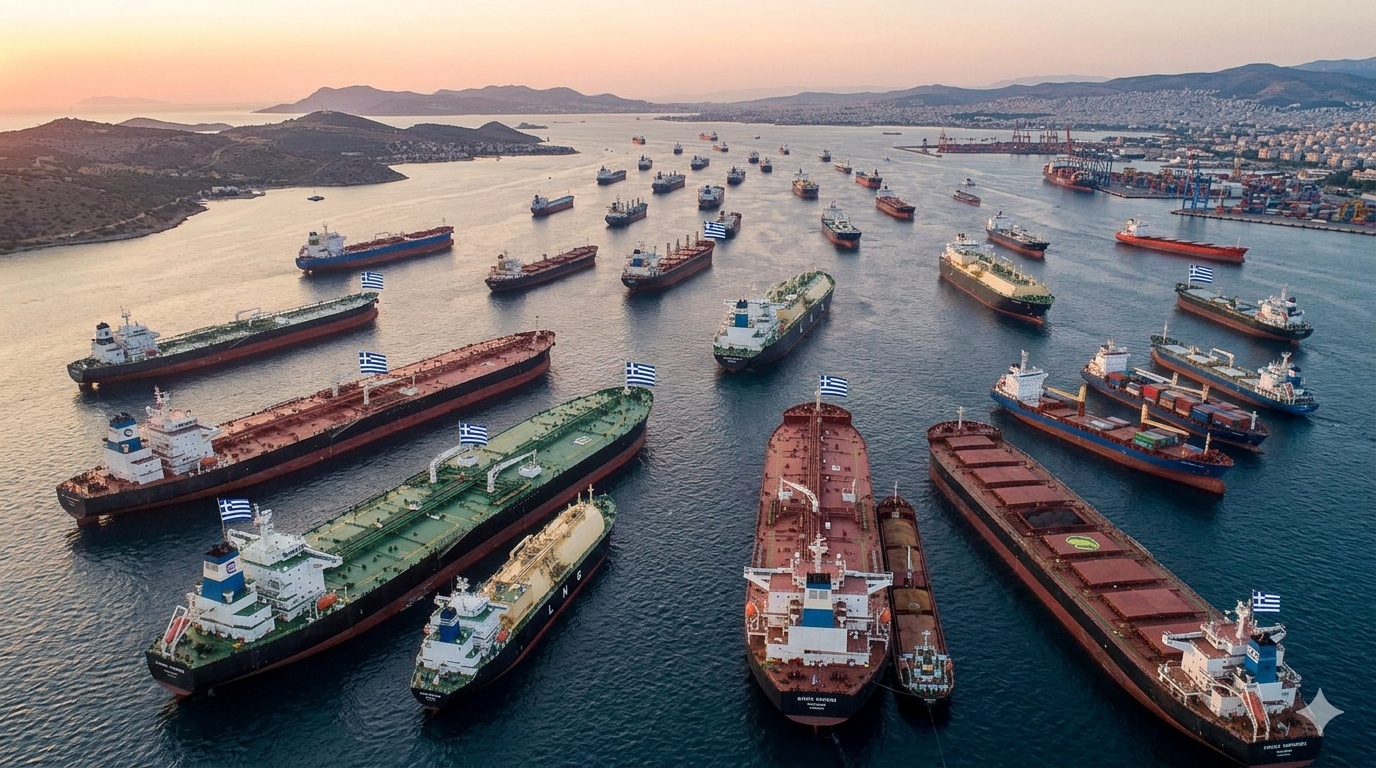
Neither the USA nor China: a small European nation has become one of the largest maritime powers on the planet, controlling one of the largest merchant fleets in the world with thousands of ships and dominating the global transportation of oil and strategic cargo.
-
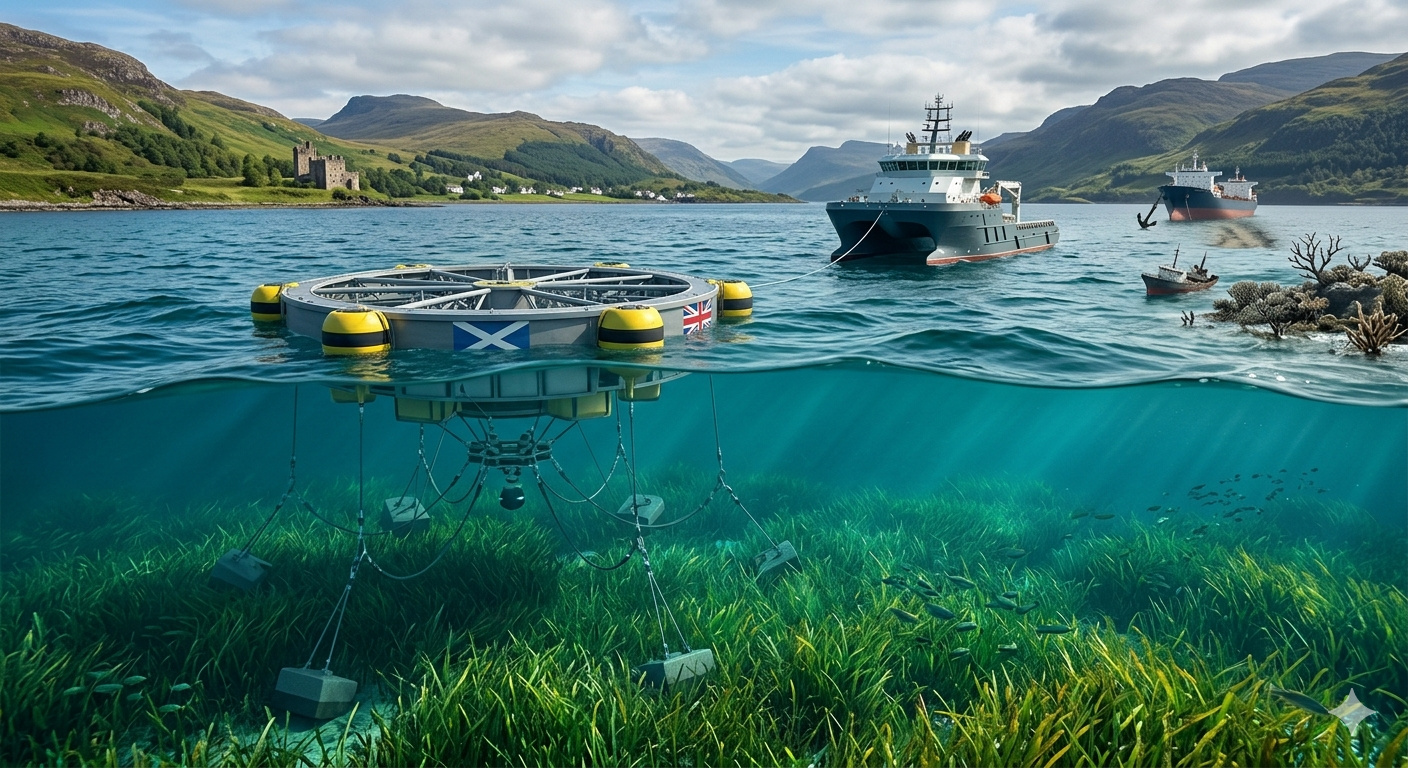
Scotland and the United Kingdom have created a new anchoring system that floats in the water without touching the seabed, after discovering that the current from a conventional anchor destroys up to 50 m² of seagrass meadow per event and that ship-damaged reefs showed no signs of recovery even ten years later.
-
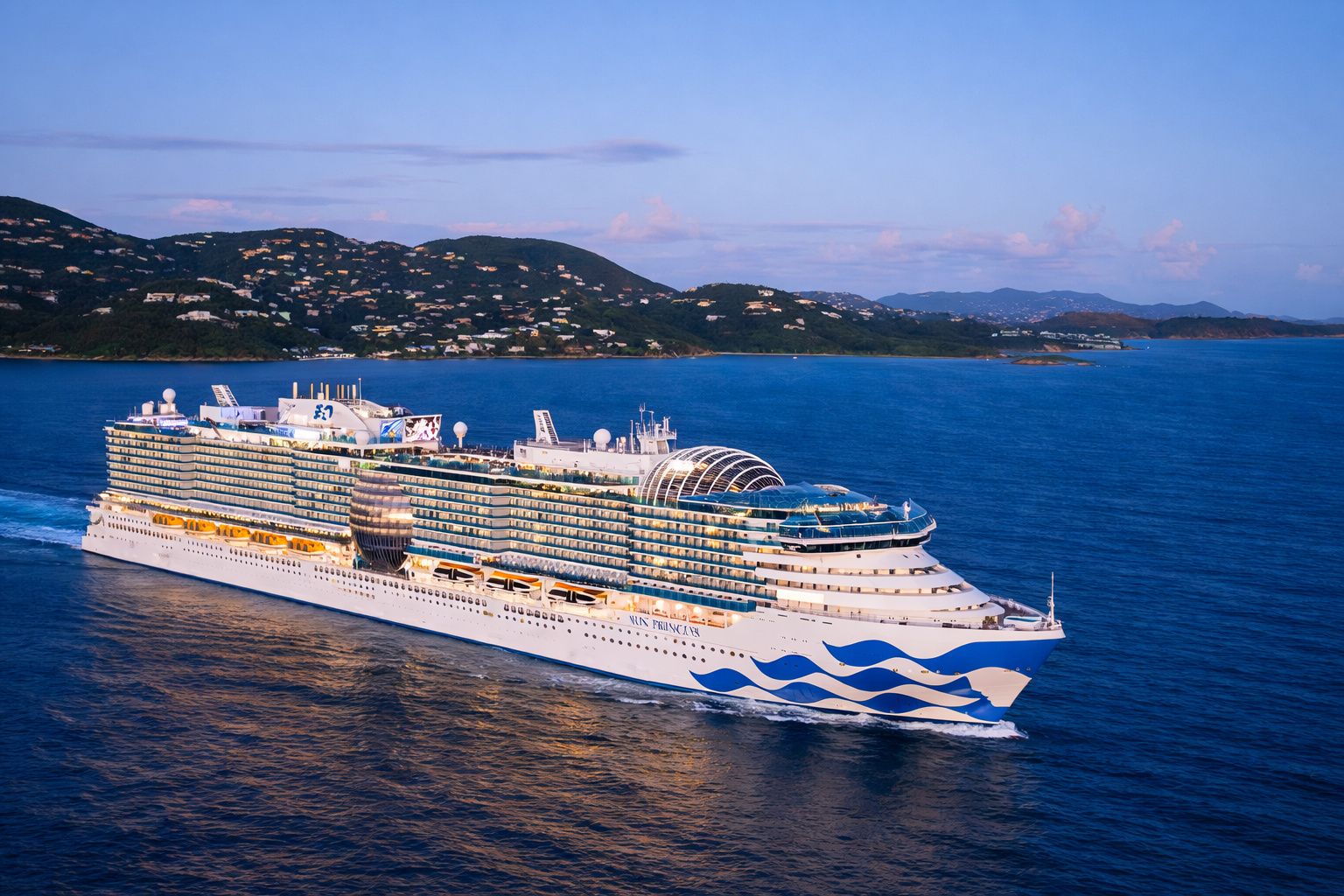
Weighing 175,500 Tons, Measuring 345 Meters Long, and With Capacity for Over 4,300 Passengers, the Sun Princess Becomes the Largest Ship Ever Built by Princess Cruises and Attracts Global Attention for Its Huge Glass Dome Inspired by Santorini’s Architecture Installed on Top of the Vessel
-
TX-10, The Colossus of The Sea: Largest Lifter Ship in The U.S., With Two Giant Barges, 73-Meter Tall Structure, and Strength to Raise 7,500 Tons of Sunken Oil Rigs

High-Precision Cutting Technology
The manufacturing process starts with the selection and cutting of steel plates. The plates are cut and shaped using CNC (Computer Numerical Control) machines for high precision. Companies use plasma and laser cutting techniques. These technologies allow for the formation of complex pieces that fit precisely into the vessel’s structure.
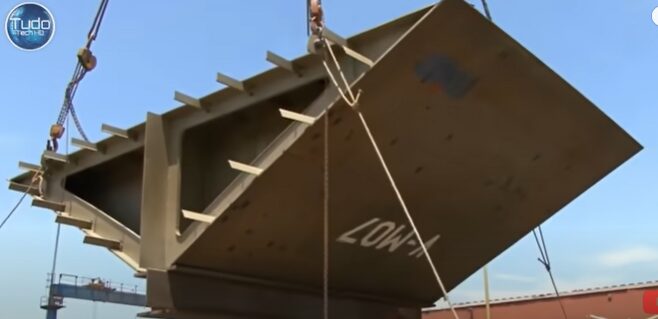
Each block represents a complete section of the ship’s structure. It may be part of the hull, decks, or internal areas. These blocks are built separately. Later, they are assembled, welded, and precisely adjusted at the shipyard.
Integrated Systems In Each Block
The blocks already contain all the integrated systems. This includes cable passage structures and piping. Each block is designed to accommodate the systems that the ship will need, such as air ducts, electrical cables, water and fuel piping systems, and ventilation systems. These systems are installed in the blocks during the assembly stage to facilitate the work and avoid complexities during final assembly.
Joining The Steel Giants
Continuing the construction, at the shipyard, the steel plates and other parts of the blocks are placed in specific positions. They are aligned according to the design. Then, they begin to be fixed using advanced welding techniques.
Welding is essential to join the plates and form a solid and cohesive structure. Submerged arc welding and gas welding are used. Submerged arc welding is done in a protective environment that prevents oxygen infiltration. This reduces the risk of defects and ensures durable welds, being widely used to join the hull plates. Gas welding is used for hard-to-reach areas or smaller components that require more precision. For the welding process of the ship’s internal and external parts, more than 200 tons of welding material are used in total.
During the welding process, rigorous inspections are carried out. Ultrasonic tests, for example, check the integrity of the joints. The goal is to avoid weak points that could compromise the safety and durability of the ship.
Final Assembly And Installation Of Essential Systems


When the blocks are ready, they are transported to the final assembly area. There, they will be joined to form the ship.
This transport is carried out using special equipment, such as high-capacity cranes and transport platforms. These ensure the safe movement of each block, which can weigh several tons. The construction blocks are carefully positioned and aligned in the assembly dock. Precision in alignment is crucial so that the blocks fit perfectly, without gaps, defects, or deformations. With the blocks perfectly aligned, they are joined using winches and welded to form the complete structure of the ship.
Construction Deadlines And System Integration
The assembly time of a ship depends on its size and type. Warships, such as patrol boats and frigates, take about 18 to 36 months. Commercial and offshore support vessels, such as tugboats or cargo ships, usually have deadlines between 12 and 24 months. Large sailing school ships can take between 2 and 4 years. With the main structures of the first floor assembled, the team installs the propulsion, electrical, hydraulic systems, and control systems.
Structure Details And Construction Dimensions
The sectional assembly or block construction is an efficient and safe methodology. It allows for the rapid construction of ships with high precision. One example of a vessel was built with a total of 38 main blocks. Once completed, this vessel will measure 110.75 meters in length, 13.5 meters in width, with the main mast measuring 53.5 meters in height. The final weight of the vessel will be approximately 3,500 tons.
The integration of alignment technologies, cutting-edge welding, and rigorous inspections ensures that each block complies with quality standards.
Comfort And Habitability Systems
Finally, accommodation and comfort systems are installed. This includes air conditioning, ventilation, heating, and lighting for the habitable areas of the ship.
After the last block is assembled, the ship goes through the painting process with anti-corrosive paint. This stage of construction is crucial to protect the steel from marine corrosion. Then, the vessel is rigorously inspected before its baptism and first dive into the sea, ready to face the challenges of the oceans.
With information from: Canal Tech HD









Seja o primeiro a reagir!