





 Portuguese
  English
  Spanish
 6 min of reading
  9 comments


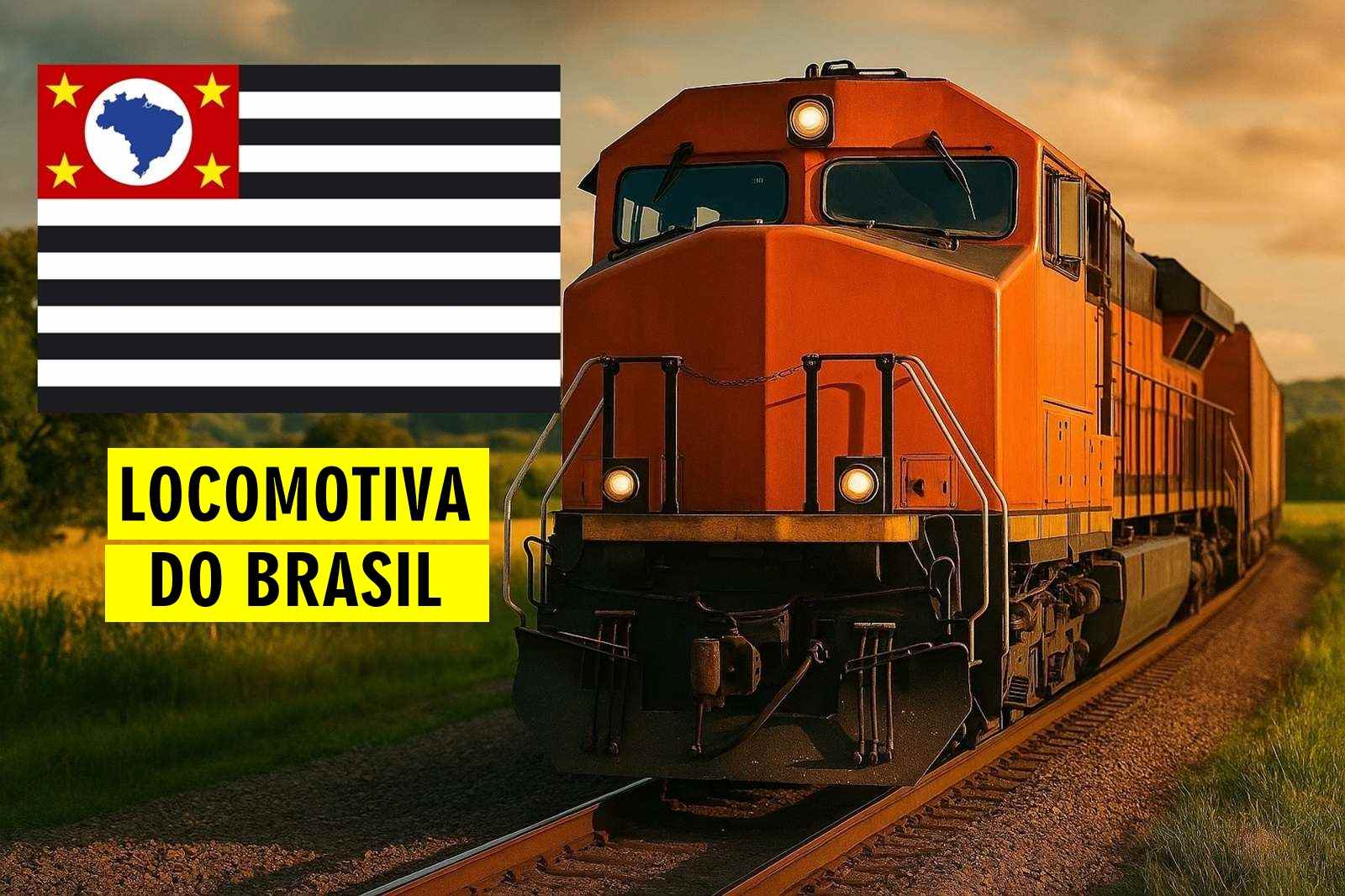


From Forgotten Province with Few Exports, São Paulo Built Its Strength in Coffee, Railways, Immigration, and Became the National Locomotive.
The economy of São Paulo is so strong that if it were a country, it would be richer than almost all its neighbors in Latin America. The numbers show that the state is also, by far, the richest state in Brazil.
But it hasn’t always been this way. Until about 200 years ago, São Paulo was not a region of great relevance in the economy, politics, or even in terms of population.
In 1872, the capital had only 30 thousand inhabitants. It was the ninth largest city in Brazil. Belém, for example, had double that population. Rio de Janeiro was almost ten times larger. But in a very short time, everything changed.
-
The government requests the Federal Revenue Service for a new system to automate the income tax declaration, reducing errors, time, and bureaucracy for millions of Brazilians.

-
Pix in installments, international Pix, and contactless payment without internet: the Central Bank revealed the new features coming to the tool that is already used by almost every adult in Brazil.

-
Mercado Livre has just started selling medications with delivery in up to three hours to your door, and this move could completely change the way Brazilians buy medicines on a daily basis.

-
In Dubai, rising tensions from the war in the Middle East are causing super-rich individuals to leave the Gulf and direct their fortunes to a new financial refuge in Asia.


It’s an impressive transformation, rare even in global economic history.
In less than 100 years, São Paulo became the most populous and also the richest city in the country. So what happened?
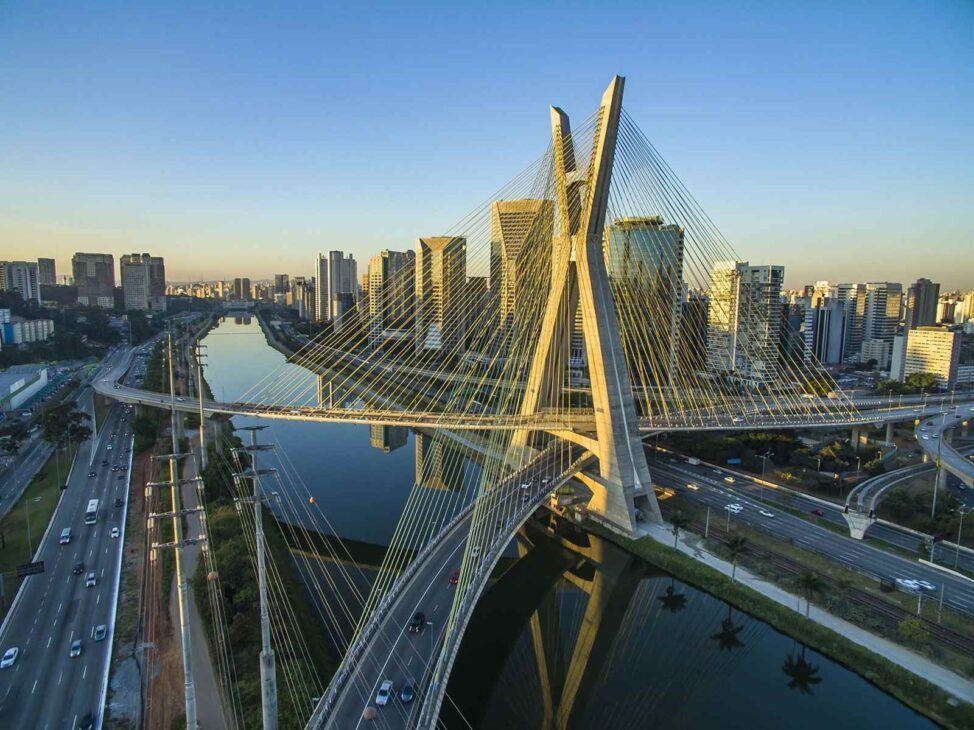
A Peripheral Past
After the arrival of the Portuguese in Brazil, São Paulo spent long centuries without prestige. The province had little importance, both politically and economically.
In the early 19th century, São Paulo was still a relatively poor province, within a country that also did not have much international weight.
Even more seriously for the Paulistas of the time: São Paulo was seen as a sort of periphery of Rio de Janeiro.
Bahia, Pernambuco, and Maranhão were richer provinces. They exported valued products to the external market. Maranhão exported cotton. Bahia and Pernambuco were major sugar producers.
São Paulo also produced sugar, but in smaller quantities. It exported little and, therefore, remained relatively poor.
The Natural Wall
The soil in São Paulo was fertile. But there was one obstacle: transportation.
To get products from the interior to the coast, where the ports were located, it was necessary to cross the Serra do Mar. And in the mountains, there was a steep wall, nicknamed “The Wall.”
For centuries, this route was traversed by trails opened by indigenous peoples. These were narrow paths that hindered the transport of any goods.
The first road only appeared at the end of the 18th century. It was winding and had 133 curves, connecting the top of the mountain to the coast. Even so, it already represented progress.
This opening allowed the first step towards São Paulo’s transformation: the beginning of coffee cultivation. But transportation remained slow, expensive, and dependent on mule trains.
The Mule Toll
Corn was the fuel for the mules. Expensive and difficult to transport. It was then that, in 1831, after the abdication of Dom Pedro I, the provinces gained more autonomy.
São Paulo took the opportunity and created dozens of tolls. Those passing with mule trains paid 200 réis per animal. The money collected financed improvements on the roads.
This allowed for the expansion of coffee plantations to areas farther from the coast. This decision, seemingly simple, changed the economic trajectory of the state.
The Power of the Railway
The decisive leap came soon after. Coffee producers began investing in the construction of railways. Through them, the grain was taken to the port of Santos and from there, it was shipped to the world.
During this same period, countries like the United States were increasing coffee consumption. International demand was growing rapidly, and São Paulo was ready to take advantage of this opportunity.
São Paulo Railway
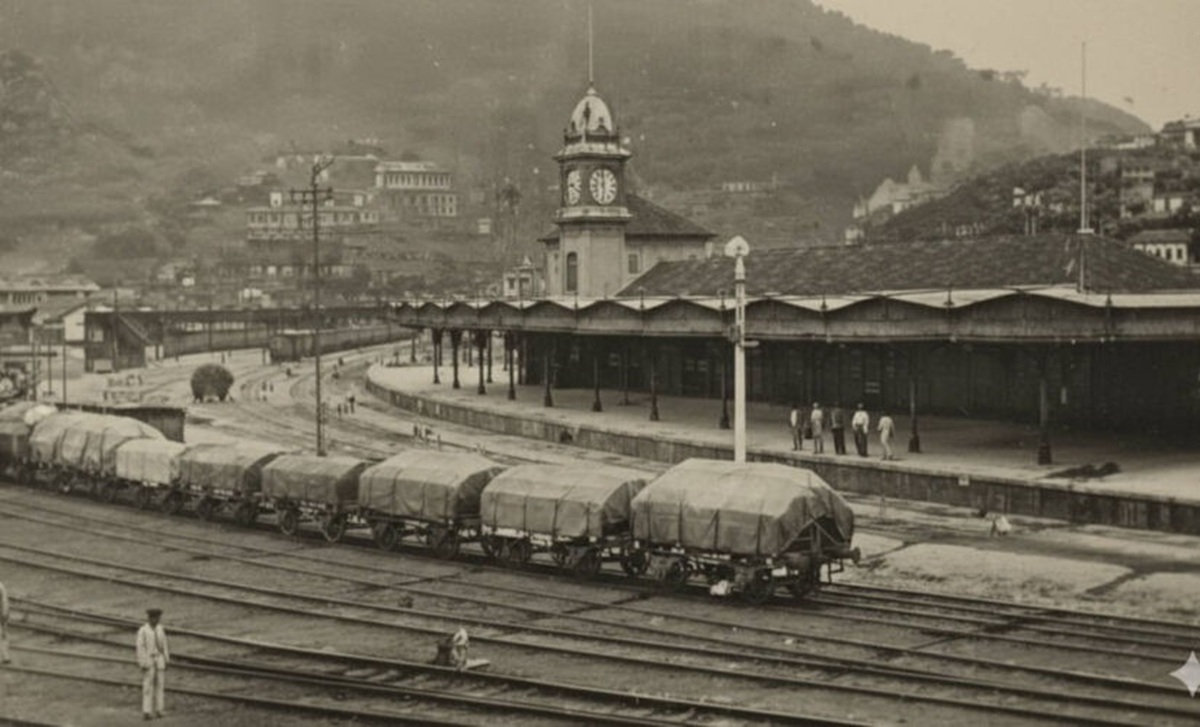
Inaugurated in 1867, the São Paulo Railway connected Santos to the São Paulo plateau, passing through cities like São Bernardo, Santo André, and Jundiaí.
Its main goal was to transport the coffee produced in the interior to the port of Santos, which was already consolidating itself as Brazil’s largest export point.
Highlights of the railway:
- Initial Length: approximately 139 km.
- English Technology: British engineers created innovative solutions to overcome the Serra do Mar, such as inclined planes with steel cables and adapted locomotives.
- Economic Impact: accelerated São Paulo’s growth, ensuring that coffee reached international markets quickly and at a lower cost.
- Historical Legacy: it was a key piece in transforming São Paulo into the “locomotive of Brazil,” stimulating industrialization and the arrival of immigrants.
The advancement of the railway also encouraged the founding of new cities and strengthened São Paulo’s role in the national economic landscape.
End of the Traffic and Search for Labor
Brazil banned the trafficking of enslaved people from Africa. This initiated the so-called internal trafficking, bringing enslaved individuals from the Northeast to the Southeast.
This model, however, became unfeasible. The resistance of the enslaved individuals themselves and the abolitionist movement created an unsustainable situation.
In light of this scenario, the Paulista elite made another crucial decision: to encourage immigration.
The Arrival of Immigrants
São Paulo received millions of immigrants. More than 3 million people passed through the old immigrant lodging in less than 100 years.
Some came from Japan and the Middle East. But the majority were European. Italians arrived en masse, fleeing economic crises, wars, and hunger.
The arrival of these immigrants formed a salaried working class, something rare in Brazil at the time. They had money to spend, which boosted the nascent industry.
While other states still depended on a declining slave economy, São Paulo advanced towards an industrial model.
Coffee with Milk Republic
Coffee not only brought wealth but also political power. Elites from São Paulo and Minas Gerais began to dominate national politics.
The so-called Coffee with Milk Republic marked the beginning of the 20th century. São Paulo led coffee production, while Minas Gerais led dairy production.
But the 1929 crisis knocked down coffee prices and affected Paulista hegemony.
Revolution of 1932
Getúlio Vargas took power in 1930 and reduced the autonomy of the states. He appointed federal interventors and governed without a constitution.
Paulistas reacted with the Revolution of 1932. They were militarily defeated, but the local elite responded by investing in knowledge.
They created the University of São Paulo (USP), which became an academic reference.
Industrialization and Northeastern Migration
In the 1930s, the difficulty of importing products led Brazil to adopt industry protection policies. São Paulo benefited.
The industry grew, and the state received migrants from all over the country. Northeasterners played a fundamental role, filling jobs in construction and factories.
According to the 2022 Census, more than 5 million Northeasterners live in São Paulo. They represent more than 11% of the state population.
This migratory flow shaped not only the economy but also Paulista culture.
Culture, Economy, and Symbolic Power
São Paulo became synonymous with development but also with symbolic disputes.
Some experts warn that the Paulista elite used the idea of “Europeanization” to justify leadership over the rest of the country.
According to Jessé Souza, this elite exploited symbolic power to strengthen economic and political power.
The Summary of the Transformation
In few words, São Paulo became wealthy because it solved the transportation problem with tolls and railways.
Because it cultivated coffee on a large scale, taking advantage of international demand.
Because it brought millions of immigrants who formed a salaried working class.
And because it reinvested part of that wealth into industrialization and education.
Today, São Paulo continues to be the economic locomotive of Brazil. But its history shows that geography, transportation, politics, and institutions were essential pieces for this transformation.









Sou Paulista,filho de pai Paulista e mãe Mineira e digo com certeza que a maior riqueza do nossa terra é o nosso povo;mesmo antes dos imigrantes e migrantes nosso povo já tinha uma ideia firme de desenvolvimento(os Bandeirantes saíram daqui)e conquistas.A abertura da Estrada de Ferro rumo a Santos foi sem dúvida a “primordial “porém a administração do desenvolvimento que coube é ainda cabe somente a nós(dada por DEUS)continua senhora cereja do bolo”.
ESSA POLÍTICA PODRE VAI LEVAR O BRASIL PARA O ABISMO. SÃO PAULO TEM QUE CAIR FORA DESTE LIMBO! CADA ESTADO QUE SE LIVRE DESTE PAÍS QUE NUNCA DARÁ CERTO.
Com todo respeito a outros estado do Brasil, São Paulo já dá pra ser um tranquilo sem depender de nada do restante do Brasil.