





 Portuguese
  English
  Spanish
  4 min of reading
  0 comments


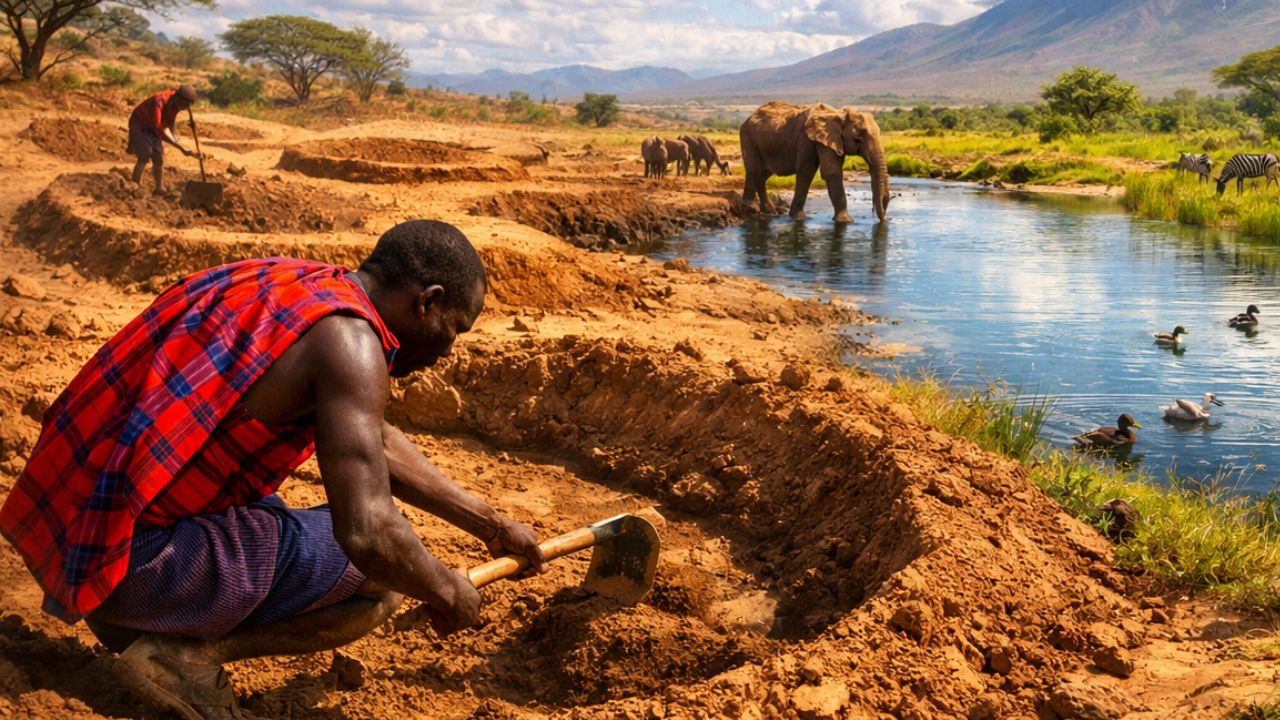
With Semicircular Dikes, Just Dig It, and Maasai Communities, the Technique Retains Rain and Returns Water Back to the Desert While Initiating Soil Restoration.
In southeastern Kenya, a simple technique is putting water back into the desert by retaining rain in the ground, breaking the impermeable soil cycle, and allowing vegetation to return where almost nothing survived before.
With Maasai communities and support from organizations like Just Dig It, these semicircles act as small landscape infrastructures: they hold water, replenish nutrients, stimulate microorganisms, and can rebuild entire ecosystems from the basics.
Why Returning Life to the Soil Has Become an Urgency
It may seem like just dirt, but soil supports healthy ecosystems by hosting organisms, recycling nutrients, and storing water.
-
While the world looks at oil, the war with Iran is already disrupting helium supply from Qatar, affecting car and iPhone chips, threatening AI expansion, and putting pressure on aluminum packaging at the highest value in four years.

-
Global warming will expose a treasure hidden under the ice of Antarctica and may spark an international dispute over gold and valuable minerals.

-
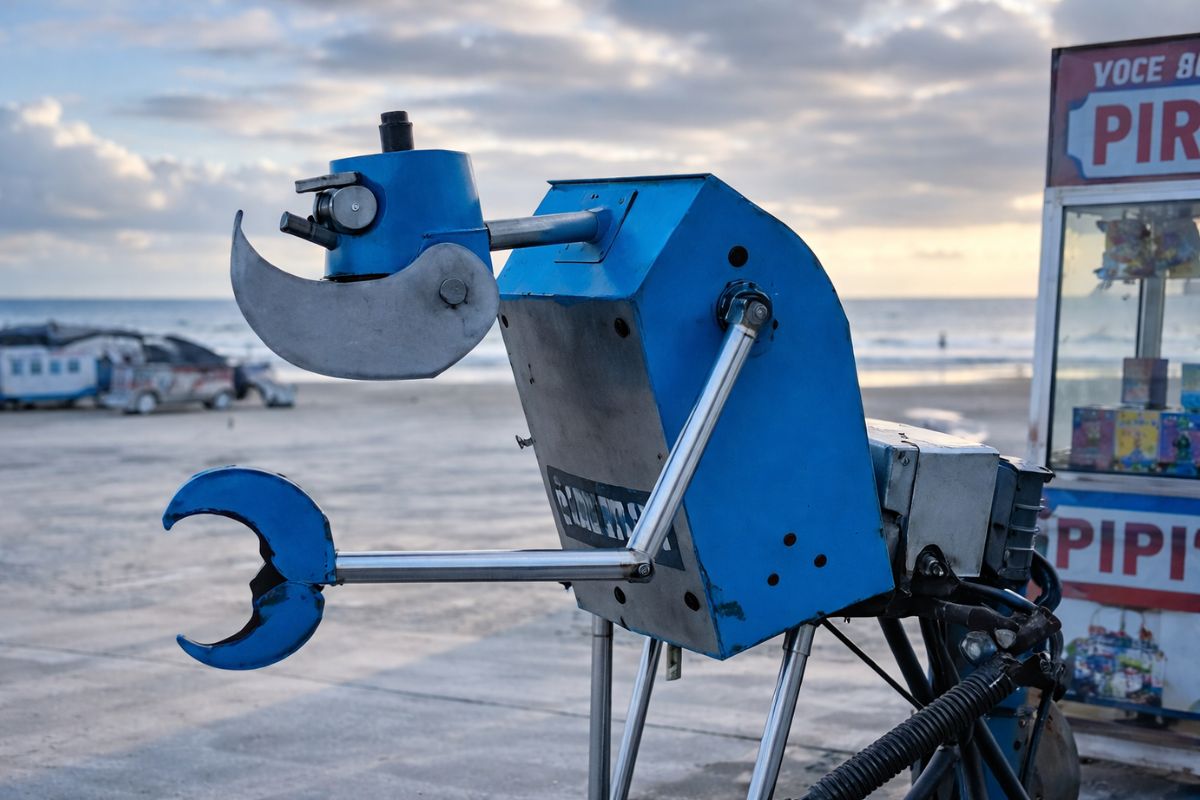
A street vendor from Praia Grande built a robot made of scrap from scooters and washing machines that pulls his popcorn cart on the beach, emits sounds, and interacts with customers, becoming an attraction on the coast of São Paulo.
-
The specifications of the Xiaomi 18 Pro Max have been leaked, and the highlight is a dual 200 MP camera with a new 22-nanometer technology that promises to consume less energy and capture details in shadows and bright areas using LOFIC HDR.


The problem is that the crisis is severe: one-third of the world’s soil is already degraded, and it is estimated that this could reach 90% by 2050 if nothing is done.
In this scenario, putting water back into the desert is not just a metaphor. It is a direct way to interrupt the loss of productivity and biodiversity in areas collapsing under longer droughts and more erratic rainfall.
The Vicious Cycle of Hot, Dry, and Hydrophobic Soil

The landscape is naturally hot and dry, but warming makes droughts longer and rains less reliable. The critical point occurs when the land dries out so much that it loses the ability to absorb water even when it rains.
Here comes an essential detail: hot, dry soil absorbs water very poorly because the surface layer hardens and forms a hard cap. When soil microbes die, waxy substances accumulate and make the soil hydrophobic, meaning it actively repels water.
What Are Semicircles and Why Do They Work
The solution begins with a semicircular well called a dike, designed to control water flow. Conservationists have realized that this shape, already used by farmers in other contexts, has the potential to reforest entire ecosystems without relying on expensive technology.
In practice, the logic is simple and powerful: by holding rainwater in the right place, the soil gains time to start absorbing and retaining moisture again.
This is how the technique puts water back into the desert, without miracles, just repositioning the water back into the system.
How Dikes Are Built in the Field
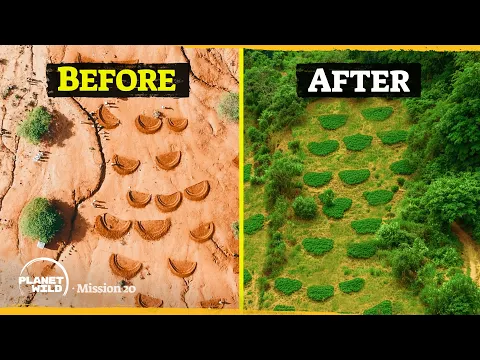
The implementation respects the natural slope of the land. With rope and level, the group identifies the fall and positions the dikes at the base to collect rainwater. Each dike is shaped with a precise diameter of five meters, forming the smiles of the Earth when viewed from above.
To initiate recovery, native grass seeds and a temporary cover of thorny branches are used to protect the planting. It’s physical work, but it’s quick enough to scale to a community level.
The Chain Reaction That Makes Vegetation Reappear
After digging and seeding, rainwater accumulates in the dikes, and the dry soil slowly starts to absorb water again. The seeds sprout, create deep roots, break the hardened earth, and restore its sponginess.
As a result, microscopic life reappears, nourishing the vegetation above ground and helping to protect the land from erosion, as well as creating shade that reduces temperature and increases humidity.
The effect described at the base is strong: in less than a year, the soil begins to hold nutrients, moisture, and even 40,000 different microorganisms; vegetation increases from about 0.1% to nearly over 40%, with expectations of reaching 70% in the next season. When the grass grows, animals also begin to return.
What Changes for Maasai Communities
For the Maasai, livelihoods depend on healthy soils, and it all starts with water. When the water dries up, income dries up as well: cattle can no longer be kept, families are no longer fed, and people leave, putting culture and tradition at risk.
Therefore, putting water back into the desert is also about protecting permanence, work, and autonomy. Just Dig It has been involved in land restoration in Africa for 15 years and works closely with local Maasai to recover lost areas.
Scale and Impact: From Semicircle to Entire Ecosystem
The foundation outlines a partnership to fund 8,000 dikes across 100 hectares, with an estimated retention of 2 billion liters of water over 20 years, as well as salaries, community training, and long-term monitoring. In the field, there is intense mobilization, with over 100 excavators working together.
And there may be a possible secondary effect: during photosynthesis, plants release water into the air, creating a cooling effect, and Just Dig It predicts that, at a large enough scale, the dikes could help create clouds and increase rainfall. It’s a path where soil recovery opens doors to recover the local climate.
And now the quick question: if a simple technique can put water back into the desert, do you think the biggest obstacle to replicating this elsewhere is money, labor, or political will?








Seja o primeiro a reagir!