





 Portuguese
  English
  Spanish
  6 min of reading
  1 comment


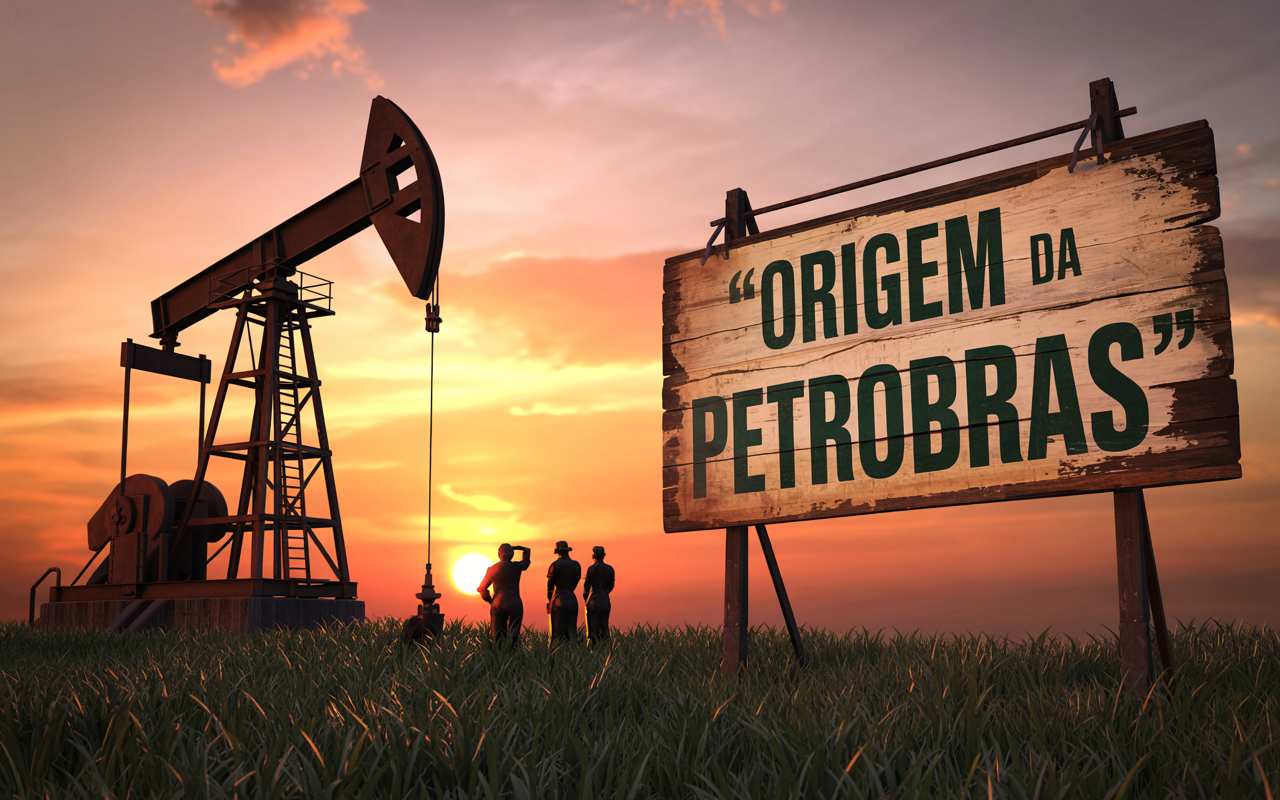

Discover How the Name Petrobras Came to Be, the Most Famous State-Owned Company in Brazil. Understand the Meaning Behind the Name “Petrobras,” Its Origins Under Vargas’s Government, and How It Became a Symbol of National Sovereignty in the Energy Sector.
The story of how the name Petrobras originated is directly linked to Brazil’s quest for energy and economic autonomy. In the mid-20th century, the country still relied heavily on foreign multinationals for oil exploration, a strategic resource for industrial development.
It was during the government of Getúlio Vargas, in 1953, that Petrobras — Petróleo Brasileiro S.A. was born, the result of one of the largest nationalist campaigns in Brazil’s history: the “The Oil Is Ours!” movement. This campaign began in the 1940s, mobilizing intellectuals, military personnel, politicians, and the population to defend state control over the country’s energy resources.
With decree No. 2004, on October 3, 1953, Congress approved the creation of the state-owned company, symbolizing a new chapter in national sovereignty. But the name chosen for the new company carried an even greater weight than imagined.
-
Drought may be creating stronger superbugs in the soil and helping antibiotic resistance reach hospitals, warns a study highlighting a problem that could grow alongside extreme weather.

-
The biggest scam in history: Napoleon’s France deceived the United States by selling them a territory that was Spanish.

-
Why is the Danakil Desert so dangerous? It has unstable terrain and how extreme temperatures and toxic gases turn the region into one of the most hostile environments on Earth.

-
With a height of 221 meters and a capacity for trillions of liters, Hoover Dam still holds a trick that makes water defy logic.

Meaning Behind the Name “Petrobras”
Many people wonder how the name Petrobras came about and what its real meaning is. The answer lies in the direct combination of two fundamental words: “petroleum” and “Brazilian.” Thus was born “Petrobras,” a simple name but loaded with political and geopolitical symbolism.
By incorporating “brás” from “Brazilian,” the name carried a clear message that the oil belonged to Brazil, and its exploration should primarily benefit the Brazilian people. This reinforced the idea that profits and control would not be in the hands of large foreign conglomerates like Standard Oil, Shell, or Texaco, which until then dominated the sector in the country.
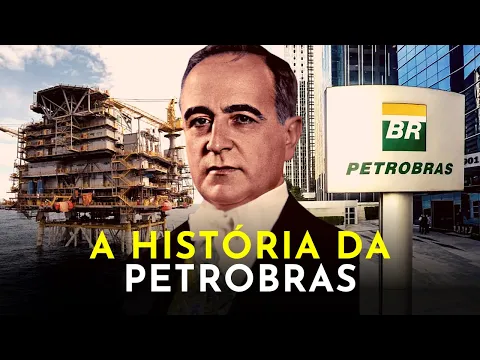

This name was intended to be more than just a brand: it was conceived as a symbol of the nationalist struggle, the strengthening of the local economy, and energy independence. The emergence of the name Petrobras, therefore, is deeply connected to the sentiment of sovereignty and national identity.
Before Petrobras: The National Petroleum Council (CNP)
Before the establishment of the most famous state-owned company in Brazil, the government had already attempted to organize the oil industry through the National Petroleum Council (CNP), created in 1938. However, the CNP had limited powers, and Brazil did not have the technological expertise or capital to compete with foreign giants.
It was in this scenario of economic submission that the need arose to create a state-owned company with real power to explore, refine, transport, and market oil across the national territory. And it was in this context that not just a company was born, but one of the biggest brands in Brazil’s history.
The Official Creation of Petrobras: October 3, 1953
Petrobras was officially founded on October 3, 1953, by means of Law No. 2,004, sanctioned by then-President Getúlio Vargas. The law established that the company would have state monopoly over the exploration and production of oil in the country.
Headquartered in Rio de Janeiro with a structure focused on research and production within the national territory, Petrobras was built with 100% national capital. The choice of the name “Petrobras” to represent the state-owned company was a deliberate act of political and geopolitical marketing.
This initiative marked a turning point in Brazil’s industrial history and initiated a trajectory that would lead the company to become one of the largest oil producers in the world.
Early Years: Operational Difficulties and the Link Report
Despite the popular enthusiasm, the early years of Petrobras were marked by operational failures. Drilling carried out in inland regions of the country, such as Maranhão and the Amazon, did not result in significant discoveries.
Costs were high, technology was limited, and Petrobras was accumulating losses. It was only after hiring geologist Walter Link in 1959 that the company initiated a strategic pivot.
In his famous 1960 report, Link recommended that the state-owned company redirect its investments to the coastal region, especially in southeastern Brazil. This decision was crucial: from 1967 on, Petrobras began to carry out promising drilling in the Campos Basin, off the coast of Rio de Janeiro, paving the way for major oil discoveries.
The Era of Deepwater Oil: Petrobras’s Technological Leap
Petrobras’s breakthrough came with investments in offshore technology. Starting in the 1970s, the company became one of the world leaders in deepwater oil exploration. It was during this time that the state-owned enterprise began to gain international recognition for its technical capacity.
In the 2000s, the greatest leap came: the pre-salt discovery in 2006. With fields located over 7,000 meters deep, beneath a thick salt layer, Petrobras became a pioneer in oil extraction under extreme conditions.
This achievement placed Brazil among the top oil producers in the world and guaranteed the state-owned company a central role in global energy geopolitics.
International Expansion and Leadership in the Energy Sector
Petrobras ceased to be just a national company to become a Brazilian multinational. Present in 14 countries, including the United States, Bolivia, Angola, and Japan, the company expanded its activities beyond oil and gas extraction.
Today, the state-owned company is responsible for important production chains involving refining, transportation, petrochemicals, and renewable energy. Its portfolio includes offshore wind energy projects and green hydrogen production, demonstrating that the company also seeks to play a leading role in the global energy transition.
Crises, Scandals, and Recovery: Petrobras in the 21st Century

Despite its relevance, Petrobras also went through critical moments. One of the most severe was the Lava Jato Operation, launched in 2014, which revealed a billion-dollar corruption scheme involving company directors, contractors, and politicians.
The scandal shook the state-owned company’s credibility, decreased its market value, and caused damage to its international image. However, in the following years, the company underwent restructuring, sold non-strategic assets, increased operational efficiency, and returned to profitability.
Financial Balance and Current Challenges
In 2024, Petrobras faced a financially challenging year. Net revenue fell by 4.1%, totaling R$ 490.8 billion compared to the previous year. This decline was attributed to the reduction in international oil prices and decreased margins in the refining sector.
Additionally, the state-owned company’s net profit plummeted by 70.6%, ending the year with R$ 36.6 billion, compared to R$ 124.8 billion recorded in 2023. The market value, which peaked at R$ 541 billion, fell to R$ 473 billion in March 2025.
Despite the negative figures, Petrobras’s operational capacity remains robust, focusing on productivity, cost containment, and energy diversification. The company still leads the B3 (Brazilian Stock Exchange) as one of the largest listed companies, competing with giants like Itaú Unibanco and BTG Pactual.
Petrobras and the Future of Energy in Brazil
Petrobras has announced investments of US$ 2.5 billion by 2025 in renewable energy projects, especially wind and solar. This movement is part of the strategy to adapt to the new global reality of decarbonization and combating climate change.
On the horizon for the state-owned company is the consolidation of its position as a leader in energy transition, maintaining its prominence in oil while heavily investing in new sources of clean energy.
More Than Just a Company, a National Symbol
Understanding how the name Petrobras came to be reveals a story that goes far beyond marketing or public administration. Petrobras represents energy nationalism, economic autonomy, technological resilience, and Brazil’s capacity to compete globally in a strategic sector.
The company has faced failures, scandals, and economic challenges but continues to be the most famous state-owned company in Brazil — and one of the national industry’s greatest prides.









Não está fazendo jus ao nome Petrobrás, porque gasolina e diesel estão caros refletindo a falta de refinarias para finalizar o produto. O petróleo é nosso mas encarece mandando pra fora para refinar. E quanto mais o preço diesel subir mais aumenta a inflação. Isso é lógico porque o diesel é a base da produção agrícola, do transporte de mercadorias e urbano. A gasolina não reflete na inflação mas o diesel sim.