





 Portuguese
  English
  Spanish
  5 min of reading
  1 comment





Frauds in INSS Deductions Originated from Legal Loopholes Created in 2016, Gained Momentum in Subsequent Years, and Transformed into One of the Biggest Scams Against Retirees and Pensioners in the Country
As attorney Flávio Romeu Picinini explains, the frauds in INSS deductions that are currently under investigation and caused billion-dollar losses to Brazilian retirees began nearly a decade ago. What started as an attempt to facilitate the collection of associations and unions ended up opening the door for irregular practices, with undue deductions directly from the payroll of millions of insured individuals.
These loopholes, created in 2016, allowed the accreditation of private entities to carry out automatic charges on INSS benefits. Over time, the lack of oversight and the increase in the number of signed agreements led the system to a breaking point, where phantom organizations began deducting amounts without the retirees’ consent, turning the mechanism into a gear of institutionalized fraud.
Where the Failure That Opened Space for Fraud Began
The starting point was the regulation of 2016, during Michel Temer’s government, when the Ministry of Labor and Social Security, then led by Ronaldo Nogueira, authorized union and association entities to make deductions directly from pension benefits. The president of INSS at the time, Leonardo de Melo Gadelha, was responsible for implementing the system of agreements that, although aimed to simplify administrative processes, lacked sufficient control mechanisms to prevent fraud.
-
Italian researchers have detected what appears to be a second Sphinx buried under the sands of Egypt, and satellite scans reveal a gigantic underground megastructure hidden beneath the Giza Plateau for over 3,000 years.

-
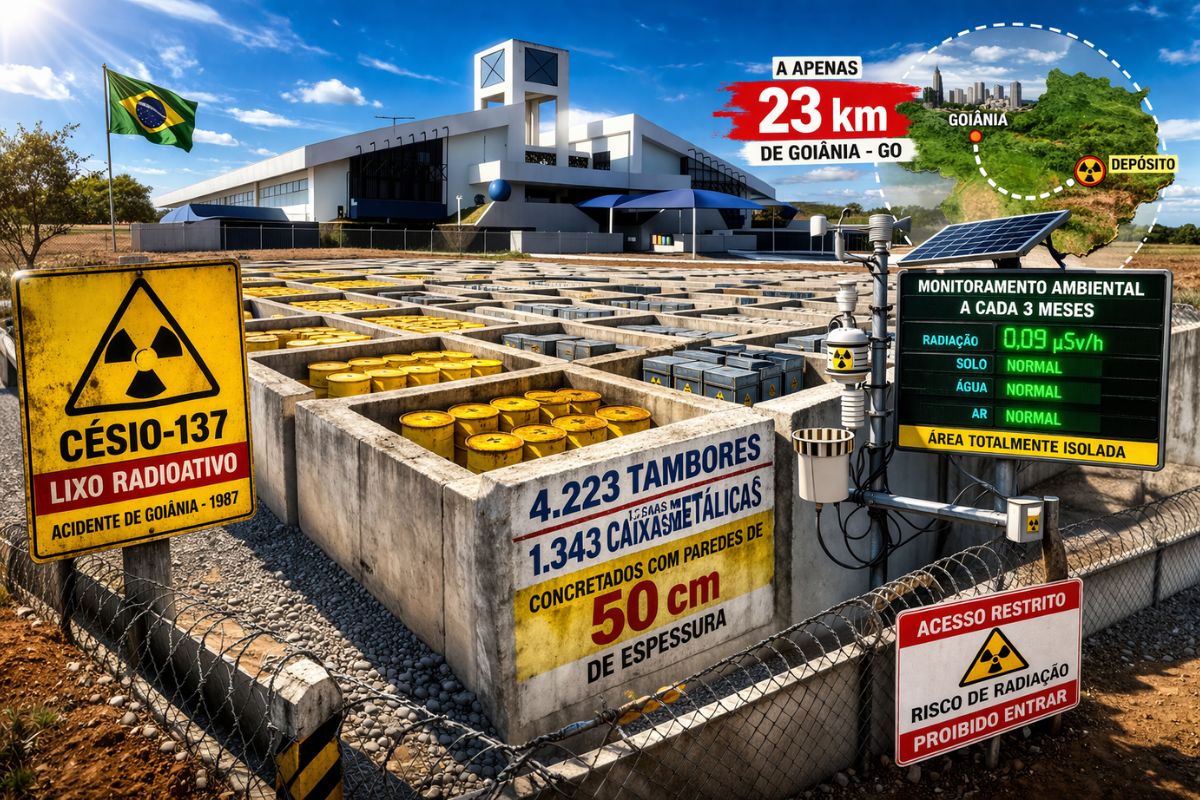
There are 4,223 drums and 1,343 metal boxes concreted with 50-centimeter walls that store the radioactive waste from Cesium-137 in the worst radiological accident in Brazil, just 23 kilometers from Goiânia, with environmental monitoring every three months.
-
Giant Roman treasure found at the bottom of Lake Neuchâtel in Switzerland reveals an advanced trade system, circulation of goods, and armed escort in the Roman Empire about two thousand years ago.

-
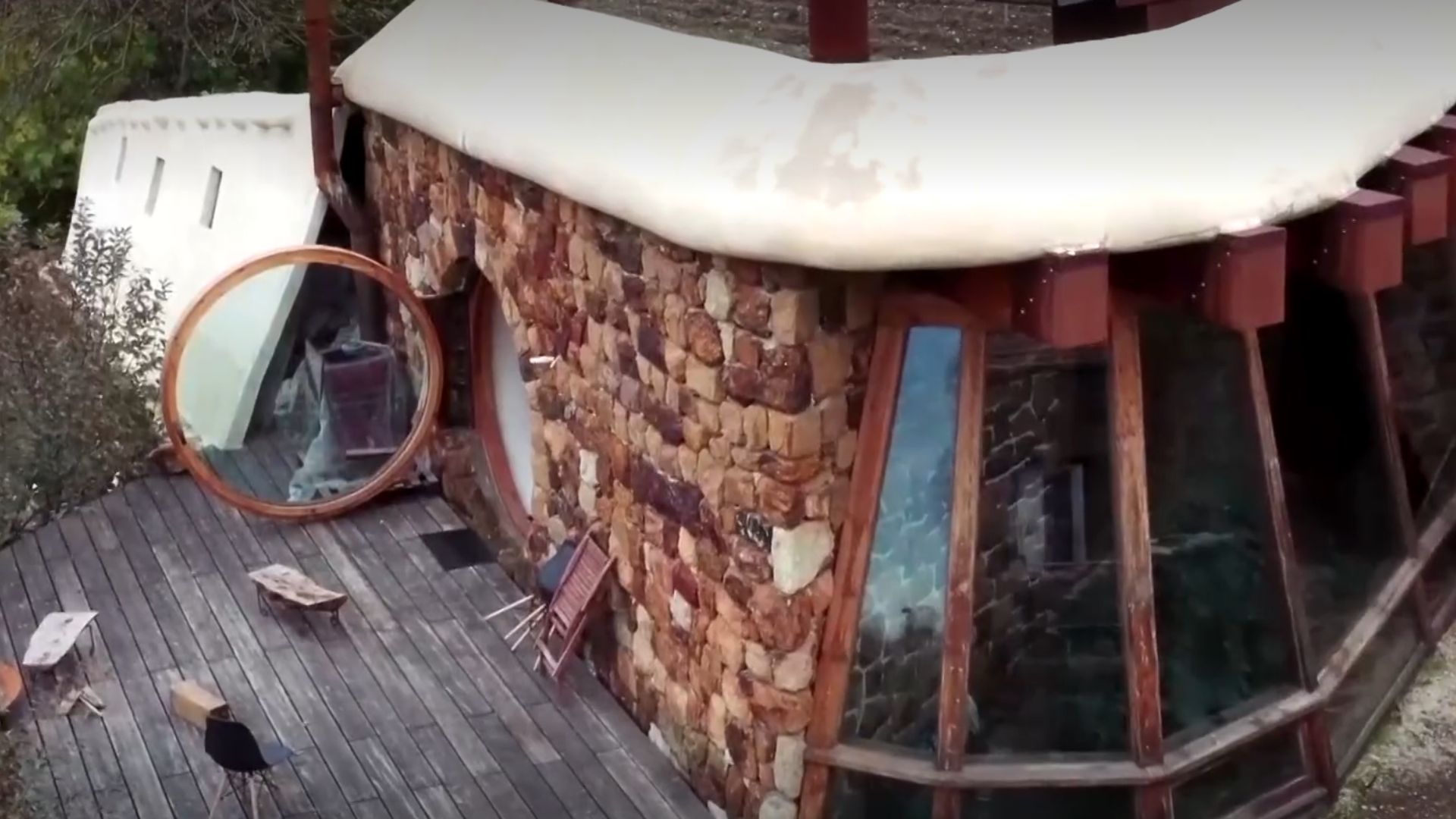
He buried 1,200 old tires in the walls to build his own self-sufficient house in the mountains with glass bottles, rainwater, and an integrated greenhouse.

The model stipulated that deductions could only occur with explicit authorization from the insured party. In practice, the absence of biometric verification and cross-identity checks opened a loophole for false registrations, forged electronic signatures, and misuse of personal data. This was the beginning of a process that would later evolve into a network of false unions and associations.
From 2019 onward, irregularities grew at an accelerated pace. Technical reports indicate that there was an explosion of agreements and automatic transfers to private entities, many of which had no physical headquarters or valid registration. In 2022, new legal measures ended up facilitating the electronic authorization process, which, in practice, reduced control barriers.
The scam became massive: amounts were siphoned off monthly from thousands of benefits, with false authorizations recorded in official systems. Between 2023 and 2024, the volume of complaints reached an unprecedented level, forcing the government to review and suspend agreements. The accumulated loss reached billions of reais.
The Government’s Reaction and Attempt to Correct
In 2024, in light of the repercussions and allegations, the government published a joint normative instruction between INSS and the Ministry of Social Security, with stricter measures to prevent new abuses. Among the requirements, mandatory biometrics and validated electronic signatures were implemented, which became prerequisites for any future deductions.
The measure only came into effect in February 2025, almost a year after the publication. In the meantime, the system remained vulnerable. When biometrics were finally adopted, there was already a backlog of accumulated frauds, with retirees demanding restitution and judicial compensation for moral damages.
Thousands of insured individuals discovered monthly deductions of small but constant amounts linked to associations they never authorized. Many only realized the scam after months, when the total siphoned off was already significant. In various cases, the amount deducted from the benefit affected the basic budget of entire families, compromising expenses with food and medications.
Public pressure led the government to immediately suspend all agreements with associations and unions and determine the full return of amounts unduly deducted. According to information released in June, reimbursement will be done directly by INSS, with a review of all contracts signed since 2016.
Institutional Responsibility and the Role of Oversight
Even with corrective measures in place, the debate over INSS’s responsibility continues. Jurists and experts in social security law argue that the agency was negligent in overseeing agreements and investigating internal irregularities. The lack of regular audits, combined with the absence of digital verification mechanisms, allowed frauds to thrive for years.
The consequence is twofold: financial damage to insured parties and institutional discredit. Many retirees have turned to the courts to demand compensation for moral damages and double reimbursement of amounts incorrectly charged, based on the Consumer Protection Code and the objective responsibility of the State.
The case of fraudulent deductions repeats a historical pattern of vulnerability in INSS. Since the 1990s, schemes of corruption involving benefits and undue registrations have multiplied, from Georgina de Freitas in 1991 to the case of “living dead” in 2004, when benefits of deceased individuals were reactivated. The system, despite being digitized, still operates with weaknesses that allow for manipulations and human errors.
The lack of integration between databases, the outsourcing of processes, and the slowness to adopt modern anti-fraud tools explain why the same type of scam continues to repeat itself in new formats. Mandatory biometrics and automated information cross-checking are seen as fundamental steps to contain this cycle.
What Changes Moving Forward
With the blocking of agreements and the implementation of biometrics, INSS is trying to rebuild trust in the system. The new rules require facial or digital identification to validate any authorization for deductions, and the agency promises continuous audits and electronic tracking of transactions.
Nevertheless, experts warn that the total recovery of siphoned amounts and the punishment of those responsible will depend on lengthy investigations and coordination between CGU, Federal Police, and Federal Public Ministry. Until then, thousands of retirees are still waiting for the return of what they lost.
The frauds in INSS deductions reveal how poorly structured administrative decisions can turn into loopholes for billion-dollar schemes. The challenge now is to rectify the past without punishing the citizen, ensuring transparency and control in a system that manages the income of over 39 million Brazilians.
And you, do you know anyone who had undue deductions on their INSS benefit? Do you think mandatory biometrics is enough to prevent new frauds? Share your story in the comments — your experience helps show what still needs to change in practice.










Conheço pessoas que tiveram desconto indevido.
Infelizmente muitas pessoas não têm o hábito de saber o que lhes é devido, simplesmente aceitam o crédito na conta ou sacam o valor à disposição, o que facilita as ações de esquemas comandadas por associações de fraudadores, ****, espertos, aproveitadores, travestidos de pessoas do bem, que enganam vulneráveis, necessitados, de forma inimaginável.
Espero que a justiça não falhe e não demore para recuperar valores desviados, e aplicar as penas cabíveis aos envolvidos, de A a Z, desde os mentores , passando pelos facilitadores, até os beneficiários de qualquer natureza.
Trabalho difícil motivado pelos esquemas e pelas articulações dos mentores, mas, espero, não difícil para os investigadores, que cada dia se especializam mais no trato da bandidagem, que aumenta, se organiza, envolve e se envolve com todo tipo de pessoas, que ora discursam, ora oram, ora posam como cordeiros, ora manipulam, mas, felizmente, ao final, embora poucos, são desmascarados. Por outro lado, agora infelizmente, não apenados adequadamente.
Desigualdade e impunidade explicam muito, mas não explicam tudo, e principalmente por isso continuam prevalecendo nos discursos.
Espero que esse Congresso mequetrefe varra de vez essa facilitação aos malandros da vez, proibindo qualquer tipo de desconto do que é devido do valor líquido de aposentados e pensionistas, apesar de vozes contrárias que se ouve.
Por que será que, apesar de tudo, ainda existem vozes do “veja bem”
argumentando para a manutenção disso?
Uma Instituição, que deveria ser bem gerida pelo seu objetivo e recursos manipulados, recursos públicos, é oferecida para gente facilmente cooptada por artífices
do descaminho, se enquadrilham e agem soltos, (olhemos para o histórico publicado pela mídia, sabe se lá quantos outros episódios desconhecidos por nós) e, perplexos, perguntamos, cadê as auditorias, internas, externas, CGU, AGU, cadê?
Será que, até neste ponto, os descaminheiros são imbatíveis?
Pobre Brasil, pobres brasileiros (a maioria pelo menos) !!