





 Portuguese
  English
  Spanish
  6 min of reading
  0 comments


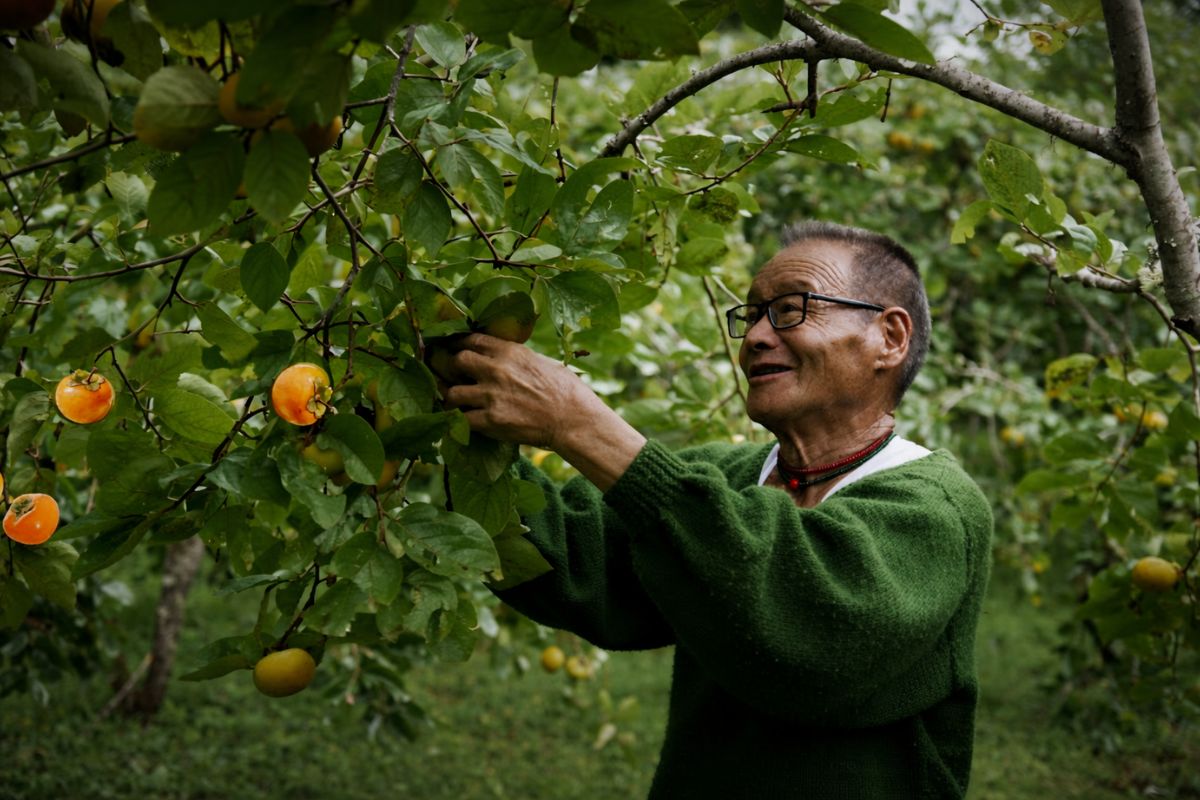
How The Mother Plant Of Persimmon Transformed A Forest In Nagaland Into A Pioneering Orchard, Generated Income Much Greater Than Rice And Created A New Way To Care For The Land
On the slope of a village in Nagaland, an 85-year-old farmer transformed a forest in Nagaland into an organic orchard of persimmons and kiwis. Where there used to be only jungle and uncultivated land, today there is a productive system that feeds his family, inspires neighbors, and shows the power of patient work done over decades.
Before reaching this point, he was a rice farmer, a small cookie trader, and a store owner in another town. Tired of the routine of being a shopkeeper and attracted by the charm of fruit trees, he rebuilt his life around the land, creating a production model that unites tradition, income, and care for the soil.
The Mother Plant That Became The Grandmother Of An Entire Orchard

It all starts with a unique tree. He calls this first persimmon tree the mother plant, the oldest in the orchard, the true grandmother of all the others.
-
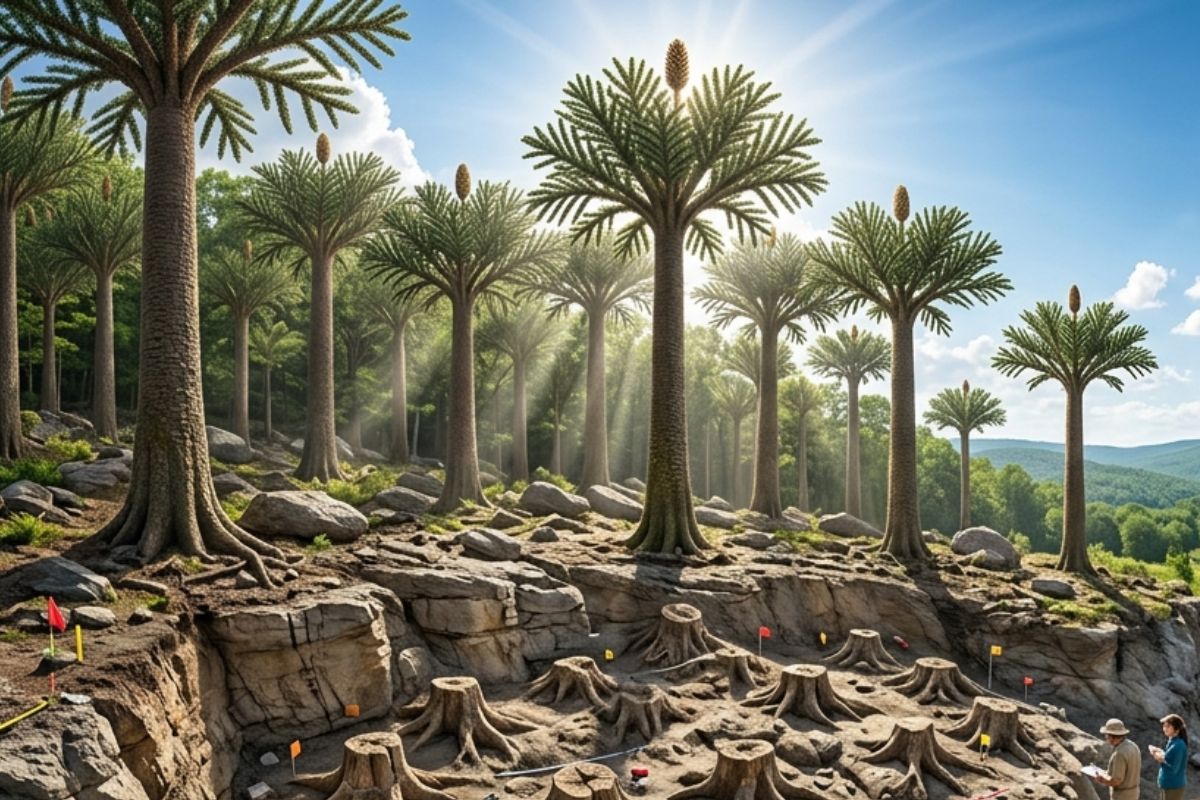
Oldest tree on the planet reappears after 130 years of searches: Wattieza, 385 million years old, was 10 meters tall and had no leaves or seeds; Gilboa fossils in New York solved the mystery in 2007.
-
A 48-square-meter house assembled in hours with 4,000 bricks made of recycled plastic that does not absorb moisture, has natural thermal insulation, and costs less than 90,000 reais in a complete kit.

-
Luciano Hang revealed that Havan’s air fleet has already accumulated more than 20,000 landings, 10,000 flight hours, and 6 million kilometers traveled, and he says that without the planes, the company would never have grown so quickly.

-
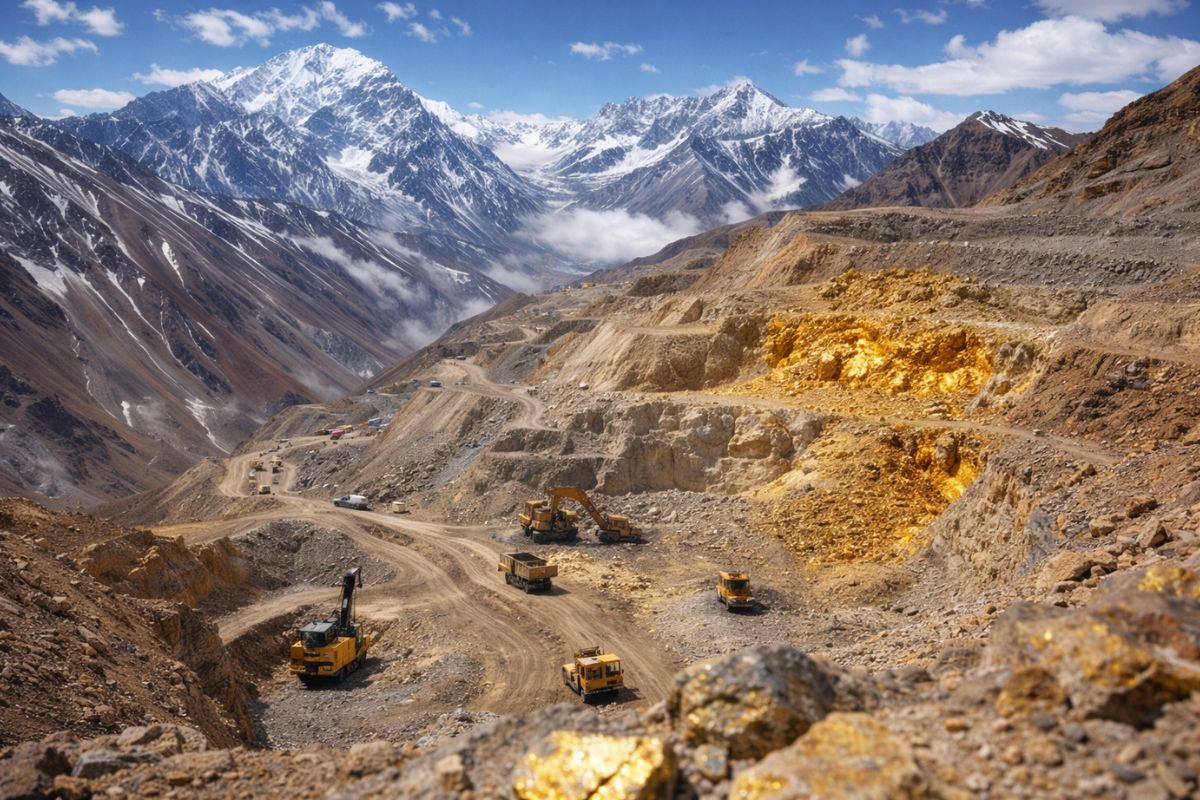
A historical discovery in the Andes Mountains reveals a gold deposit valued at 770 billion reais hidden over 4,000 meters above sea level on the border between Chile and Argentina, and the whole world is watching.

From this initial tree came the grafts for all the other trees he has today. Each persimmon tree on the property carries a piece of this first tree, which has become a symbol of the time, patience, and long-term vision of the farmer.
He didn’t start as a fruit expert. The opportunity arose when he visited a horticultural research center, where a friend was working with kiwis and persimmons.
During a visit in full fruiting, they tasted the fruits and realized how special the flavor was. The friend offered him seedlings.
He planted two persimmon seedlings. One died, one survived, and that single survivor became the mother plant that sustains the entire current orchard.
From Rice And Cookies To The Orchard That Transformed The Land

Before transforming the forest in Nagaland, his life revolved around another logic. He cultivated rice in the village and, with great effort, managed to save 200 to 300 rupees. With that money, he bought cookies in Kohima and resold them in the village, accumulating small savings.
Over time, he decided to move to Pfütsero and open a small store. Years of work behind the counter ensured the family’s survival, but also brought the silent fatigue of someone who feels life could be different. As he aged and his body demanded a different pace, the desire to return to the land in a new way arose.
That’s how he found fruit tree cultivation. This discovery was not just a change of economic activity. It was a change in life’s meaning.
When He Transformed A Forest In Nagaland Into Terraces And Trees

At the time he received the first seedlings, the land where the orchard now stands was simply a forest. Nobody cultivated that area, there were no terraces, no fields, just jungle.
He decided to intervene. He built three terraces with benches, organizing the slope into levels. He then began to cultivate rice on that newly shaped terrain.
After two years of planting rice, he made the decision that would change everything: he transformed that old stretch of forest in Nagaland into a fruit orchard.
The first harvests showed something obvious to anyone who tasted the fruits: the flavor was excellent. Initially, he didn’t even think of selling; he didn’t clearly see the commercial value of what was being produced there. Over time, however, he realized that fruit cultivation had much greater potential than rice.
When he planted rice, the income from the land was between 20,000 and 30,000 rupees. With the fruit orchard, the scenario changed completely: the same space began to yield from 300,000 to 400,000 rupees per year.
In one especially good year, he made 400,000 rupees with persimmons, 200,000 with kiwis, and 500,000 with the sale of persimmon seedlings, totaling eleven lakhs.
He started with kiwis and later placed more emphasis on persimmons, which now bring him even more joy.
An Orchard That Is A Laboratory Of Organic Farming
Throughout this journey, he made a firm choice: to never use chemical products on the farm.
When he cultivated rice, he already followed this path. Now, with the fruits, he remains true to the same principle. All trees and vegetables are managed organically. A clear example appears in the control of insects that attack the lower part of the trees.
Instead of resorting to chemical pesticides, he mixes terhipri (Nicotiana tabacum) with ashes and applies it directly to the trees. This simple preparation works as a repellent and drives the insect away.
Caring for the soil is another pillar of his method. He gathers all the leaves and loose soil from the farm and makes piles of material scattered around the orchard.
These piles decompose until they become fine black soil, a rich compost that is then mixed with normal soil, strengthening the health of the plants.
Even the management of weeds has its own logic. Instead of pulling them out with a Dao, a handmade knife, he recommends using a shovel. By removing the weeds with a shovel, not only is the immediate area around the tree cleared.
The weeds mix better with the soil as they decompose, improving its quality. Doing this once per season already shows a noticeable improvement in the soil.
He doesn’t speak ill of chemicals from direct experience because he has never used them. But he mentions something he heard from others: if someone applies chemicals once, the following year, the quality of the soil tends to deteriorate if usage is stopped, and continuous use can have long-term effects.
In practice, his orchard has become a living laboratory of organic farming, built with observation, trial, error, and a lot of daily discipline.
Family Work, Body Fatigue And The Succession Challenge

This project has never been a large operation with a big team of employees. The backbone of the orchard has always been the work of him and his wife.
They hired a few people only for the heaviest job of digging the initial holes for planting the seedlings. After that, everything else has been done practically by the couple, a little each day, season after season.
He likes to repeat that if someone works a little in the orchard every day, it is possible to handle everything. But time passes, the body changes.
Today, he tires easily. Tasks that used to be routine, like picking up a post to support a branch, have become too heavy. Even the walk from the road to the farm has become difficult.
In his assessment, it’s only a matter of a few years before he can no longer maintain the orchard alone. Therefore, he knows that someone younger needs to take over the legacy he has built.
Thinking about the future, he made a new strategic decision: he bought a more accessible piece of land nearby and has been working there since last year. In this new space, he has already planted about a hundred persimmon trees.
It’s a way to prepare for the transition, facilitating access and making management more viable for those who come after him.
A Legacy That Goes Beyond Money
The story of this 85-year-old farmer is at once simple and profound. With few tools, a lot of work, and consistent choices, he transformed a forest in Nagaland into an organic orchard that multiplies income, conserves the soil, and inspires the community.
His legacy is not just in the trees laden with fruit or in the increased income, but in the principles he leaves for those who want to learn: observe the land, care for the soil, avoid chemical shortcuts, work a little every day, and think about who will continue the path.
In the end, every persimmon that ripens in that orchard carries a story of persistence, love for the land, and trust that patient work can change a piece of the world.
And you, if you could transform a piece of abandoned land anywhere in the world, what would you choose to plant and why?







-

-

-

-

-

-

37 pessoas reagiram a isso.