





 Portuguese
  English
  Spanish
  3 min of reading
  0 comments


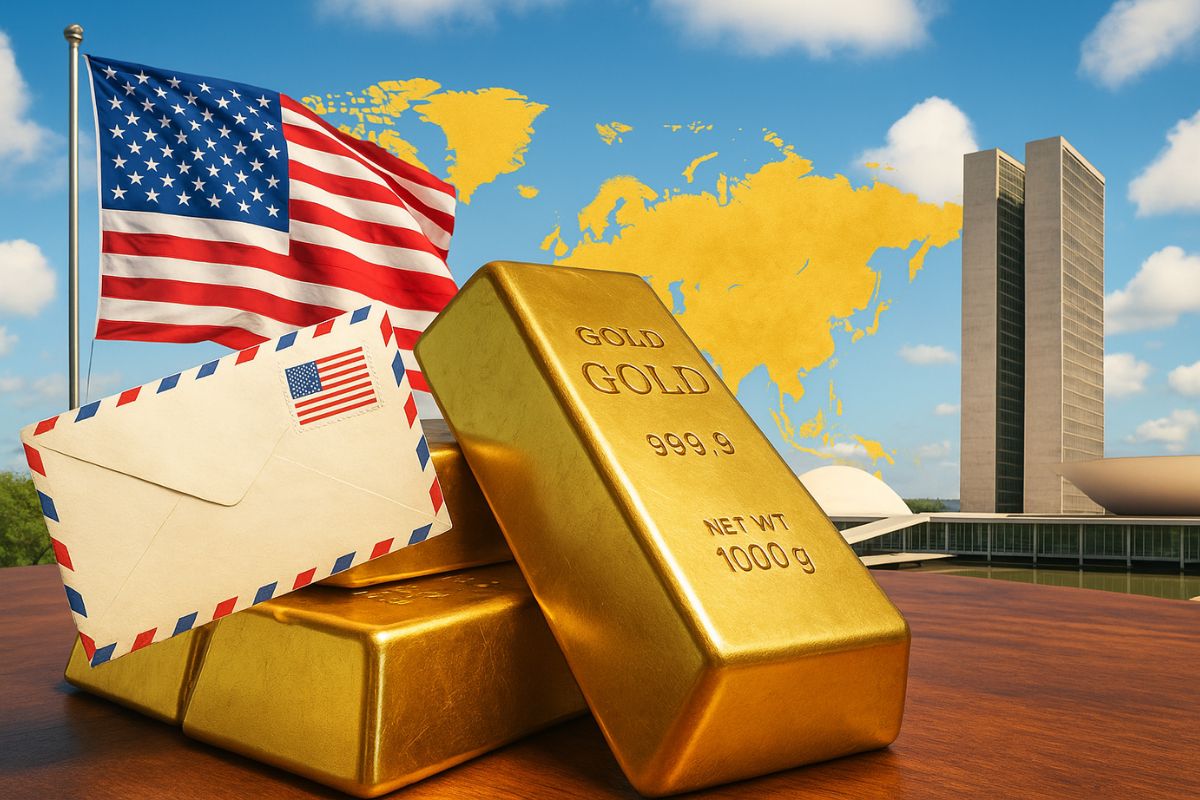
Unexpected Decision on Tariffs Sent Prices Soaring and Exposed Fragility in the Gears of Global Gold Trade
A simple letter sent by U.S. authorities to a Swiss refinery at the end of July was enough to create a seismic shift in the gold market. Within hours, futures contracts for the metal in New York hit record levels, only to then plunge sharply amid uncertainty over potential import tariffs in the United States.
Behind this abrupt movement lies a complex and billion-dollar network that connects banks, refineries, and trading hubs around the world. Any change in the rules of the game can trigger global impacts from the prices paid by jewelers in Mumbai to the solidity of stocks in vaults in London and New York.
The Spark: The Letter That Changed the Market
The communication, sent by the U.S. Customs and Border Protection (CBP) on July 31 and made public on Friday (the 8th), indicated that gold bars could be subject to import tariffs. The announcement surprised the market by treating gold as a common physical commodity, without considering its central role as a financial asset.
-
Elderly individuals aged 65 or older who have never contributed to the INSS can receive R$ 1,621 per month in 2026 without having paid any contributions in their lifetime: learn how the benefit works that already supports nearly 7 million Brazilians.

-
The gaucho city reduced the number of Bolsa Família beneficiaries by almost 40% in just a year and a half with active outreach that connects each registered person directly to job vacancies in Bento Gonçalves in Rio Grande do Sul.

-
The bluest city in Brazil has just gained a new floating bridge for the free crossing between the island and the mainland, connecting residents and visitors to the historic center of São Francisco do Sul every day of the week.

-
In a silent race, Shopee signs a mega contract in Guarulhos and accelerates the e-commerce war with faster deliveries, pressured shipping, and a new threat to rivals in Brazil.


The effect was immediate: traders rushed to adjust positions, pushing prices on the Comex in New York to over US$ 3,530 per ounce, a historic record. Shortly after, the White House signaling that tariffs would not apply to bars caused prices to plummet, in a typical case of volatility driven by sudden political decisions.
How the Global Gold Market Works
The gold market is supported by a system involving futures exchanges like those in New York and Shanghai, along with a broad over-the-counter market in London. These hubs supply strategic consumer centers such as Dubai, Mumbai, and Hong Kong.
Just in New York and London, the stored value exceeds US$ 1.1 trillion, mainly held by giants like JPMorgan and HSBC. Swiss refineries, in turn, act as logistical bridges between London and New York, melting large bars into units of 1 kilogram — the format accepted on Comex.
The Impact of Tariffs and the Threat to the Gears
If the 39% tariff on Swiss gold were confirmed, the price in New York would have to rise to around US$ 4,700 per ounce to justify sending bars to the American market. This prospect led Asian refineries to temporarily halt sales to the U.S., while the Swiss association warned that blocking such a significant market could destabilize global trade in the metal.
The difference between the price in New York and the reference price in London, which reached US$ 100 per ounce on Friday, revealed the dysfunction in the system. This spread of about 3% would still be insufficient to cover the cost of the tariffs proposed by the U.S. government.
Alternatives and Risks to Supply
With Switzerland under tariff threat, alternatives could include importing gold from countries like Canada and Mexico. However, the U.S. government itself has already considered imposing heavy tariffs on these partners as well, making supply even more vulnerable.
Independent refineries operate with narrow margins and rely on predictability to maintain contracts and logistics. Any sudden rule changes, like this letter, threaten not only the flow of gold but also the confidence in the exchanges that support the global price of the metal.
The White House Backtrack and Lessons for the Market
According to a government official, the administration intends to publish an executive order clarifying what it called “misinformation” regarding gold tariffs.
For analysts, this episode reinforces how the gold market is sensitive to political decisions and how volatility can generate billions of dollars in gains and losses within hours.
Veteran Ross Norman, founder of the Metals Daily website, summarized the risk: “The problem is that we are not in a good position when something disrupts the market. When things explode, many people get hurt.”
Do you believe that political decisions should hold so much power over the gold market? Or should the sector have stronger rules against sudden fluctuations? Share your opinion in the comments and join the debate.








-

-

-

5 pessoas reagiram a isso.