





 Portuguese
  English
  Spanish
  6 min of reading
  7 comments


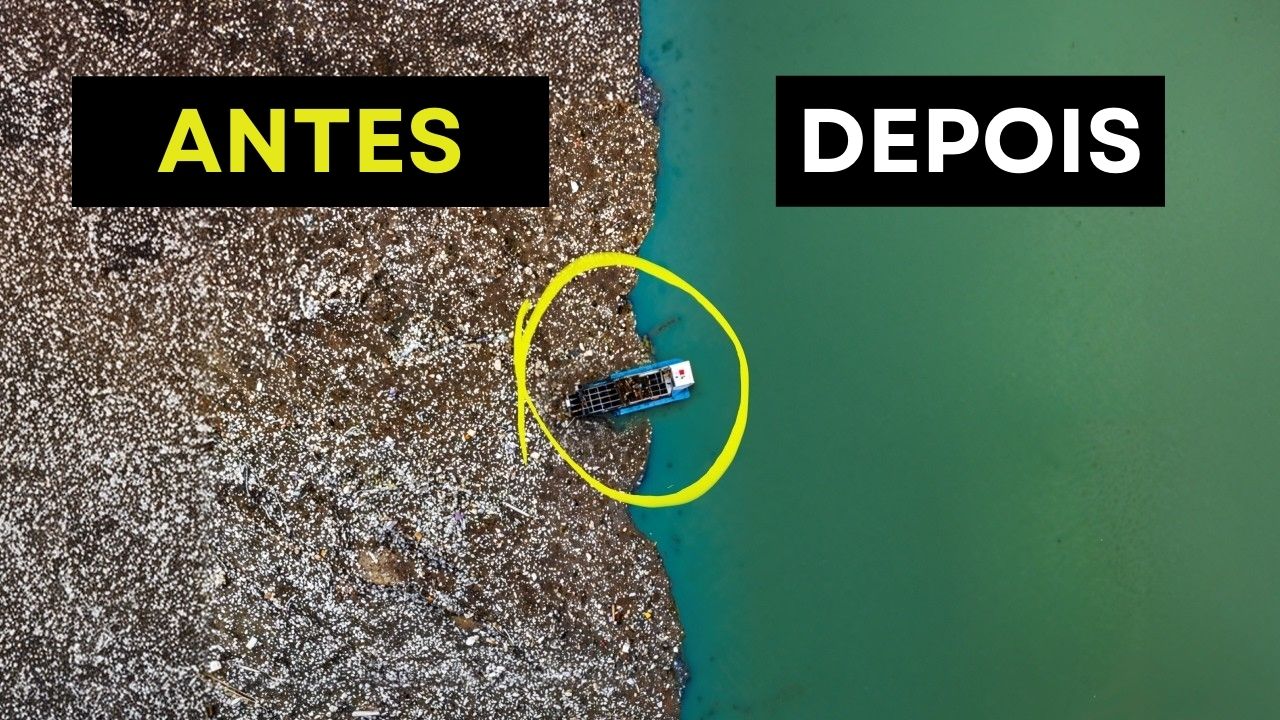


A Dam, A Modified Boat, And €100,000 In Community Funding Are Transforming A Plastic River Into A Source Of Recycling And Local Income In Albania
The images of a plastic river pouring tons of waste into the Mediterranean every year seem impossible to reverse, but in Albania a bold experiment shows that this story can be different. Rather than waiting for waste to reach the sea, a partnership between an international NGO, local experts, and the community is intercepting plastic still in the river’s course, using an existing dam, an adapted boat, and an old Soviet factory.
The logic is simple and powerful at the same time: if most of the waste reaching the oceans comes from rivers, tackling the problem at its source is the most efficient way to prevent the plastic river from becoming a direct line of waste to the Mediterranean. With €100,000 in community funding, this mission aims to transform a scenario of extreme pollution into a model of cleaning, recycling, and financial autonomy in one of Europe’s most critical regions.
Context: When The Plastic River Meets The Mediterranean
Before understanding the solution, it is necessary to look at the extent of the problem. Every year, about 570,000 tons of plastic enter the Mediterranean, the equivalent of 625 garbage trucks per day dumped into a nearly closed sea. The Mediterranean holds only 1% of the planet’s water but houses approximately 7% of all microplastics in the world.
-
The Argentine government celebrates the lowest poverty rate in 7 years, but experts warn that the methodology has changed, real wages have fallen, unemployment has risen, and the number of people on the streets of Buenos Aires has increased by 57% since Milei took office.

-
7.8 magnitude earthquake in Indonesia frightens the population, triggers tsunami alert, and hits an island with over 200,000 inhabitants this Thursday.

-
Google will finally let you change that embarrassing Gmail address you created in your teenage years without losing any accounts, logins, or old emails: the feature is already available in the United States.

-
Heading to Brazil in a Bonanza F33 single-engine aircraft: a couple departs from Florida on a visual flight, makes technical stops in the Caribbean to refuel and organize paperwork, and begins the staged crossing until they reach the country.

This means that every plastic river flowing into it acts like a continuous conveyor belt of waste, pushing bottles, packaging, and all kinds of trash into an environment where almost nothing exits. When this plastic reaches the sea, the chance of doing anything about it practically disappears. The aim of the mission in Albania is precisely to act before this point of no return.
Why The Drin Became A Plastic River

The stage of this story is the Drin River, in the Kukes region of northern Albania. Visually, it cuts through a mountainous and scenic landscape, but behind the beauty lies a serious problem: the region works as a funnel for waste from three countries. There, the Black Drin, which comes from North Macedonia, and the White Drin, which comes from Kosovo, meet, turning the stretch into a true multinational plastic river.
In many areas around the Drin, there is no regular waste collection. People produce waste every day and, without an adequate option, they end up resorting to illegal dumping sites. With rain, wind, flash floods, and poor drainage, this material runs down the slopes and is dragged into the riverbed. From there, it would naturally follow the course to the Mediterranean, spreading pollution along the way.
Those working in the region report that the transformation has been visible throughout their lives. Areas that were once seen as clean beaches and untouched landscapes now accumulate bags, bottles, and plastic remnants, to the point where some residents say they can no longer sleep peacefully knowing what the plastic river carries daily toward the sea.
The Solution: Dam, Modified Boat, And Soviet Factory
To tackle this plastic river, the organization Everwave has joined forces with local partners and the Planet Wild community in a three-step plan: using an existing dam to concentrate waste, employing a modified collection boat to remove plastic from the water, and transforming an old Soviet factory into a sorting and recycling center.
The first element is the Fierza Dam, located shortly after the point where the White Drin and the Black Drin meet. Generally, dams have significant environmental impacts, but here the existing infrastructure is used in favor of the solution. By partially blocking the flow, the dam ends up retaining enormous amounts of waste in the reservoir, functioning as a “natural barrier” that holds the plastic river long enough to allow for collection.
It is in this scenario that the “secret weapon” of Everwave comes into play: a waste collection boat that was originally an aquatic harvester used for wheat. The team adapted the machine to “chew plastic,” collecting waste directly from the surface of the reservoir. The equipment can collect about one ton of waste in under 20 minutes, sweeping through areas of water filled with bottles and packaging before they follow the river’s course.
The journey of this boat to the reservoir alone demonstrates the challenges of the initiative. Built in northern Germany, it had to cross thousands of kilometers, face toll issues, and even be re-imported at another border point before finally reaching Kukes. Only after this logistical marathon could the boat begin pulling plastic from the Drin and reducing the impact of the plastic river on the Mediterranean.
What Happens To The Waste Removed From The Plastic River

Removing waste from the water is only half the challenge. The other half is deciding what to do with all of it in a region that practically has no structured waste management system. If plastic were simply collected from the plastic river and left somewhere else, the problem would only change addresses.
Therefore, the project includes transforming an old Soviet packaging factory into a processing and recycling plant. With the support of €100,000 in community funding, the building is being renovated to serve as a sorting, compacting, and shipping center for recyclers.
The flow works like this: the collection boat takes the mix of plastics and other waste to the facility. There, the waste is separated into different types of materials, such as recyclable plastics, metals, and others. Then, the materials with market value are compressed into bales and sold to recycling companies that will transform them back into raw materials.
A crucial point is that, according to project estimates, about 80% of the collected waste is recyclable. This means that, besides cleaning the plastic river, the operation generates enough revenue to help pay the local team working at the plant. Thus, the initial community funding acts as a trigger for a solution that tends to be self-sustaining over time, continuing to remove plastic as long as there is waste coming from the rivers.
Direct Impact And Potential For Scale
The results have two levels of impact. At the local level, the goal is to remove up to 25 tons of plastic per month from the Fierza Dam reservoir. Each ton removed represents less pollution on the banks, less waste flowing down the river, and less pressure on the Mediterranean.
At the same time, the presence of the recycling plant and the ongoing operation shows the population that the plastic river can be tackled with relatively simple technology and coordination between organizations and the community.
At the global level, the project serves as a proof of concept. Today, it is estimated that between 1 to 3 million tons of plastic flow from the world’s rivers into the oceans every year.
If similar approaches were implemented in the most polluting rivers, the amount of waste that would stop reaching the seas would be enormous. It is a way to tackle the problem before it dilutes and becomes almost impossible to control.
Another important effect is symbolic. By showing that an existing dam, an adapted boat, and an old factory can be reconfigured to stop a plastic river, the project proves that it is not always necessary to start from scratch or rely on grand futuristic solutions.
Often, repurposing structures and simple technologies with creativity is enough to transform a constant flow of waste into environmental and economic opportunity.
Finally, there is the human impact. People who grew up seeing clean rivers and beaches are now beginning to see signs of recovery in areas that seemed lost forever to waste. This helps rebuild the bond of communities with the territory and reinforces the idea that it is worth fighting to prevent every river from becoming yet another plastic river dumping waste into the seas.
And you, looking at this experience in Albania, do you believe that similar solutions could work in the main plastic rivers of Brazil and the world?








Melhor educar a população… mostrar o caminho correto do lixo..,, educação ambiental é a melhor opção @projetolimpezanarepresa 🙏🏼♻️
Que tal uma concientização desse Povo heim 🤔🤔🤔🤔🤔, afinal de contas cadê a cultura e inteligência dos povos europeus 😂🤣🤣🤣🤣🤣🤣🤣🤣
Acredito que é possível. E também é uma fonte de renda nova usando matérias perdidos no mar que vão ser utilizados com tecnologia já existentes, sem precisar de tecnologia futuristas, inclusive as tecnologias futuristas vão sair de ideias criadas com esses matérias que estão boiando nos rios e mares, eu já comecei minha parte guardo tampinhas e outros plásticos, e estou criando carrinhos com sucatas que estariam no indo para o lixo .