





 Portuguese
  English
  Spanish
  5 min of reading
  0 comments


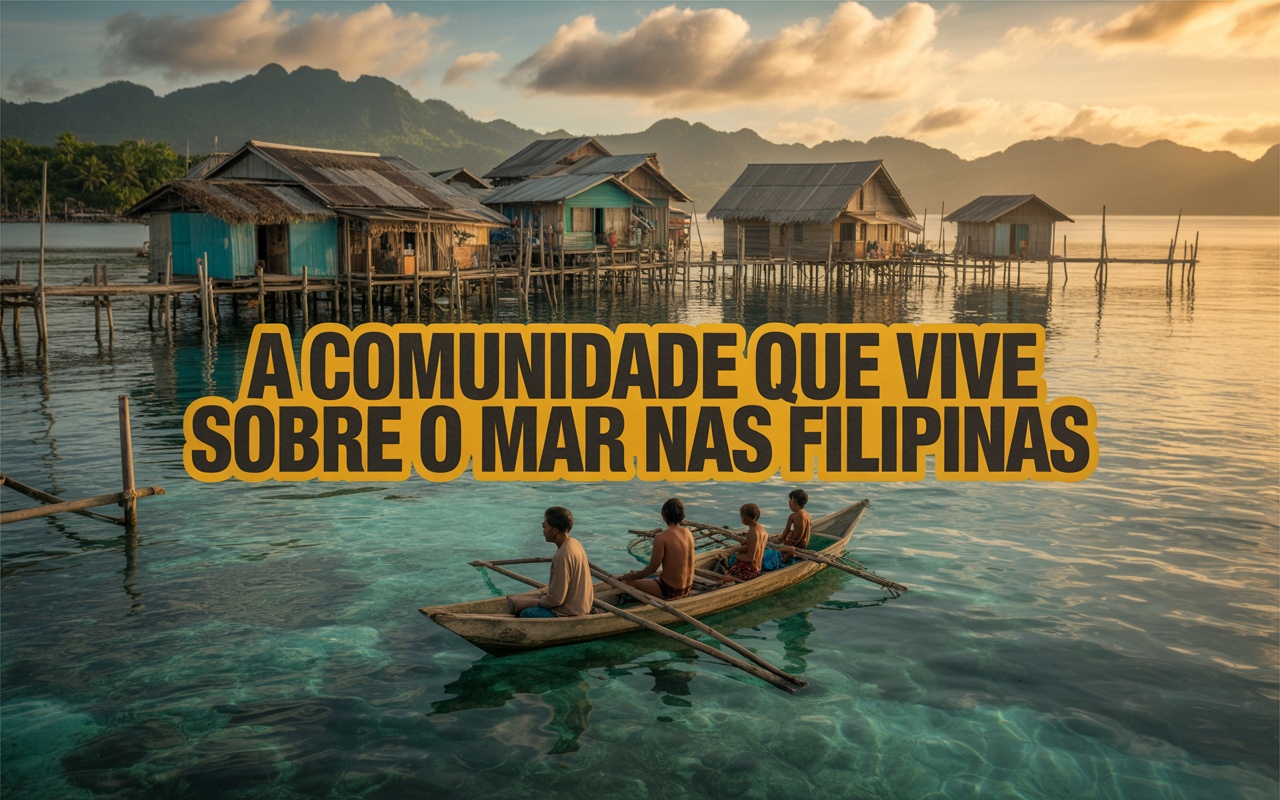
Isolated In The Far South Of The Philippines, The Badjao Maintain Entire Villages Floating On The Sea, Traveling Only By Boats And Preserving One Of The Last Oceanic Nomadic Traditions Still Existing On The Planet.
In the far south of the Philippines, between the dark blue waters of the Sulu Sea and the remote islands of Tawi-Tawi, lives one of the most unique peoples in Asia: the Badjao, known internationally as Sea Nomads. In an increasingly urbanized and technological world, they preserve a way of life built almost entirely on water. Their homes, supported by stilts or floating on the sea, form small villages that gently sway with the tides. Their lightweight boats replace streets, roads, and sidewalks. For the Badjao, the ocean is not just territory — it is home, school, transportation, and sustenance.
The maritime mobility that marks the identity of this people has been documented by anthropologists throughout the 20th century, and institutions like UNESCO recognize Badjao culture as one of the last truly maritime societies in existence.
What seems exotic or extreme to many is simply everyday life for them:
they wake up to the sound of waves beneath the wooden floor, prepare meals over the sea, fish around their houses, and take children to school in small canoes.
A Life Built On Water: The Villages That Float With The Tide
The Badjao traditionally live in houses on stilts driven into the shallow sea floor or on floating platforms anchored near the shore. In various regions of Tawi-Tawi and Sulu, small communities organize as entire villages on the sea, where each house is connected to the next by improvised planks or small bamboo walkways.
When the tide rises, the entire village seems to float. When it recedes, it reveals the stilts and the sandy ground where there was once only water.
-
Friends have been building a small “town” for 30 years to grow old together, with compact houses, a common area, nature surrounding it, and a collective life project designed for friendship, coexistence, and simplicity.

-
This small town in Germany created its own currency 24 years ago, today it circulates millions per year, is accepted in over 300 stores, and the German government allowed all of this to happen under one condition.

-
Curitiba is shrinking and is expected to lose 97,000 residents by 2050, while inland cities in Paraná such as Sarandi, Araucária, and Toledo are experiencing accelerated growth that is changing the entire state’s map.

-
Tourists were poisoned on Everest in a million-dollar fraud scheme involving helicopters that diverted over $19 million and shocked international authorities.



In some settlements, families still preserve the ancestral custom of living in houseboats called lepa-lepa. These vessels are complete homes: they have space for sleeping, cooking, storing supplies, and fishing. It is common to see boats anchored side by side forming small “streets” of wood over the sea — communal spaces where families talk, exchange fish, care for children, or make repairs on the vessels.
For those living in cities, stone streets, sidewalks, and cars are basic attributes of daily life. For the Badjao, the equivalent is the boats. They replace cars, motorcycles, buses, and even bicycles. There is no other way than the waters that stretch around.
Children Growing Up In Boats: The Daily Life Shaped By The Tides
One of the most striking images recorded by anthropologists and documentarians over the past decades shows Badjao children paddling alone in small canoes, with the same naturalness that other children have while riding a bicycle.
From a very young age, they learn to navigate, paddle, and jump into the water with skill. The older ones teach essential skills to survive in communities formed almost entirely on the ocean.
To go to school, many Badjao children depend on their family’s boats.
In Tawi-Tawi and Basilan, the school journey can take between 20 and 40 minutes of navigation, depending on the tide. During the windy season, when the sea gains higher swells, the journey becomes even more challenging.
However, for this community, there is no strangeness. Sailing is part of childhood, and the sea is both park, road, and territory of life.
A Culture Shaped By The Deep Relationship With The Ocean
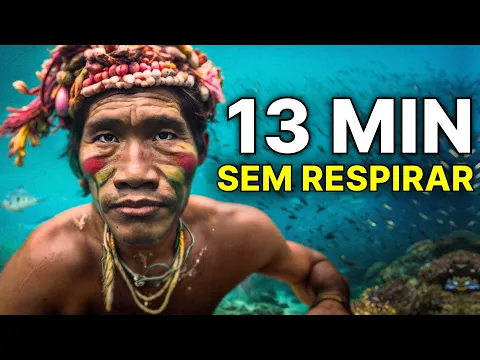
The Badjao have developed fishing and diving techniques considered unique in the world.
For centuries, they have been pioneers in free diving — many divers can reach depths greater than 20 meters without equipment, holding their breath for long minutes in search of fish, octopus, and shellfish.
Research conducted by Asian universities has identified real physiological adaptations in Badjao who have spent their lives diving: the spleen, responsible for releasing red blood cells during diving, tends to be larger than that of other peoples in the region.
In practical terms, this means greater tolerance for prolonged diving and better performance in apnea. These findings have turned the Badjao people into a scientific reference for studies on human adaptation to the marine environment.

The relationship with the ocean also appears in traditions. Festivals are held on boats decorated with colorful flags that float side by side, creating a kind of temporary maritime village. It is a visual spectacle that attracts researchers and tourists, besides reinforcing the cultural identity of groups that, in many places, face socioeconomic challenges.
Use Of Boats As A Form Of Transportation, Sustenance, And Survival
Without roads and no land access in several settlements, the Badjao rely entirely on boats to:
- Reach markets on neighboring islands
- Transport fish and seafood for sale
- Take children to school
- Visit family in other villages
- Access medical services
- Fetch drinking water from municipal stations
In some communities, larger boats transport entire groups to neighboring villages at specific times, functioning almost like informal public transportation.
The tide defines travel times. At low tide, the path may become too shallow for larger vessels. At high tide, the wind may bring stronger waves that hinder navigation. The entire routine is shaped around this natural rhythm.
Changes, Challenges, And Cultural Preservation
Despite the enduring tradition, the Badjao’s life faces new pressures.
With the advance of urbanization and tourism on some islands, many have been displaced to coastal areas, while others migrated to larger cities in search of work.
Even so, a significant part of the people maintains their villages on floating platforms or stilts, preserving their maritime identity.
Support programs driven by local and international organizations seek to provide education, basic services, and civil documents for Badjao communities that have historically been isolated from the formal Filipino system.
Still, maritime culture endures. It endures in the small canoes that move between floating houses. It endures in the houseboats that still sail from island to island. It endures in the traditional singing that echoes over the sea at sunset.
One Of The Last Maritime Peoples On The Planet
In a world where almost every city is built on solid ground, where paved streets define borders, and where distances are measured in kilometers and not in knots, the Badjao represent a rare way of life.
They are a living reminder that humanity did not always belong to the soil — that for centuries we navigated, migrated, and survived on the ocean.
While many maritime peoples have disappeared with modernization, the Badjao remain there, balancing tradition and survival, living on a liquid territory that changes daily with the wind and the tide.
In the archipelago of the Philippines, their presence is a testament to adaptation, cultural resistance, and an intimate connection with water. And as long as the boats continue to set out with the sunrise and children keep paddling to school, the Badjao will remain one of the last peoples to live not beside the sea — but within it.








-

-

2 pessoas reagiram a isso.