





 Portuguese
  English
  Spanish
  3 min of reading
  71 comments


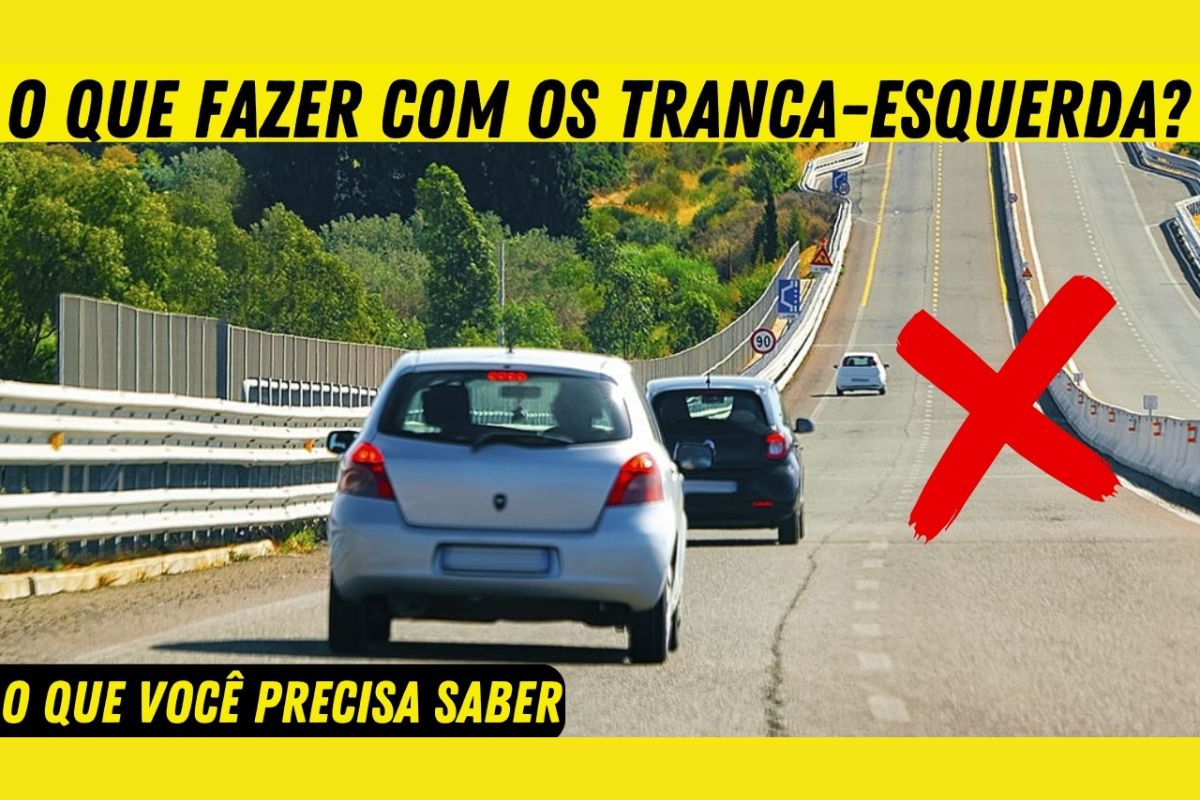


Driver Who Keeps the Vehicle in the Left Lane Without Allowing Overtaking Can Be Fined, and the Driver Who Overtakes on the Right Is Also at Risk of Penalty; Understand the Rules of the Brazilian Traffic Code and How to Act Legally Without Losing Points on the CNH
Situations of traffic jam in the left lane are common on Brazilian roads and often generate conflict between drivers. Even when within the speed limit, the driver who prevents another vehicle from passing on the left commits an infraction, according to Article 198 of the Brazilian Traffic Code (CTB).
On the other hand, overtaking on the right is also considered an infraction, as provided in Article 199 of the CTB, with a fine and four points on the license. The challenge is to understand when this maneuver is really prohibited and under what circumstances the driver can move on the right without being penalized.
When the Driver Should Leave the Left Lane
Article 29 of the CTB states that the left lane is intended for overtaking and for faster vehicles, meaning that remaining there at a speed lower than the flow is a medium-level infraction. Even if the driver is respecting the speed limit, they must yield to vehicles approaching at a higher speed, as it is not the driver’s responsibility to assess whether the other is above the allowed speed.
-
The Senate approves a bill that criminalizes misogyny, hatred, or aversion towards women, and includes the crime in the Racism Law with a penalty of up to 5 years.

-
Chamber Approves Bill That Allows Pepper Spray for Women Over 16 and Imposes Strict Rules for Purchase, Possession, and Use as Self-Defense

-
Chamber Approves Law to Combat Leucaena, Fast-Growing Plant That Dominates Land and Threatens Native Species in Various Regions of the Country

-
Asset Division: Know What Cannot Be Divided in Case of Divorce


In addition to being a legal requirement, leaving the left lane increases road safety, reduces the risk of rear-end collisions, and avoids situations of stress or dangerous maneuvers by other drivers.
Overtaking on the right is generally prohibited in Brazil. It is only considered legal when the vehicle in front signals the intention to turn left, allowing another to proceed safely on the right. This exception is directly provided in Article 199 of the CTB.
On highways, the technical recommendation is for the driver to not overtake on the right, but rather change lanes and remain in it for a few meters before returning to the left. This characterizes a “passing of another vehicle”, not an irregular overtaking. Although the Code does not define a minimum distance, experts recommend maintaining at least one kilometer before returning to the original lane to avoid being fined.
Penalties for the Offending Driver
According to the CTB, overtaking on the right constitutes a medium-level infraction, with a fine of R$ 130.16 and four points on the CNH. The driver who does not yield on the left also commits a medium-level infraction, subject to the same penalties. Enforcement can be carried out by traffic agents or by video monitoring, including the use of drones on highways.
These rules reinforce the importance of every driver maintaining attention to the position and function of each lane, prioritizing fluidity and collective safety. Compliance with these rules helps to reduce accidents and conflicts in traffic.
More than just avoiding fines, adopting a collaborative behavior in traffic is essential to reduce risks. The driver must understand that staying on the left without necessity harms mobility, while irregular overtaking compromises safety. Both behaviors are at the center of the most common infractions on highways.
With information and awareness, it is possible to transform the habit of driving into a safer and more respectful practice, benefiting all road users.
The rule is clear: whoever blocks the left lane commits an infraction, and those who overtake on the right outside of the exception do as well. The correct application of these rules prevents accidents and maintains traffic fluidity.
Do you agree with these rules? Do you think that the fines applied in these cases are fair or excessive? Leave your opinion in the comments — we want to hear from those who experience this in practice.









Sim
ja passei por isso. a pessoa travou o trânsito do lado de um caminhão. eu passei para a faixa da direita. e ele mesmo sabendo que eu estava lá me fecho de forma irresponsável e criminosa. temos traumas até hoje. dessa situação. estavam eu meu filho e minha esposa. Lamentável. quase morremos naquele dia.
Eu concordo com essas regras