





 Portuguese
  English
  Spanish
  3 min of reading
  3 comments


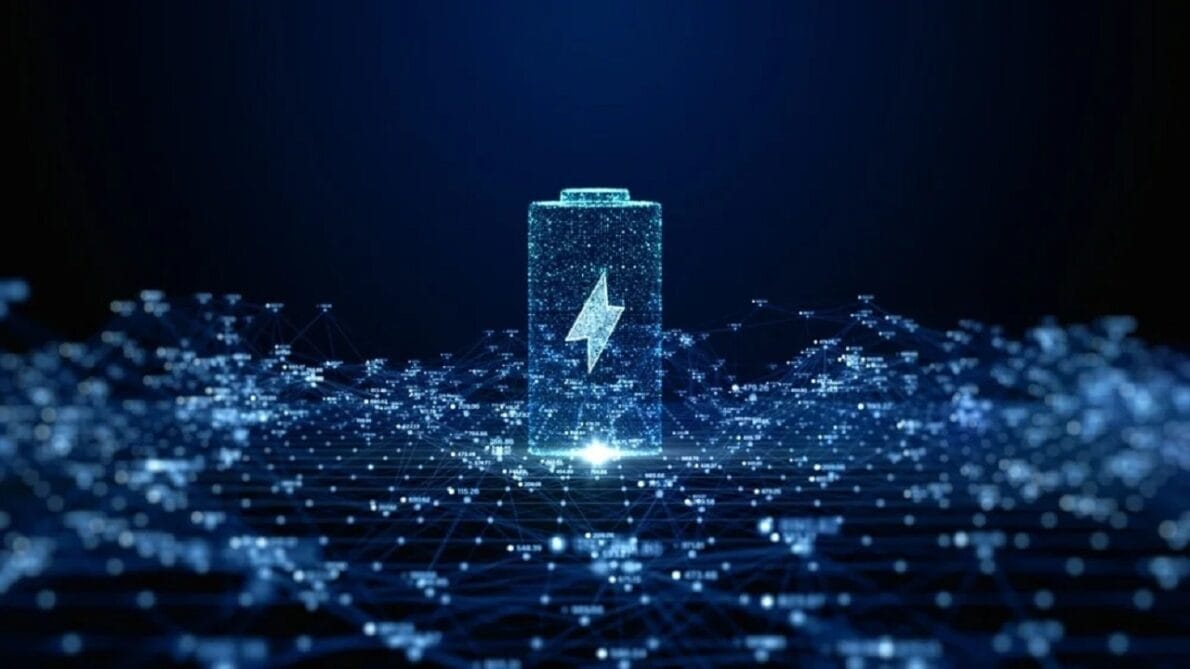

Discover The Revolutionary Chinese Water Battery With Double The Capacity Of Lithium Ones. Safer And More Efficient, Ideal For Electric Vehicles
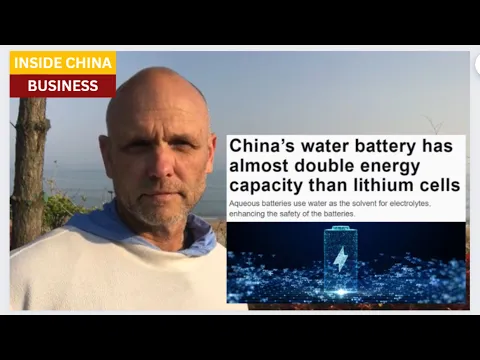
Chinese researchers have developed a water-based battery that promises to be safer and more efficient in energy than traditional lithium options. These new aqueous batteries, using a mixed halogen solution, have demonstrated an energy density that could double that of lithium-ion batteries, marking a potential change in the electric vehicle industry and large-scale energy storage.
In a recent breakthrough in battery technology, a team of researchers from the Dalian Institute of Chemical Physics (DICP), part of the Chinese Academy of Sciences (CAS), developed an aqueous battery with energy capacities that almost double those of traditional lithium cells. This development not only promises to enhance safety but also improve energy efficiency.

Safety And Energy Efficiency Of The Aqueous Battery
Aqueous batteries use water as a solvent for electrolytes, which significantly improves their safety compared to non-aqueous lithium batteries, which are highly flammable due to the organic electrolytes they use. The latter, while offering high energy density, compromise safety.
-
While the world looks at oil, the war with Iran is already disrupting helium supply from Qatar, affecting car and iPhone chips, threatening AI expansion, and putting pressure on aluminum packaging at the highest value in four years.

-
Global warming will expose a treasure hidden under the ice of Antarctica and may spark an international dispute over gold and valuable minerals.

-
A street vendor from Praia Grande built a robot made of scrap from scooters and washing machines that pulls his popcorn cart on the beach, emits sounds, and interacts with customers, becoming an attraction on the coast of São Paulo.
-
The specifications of the Xiaomi 18 Pro Max have been leaked, and the highlight is a dual 200 MP camera with a new 22-nanometer technology that promises to consume less energy and capture details in shadows and bright areas using LOFIC HDR.

Improved Energy Density
While aqueous batteries generally exhibit a lower energy density due to the limited solubility of the electrolyte and low voltage, researchers from DICP have managed to develop a high-energy-density aqueous battery through a multi-electron transfer cathode based on bromine and iodine.
Technical Innovations
The group led by Prof. Li Xianfeng and Prof. Fu Qiang, also from DICP, used a mixed solution of iodide (I-) and bromide (Br-) ions as electrolyte. During the charging process, iodide ions are oxidized to iodate (IO3-) on the positive side, while the generated protons are transported to the negative side as supporting electrolyte. This process is reversed during discharge, allowing for a reversible and rapid electrochemical reaction.
The developed cathode achieved a specific capacity of over 840 Ah/L and an energy density of up to 1200 Wh/L, according to a study published in Nature Energy. These results not only surpass the energy density of some solid electrode materials but are also cost-competitive with traditional lithium batteries.
Potential Impact And Future Applications
The increase in capacity and energy density of these aqueous batteries could have a significant impact on the electric vehicle industry and grid-scale energy storage. Furthermore, the lifespan could extend to 1000 cycles, demonstrating significant stability.
The development of aqueous batteries with high energy density offers a new option for designing safer and more efficient batteries. This advancement is not only promising for application in power batteries but could also significantly expand application in various fields of renewable energy and sustainability.
Source: scmp








Uau!!! Que bom!!!
1000 ciclos? Supondo uma carga a cada 2 dias dá aproximadamente 5,5 anos e no caso de uso pesado que necessita de uma carga diária vai dar 2 anos e nove meses. Eu estou imaginando que essa bateria seja utilizada em automóveis. Enfim o carro elétrico será obrigatoriamente descartado quando a bateria acabar. Ainda que essa bateria seja mais barata o que se levarmos o terrível “custo Brasil” não vai fazer diferença nenhuma para um automóvel vendido aqui.
Seu cálculo é correto, menos na parte de “descartar o carro”. Não tem nem lógica, se for uma bateria fácil de produzir e reciclar, basta que o carro seja produzido com mecanismo especial para troca de módulos. O restante do carro sofrerá manutenções comuns, e a bateria antiga seria devolvida ao fabricante para filtragem e reaproveitamento dos materiais básicos. No mundo dos nossos pais, as chances de um carro de papel eram mais altas, mas a pressão pela sustentabilidade só vai aumentar com o passar dos anos e nenhuma obsolescência que gere desperdícios nesse caso vai dar lucros que valham a tramóia