





 Portuguese
  English
  Spanish
 5 min of reading
  0 comments


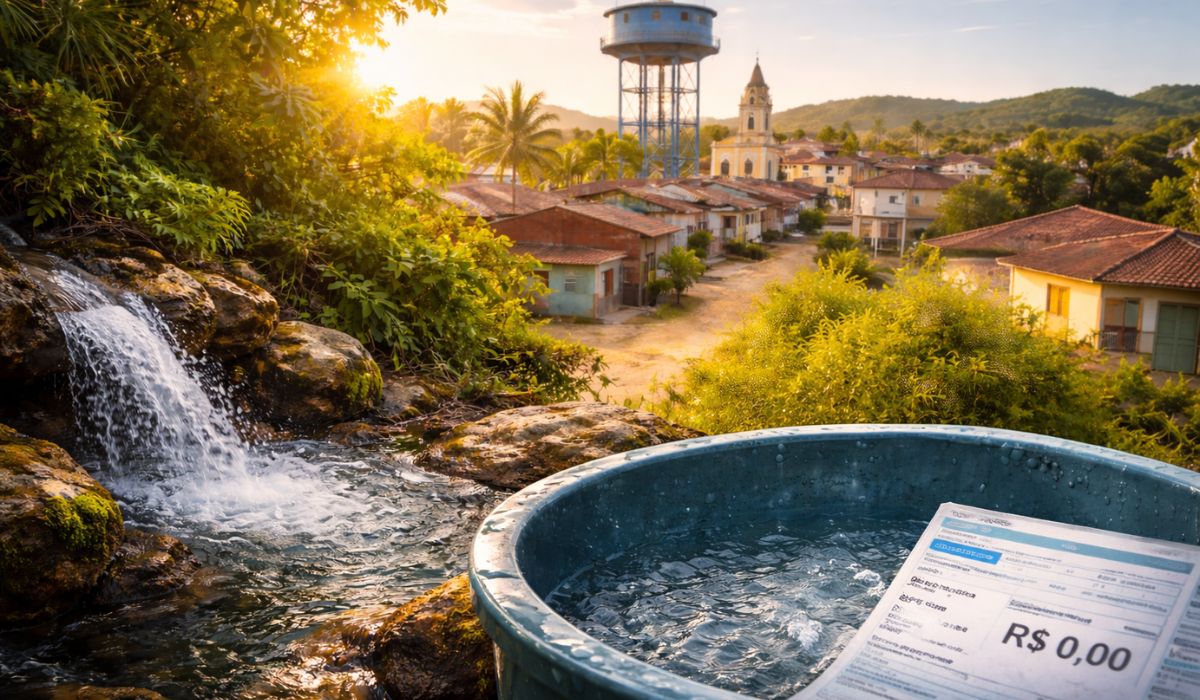
Municipality of Paraíba Maintains Water Supply Without Charge Since 1961 and Discusses Future of the System Amid Environmental Challenges and Possible Service Concession.
Since political emancipation in 1961, Itapororoca, in the Zona da Mata of Paraíba, has maintained urban water supply without charging residents for water.
The model, sustained by a spring that serves the urban area, has come under closer scrutiny amid population growth and discussions regarding system security.
IBGE data indicates that the municipality had 18,382 inhabitants in the 2022 Census, with an estimated 19,165 residents by 2025.
-
Friends have been building a small “town” for 30 years to grow old together, with compact houses, a common area, nature surrounding it, and a collective life project designed for friendship, coexistence, and simplicity.

-
This small town in Germany created its own currency 24 years ago, today it circulates millions per year, is accepted in over 300 stores, and the German government allowed all of this to happen under one condition.

-
Curitiba is shrinking and is expected to lose 97,000 residents by 2050, while inland cities in Paraná such as Sarandi, Araucária, and Toledo are experiencing accelerated growth that is changing the entire state’s map.

-
Tourists were poisoned on Everest in a million-dollar fraud scheme involving helicopters that diverted over $19 million and shocked international authorities.


Over the past decades, the city has been mentioned in reports and studies on sanitation for adopting a method of capturing and distributing water distinct from most Brazilian municipalities, which rely on paid systems and greater operational complexity.
Water Supply from Own Spring in Itapororoca
The Municipal Basic Sanitation Plan, completed in 2016, states that the public water supply originates from a spring located in the Nascença Municipal Park, an area of Atlantic Forest under local protection.
According to the document, capture occurs continuously, 24 hours a day.

The plan records that the flow of the spring has previously reached 120,000 liters per hour, but during the diagnostic period, it had been observed to reduce to about 40,000 liters per hour.
The data is included in the technical report prepared to guide municipal sanitation policy.
Water Distribution by Gravity and Existing Structure
The water is conducted to the city due to the difference in altitude between the spring and the urban perimeter.
Reporting from Jornal da Paraíba describes that the supply is done by the force of gravity, without the use of pumps or motors, and notes an elevation difference of approximately 98 meters between the capture point and the urban area.
According to the municipal plan, the structure includes a pipeline originally made of asbestos.
Part of the material was replaced with cast iron, but the document indicates that there was still a remaining stretch of about 1.5 kilometers with the old material at the time of the diagnosis.
The report mentions that asbestos is classified as harmful to health, although it notes that there was no specific investigation proving a causal relationship between the pipeline and the cancer cases mentioned in the text.
Water Quality and Sanitary Requirements
According to the Municipal Basic Sanitation Plan, physical-chemical analyses indicated that the raw water from the spring met drinking water standards in these aspects, but the system required disinfection to fully comply with sanitary regulations.
The document reports that monthly analyses were conducted to monitor the quality of the water distributed.

The technical report does not detail domestic procedures adopted by residents for disinfection.
There is no confirmation, in the consulted official documents, about any standardized practice of chlorine use in households.
Environmental Risks Around the Water Source
The municipal diagnosis also describes factors considered risks to the water source.
These include the possibility of deforestation around the spring and potential contamination associated with agricultural activities in nearby areas, with the use of fertilizers and pesticides.
The technical text also cites the presence of commercial and recreational activities in the Nascença Park and points out that, at the time of the survey, there was no basic sanitation system in place.
According to the plan, this condition could pose a risk of contamination to the subsoil.
Another point highlighted in the report is the control of access to the spring area.
The document classifies the absence of permanent restriction on the capture point as serious and states that the circulation of people could pose risks to the system, even in extreme situations.
Concession to Cagepa and Debate on Possible Charges
Given regulatory requirements and investment needs, the municipal plan cites the possibility of granting water supply and sewage services to the Water and Sewage Company of Paraíba, Cagepa.
The proposal has become part of the local debate in recent years.
Documents from the City Council indicate that, in 2025, a request was made for a bill to subsidize any water and sewage fee for low-income families, already considering the future implementation of the service by Cagepa.
The request signals that the administration is discussing alternatives for a scenario of tariffing.
Reports published in the state press note that the concession was approved, but no date had been set for the start of operations yet.
Residents interviewed in these reports express differing views.
Some support the change as a way to increase the security and regularity of the supply, while others express concern about the charges for the service.
Unique Case in the Brazilian Sanitation Scenario
Experts interviewed in reports on the subject classify the case of Itapororoca as uncommon in the Brazilian scenario, due to the combination of its own water source, gravity distribution, and historical absence of charges.
At the same time, they point out that maintaining sanitary standards and environmental protection requires continuous monitoring and investments.
With population growth and environmental pressures described in official documents, the municipality is discussing the next steps for the water supply system.
The eventual transition to a charged model, if confirmed, may alter a practice adopted since 1961.









-

-

-

-

-

9 pessoas reagiram a isso.