





 Portuguese
  English
  Spanish
  3 min of reading
  1 comment



BYD Anticipates Tax Increase And Brings 100,000 Hybrid And Electric Vehicles – Understand How BYD Is Revolutionizing The Car Market In Brazil, Ensuring Competitive Prices Before July
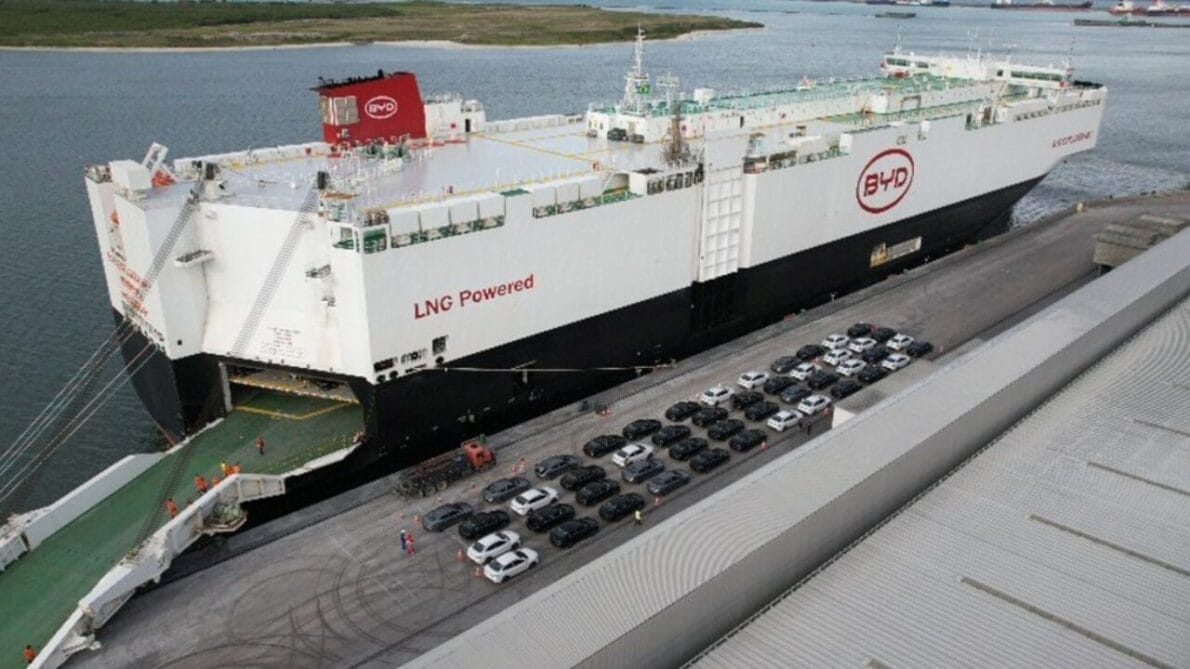
BYD continues to make headlines with its arrival in the region. After unloading more than 5,000 cars in Brazil at once with its own ship, it has now announced that it will bring up to 100,000 hybrid and electric cars before the beginning of July.
The Chinese brand’s decision is motivated by the fact that, starting July 1st, hybrid and electric cars in Brazil will face an additional increase in the import tax.
With this action, the company seeks to maintain the low prices it has been practicing since the beginning of the year, as this new tariff could lead to costs being transferred to consumers. To anticipate this change, BYD aims to reach the mark of 100,000 vehicles imported from China before July.
-
USA and China compete for Brazil over resources that could be worth trillions — rare earths put the country at the center of a global dispute

-
A French brand placed a car on four huge red balloons to prove that its suspension made the vehicle “float,” and the surreal scene became one of the most iconic and unusual images in automotive history.

-
Jeep Avenger begins production in Brazil, debuting as the brand’s new entry-level SUV and inaugurating an unprecedented phase by becoming the first national Jeep manufactured outside of Goiana, as part of a R$ 3 billion plan.
-
Costing R$ 12,490, the new Shineray Urban Lite 150 “cheap one” arrives in Brazil with a CVT transmission, digital dashboard, and LED lights, making it more affordable than the Biz and targeting those who want to abandon the bus.

This volume should be enough to supply the company’s operations in Brazil until the end of the year, when local production is expected to start in Camaçari, Bahia, in the north of the country.
Even if there are storage costs in Brazilian ports or distribution centers in different regions of the country, these expenses would be less than the additional cost of the higher tax.


An Unusual Movement
This unusual move is due to the substantial increase in the import tax, which will rise from 10% to 18% for electric vehicles and from 12% to 20% for plug-in hybrids starting in July. Non-plug-in hybrids, a category in which BYD does not participate, will have a rate of 25%.
An Unprecedented Volume Of BYD Cars
According to sources close to the brand, between January and May of this year, BYD imported approximately 30,000 vehicles to Brazil, of which 25,000 had already been registered by mid-May and 5,500 were recently unloaded at the port of Suape, Pernambuco.
There are still approximately 65,000 vehicles to reach in one month to meet the goal. To achieve this, BYD will need to carry out an intense logistics operation to ensure that all vehicles enter the country before June 30, thus avoiding the tax increase. This operation is already underway, as more than a dozen ships loaded with the brand’s vehicles are scheduled to dock at Brazilian ports in the coming weeks.
Each ship is expected to transport on average 3,500 units to reach the goal, implying a very frequent arrival of ships, approximately one every two days. “Our schedule varies. We can receive ships every three days, a week, or more. It all depends on the schedule,” explained Leonardo Felippe, BYD’s supply chain director.
Currently, BYD operates at the ports of Suape (PE), Vila Velha (Espírito Santo) and Itapoá (Santa Catarina), using Ro-Ro type ships, which allow vehicles to enter and exit on their own wheels.
If the Chinese manufacturer manages to import 100,000 cars by July, it will set a record in Brazil for the largest arrival of imported vehicles in a six-month period. This will also reflect a significant leap in the brand’s results in Brazil. In 2023, BYD registered 18,000 units in the country, and in the first four months of 2024 alone, nearly 22,000 have already been registered.
If BYD manages to sell 100,000 vehicles in 2024, it will not only grow more than five times compared to the previous year, but it will also reach the licensing volume that Renault achieved last year in passenger cars. The Chinese brand is already among the top ten best-selling in the Brazilian market.
Logistical Challenges And Benefits
Importing such a large number of vehicles presents a considerable logistical challenge but will also offer significant savings, allowing the company to avoid passing costs onto customers until production begins at the Camaçari factory.








Seu site as vezes é impossível de navegar de tanta propaganda que pula na tela. Por várias vezes abandonei o site e fui ler notícia em outro. Reveja isso no seu site urgente