





 Portuguese
  English
  Spanish
  3 min of reading
  0 comments


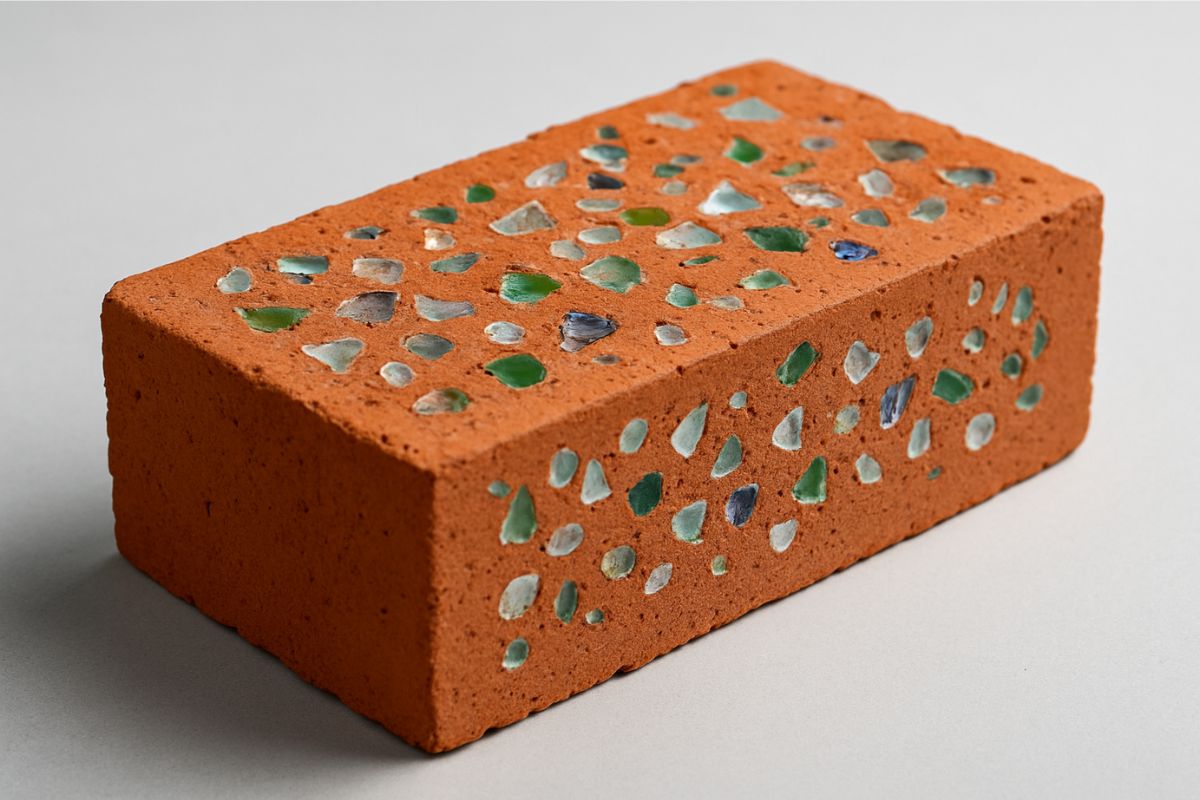
Sustainable Bricks: Better Thermal Insulation and Cheaper Than Conventional Ones. Transform Your Construction with Energy and Cost Savings
Bricks are a fundamental material in construction and the built environment, with an annual production of 1.3 trillion units. The new smart energy formula developed by RMIT could generate significant carbon savings if implemented on a large scale, while helping to reuse waste that would otherwise end up in landfills, including pieces of glass that are too small to be recycled into new jars and bottles.
Furthermore, with their enhanced insulating capability, these bricks could provide significant savings on energy bills as the cost of living continues to rise.
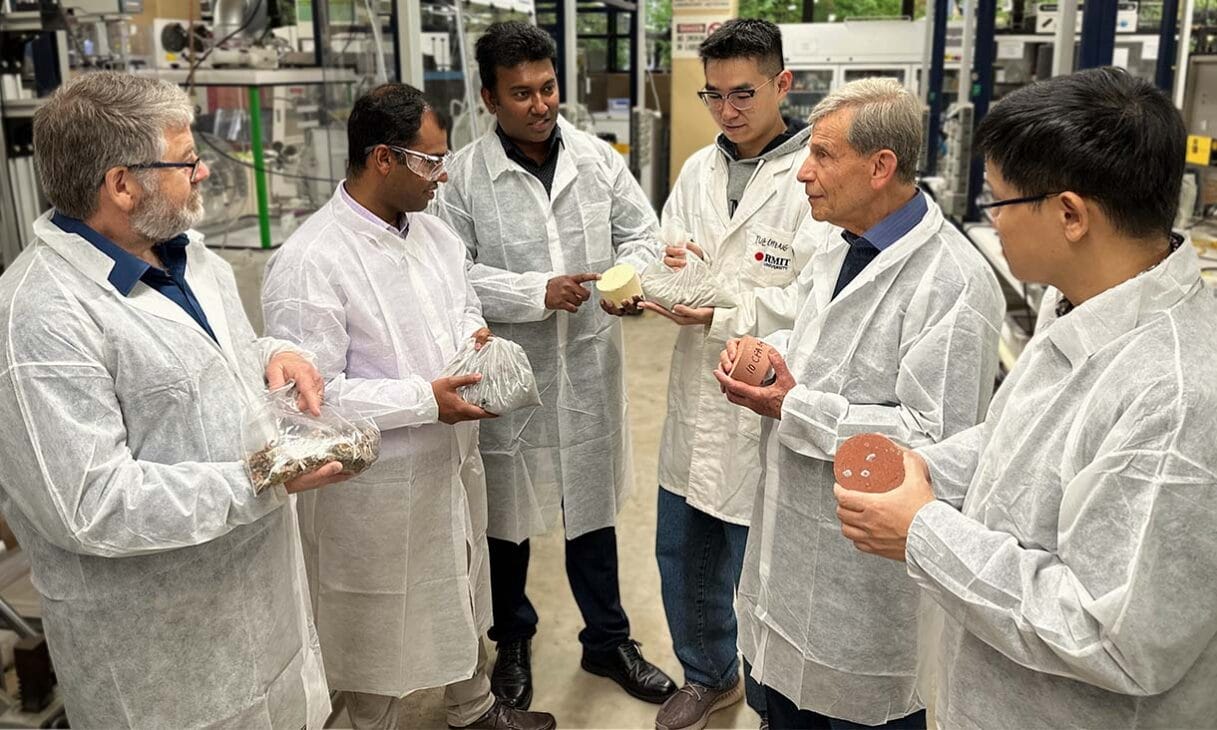
Energy Bill Savings
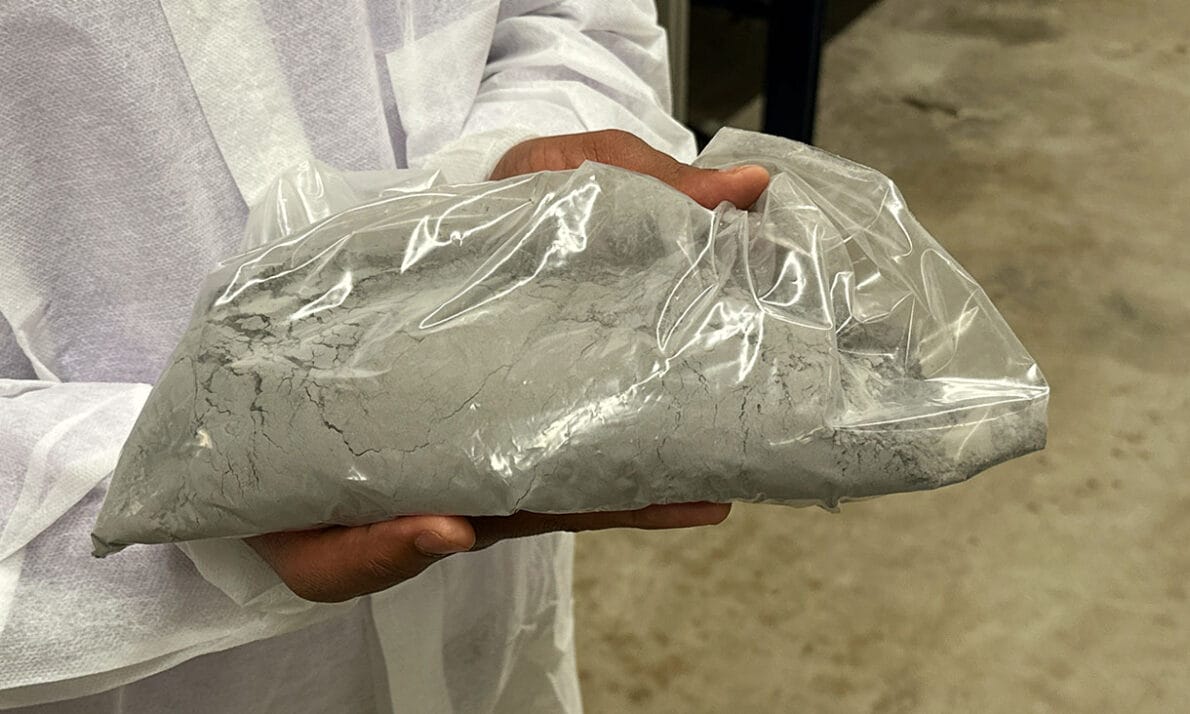
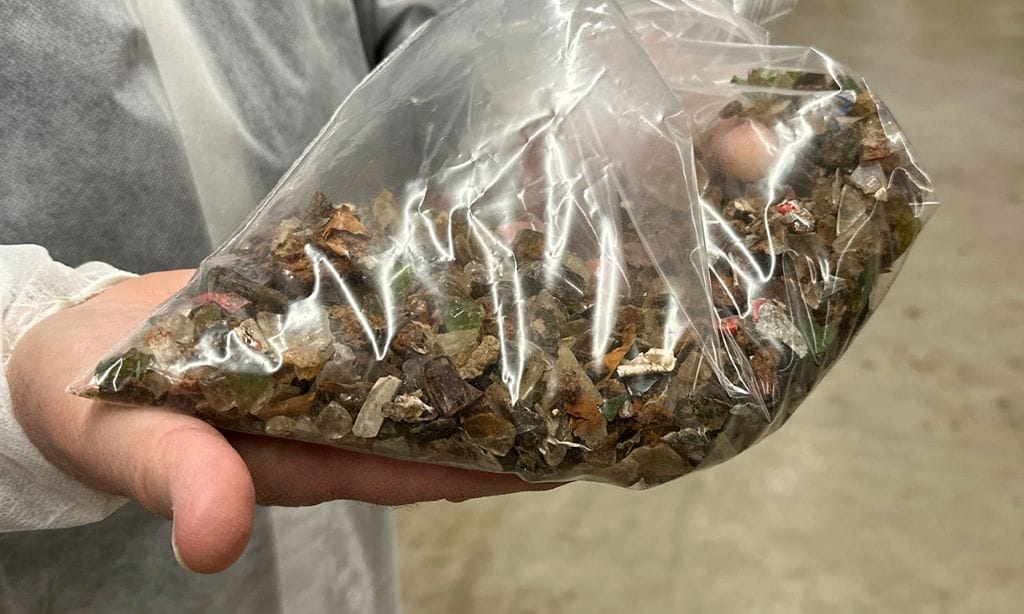
Climate change is causing increasingly extreme weather, with hotter summers and colder winters, and energy-intensive systems are becoming more necessary to keep indoor temperatures comfortable. Now, engineers at RMIT in Australia have developed a new solution: energy smart bricks. In collaboration with the country’s largest recycling company, Visy, the researchers replaced the clay content in their bricks with waste materials: at least 15% of discarded glass that cannot be recycled and 20% of combustible solid waste (ash).
-
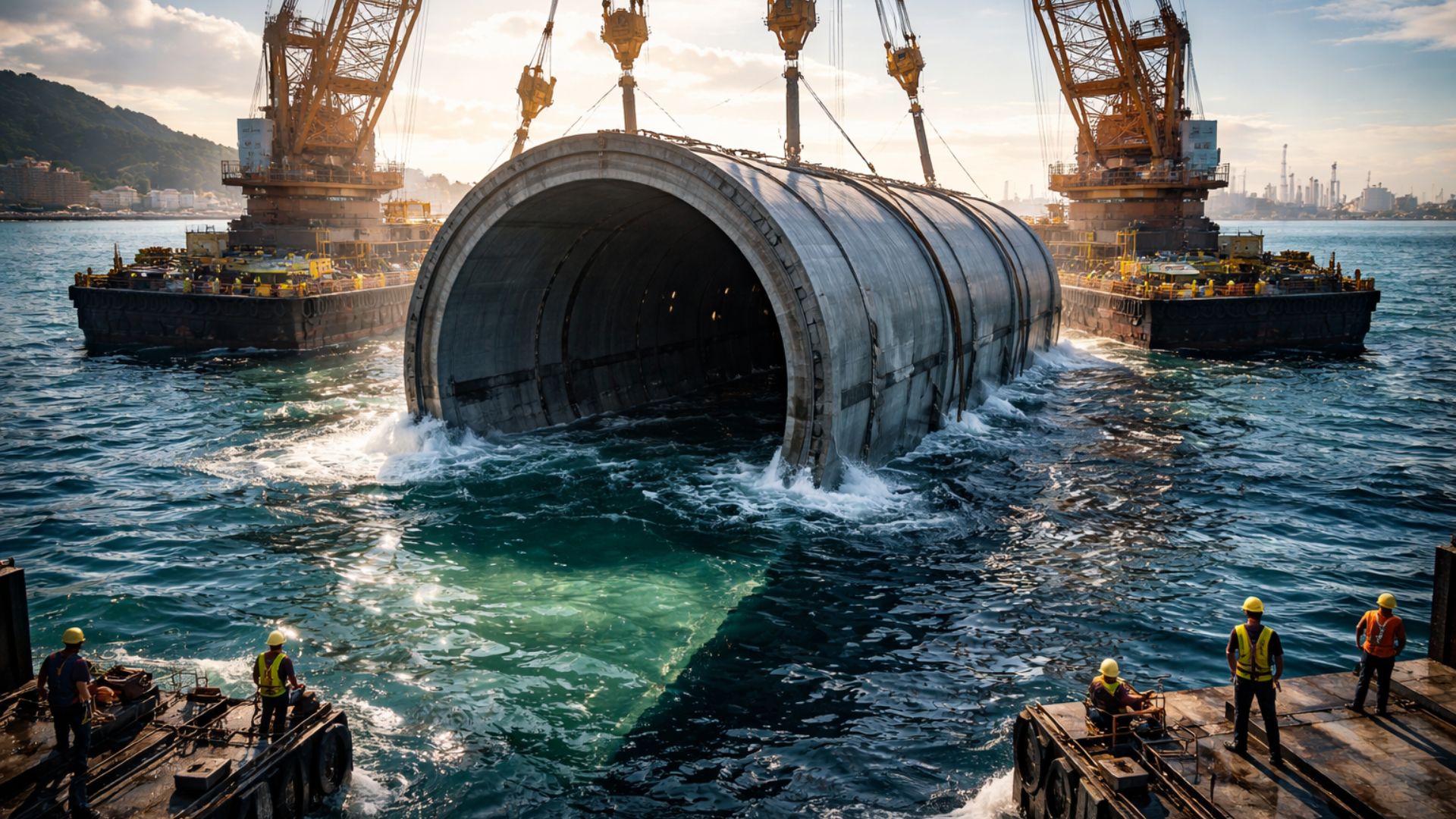
The government opens the vault and deposits R$ 2.6 billion for the construction of Brazil’s first underwater tunnel, with a length of 1.5 km, 870 m under the sea, a total project cost of R$ 6.8 billion, and a 30-year concession.
-
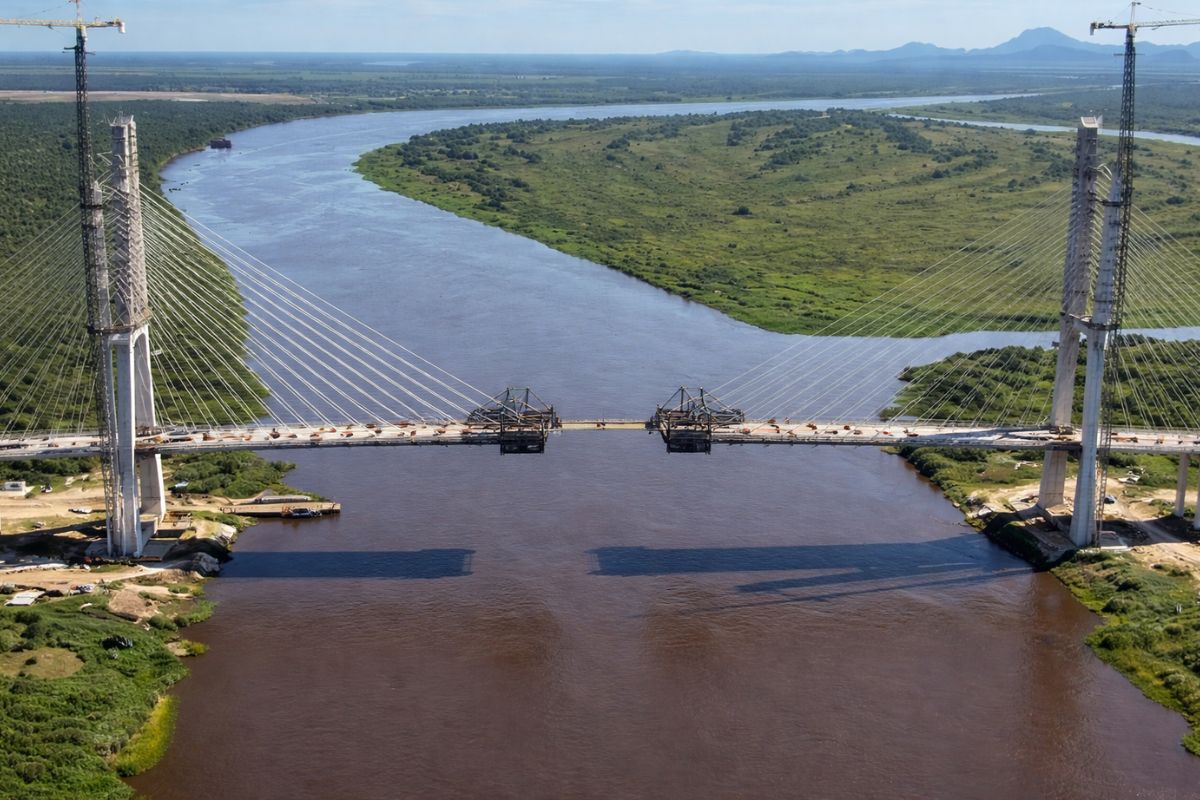
Only 46 meters remain for Brazil and Paraguay to connect via the Bioceanic Route bridge, the project that will link the Atlantic to the Pacific by land and change the logistical map of four countries in South America.
-
The bridge that holds the largest stone railway arch in the world: built over 100 years ago, destroyed in the war, and rebuilt to continue operating to this day, it still carries trains over the Soča River in Slovenia.

-
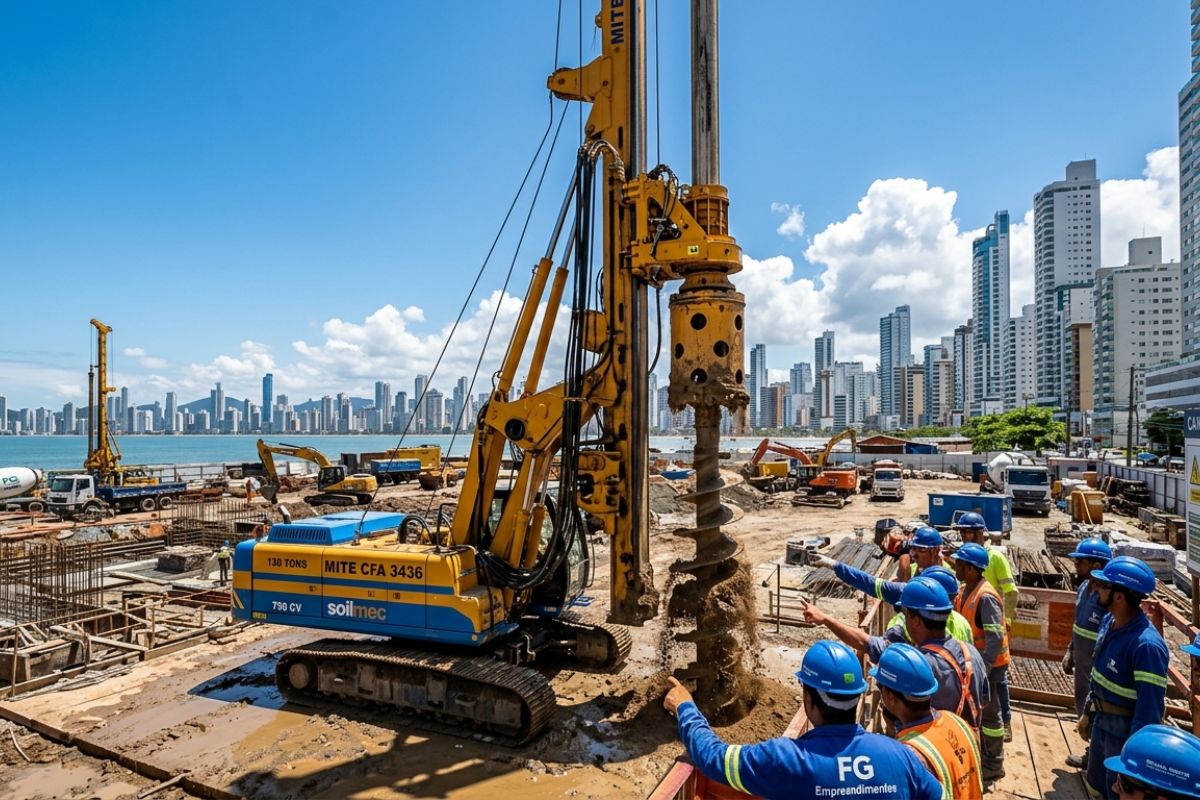
Italian giant of 130 tons arrives at the Senna Tower construction site and accelerates foundations: Mite CFA 3436 drills up to 50 m, 750 hp engine, investment of R$ 20 million, unique in Latin America.

Innovation in Construction
Modifying the brick recipe meant it could be fired at temperatures 20% lower than usual, which could lead to significant savings in costs and energy for manufacturers. And due to the fact that the insulating capacity of the bricks has been enhanced with the new elements, tests found that the new bricks could reduce energy bills by 5% in a single-story building. Currently, the team is working to scale up production and market their solution, hoping to explore other ways to incorporate waste into other construction materials.
Enhanced Energy Efficiency
The team’s research showed that the new bricks have higher energy efficiency through improved thermal performance and meet rigorous structural, durability, and environmental sustainability standards. The technology met the key compliance requirement for fired clay bricks established by Standards Australia (AS 3700).
Bricks play a crucial role in preventing energy loss from buildings.
We can also produce lightweight bricks in a range of colors, from white to dark red, by changing our formulations.
Dilan Robert
Circular Economy Solution
In Victoria, Visy recycles glass packaging to turn it into new bottles and jars. However, glass pieces smaller than 3 millimeters, known as fines, cannot be recycled into bottles.
We are focused on scaling the production process to facilitate the marketing of our innovative bricks in collaboration with brick manufacturers in Melbourne.
Dilan Robert
Paul Andrich, Project Innovation Manager at Visy, stated that the company was delighted to find a solution for the material that cannot be recycled into food and beverage packaging.
Diversion of this waste to bricks with higher insulation, instead of landfills, is another way to drive the circular economy.
Paul Andrich
The research team aims to collaborate with industries to explore applications of waste materials in other construction products. The innovation in manufacturing energy smart bricks not only addresses the challenge of waste but also contributes to energy efficiency and environmental sustainability. With the potential to be implemented on a large scale, this solution could revolutionize the construction industry and set a new standard for waste reuse and carbon emissions reduction.
Source: www.rmit.edu.au





-

2 pessoas reagiram a isso.