





 Português
  Inglês
  Espanhol
 6 min de leitura
  5 comentários


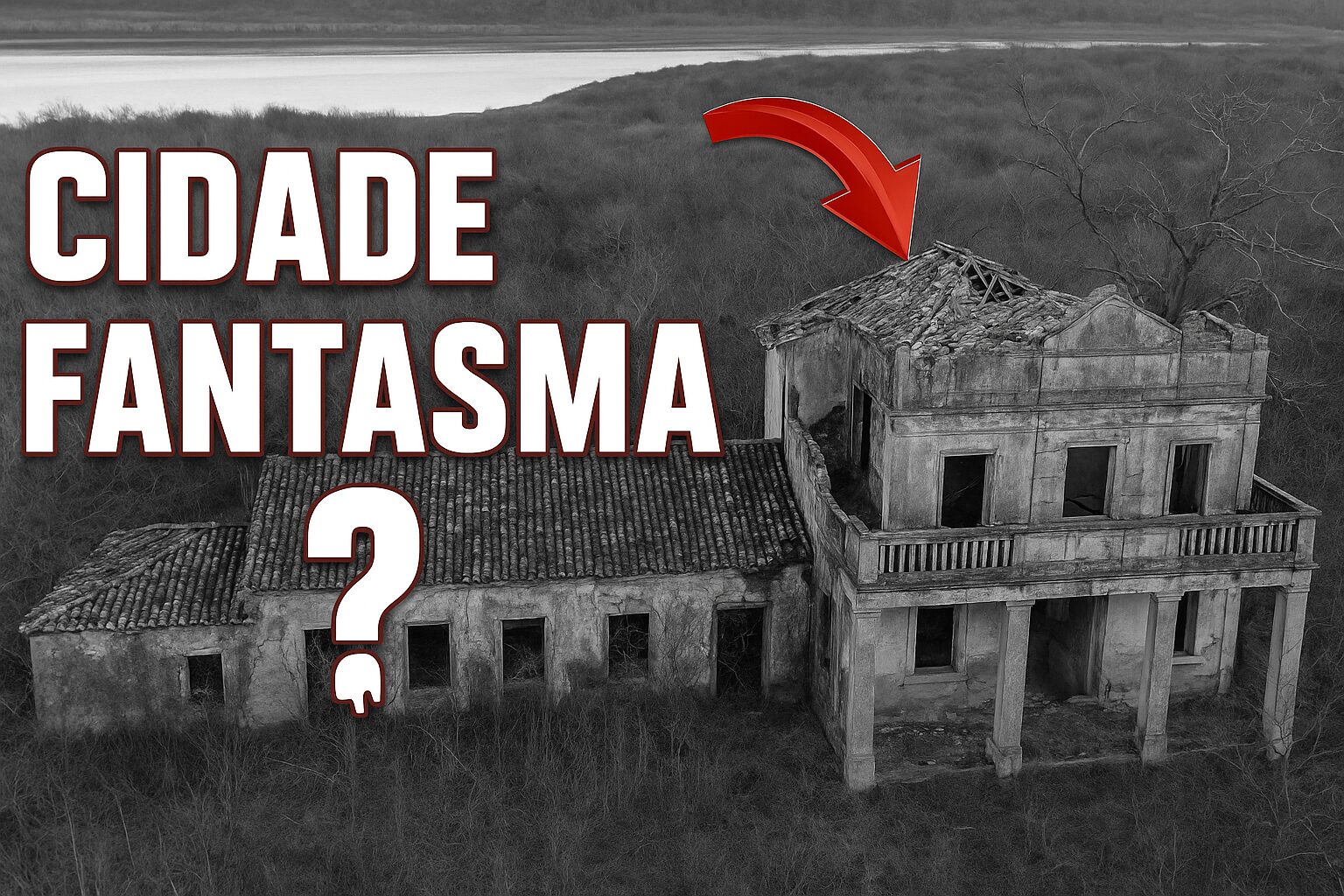


With only six residents and buildings overtaken by weeds, Cococi, in the sertão of Ceará, once had a mayor, city council, butcher, and bakery. Today, it is remembered as one of the most emblematic ghost towns in Brazil.
In the heart of the Inhamuns sertão, about 500 km from Fortaleza, the district of Cococi holds ruins of a past that was once bustling, politically and economically active. Despite having had a mayor, council members, over 3,800 residents, and even urban infrastructure with a notary office, hotel, pharmacy, and market, today Cococi is a ghost town.
The former seat of the municipality is almost completely empty: in 2024 only six people currently lived there, divided among two families. Weeds invade the ruins of public buildings. The houses are collapsing. What was once a symbol of regional progress is now synonymous with the abandonment of cities and state forgetfulness.
A Municipality Extinct by Law: The Political Past of Cococi
Cococi was elevated to the status of municipality on October 24, 1957, after decades as a district subordinate to other cities in Ceará. However, municipal autonomy lasted a short time. In September 1970, a state law officially extinguished the municipality, which reverted to being a district of Parambu, in Ceará.
-
Drought may be creating stronger superbugs in the soil and helping antibiotic resistance reach hospitals, warns a study highlighting a problem that could grow alongside extreme weather.

-
The biggest scam in history: Napoleon’s France deceived the United States by selling them a territory that was Spanish.

-
Why is the Danakil Desert so dangerous? It has unstable terrain and how extreme temperatures and toxic gases turn the region into one of the most hostile environments on Earth.

-
With a height of 221 meters and a capacity for trillions of liters, Hoover Dam still holds a trick that makes water defy logic.



The extinction occurred during the term of Eufrásio Alves Feitosa, the mayor and, at the same time, the owner of the lands of the former municipal seat. In fact, Cococi was one of the rare instances where the mayor was also the owner of the “town”, a structure inherited from the days of sesmarias.
The Federal Court of Accounts (TCU) even classified Cococi as a “fake municipality,” as it functioned more as a private property of the Feitosa family than as a republican structure of public management.
From Sesmaria to Town: The History of the Occupation of Cococi
The occupation of the region where Cococi now stands dates back to the early 18th century, in the context of the interiorization of the Portuguese colony. The Crown encouraged the migration of cattle ranchers to the interior of the Northeast, while the fertile areas near the coast were dedicated to sugarcane cultivation.
It was in this context that the Feitosa family left the Pernambuco coast and settled in the interior of Ceará, along the banks of the Jucá stream — a strategic location for cattle raising, with natural pastures and favorable climate.
The area was demarcated as a sesmaria, leading to the establishment of a settlement that gradually transformed into a village and then into a town. In 1740, the first church in the area was built, and eight years later, the Church of Our Lady of the Conception, still in operation and a symbol of the historical resistance of the locality.
The Three-Hundred-Year-Old Church: The Heart That Still Beats
Amid the abandonment, a single historical building remains active: the Church of Our Lady of the Conception. Founded in the 18th century, it is responsible for the only moment of the year when Cococi “reborn”: the feast of the patroness, celebrated annually and attracting residents from all over the region.
It is on this occasion that the urban center of the ghost town receives visitors again. Families return temporarily, reconnect with neighbors from the past, attend mass, and promote a kind of “symbolic reoccupation” of the place where there once were bustling streets, with stores, informal shops, butcher, bakery, and market.
“I Cried Too Much When the Feast Came Around”
Maria Clenilda, 53, is one of the six residents of the former urban seat of Cococi. She was born shortly after the municipality was extinguished and has lived her entire life there, witnessing the gradual emptying of the settlement. She lives in a house provided by the Feitosa family, next to her 12-year-old grandson.
According to her, the feast of the patroness was, for a long time, her only contact with Cococi’s more vibrant past:
“At first, I cried too much when the feast came around. Because I feel very lonely. I missed the people so much.” — In a report to G1
Clenilda reports that Cococi’s decline was accelerated by the drought and lack of alternative livelihoods. Most families depended on agriculture and ranching. Without rain, subsistence became unfeasible. Gradually, the population migrated to other regions in search of work.
The Causes of Abandonment: Drought, Poor Management, and Absence of the State
Experts point out that the rural exodus in Cococi intensified due to the lack of infrastructure and state support. Even though it was officially a municipality for 13 years, Cococi did not receive lasting investments in education, health, or local development.
Another crucial factor was the mismanagement of public funds, which motivated the formal extinction of the municipality. The TCU itself identified that Cococi lacked the administrative conditions to continue existing as a federative entity. The case became emblematic for debates about the artificial creation of municipalities for political purposes.
Nevertheless, the locality remains a district, with several rural properties scattered throughout the region. The urban center, however, is in ruins — a vivid portrait of the failure of public policies in the deep interior of the country.
The Current Picture: A Town Taken Over by Weeds
Today, Cococi is a nearly cinematic scene. The town’s hotel is empty. The former city hall is in ruins. The notary office, pharmacy, butcher, and city council no longer exist, except for the deteriorating walls that resist time.
The vegetation has taken over the old buildings, and many structures have completely collapsed. There are no paved streets, public lighting, or sanitation. Daily life is limited to two inhabited houses and the small church that is still active. Cococi is, in fact, a ghost town in the sertão.
Cococi and Brazil: Other Towns in Similar Situations
The case of Cococi is not isolated. Brazil still deals with hundreds of small municipalities with little or no financial autonomy. Many of them exist only on paper, without administrative structure, own revenue, or functioning basic services.
From time to time, these municipalities become the subject of debates about extinction, merging, or restructuring, especially in times of fiscal crisis. According to experts from the Ceará State Court of Accounts (TCE), there are now legal mechanisms to curb mismanagement, such as:
- Limitation of commitments
- Dismissal of public servants
- State intervention in extreme cases
However, in the 1950s and 60s, when Cococi became a municipality, these tools did not exist. The consequence was the creation of an unsustainable municipality, which ended in collapse.
Historical Heritage and Living Memory of the Sertão
Despite the abandonment, Cococi carries an invaluable historical value. It is a witness to the cycle of sesmarias, the occupation of the northeastern sertão, the strength of traditional families, and the failed attempt at urbanization in remote areas.
The historian Paulo César Silva, author of a book about Cococi, summarizes the feeling:
“It is a space where time stopped. Cococi is more than ruins — it is a symbol of the history of the sertão and our relationship with power, with the land, and with forgetfulness.”
Keeping the memory of Cococi alive is also a way to denounce the mistakes of the past and think of a fairer future for small communities in the interior of Brazil.
Cococi, Symbol of Resistance and Forgetfulness
Cococi, the ghost town of the Ceará sertão, is a silent reality on the map of Brazil. What was once a village, district, and municipality now consists of ruins, memories, and a century-old church that insists on enduring. The six people who still live there carry, in their simple routines, the legacy of a territory where history walks among stones, dust, and memories.
The trajectory of Cococi is both unique and collective: it represents the Brazil that has been left behind in public policies, misallocated funds, and neglect of the semi-arid regions. A place that once had everything — and today has almost nothing, apart from its history.









Esta situação não deveria acontecer. Isso é muito triste ver o abando desta cidade
Q, pena,o motivo é sempre o mesmo, cobiça, corrupção, desvio de verbas(quando existentes) e desinteresse do Estado pelo povo em localidades menos favoráveis 🤔🤔
Notamos que os coronéis que dominavam a região com certeza desviaram os recursos levando a cidade a ser desabitada com isto vindo seu fim jurídico.