





 Portuguese
  English
  Spanish
  3 min of reading
  1 comment


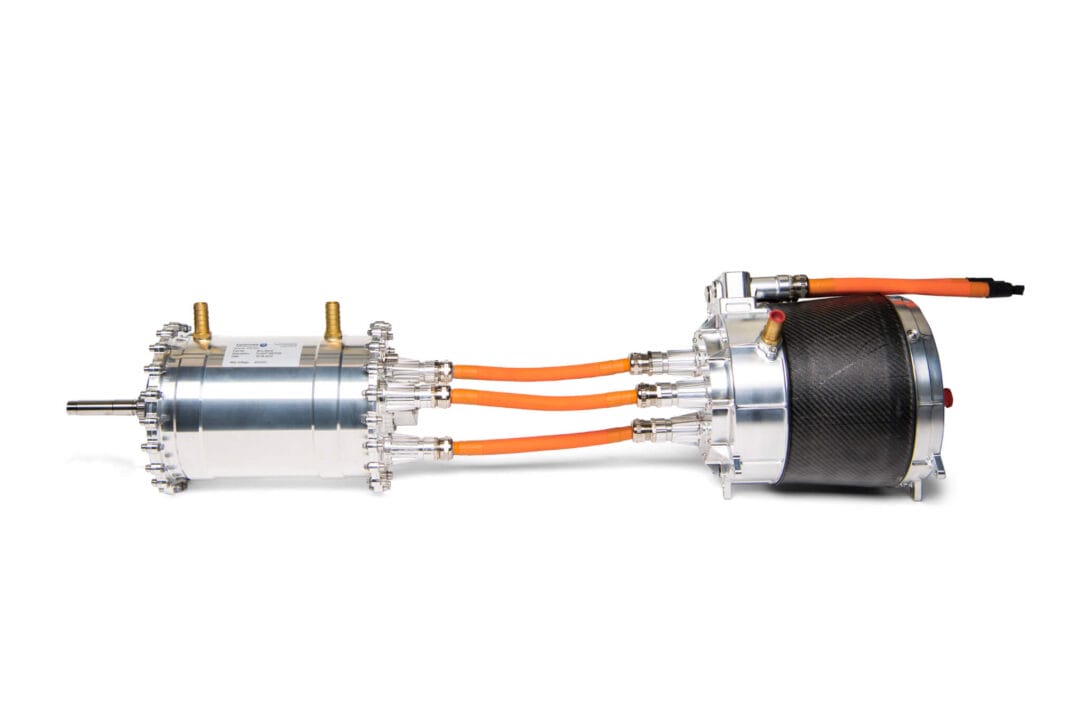


Company Develops New 40 kg Electric Motor and Surprises the Automotive Sector. New HPM-400 Motor Delivers Over 500 Horsepower and Could Reach the Market Soon.
Although electric motors still face some resistance in the market, their ability to provide high power in a lightweight and compact format is undeniable. This feature significantly distinguishes them from internal combustion engines, which typically require larger capacity and more cylinders, or the use of a turbo or supercharger, to achieve more power. In this context, the HPM-400 motor emerges, a new electric motor weighing only 40 kg, yet with exceptionally high power, marking a potential breakthrough in the industry.
HPM-400 Motor Delivers 544 Horsepower
With combustion engines, it is often the case that increasing engine efficiency means, in most cases, increasing the weight of the engine assembly. This is something that electric motors have come to counter, nearly democratizing power in automobiles.
There are significant examples of this, such as the Kia EV6 GT with 585 horsepower, the smaller MG4 XPower with 435 horsepower, or even the Tesla Model S Plaid with 1020 horsepower. And this leads us to question where the limit of an electric motor will be.
-
OMODA & JAECOO grows in Europe in 2026 with an integrated strategy of sales, innovation, local production, and technological advancement in the United Kingdom, Italy, and Spain.
-
OMODA & JAECOO expands after-sales service in Brazil with competitive maintenance, a 7-year warranty, and high availability of parts for technological SUVs.

-
OMODA & JAECOO appoints Alessandra Souza as executive marketing director in Brazil and accelerates brand expansion with a focus on innovation, networking, and hybrid portfolio.

-
Jaecoo 7 with super hybrid SHS system exceeds 1,200 km of combined range with a 1.5 turbo engine, high-density battery, and intelligent energy management.


Called the HPM-400 and created by the British company Equipmake, this small 40 kg electric motor is the true testament to the potential of electric motors, as it has a structure weighing only 40 kg, with 30 kg for the motor and 10 kg for the silicon carbide inverter, capable of delivering a maximum of 400 kW, equivalent to 544 horsepower and 250 Nm, while spinning up to 20,000 rpm.
40 kg Electric Motor Was Developed to Be Used in Rockets
With an extraordinary power density, the HPM-400 motor is recognized as the most powerful in the world, as announced by the Equipmake company based in Norfolk, United Kingdom.
This motor, which weighs only 40 kg, was presented at the “Future Propulsion” conference held last year in the UK. Originally designed to serve as a rocket fuel pump, the motor was developed to withstand extreme conditions, including intense accelerations, as explained by Ian Foley, CEO of Equipmake.
Initially created for the Eris rocket program by Gilmour Space Technologies in Australia, the HPM-400 was designed to operate both under atmospheric pressure and in a vacuum, with no environmental limitations. Equipmake emphasizes that the motor was designed for high-performance applications, not only in space but also in the aerospace and marine sectors.
Could the New 40 kg Electric Motor Come to Electric Cars?
With all this potential, one cannot help but imagine this technology applied to automobiles. This does not seem like a distant exercise, as the company features electric motors for cars, trucks, and buses in its catalog.
In addition, the company’s CEO, Ian Foley, has a career linked to the automotive sector and competition. Foley was the director of research and development at Lotus in Formula 1 between 1991 and 1994 and spent seven years leading Williams Hybrid Power.
It is important to mention that the electric motor is a fundamental component that has been at the forefront of the electric car industry. It plays an essential role in converting electrical energy into wheel motion. There are various types of motors used in electric vehicles, such as induction motors with permanent magnets and switched reluctance motors, each with its advantages and disadvantages in terms of efficiency, cost, weight, size, and performance.









otimo ! qual o preço ? muito bom estou ate com uma ideia na cabeça . agora depende do preço.