





 Portuguese
  English
  Spanish
  6 min of reading
  1 comment


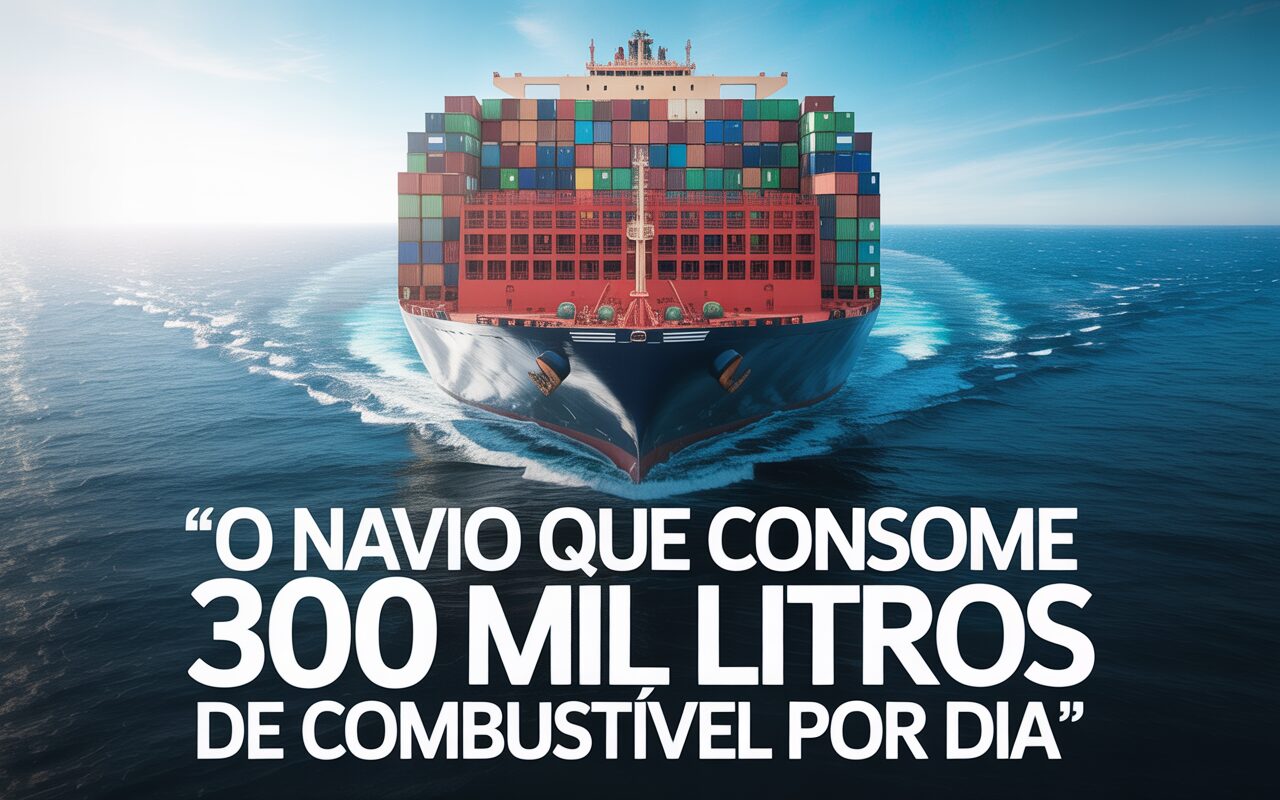


Did You Know That There Is a Maersk Ship That Consumes 300 Thousand Liters of Fuel Per Day — and Yet Is Considered More Efficient Than an Airplane? Designed to Cross Oceans Carrying Up to 20 Thousand Containers, This Maritime Giant of the Triple-E Class Represents the Peak of Modern Naval Engineering and Global Logistics.
In Recent Years, Maritime Transport Has Established Itself as the Backbone of Global Trade, Responsible for Moving About 90% of the World’s Goods. And Behind This Monumental Machinery Are the Ultra Large Container Ships, Capable of Crossing Entire Oceans with Thousands of Containers Onboard.
But a Surprising Detail About These Vessels Draws Attention Even from Those Who Are Already Used to the Grandeur of International Logistics: There Are Ships That Consume 300 Thousand Liters of Fuel Per Day — and Still, They Are More Efficient Than Any Commercial Aircraft When Evaluating Consumption per Ton Carried. Do You Like Large Vessels? Meet the “Colossus of the Seas” That Was Wider Than a Building: Meet the Knock Nevis, the Largest Oil Tanker in the World, Designed to Withstand Giant Waves Without Capsizing.
The Ship That Consumes 300 Thousand Liters of Fuel Per Day: How Is That Possible?
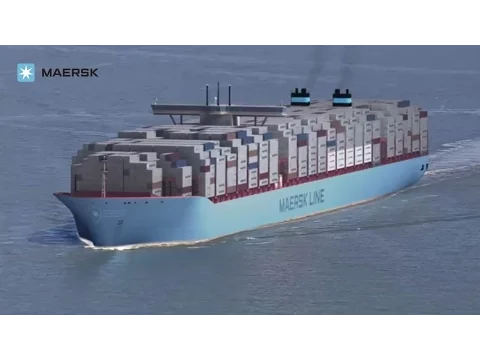

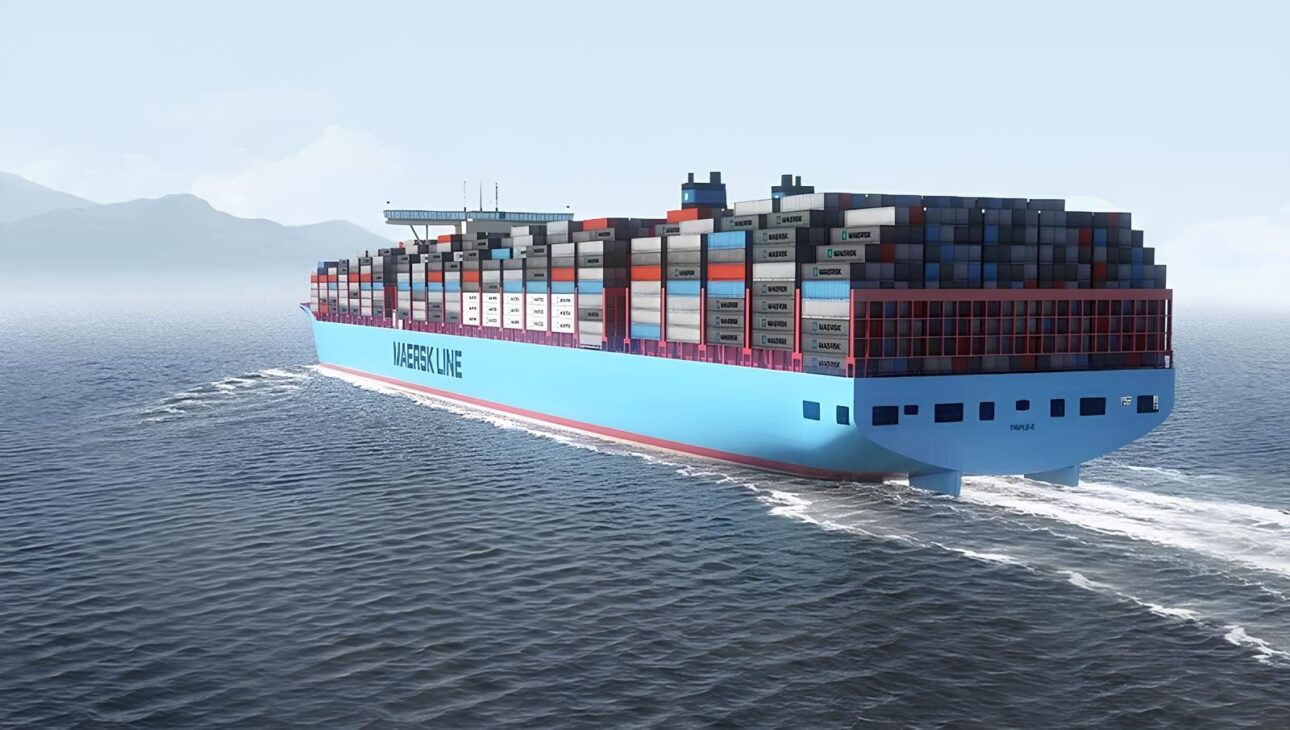
The Amount May Seem Absurd — and Indeed, It Is Difficult to Imagine 300 Thousand Liters of Fuel Oil Being Burned Daily. But This Is the Case for Super Tankers and Mega Container Ships, Like Those of the Triple-E Class of Maersk or Oil Tankers Like the Former Knock Nevis, Which Was Once the Largest Ship in the World.
-
Spain surprises the world by erecting 62 artificial dunes, mixing sand with natural remains of posidonia, and causing the structure to lose only 1.4% of its volume in 1 year.

-
With 16 Bulava missiles, improvements in acoustic stealth, and a design focused on silent patrols, Russia’s nuclear submarine was born to ensure Moscow’s invisible retaliation and has become one of the pillars of its maritime strength.

-
‘Populous’ city in Rio among the worst in Brazil in national ranking and exposes silent development crisis.

-
Couple buys house in the South Zone of São Paulo, opens a hidden door in the garage, and finds a secret wine cellar with dozens of old wines forgotten since the 1970s.


These Ships Can Measure Over 400 Meters in Length, With the Capacity to Carry More Than 20 Thousand TEUs (Standard Containers) or 500 Thousand Tons of Crude Oil. To Keep Their Operation Constant, 14-Cylinder Engines, With Power Exceeding 100 Thousand Horsepower, Operate 24 Hours a Day.
This Continuous Operation Requires the Consumption of Large Amounts of Bunker Oil, a Thick Marine Fuel with High Energy Content. The Figure of 300 Thousand Liters per Day Refers to the Operation at Cruising Speed — About 22 Knots (40 km/h).
But How Can Such a Polluting Ship Be Considered More Efficient Than an Airplane?
This Is Where a Often-Ignored Data Enters the Environmental Debate: Energy Efficiency per Ton-Kilometer. A Ship That Consumes 300 Thousand Liters of Fuel per Day May Seem Inefficient at First Glance, But When the Volume of Cargo Carried Is Considered, It Turns Out to Be Much More Economical Than an Airplane.
Let’s Look at the Numbers:
- A Boeing 747 Consumes About 13 Thousand Liters of Jet Fuel per Hour, Transporting at Most 140 Tons of Cargo.
- A Ship Like the Triple-E Consumes 300 Thousand Liters per Day, but Transports 200 Thousand Tons or More of Cargo.
Calculating per Ton Carried, the Ship Consumes Less Fuel and Emits Less CO₂ per Kilo of Cargo per Kilometer Traveled.
According to the International Maritime Organization (IMO), Maritime Transport Emits About 3 to 5 Grams of CO₂ per Ton per Kilometer, While Cargo Aircraft Emit from 500 to 1,000 Grams per Ton per Kilometer.
The Engine Behind This Force: State-of-the-Art Naval Engineering
To Move This True Floating Building, a Colossal Engine Is Needed, Such as the MAN B&W 14RT-Flex96C, Considered for Many Years the Largest Diesel Engine in the World. With 14 Inline Cylinders, It Generates 109 Thousand Horsepower and Weighs Over 2,300 Tons.
This Type of Engine Operates at Low Speeds — Between 80 and 90 RPM — but Delivers Extreme Torque, Sufficient to Move Tons of Steel and Cargo Across the Ocean with Stability.
In Addition to Propulsion, Modern Ships Feature Gas Treatment Systems, Such as Scrubbers, Which Reduce Emissions of Sulfur Oxides (SOx), Along with Route Optimization Systems to Reduce Navigation Time and, Consequently, Fuel Consumption.
What Is the Environmental Impact of a Ship That Consumes 300 Thousand Liters of Fuel?
Even with the Comparative Advantage Over Airplanes, One Cannot Ignore the Fact That a Ship That Consumes 300 Thousand Liters of Fuel per Day Contributes to the Emission of Greenhouse Gases, Mainly CO₂, SOx, and NOx.
It Is Estimated That the Global Fleet of Commercial Ships Emits About 940 Million Tons of CO₂ Per Year, Equivalent to Almost 3% of Global Emissions.
This Is Why There Is a Race in the Maritime Sector to Reduce This Impact. Among the Solutions Being Developed Are:
- Use of Alternative Fuels, Such as Liquefied Natural Gas (LNG), Methanol, Green Ammonia, and Hydrogen.
- Rigid Sails and Kites (Giant Kites) to Harness the Wind and Reduce the Use of Fossil Fuels.
- Electric and Hybrid Ships for Coastal Operations and Short Routes.
- Hydrodynamic Efficiency, with Optimized Hulls, Special Coatings, and New Propeller Designs.
Why Does Maritime Transport Remain the Best Logistics Option?
Despite Environmental Challenges, Maritime Transport Remains the Most Efficient on a Global Scale. A Single Ship Can Transport:
- 200 Thousand Tons of Grain
- 20 Thousand Containers of Clothing, Electronics, Food, and Cars
- 500 Thousand Barrels of Oil
- Entire Loads of Iron Ore, Fertilizers, Coal, and Chemicals
Moreover, its cost-benefit ratio is unbeatable. According to Estimates from the World Trade Organization (WTO), Transporting a Container from China to Brazil by Ship Costs Up to 20 Times Less Than by Airplane.
Thus, Even with Its High Consumption, the Ship That Consumes 300 Thousand Liters of Fuel Remains a Key Player in the Global Economy.
Is There an Alternative to High Fuel Consumption?
Several Companies Have Already Started Investing in Energy Transition in the Naval Sector. Maersk, for Instance, Recently Launched the First Ships in the World Powered by Green Methanol, Produced from Renewable Sources Such as Biomass and Wind Energy.
Other Giants in the Industry Are Testing Ships Powered by Ammonia, Which Does Not Emit CO₂ When Burned, and Hybrid Systems with Lithium Batteries for Port Support.
Additionally, Technologies Such as Automated Sails, Aerodynamic Double Hulls, and Artificial Intelligence for Shorter Routes Are Helping to Reduce Average Daily Consumption — Even on Ships That Originally Consume 300 Thousand Liters of Fuel Daily.
A Greener Future in the Oceans
The Goal of the IMO Is to Reduce Greenhouse Gas Emissions from Maritime Transport by 50% by 2050, and to Eliminate Them Completely by the End of the Century. For This, Investment in New Technologies Will Be Essential.
Even If the Ship That Consumes 300 Thousand Liters of Fuel per Day Continues to Operate for a Few More Decades, It Will Gradually Be Replaced by Cleaner Models, Smart, and Integrated with Alternative Fuels.
The Future of Global Transport Is at Sea, But Now with a Compass Pointed Toward Sustainability.
When One Hears That There Is a Ship That Consumes 300 Thousand Liters of Fuel per Day, the Immediate Reaction May Be of Shock. But When Diving into the Data and Logic of Global Transport, It Becomes Clear That, Despite This High Consumption, Large Cargo Ships and Super Tankers Are, Indeed, More Efficient Than Airplanes in Consumption per Ton Carried.
With the Advancement of Green Technologies, the Naval Sector Is Reinventing Itself. And What Once Was a Symbol of Consumption and Pollution Can Now Transform Into a Reference of Innovation and Environmental Efficiency.
The Era of Smart and Sustainable Mega Ships Has Already Begun — and the Engine That Consumes 300 Thousand Liters Per Day May Just Be the Last Breath of an Era That Is Being Left Behind.







Bom dia
Bravo, aos Gigantes do Mar👀