





 English
  Francês
  Alemão
  Italiano
  Japonês
  Norueguês
  Portuguese
  Spanish
  3 min of reading
  1 comment




China Advances in The Technological Race by Successfully Testing a High-Speed Maglev Train, Promising to Revolutionize Rail Transport
The China has just taken another giant step towards the future of high-speed transport. During a recent test, the country unveiled its latest project: a “flying” train that reached an impressive 1,000 kilometers per hour, challenging the limits of rail technology. This breakthrough could completely transform the way we travel, making journeys between major cities, such as Beijing and Shanghai, a matter of minutes.
The project is a collaboration between the government of the Shanxi Province and China Aerospace Science and Industry Corp, and promises to revolutionize transportation in Chinese territory. Now, let’s explore in detail how this technology works and what we can expect for the future of railways, according to ocafezinho.
What Is The “Flying” Train and How Does It Work?
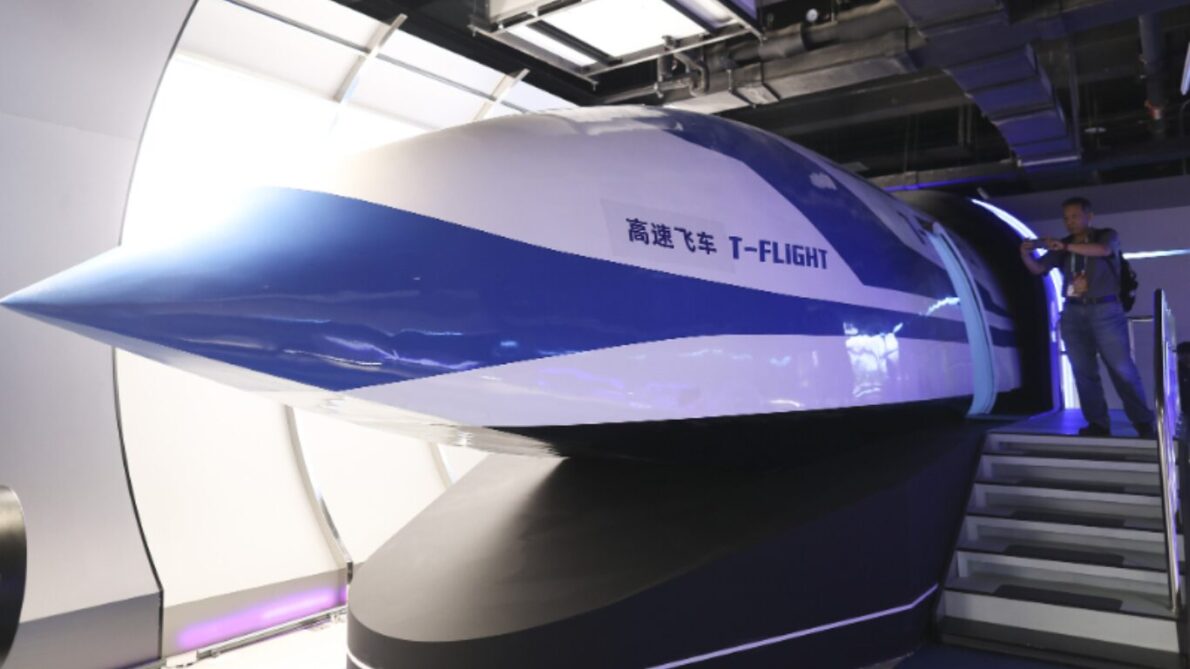
The “flying” train is, in fact, a transportation system based on maglev (magnetic levitation) technology in a vacuum tube. This system allows the train to float above the tracks, virtually eliminating all friction and enabling it to reach extreme speeds. During the test, conducted on a 2-kilometer track, the train reached 1,000 km/h, an impressive milestone made possible by the combination of magnetic levitation and a low-pressure environment.
-
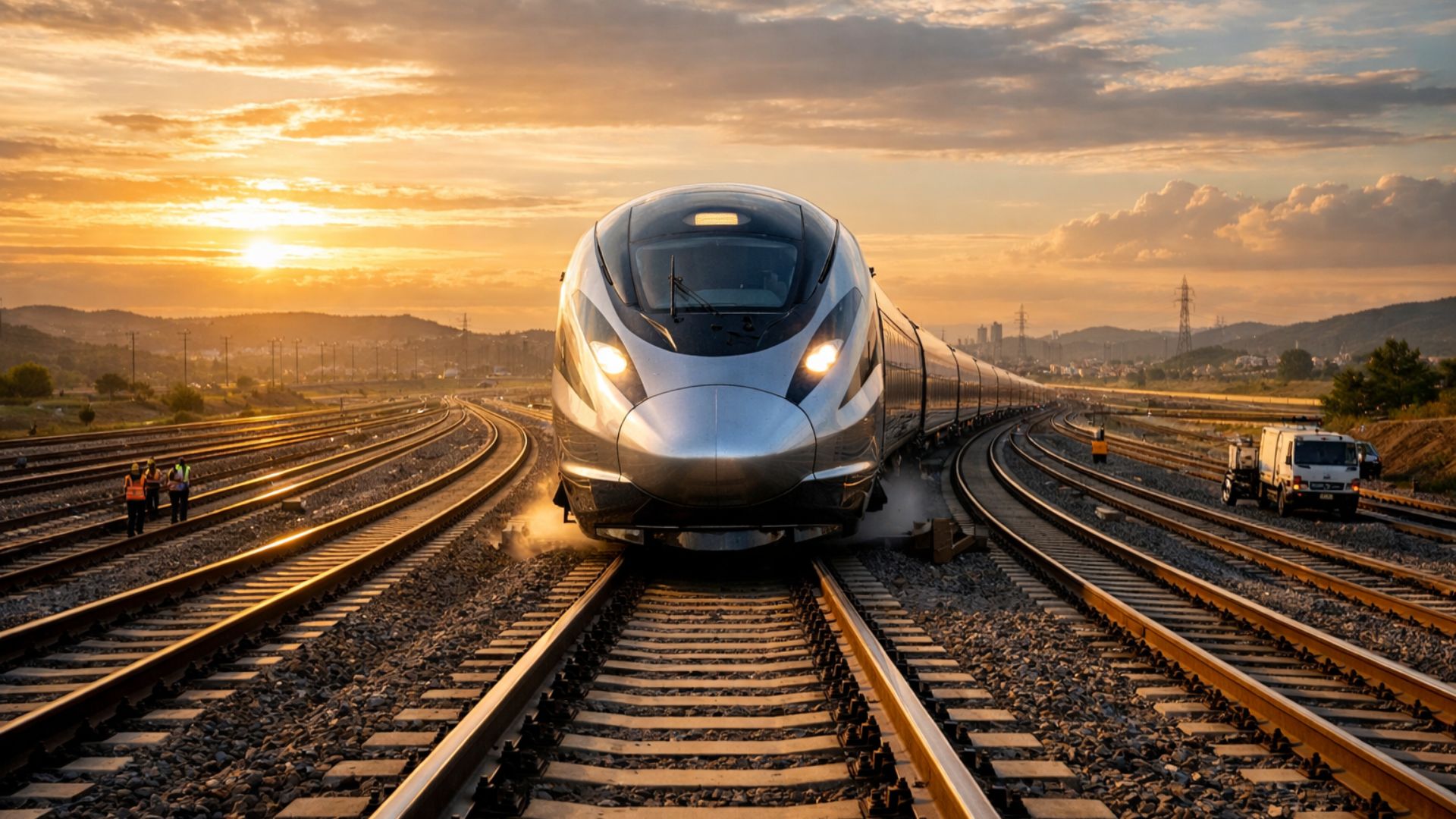
São Paulo surprises the world with a colossal railway network project that promises over 1,000 km of tracks, R$ 194 billion in investments, and 40 projects connecting the capital to the interior with fast and sustainable trains.
-
The world’s largest escalator, measuring 905 meters in China, reduces urban travel time from 1 hour to about 20 minutes and transforms mobility in mountainous regions with an engineering solution adapted to the terrain.

-
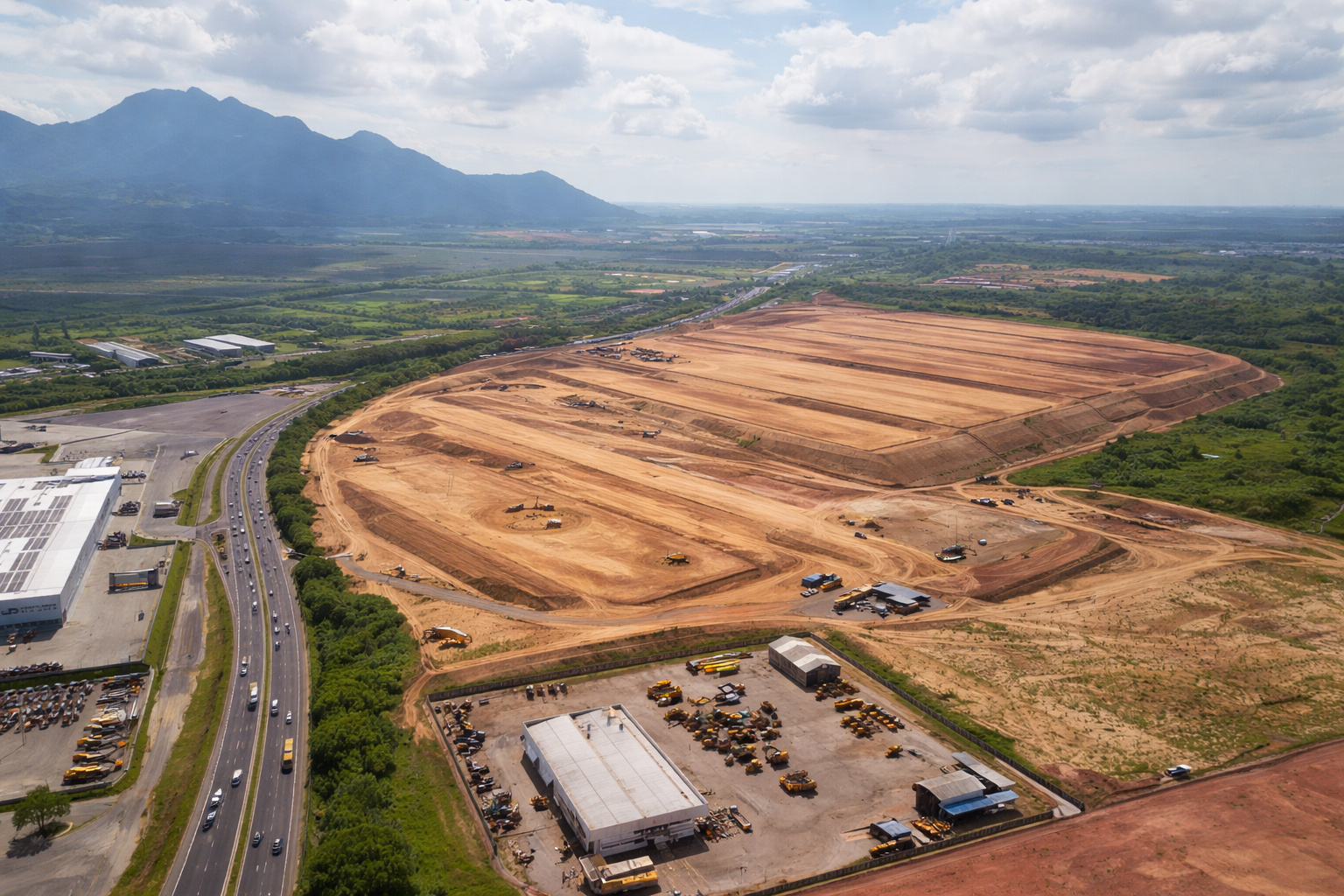
A R$ 300 million logistics giant is taking shape in Serra with over 100,000 m² and raises a question: how can this transform e-commerce and distribution in the state?
-
Could Uber Rides Lose Minimum Fare? Understand What’s Happening!


But don’t think it was just about speeding up. The team tested not only the maximum speed, but also the efficiency of the brakes and the stability of the magnetic suspension. And the good news? Everything went according to plan. The results were so positive that there’s already talk of speeding up the process for future evaluations and, perhaps, commercial implementation.
Beijing to Shanghai in 90 Minutes: A Possible Reality?
Imagine leaving Beijing and arriving in Shanghai in just 90 minutes. It sounds like something out of a science fiction movie, but with this new train technology, it could become a reality very soon. The extreme speed achieved by the “flying” train has the potential to drastically reduce travel time between China’s major metropolises.
However, as Sun Zhang, a rail expert at Tongji University, rightly pointed out, there is still a long way to go. Before the public can start boarding this new form of transportation, rigorous safety tests will be necessary. After all, it’s not enough to be fast; it also has to be safe, doesn’t it?
China Leads The Technological Race in Railways
The idea of transportation in low-pressure tubes, known as Hyperloop, is not new. Elon Musk was the first to present the proposal in 2013, but since then, few companies have made significant advancements. China, however, with its vast rail network and high population density, emerges as one of the most promising places for the commercial viability of this revolutionary technology.
With the completion of the project set for November 2023, China demonstrates that it is not just exploring possibilities; it is shaping the future of global railways. By integrating aerospace and rail technologies, the Asian country is not only paving the way for faster and more efficient travel, but is also positioning itself as a global leader in technological innovation.
The Beginning of A New Era
The successful test of the “flying” train in China marks the beginning of a new era for rail transport. With impressive speeds and a focus on safety, this project has everything it takes to transform the way people travel, especially in a country the size of China. As technology advances, we can expect the whole world to keep an eye on the next steps of this revolution.
And you, are you ready to travel at 1,000 km/h? Leave your opinion in the comments!








têm a fonte?