





 Portuguese
  English
  Spanish
  4 min of reading
  0 comments


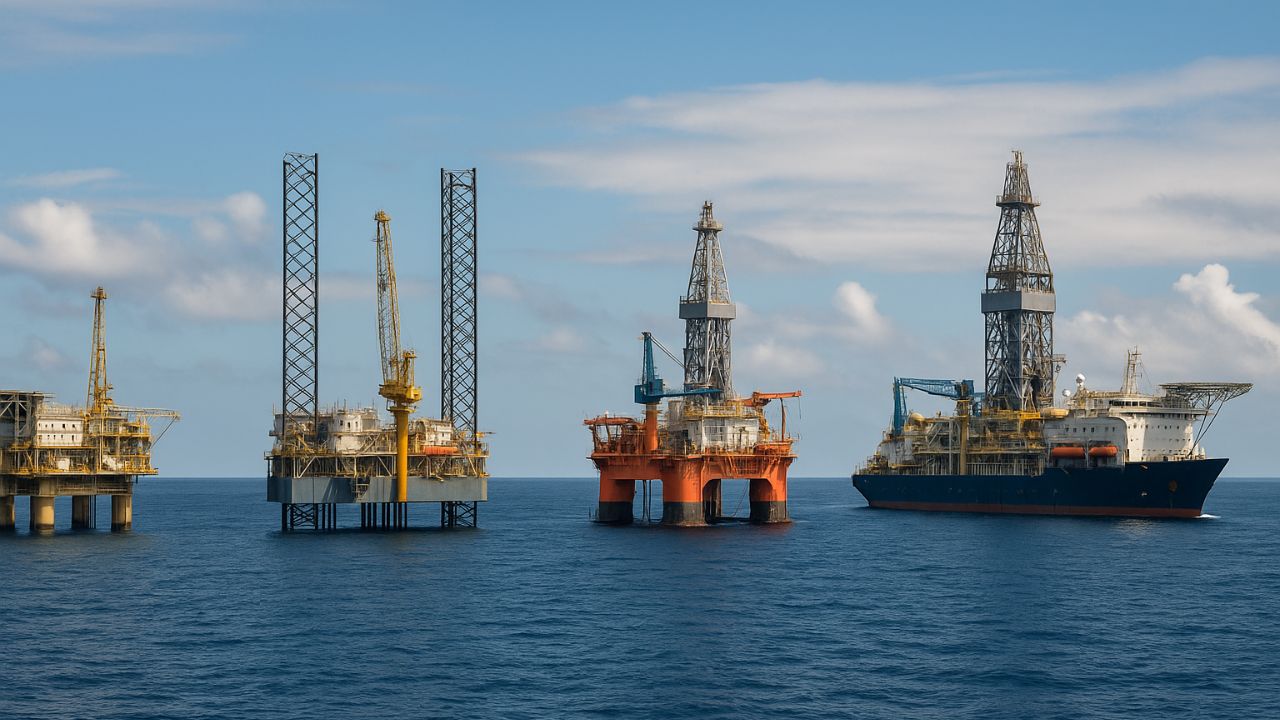
From Fixed Structures on the Seabed to Gigantic Floating Cities, Understand the Technology Behind Offshore Oil and Gas Exploration.
Offshore platforms are the backbone of the offshore energy industry. They are true industrial cities, designed to operate in some of the most hostile environments on the planet and access oil and gas reserves beneath the seabed. The choice of platform type is a complex strategic decision, based on water depth, environmental conditions, and economic viability.
What Are Offshore Platforms and Why Are They So Important?
Offshore hydrocarbon exploration is one of the greatest achievements of modern engineering. At the heart of this activity are offshore platforms, structures designed to allow for drilling, production, and, in some cases, storage of oil and natural gas.
They operate in water depths ranging from a few dozen to over 3,000 meters, such as in the Brazilian pre-salt. There is no universal platform. The correct choice depends on a matrix of factors, with the main classification based on its foundation: whether they are fixed to the seabed or floating systems.
-
The Argentine government celebrates the lowest poverty rate in 7 years, but experts warn that the methodology has changed, real wages have fallen, unemployment has risen, and the number of people on the streets of Buenos Aires has increased by 57% since Milei took office.

-
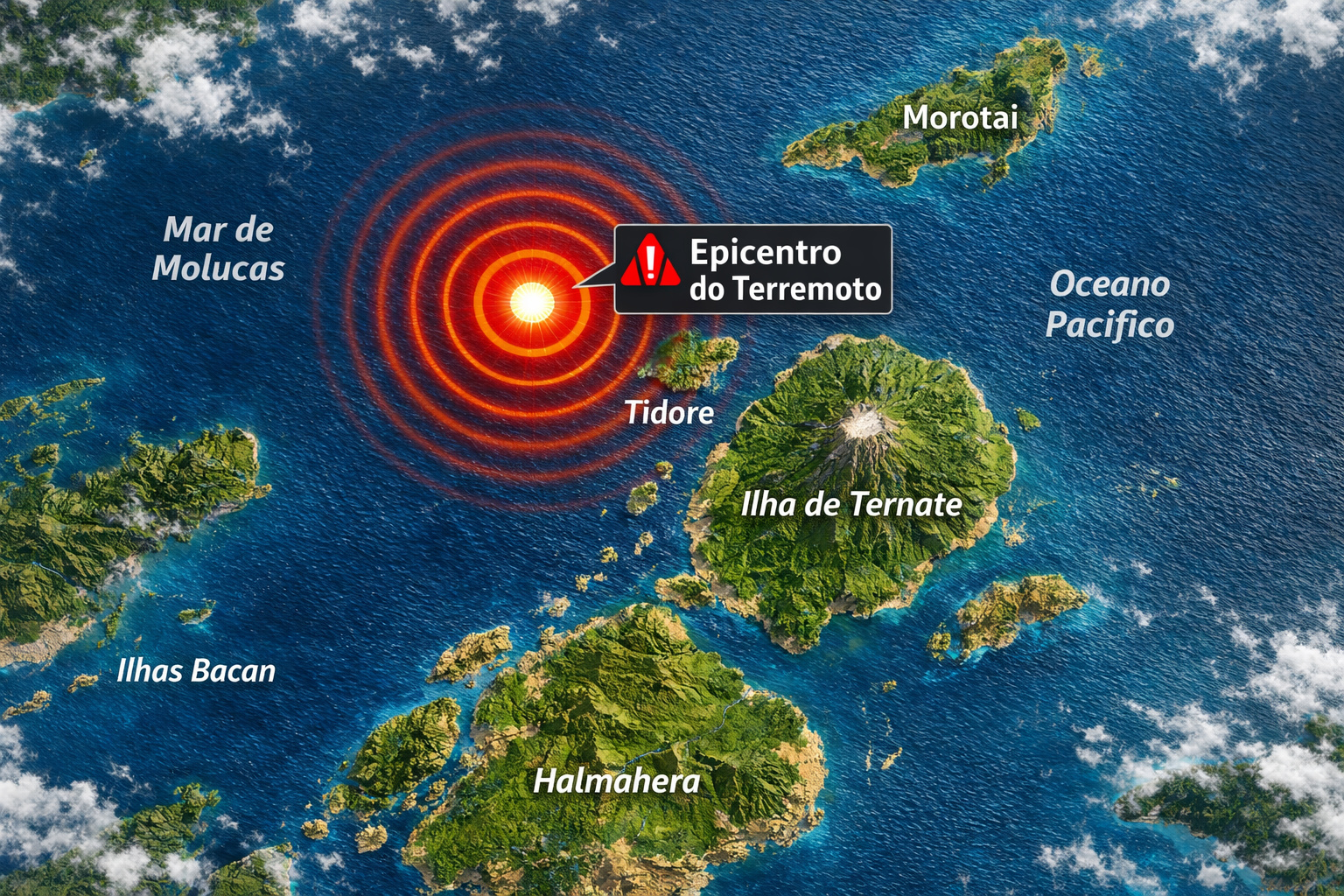
7.8 magnitude earthquake in Indonesia frightens the population, triggers tsunami alert, and hits an island with over 200,000 inhabitants this Thursday.
-
Google will finally let you change that embarrassing Gmail address you created in your teenage years without losing any accounts, logins, or old emails: the feature is already available in the United States.

-
Heading to Brazil in a Bonanza F33 single-engine aircraft: a couple departs from Florida on a visual flight, makes technical stops in the Caribbean to refuel and organize paperwork, and begins the staged crossing until they reach the country.

Fixed and Jack-Up Offshore Platforms
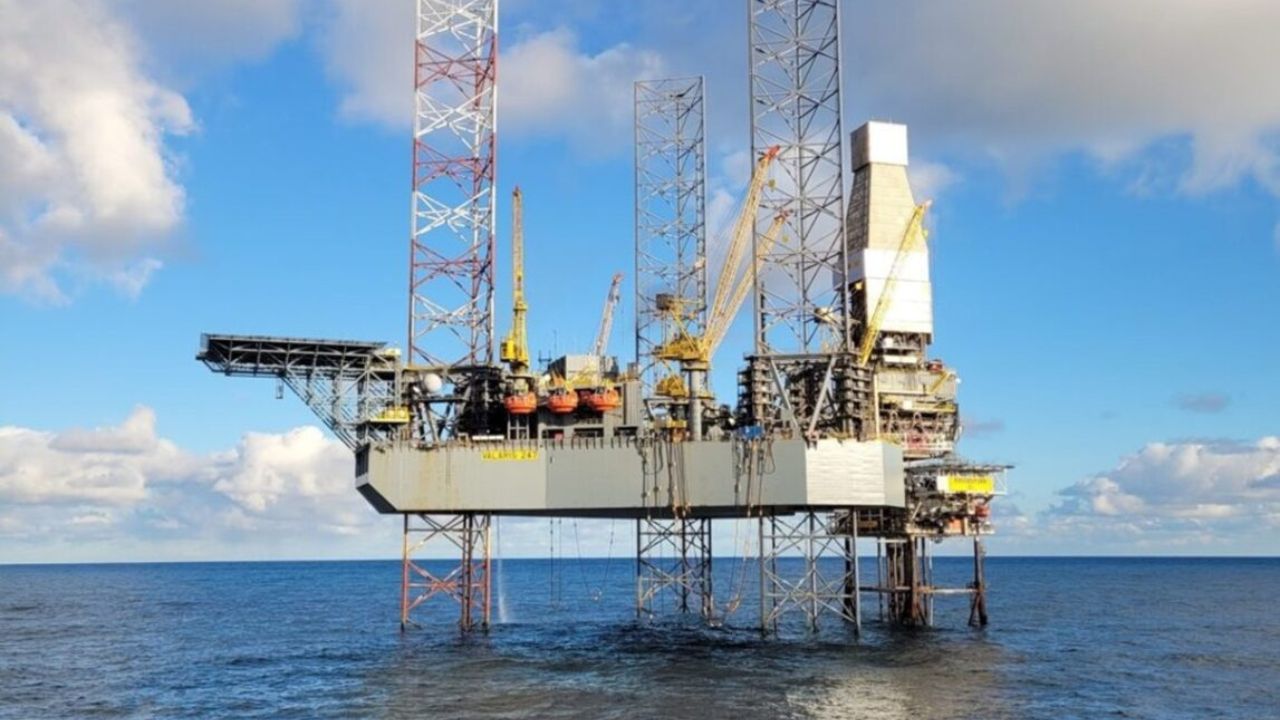
For waters considered shallow, typically up to 400 meters, two types of platforms stand out. The Fixed Platform represents the most traditional technology. It is a rigid structure, made of steel (Jacket) or concrete (GBS), permanently anchored to the seabed by piles or its own weight. Its main advantage is its unmatched stability, allowing the installation of well control equipment on the deck, a process known as “dry completion”, which facilitates maintenance. However, its total immobility and high cost at greater depths are its main limitations.
The Jack-Up Platform is a unit that combines the mobility of a vessel with the stability of a fixed structure. It is towed to the site and then lowers its three or more legs until they rest firmly on the seabed. Next, the hull is raised out of the water, creating a stable and secure operational base. It is the ideal solution for drilling campaigns in waters up to 170 meters, as it can move from one well to another, optimizing costs and time.
Floating Platforms
As exploration advanced to deeper waters, floating solutions became essential. Offshore platforms are anchored to the seabed, but designed to move in a controlled manner with environmental forces. The Semi-Submersible Platform has excellent stability in rough seas, as its innovative design keeps most of its buoyancy volume well below the surface. It can be maintained in position by anchoring systems or Dynamic Positioning (DP), making it extremely versatile for drilling and production.
Another solution is the Tension Leg Platform (TLP), a floating structure connected to the seabed by vertical steel tendons that are kept under constant tension. This restricts nearly all vertical movement, providing a stability that also allows for “dry completion”. Similarly, the SPAR Platform, inspired by the stability of an iceberg, consists of a single large-diameter vertical cylinder with a very deep draft, making it intrinsically stable.
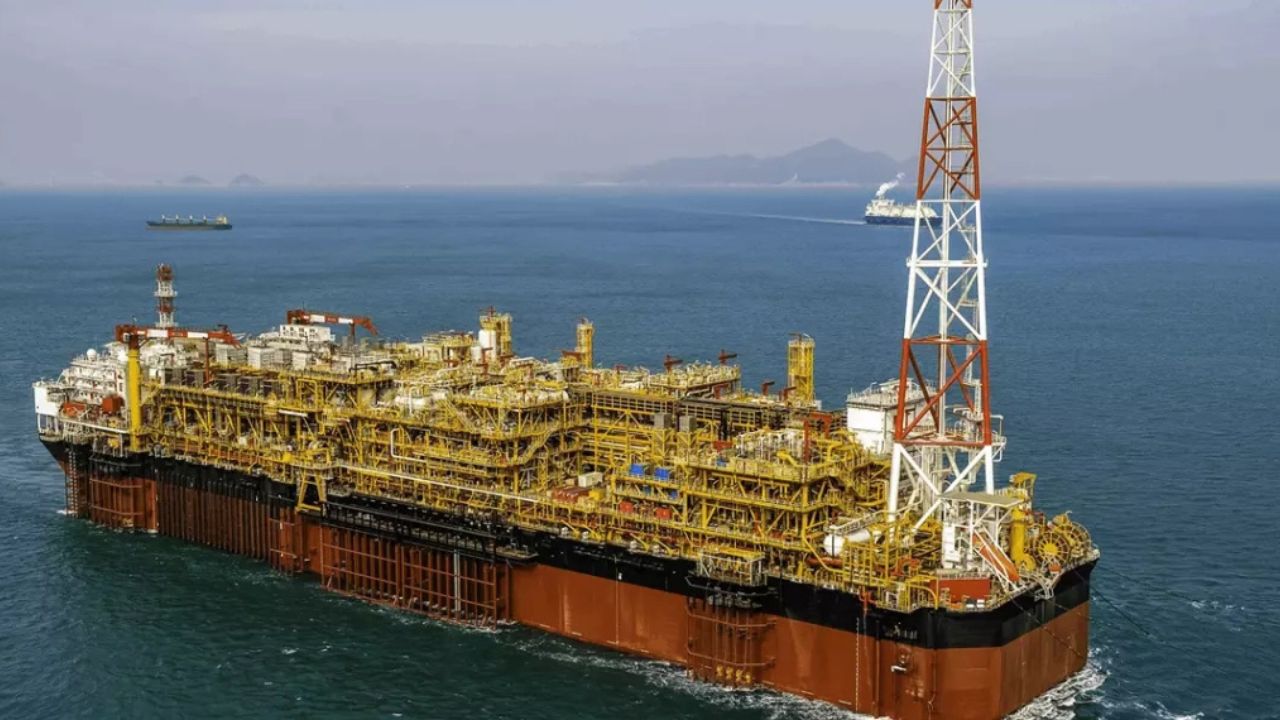
The most well-known in this category is the FPSO (Floating Production, Storage, and Offloading). This is the “all-in-one” solution and the technology that enabled the exploration of the Brazilian pre-salt. Based on the hull of a ship, it integrates the functions of Production (processing), Storage, and Offloading. The oil is processed, stored in its tanks, and then transferred to shuttle tankers, eliminating the need for pipelines. It is the ideal choice for remote fields in deep waters.
Drilling and Support Units
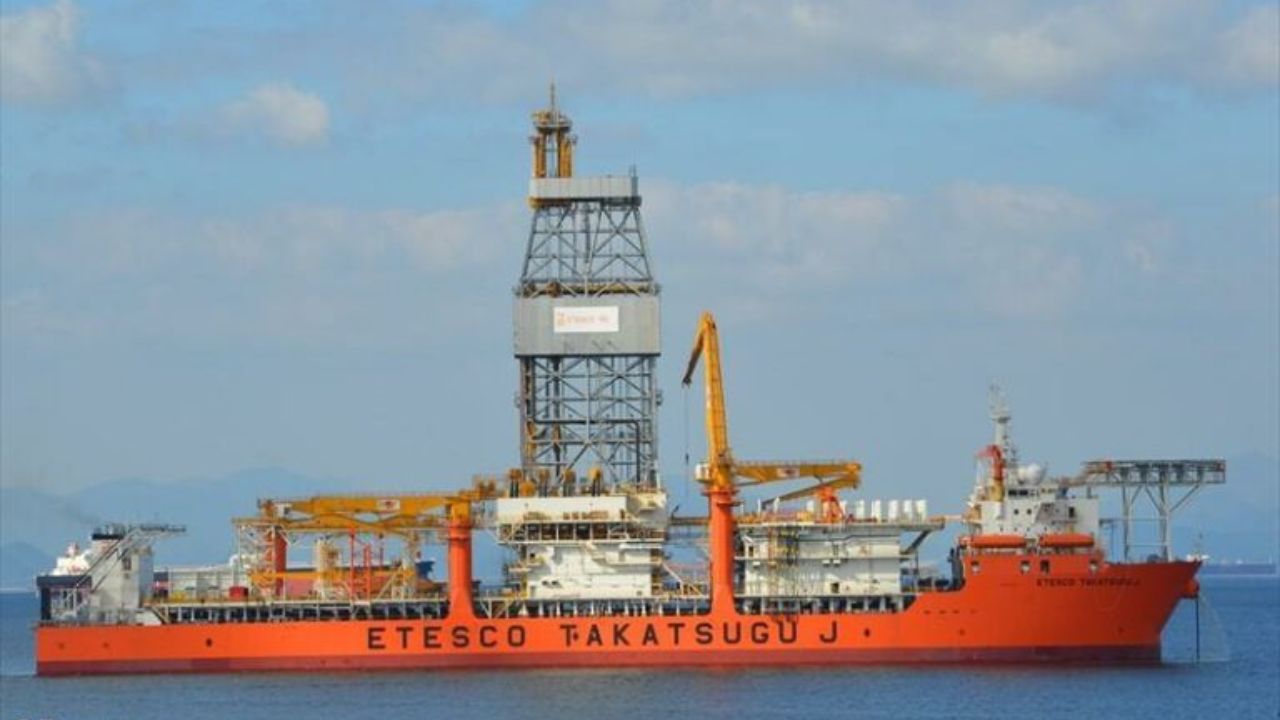
While production offshore platforms are designed for long-term presence, drillships are the essential tools for the exploration phase. The Drillship is a vessel specifically designed for drilling in deep and ultra-deep waters. Its main advantage is its high mobility, as it has its own propulsion and can move quickly between different continents for global drilling campaigns. To keep it positioned exactly over the well, it uses advanced Dynamic Positioning (DP) systems.
How Is the Right Platform Chosen?
Selecting one of the offshore platforms is not simple and depends on a multi-criteria analysis. The main factors considered are:
Firstly, technical and environmental factors, where the water depth is the initial filter. Shallow waters allow for fixed and jack-ups, while deep waters require floating systems. The conditions of wind, waves, and currents are also decisive.
Secondly, the reservoir characteristics, such as field size, type of oil or gas, and projected lifespan, directly influence the choice. Giant fields may justify a high initial investment, while smaller fields may be more suitable for rented and relocatable solutions.
Finally, the company’s logistics and strategy are crucial. The absence of pipelines, as in the case of the pre-salt, makes the FPSO the only viable option. The decision between a high initial investment (CAPEX) or higher operational costs over time (OPEX) also defines the course to be followed.








-

-

-

6 pessoas reagiram a isso.