





 Portuguese
  English
  Spanish
  8 min of reading
  33 comments


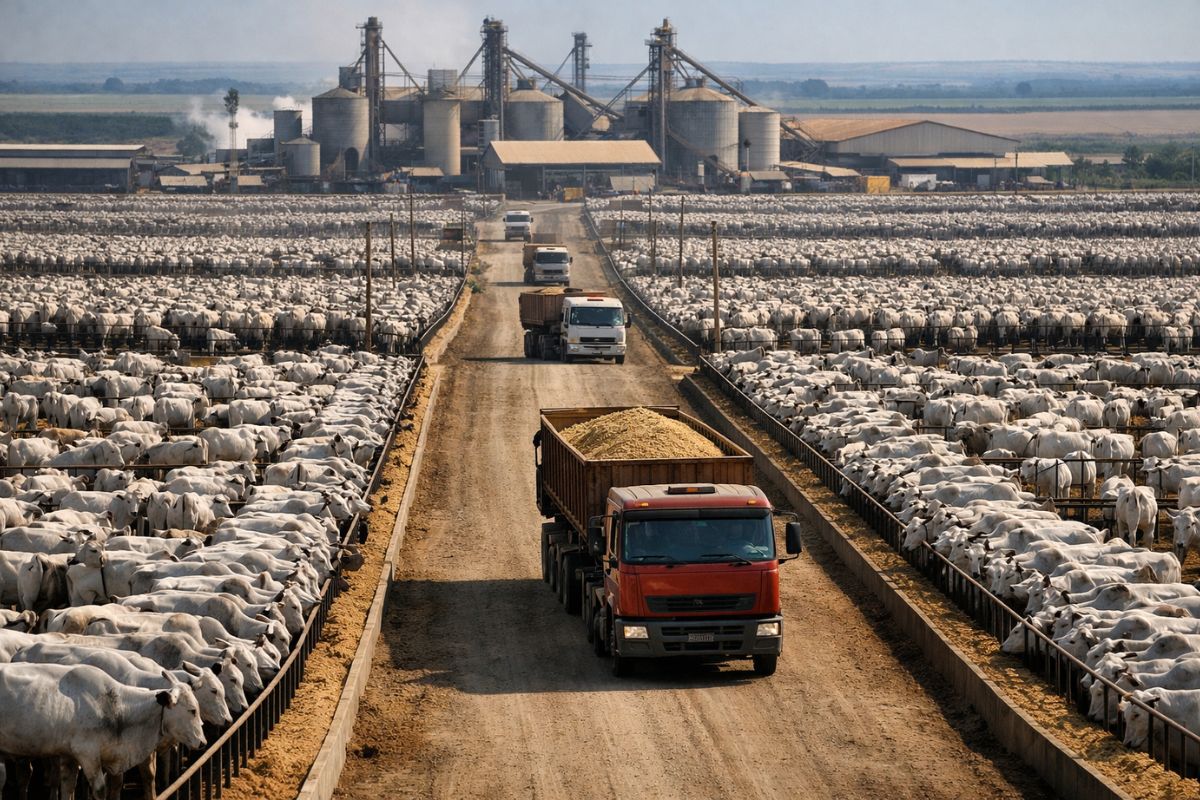


In The Gigantic Feedlot In Goiás, Fazenda Colorado Produces Its Own Corn, Mixes Diets By Batch With Precision, Monitors Consumption In Real Time, And Keeps Veterinarians On Duty 24 Hours. The Annual Flow Exceeds 130,000 Cattle, Requiring Dozens Of Trucks Per Day, Water, And Waste Management On An Industrial Scale
What Happens Inside The Gigantic Feedlot Of Fazenda Colorado Exposes A Brazil Little Seen Outside Of Agriculture: More Than 80,000 Cattle Eating At The Same Time, In One Location, With Daily Consumption Exceeding 1,000 Tons Of Feed And An Operation That Cannot Stop For Even A Day.
In 2026, The Farm Continues To Operate As A Continuous Meat Production Line Operating 365 Days A Year, With Continuous In And Out Of Animals, Nutritional Control By Batch, Strict Sanitary Protocols, And A Logistics System For Grains, Water, And Waste That Functions Like An Industrial Terminal.
What Is, In Practice, A Gigantic Feedlot

Feedlot Is Usually Associated With “Fast Fattening.” At Fazenda Colorado, The Scale Changes The Definition: It Is Not Just A Set Of Large Pens, It Is A Whole System Designed To Operate Without Improvisation.
-
They said no to 26 million dollars and would do it all over again: mother and daughter from Kentucky reject a million-dollar offer from a mysterious company that wants to build the largest data center in the state on more than 2,000 acres of rural land.
-
While corn requires rain and is expensive, sorghum produces almost the same volume per hectare at a cost up to 80% lower and uses less water, and it is revolutionizing dairy farming in the Triângulo Mineiro, where producers save hundreds of reais per hectare.
-
A rural producer from Urubici cries as he shows 50 tons of plums thrown on the ground because no one wanted to buy them, and in desperation, he records a video asking anyone to come to the property to pick the fruits before they rot.
-
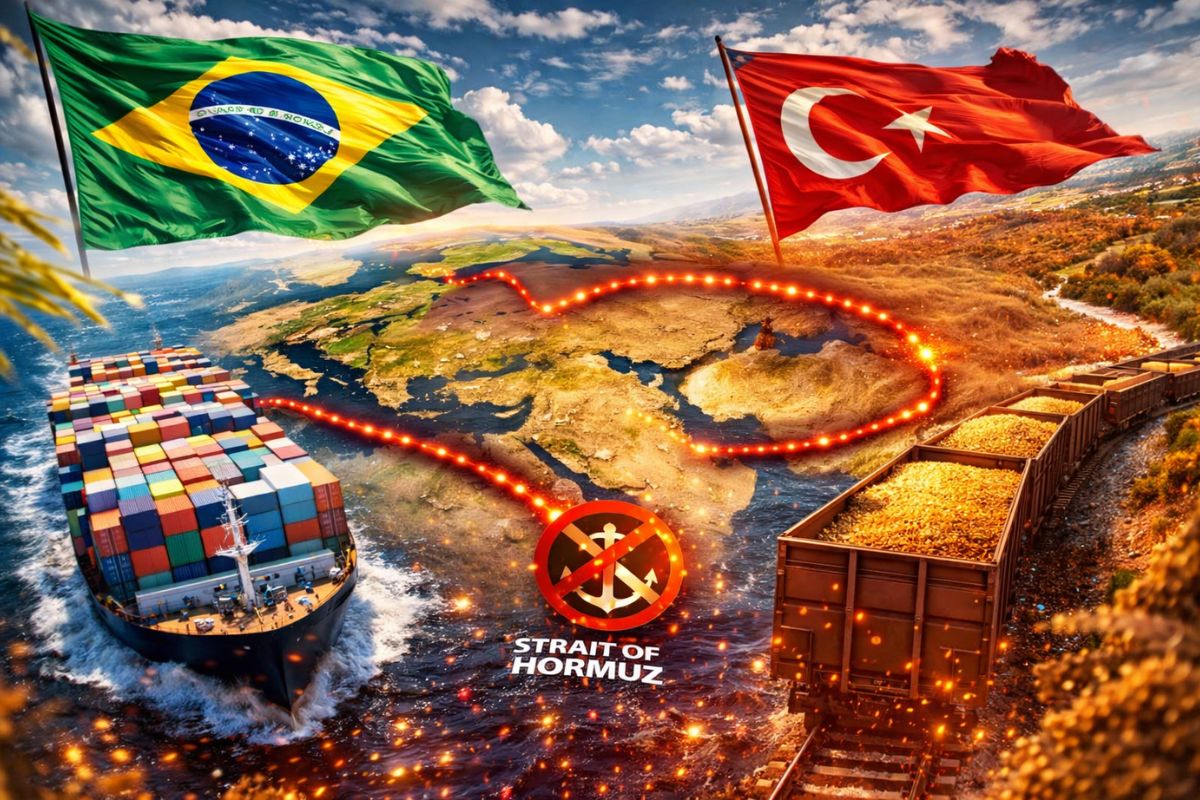
Unable to pass through Hormuz, Brazil activated a plan B that uses Turkey as a gateway to the Middle East: the route through Gibraltar and the Mediterranean is longer and more expensive but ensures that chicken, beef, and corn continue to reach Arab markets.

The Starting Point Is Simple And Frightening To Size: A Single Feedlot With More Than 80,000 Cattle Feeding At The Same Time. And This Does Not Represent “The Whole Year Stopped.” On The Contrary: The System Is A Flow.
- Thin Animals Come In, In Batches.
- Cattle Ready For Slaughter Go Out, In Cycles That Do Not Stop.
- Even With Tens Of Thousands Simultaneously, The Annual Turnover Exceeds 130,000 Cattle.
The Impact Is Not Just Visual. The Consumption Of Feed, Water, And The Daily Movement Of Trucks Transforms The Farm Into A Logistics And Production Operation, Not Just Raising.
Why 1,000 Tons Of Feed Per Day Changes Everything

The Most Commonly Cited Number Is The Most Didactic: More Than 1,000 Tons Of Feed In A Single Day. This Implies A Chain That Begins Before The Trough And Ends Long After It.
Every Day, Without Exception, Dozens Of Trucks Carry Grains, Meals, And Supplements, In Industrial Volumes. The Comparison That Usually Shocks Is The Equivalence: The Daily Consumption Has Been Described As Something That Resembles What An Entire City Of 100,000 Inhabitants Would Consume In A Month, In Supply Scale.
And Here Comes A Central Differential: The Farm Does Not Depend On The Market To Buy Grain As Its Only Outlet.
Fazenda Colorado Produces. The Corn That Becomes Feed, According To The System’s Own Description, Was Planted, Harvested, And Ground Within The Same Circuit, Reducing Intermediaries And Providing Cost Predictability.
This Becomes A “Shield” In Times Of Volatility: While Corn Prices Fluctuate And Squeeze Smaller Producers, The Integrated Operation Can Plan Costs In Advance And Sustain The Model.
Diets By Batch, Precision, And The Cost Of A 2% Error

A Feedlot Of This Size Cannot Work With “Standard Feed.” Inside The Gigantic Feedlot, There Are Cattle Arriving, Cattle In The Middle Of The Cycle, And Cattle Ready For Slaughter. Each Group Requires A Different Diet.
The Detail That Shows The Level Of Control Is The Cost Of Error: A Deviation Of 2% In The Mixture Can Mean Losses Of Hundreds Of Thousands Of Reais At The End Of The Month, Precisely Because Everything Is Multiplied By Tens Of Thousands Of Heads.
To Avoid This, The Process Is Described As Nearly Surgical:
- Mixers Weigh Ingredients With High Precision
- Systems Record The Consumption Of Each Pen In Real Time
- Algorithms Adjust Diets Daily Based On Performance
The Idea Is To Remove The “Estimation” From The Center Of Decision-Making. The Data Drives. That’s How The Feedlot Tries To Maximize Weight Gain And Reduce Costs Without Losing Operational Stability.
High-Grain Diet, Accelerated Weight Gain, And Metabolic Risks
Part Of The Performance Comes From An Aggressive Nutritional Strategy: High-Grain Diet, With High Energy Concentration To Accelerate Weight Gain.
The Result Is To Shorten The Time Until Slaughter Compared To Traditional Systems.
However, There Is No Free Lunch. The Logic Of The Feedlot Recognizes The Risk: Cattle Were Not Made To Consume So Much Concentrated Grain Indefinitely, And The Digestive System Can “Flip” If Something Goes Out Of Control.
For This Reason, The Feedlot Operates With Constant Monitoring And A Quick Response. There Are Veterinarians And Nutritionists Monitoring 24 Hours A Day, Alert To Signs Of Metabolic Imbalance That Need To Be Detected Early And Treated Quickly.
In A Structure Of This Size, Losing An Animal Due To Nutritional Failure Is Described As Unacceptable, Precisely Because Of The Cascade Effect.
Operation 365 Days, With “Scheduled” Cattle Even Before They Enter
Another Point That Differentiates A Gigantic Feedlot From A Common Feedlot Is The Predictability Of The Cycle.
The Operation Is Described As Continuous: Animals Are Constantly Entering And Leaving. Each Cattle That Enters Already Has A Kind Of Pre-Calculated Script: How Many Days It Should Take To Reach The Ideal Weight, How Much It Should Cost To Get There, And What The Expected Margin Is.
This Explains Why The System Cannot Stop. Stopping A System Like This Is Not “Taking A Break On The Farm.” It Is Breaking A Chain That Involves:
- Buying Or Producing Grains
- Mixing And Delivering Feed
- Slaughter Schedule
- Transportation Logistics
- Health And Biosecurity
- Water And Waste Management
The Logistics That Transforms A Farm Into A “Cargo Terminal”
The Less Glamorous Yet Most Determinative Part Is Logistics. The Picture Is Direct: Trucks Are Constantly Coming In And Out.
There Are Trucks Bringing Animals, Trucks Taking Ready Cattle Away, Trucks Unloading Grains, And Trucks Removing By-Products. The Result Is A Scene That Looks Like A Cargo Terminal Disguised As A Farm.
At This Level, Logistics Becomes Operational Security. If An Ingredient Is Missing, If Transportation Is Delayed, If A Link Breaks, The Entire Feedlot Feels It.
Biosecurity: Quarantine, Vaccines, Isolation, And Tracking
With Tens Of Thousands Of Heads Together, The Sanitary Risk Increases. Therefore, There Is A Protocol Described As Rigid:
- Groups Go Through Quarantine
- Receive Dewormers, Vaccines, And Preventive Treatments
- Everything Is Recorded In A System
- Animals Showing Signs Of Problems Are Isolated Immediately
The Rationale Is Simple: You Cannot Risk Contaminating Tens Of Thousands Of Cattle Because Of An Uncontrolled Case.
Moreover, Beyond The Internal Effect, There Is An External Layer: Any Relevant Sanitary Incident In An Operation Of This Size Can Affect The Image Of Brazilian Livestock And Pressured Markets. Therefore, Biosecurity Is Presented Less As Discourse And More As Large-Scale Economic Protection.
Water At The Scale Of A Municipality And Own Infrastructure
The Water Bill Is Another That Tends To Be Invisible To Those Who Only See The Cattle In The Pen. In A Gigantic Feedlot, The Daily Water Consumption Is Described As Sufficient To Supply A Medium-Sized City.
And It’s Not Just For Drinking. Water Also Enters Into:
- Washing Facilities
- Cooling Equipment
- Processing Feed
- Dust Control
- Mitigating Thermal Stress On Hot Days
During Periods Of Intense Heat, The Pressure Increases. Thermal Stress Can Destroy Performance In No Time, And The System Needs To React Quickly.
That’s Why The Farm Operates With Its Own Water Infrastructure, Large Reservoirs, A Distribution Network, And Constant Monitoring, As There Is No “Calling The Water Company To Ask For More Pressure” When The Scale Is Industrial.
Waste, Management, And Circular Economy “Because Without It, It Doesn’t Work”
If 80,000 To 85,000 Cattle Eat A Lot, They Also Generate Waste In Huge Volume. Without Management, It Becomes An Environmental And Operational Problem Quickly.
The Feedlot Is Described As A Heavy Investor In:
- Waste Management
- Treatment Of Effluents
- Emission Control
The Logic Is Not Romanticized: It Is Not “Out Of Kindness,” It Is Because Without This, The Operation Does Not Work.
There Is Also A Strategic Point: Some Of The Waste Becomes Organic Fertilizer That Returns To The Farm’s Fields, Closing A Circuit.
The Cattle Eat The Corn, Produce Manure, The Manure Becomes Fertilizer, And The Fertilizer Feeds The Corn. This Reduces Costs And Creates An Advantage Over Farms That Rely On Chemical Fertilizers Purchased Externally.
Genetics And Product: Volume And Niche In The Same System
The Scale Does Not Mean Total Standardization. The System’s Account Points To A Genetic Selection Focused On Performance:
- Presence Of Elite Nelore
- Premium Lines And Planned Industrial Crossbreeding
- Management Adjusted For Each Genetic Group
The Commercial Consequence Is Important: The Operation Can Serve Both The Volume Market And Niches Of Specialty Meat, Something Rare When Discussing Industrial Scale, Because Different Groups Require Different Management.
People And Technology: It’s Not Just “Hands,” It’s A City Within Fences
A Point That Breaks The Stereotype Is The Profile Of The Team Necessary To Keep The Gigantic Feedlot Running.
The Operation Employs Hundreds Of People And Includes, Besides Field Functions:
- Veterinarians And Nutritionists
- Technicians And Agronomists
- Machine Operators
- Drivers
- IT Technicians
- Data Analysts
The Feedlot Becomes A Kind Of “Corporate City” Surrounded By Fencing, With Routines, Indicators, And Management That Resembles Industry.
“Largest Feedlot In Latin America” And The Weight Of Stopping
Fazenda Colorado Is Often Cited As The Largest Feedlot In Latin America By Technical Criteria Such As Installed Capacity, Annual Turnover, Productive Integration, And Technological Level.
The Weight Of This Appears In A Simple Hypothesis: If An Operation Of This Size Stops For A Month, The Market Feels It. It Is Not Just Internal Production; It Is Supply, Logistics, And Predictability Affected At The Same Time.
For This Reason, The Responsibility Is Proportional To The Size. Concentrated Power Brings Efficiency But Also Elevates Systemic Risk If There Is A Sanitary, Water, Logistical, Or Operational Failure.
What Does This Gigantic Feedlot Say About Brazilian Agriculture
The Final Picture Is Clear: We Are Not Just Talking About Traditional Livestock. What Appears Here Is An Animal Protein Industry, Transforming Grains Into Meat With Assembly Line Logic.
Do You Think A Gigantic Feedlot Like This Is The Inevitable Future Of Brazilian Livestock, Or Should The Country Balance This Model More With Smaller And Regional Systems?








Animals are related to us. Allowing any person to imprison a cow for profits will not end well for either **** or man. These **** prisons are breeding hubs for the next global pandemic. If you don’t believe this you should not cry when you and your children are sick and dying. The psychopathic nature of this **** prison and similar operators are endangering our planet. Please don’t buy Brazilian meat. Please boycott depraved **** cruelty.
Always need a balance for many reasons, old saying…….”never put all your eggs in one basket”.
Será mais equilibrado manter os dois lados produtivos em frente às opções de mercado e às demandas. Além da inovação, ciência 🧪🧬 genética e tecnologia em uníssono, inclusive emprestando experiência e vendendo saberes novos diante dos embates e desafios presentes.