





 English
  Francês
  Alemão
  Italiano
  Japonês
  Norueguês
  Portuguese
  Spanish
  3 min of reading


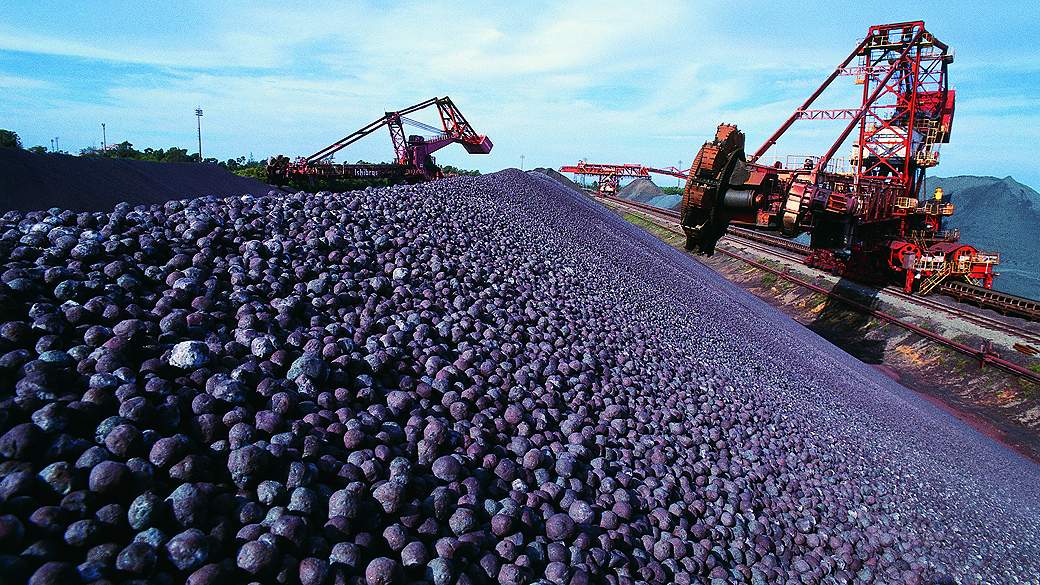
Called Block 8, the project includes a 480-kilometer pipeline that will go from Minas Gerais to Ilhéus (BA), passing through 21 municipalities.
On Thursday, September 12, the government of Minas Gerais signed a memorandum of understanding with Sul Americana de Metais (SAM), a subsidiary of the Chinese company Honbridge Holdings, for the construction of a mining complex of R$ 7.9 billion in the north of the State. President and directors of Vale are indicted for homicide in the CPI of Brumadinho.
Called Block 8, the project includes a 480-kilometer pipeline that will go from the mining town of Grão Mogol to Ilhéus (BA), passing through 21 municipalities. With the construction of the pipeline, the total investment rises to R$ 9.1 billion.
-
Government unlocks R$ 554 million for a highway that has been requested for decades and accelerates the duplication of BR.
-
Without bricks, without cement, and without endless construction: the cardboard house that is assembled in modules and can be moved.

-
Billions of barrels on the equatorial margin could lead Amapá to double its oil production in Brazil — the state aims to enter the route of companies in the Campos Basin, attract investments, and boost jobs and businesses in the oil and gas sector.
-
Without bricks, without cement, and without endless construction: the cardboard house that is assembled in modules and can be moved.
If it reaches full operation, Block 8 will have an output of 27 million tons of iron ore per year, slightly lower than that of the Brucutu mine, from Vale, and similar to the total capacity expected in the Minas-Rio project, from Anglo, whose logistics also depend on a pipeline.
The deposits to be explored are in the municipalities of Grão Mogol and Padre Carvalho. The complex will have an ore concentration plant, water dams, and a dam with the capacity to hold 845 million cubic meters of tailings.
To provide a sense of scale, Vale’s dam at the Córrego do Feijão iron mine, in Brumadinho, had the capacity to store 12 million cubic meters of tailings. Its rupture, on January 25, released a wave of sludge that killed 249 people and left 21 missing.
The mining part will be under the authority of the environmental agency of Minas, while the pipeline, crossing the state line, will be licensed by Ibama. It will be built and operated by Lotus Brasil Comércio e Logística, an independent company from SAM.
Ibama rejected the project in 2016, then called Vale do Rio Pardo, due to environmental unsustainability. Gizelle Andrade, SAM’s Director of Relationship and Environment, states that the project was restructured in 2017 and is safe.
So far, US$ 74 million has been invested in studies and acquisition of mining rights. According to her, the dam has stopped using the upstream method – used in Brumadinho and Mariana and now condemned – and will have a system capable of preventing infiltrations in the body of the dam.
The preliminary licensing process is expected to be completed in February 2020. Thiago Toscano, president of the Investment Promotion and Foreign Trade Agency of Minas Gerais, says he only sees benefits for the community. The expectation is that 1,200 direct jobs will be created and revenue of R$ 4 billion per year will be generated just from the mine, on which mining royalties will be paid.
CSN tries to resume works on the Transnordestina railway









Seja o primeiro a reagir!