





 Portuguese
  English
  Spanish
  6 min of reading
  0 comments


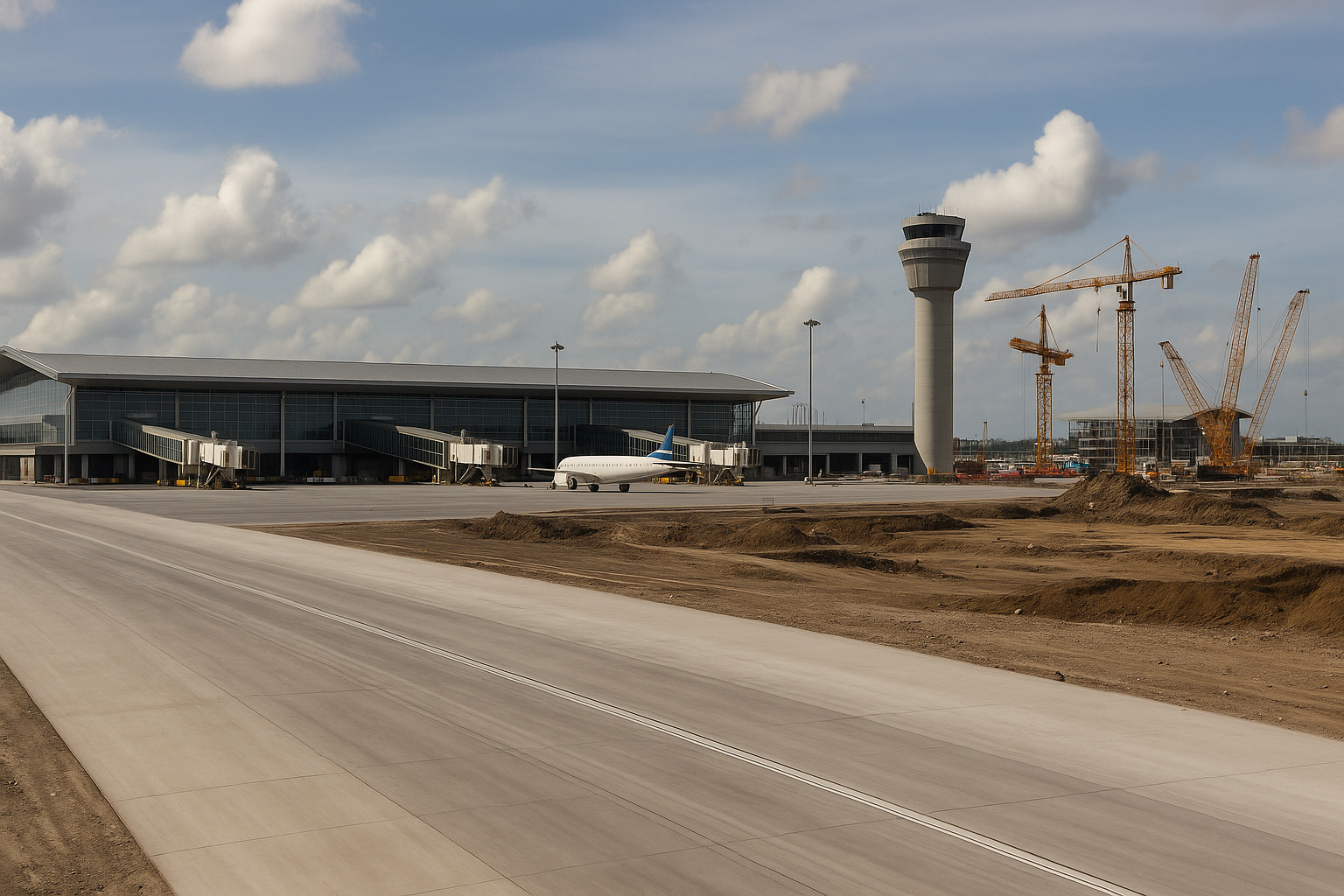
Discover How Airport Construction Transforms Cities, Connects People, and Drives Business Growth in Different Regions of the Country.
Undoubtedly, airport construction involves much more than engineering and architecture.
Furthermore, it drives a country’s advancement, strengthens connections between regions, and stimulates economic development.
From the emergence of the first runways to the modern terminals we know today, airports have marked significant moments in the history of human mobility and urban growth.
-
Abandoned house for 15 years disappears in the woods, shocks owner with unrecognizable scenery and is reborn in an intense transformation after almost 90 hours of work in just 10 days.

-
In just three hours, a natural stone floor transforms the entrance of the house with an organic effect, immediate drainage, and a sophisticated non-slip finish that doesn’t puddle water, dries quickly, and impresses with the final result.

-
‘Interlocking brick’ made of earth arrives in the construction industry with cost reductions of up to 40% on the project.

-
Espírito Santo will receive the largest engineering project in its history with the duplication of BR 262, which will have 50 viaducts, 28 bridges, and 2-kilometer tunnels cutting through the most challenging mountainous region of the entire state.


Therefore, understanding how this infrastructure directly influences people’s lives and the functioning of businesses helps to appreciate its importance in contemporary society.
Historically, according to the International Civil Aviation Organization (ICAO), the concept of an airport emerged in the early 20th century, when air transport began to gain popularity as a quick and efficient means of travel.
The ICAO records that between 1910 and 1920, the first military and civilian airports were built, a crucial period for the development of global aviation.
In Brazil, according to the National Civil Aviation Agency (ANAC), the first runways date back to the 1910s and 1920s.
These runways were primarily used for military flights and postal services, marking the beginning of the national air infrastructure.
However, with the growth of commercial aviation, it became necessary to create more robust and organized structures to meet the growing demand.
Moreover, as pointed out by the Brazilian Airport Infrastructure Company (Infraero), the increase in air traffic demanded technological adaptations in runways, navigation systems, and passenger support infrastructure.
Infraero also emphasizes that to ensure safety, there have been constant investments in technology to monitor and control airspace, especially starting in the 1970s.
What Does It Take to Build an Airport?
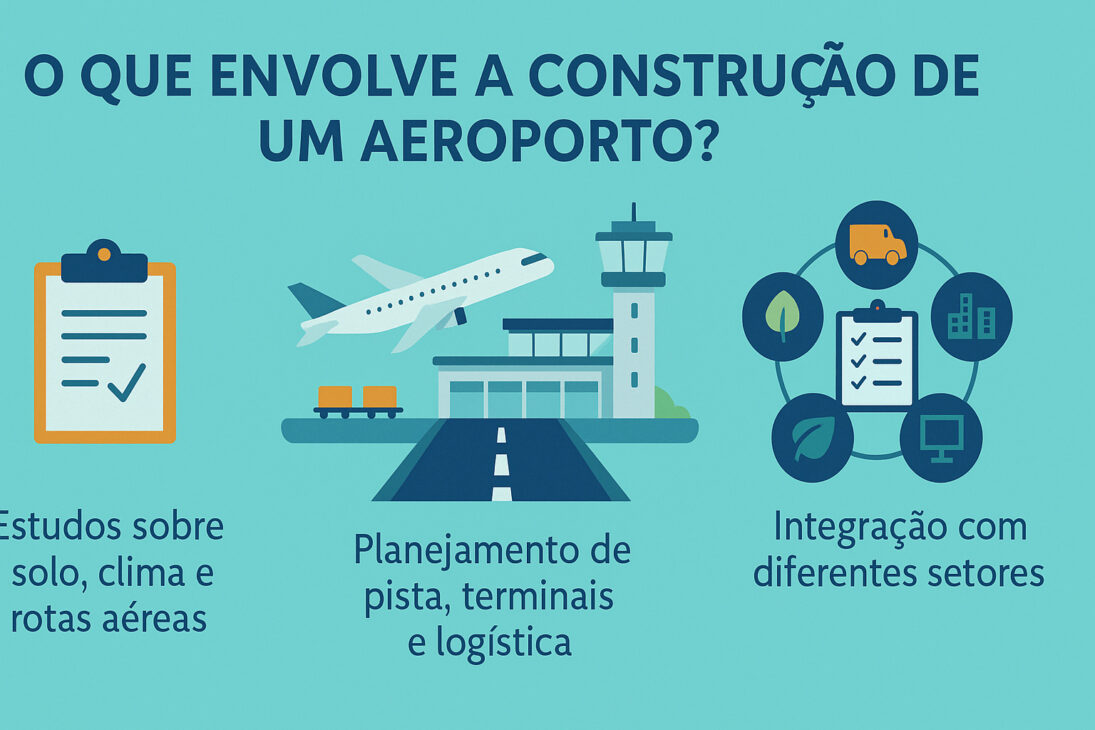
For the construction of an airport, the National Civil Aviation Plan (PNAC) — an official Brazilian government document updated in 2020 — explains that detailed studies on soil, climatic conditions, and flight paths must be conducted, along with planning for runways, terminals, and logistics for cargo and passenger transport.
The PNAC emphasizes that planning must integrate different sectors, such as transportation, the environment, urban planning, and technology.
Thus, each airport is designed to meet the economic potential of the region, the demand for air transport, and job generation.
Another point highlighted by ANAC is the need to provide accessibility and comfort to users, including parking areas, public transport, and access for people with reduced mobility, along with commercial and leisure areas.
In this way, the airport is not limited to boarding and disembarking but provides passengers with a pleasant and safe experience.
Additionally, Infraero highlights that airports function as logistic and commercial hubs that can transform a region.
Companies set up nearby to facilitate the transport of goods and expedite import and export processes.
As a result, hotels, convention centers, shopping malls, and even new neighborhoods arise nearby, boosting the real estate market and local income generation.
How Does Airport Construction Impact People’s Lives?

According to the Institute for Applied Economic Research (IPEA), the construction of airports directly impacts people’s lives, going beyond the simple possibility of travel.
It facilitates family reunions, expands access to medical treatments in other cities, promotes tourism, and opens doors to cultural and professional experiences.
IPEA highlights that residents of remote regions gain opportunities for personal and economic growth with the arrival of airport infrastructure.
Moreover, airport construction contributes to social and cultural integration, allowing people to learn about different realities and customs, favoring the exchange of experiences.
This generates new work and learning opportunities, especially for young people seeking career growth in other cities or countries.
In the business sphere, the National Confederation of Industry (CNI), in its 2022 study, points out that companies that depend on agility, such as tech firms, pharmaceuticals, e-commerce, and multinationals, find airports a decisive factor for efficiency in their operations.
The CNI also reveals that well-structured airports reduce product delivery times, increase competitiveness, and bring suppliers, clients, and strategic partners closer together.
Therefore, many business hubs develop around international airports.
Another point highlighted by the CNI is the stimulation of local entrepreneurship, as the increased flow of people and goods generates new businesses linked to tourism, transport, food, accommodation, and commerce.
Thus, airport construction creates a favorable economic ecosystem for the region.
Historical Evolution of Airports in Brazil and Worldwide
The International Civil Aviation Organization (ICAO), in its historical report from 1946, emphasizes that the global expansion of airport infrastructure accelerated after World War II, with many countries prioritizing the reconstruction and modernization of their airports.
In Brazil, Infraero records that the Congonhas Airport in São Paulo, inaugurated in 1936, was one of the first major terminals and underwent significant expansions in the 1950s and 1960s, a period marked by the country’s accelerated industrialization.
According to Infraero, air transport became a key element for connecting production centers and consumer markets, promoting the internalization of economic development.
More recently, as reported by ANAC, the major sporting events held in Brazil — the 2014 World Cup and the 2016 Olympics — drove extensive modernization of national airports.
This modernization brought improvements in passenger experience, attraction of investments, and reinforced the country’s image abroad.
These advances, despite the challenges, left an important legacy for national infrastructure, reaffirming the strategic role of airports in Brazil’s economic and tourism growth.
Sustainability and Innovation in New Airport Projects
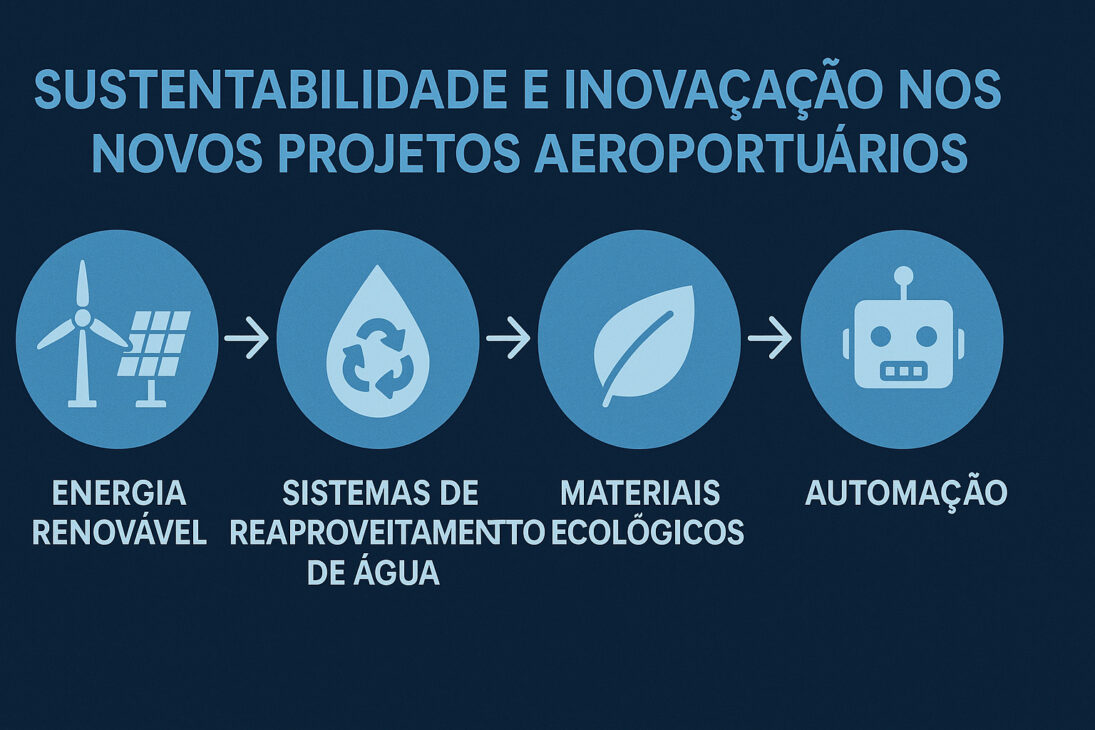
According to the 2023 report by the International Air Transport Association (IATA), the construction of contemporary airports increasingly prioritizes sustainability and technological innovation.
Recent projects incorporate renewable energy, water reuse systems, eco-friendly materials, and automation to minimize environmental impacts.
Moreover, multimodal integration with highways, subways, and railways facilitates urban mobility and makes travel smoother.
According to IATA, airports are also investing in digital technologies such as automated check-in, artificial intelligence monitoring, and personalized services via applications, making the process faster, more efficient, and safer.
Despite the challenges of high costs and bureaucracy for environmental licensing, job creation and economic activity justify the investments.
Infraero reinforces that strengthening the national logistics network makes these projects essential for the future.
Why Investing in Airports Is Investing in the Future?
Even in mid-sized cities, a regional airport can become a decisive point for attracting companies, universities, and research centers.
The CNI exemplifies that industrial hubs form in regions with adequate air infrastructure, facilitating the rapid flow of production to national and international markets.
With the evolution of the air sector, it is clear that airports are fundamental elements for a nation’s development.
They are not just places for boarding and disembarking, but platforms of opportunities.
Each terminal built or modernized represents a bridge between the present and the future, local and global, people and possibilities.
Airport construction profoundly impacts daily life, even if silently.
Whether for a father visiting his distant child, for a product to quickly reach the shelf, or for a company to expand its markets, airports operate in the details of everyday life.
Therefore, investing in this infrastructure means investing in progress, inclusion, and connection between different realities.
In an increasingly interconnected world, where time is a valuable resource, airports shorten distances and expand horizons.
Recognizing and understanding the importance of airport construction is acknowledging its strategic role in the sustainable growth of cities, regions, and countries.
After all, where there is connection, there is development.











Seja o primeiro a reagir!