





 Portuguese
  English
  Spanish
  6 min of reading
  1 comment


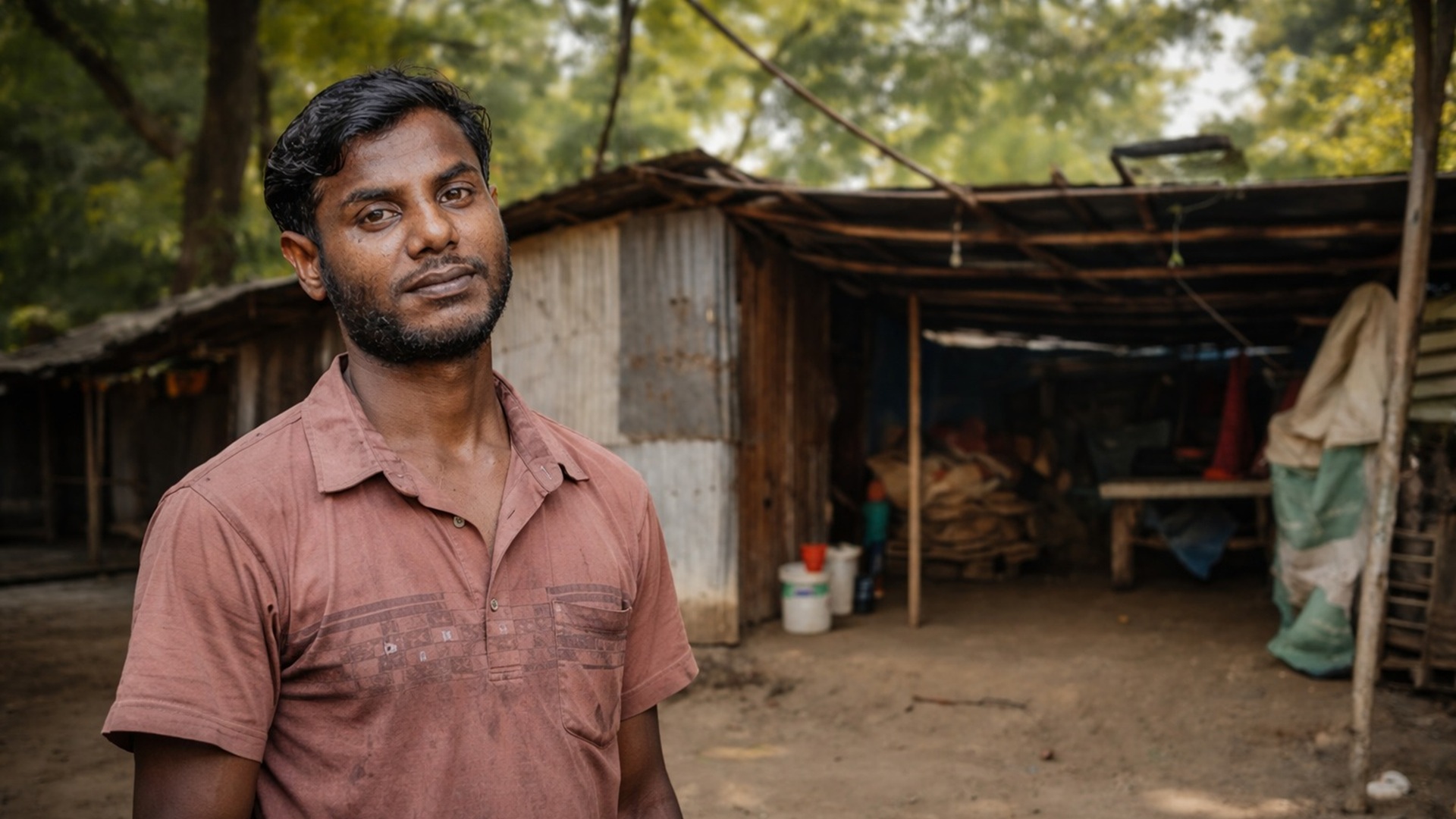


The Exhausting Routine of Mr. Tuhin Reveals the Harsh Reality of the Construction Industry, Where Extreme Physical Strength and Lack of Safety Contrast with a Daily Wage of Five Dollars, Challenging the Survival of a Family Seeking Dignity Through Hard and Continuous Work.
Imagine the hidden reality behind the glass facades of large urban buildings. Thousands of workers face grueling manual labor every day, enduring high risks and meager pay, driven solely by the urgent need to secure their family’s livelihood in a scenario of inequality.
Mr. Tuhin, 30, follows a grueling work routine in urban construction, manually transporting materials in a seven-story building. With a daily wage of 600 taka, the worker supports a family of three in precarious housing, highlighting the reality of manual labor in the sector.
Routine of Movement and Manual Transport of Vertical Loads
Mr. Tuhin’s workday begins even before he arrives at the construction site. The worker travels daily a distance of 10 kilometers to the outskirts of the city. The transport is done in a van adapted for human traction, requiring considerable physical effort.
-
Oldest tree on the planet reappears after 130 years of searches: Wattieza, 385 million years old, was 10 meters tall and had no leaves or seeds; Gilboa fossils in New York solved the mystery in 2007.

-
A 48-square-meter house assembled in hours with 4,000 bricks made of recycled plastic that does not absorb moisture, has natural thermal insulation, and costs less than 90,000 reais in a complete kit.

-
Luciano Hang revealed that Havan’s air fleet has already accumulated more than 20,000 landings, 10,000 flight hours, and 6 million kilometers traveled, and he says that without the planes, the company would never have grown so quickly.

-
A historical discovery in the Andes Mountains reveals a gold deposit valued at 770 billion reais hidden over 4,000 meters above sea level on the border between Chile and Argentina, and the whole world is watching.

The conditions of the access roads worsen the morning commute. Rain-flooded streets create sticky mud pits, where the vehicle’s wheels often get stuck. Tuhin needs to get out and push the vehicle manually to reach the asphalt and continue his journey.
The destination is a seven-story residential building currently under construction. With six floors already erected, the team focuses on plastering and finishing the seventh floor. The site’s infrastructure is basic and relies entirely on human strength for the logistics of materials.
Tuhin’s main role at this stage is the vertical transportation of sand. He fills bags with the material available on the ground floor and carries them on his shoulders. The route involves climbing six flights of stairs with the heavy load, without the aid of elevators or cranes.
This cyclical process lasts for approximately two uninterrupted hours. The worker climbs and descends the stairs repeatedly, facing muscle fatigue and accumulating sweat. With each step, the physical tension increases, while masons wait for the material to apply to the walls.
Tuhin observes the difference in assignments on the construction site. The work of the masons, though demanding, is perceived as less physically taxing and better paid. The worker harbors the goal of learning the trade to eventually abandon the transportation of raw loads.
Double Shift on Construction Sites Without Safety Equipment
After completing the sand transportation stage, Tuhin begins his commute to a second workplace. Intense urban traffic contrasts with the calm of the rural areas where he resides. The sun is already high when he arrives at the next building under construction.
In this second site, the work is focused on preparing for the installation of a roof on the fourth floor. The immediate task involves recovering construction materials for reuse, a common practice to reduce costs on the job.
The work consists of removing nails from old wooden boards. Tuhin uses a hammer to loosen the metal fasteners, an activity that requires precision and strength. The risk of accidents is constant, as a miscalculated blow can result in serious injuries to the hands.
The lack of Personal Protective Equipment (PPE) is a constant observed among all workers at the site. There are no helmets, protective gloves, or safety glasses being used during the handling of impact tools or piercing materials.
Workers at higher levels assemble the roof structure balancing on narrow beams. They operate without safety belts or lifelines, exposed to falls from considerable heights. The intense midday heat amplifies physical wear and the risk of dehydration.
Another activity performed by Tuhin is straightening iron rebar. Along with two other colleagues, he transports heavy bundles from the storage area to the work area. The metal bars are laid on the concrete floor to be processed manually.
The process of aligning the iron is repetitive and requires brute strength. Tuhin’s hands show calluses and blisters, visible marks from years of direct handling of rough construction materials. The pace is maintained for hours, aiming to meet the daily targets set by the foreman.
Economic Analysis of Remuneration and Impact on the Cost of Living
At the end of the shift, Tuhin receives his payment directly from the site manager. The daily wage for an entire day of heavy work is set at 600 taka. In current monetary conversion, this amount is equivalent to just over 5 US dollars.
This income must cover all the needs of the family unit. The amount is allocated for food, housing maintenance, and any medical expenses. The margin for savings or future investments is virtually non-existent given the basic survival costs.
On his way home, Tuhin stops at the local market. The purchase of essential items demonstrates the fragility of their purchasing power. He buys only leafy vegetables, onions, lentils, a small amount of cooking oil, and basic spices.
The cost of this simple purchase consumes about 4 dollars. In just a few minutes, almost 80% of his daily wage is spent just to secure the next day’s meal. The remaining balance is insufficient to cover unforeseen expenses or the acquisition of durable goods.
Budget constraints dictate the family’s diet. Proteins such as meat and fish are considered luxury items, inaccessible for daily consumption. The standard menu is limited to rice, fried vegetables, and red spinach, prepared by Tuhin’s wife.
The couple’s son often asks for fish for dinner, but the desire is rarely fulfilled. The financial reality imposes that such food is consumed only once a week. On other days, the family has boiled eggs or potato curry to complement the rice.
Housing Conditions and Domestic Infrastructure
Tuhin’s residence reflects his socioeconomic status. It is a single-room structure with a zinc roof, located in a remote rural area. The internal space accommodates the bed, dining area, and belongings of three people.
The house lacks an indoor bathroom or a piped water system. Tuhin’s personal hygiene is maintained in a public lake near the residence. He uses the place to bathe both at dawn and upon returning from work at night.
The kitchen operates within the same living space. His wife prepares meals on a simple stove, cooking breakfast and lunch simultaneously. This logistics is necessary for Tuhin to take his lunchbox, avoiding expenses on food outside.
The house’s porch serves as a garage for the work van. The vehicle is the family’s most valuable asset, essential for generating income. The space is also used for brief moments of family bonding before the workday begins.
Despite its simplicity, the home is the worker’s refuge. Nightfall is marked by the arrival of the young son, who waits for small treats brought by his father, such as chocolates or potato chips, bought with what little remains of the salary.
The lack of adequate sanitary infrastructure exposes the family to cold and unsanitary conditions. The nightly bath in the lake occurs even on cold days, being the only option to remove the cement and dust accumulated on the skin throughout the day.
After dinner, Tuhin seeks a brief moment of leisure. He visits a nearby tea shop, where he drinks a cup of hot beverage and smokes cigarettes. The place serves as a meeting point for other workers in similar conditions.
The cycle has repeated itself for 10 years. Tuhin’s routine is representative of a vast class of manual workers who sustain urban growth. The hope for change lies in the education of his son, envisioned as the only way for the next generation not to inherit the same fate of physical exhaustion.








Incrível reportagem, parabéns ao escritor e ao Site de divulgação…
Só que não… Aparentemente é uma obra de ficção, pois não traz informações sobre a tal cidade, o tal país. Cita o primeiro nome de um Sr. Tudo muito mal explicado…. eu fico em dúvida se realmente é uma reportagem ou um conto mal feito.
Desculpe o comentário mas há que melhorar a qualidade.