





 English
  Francês
  Alemão
  Italiano
  Japonês
  Norueguês
  Portuguese
  Spanish
  7 min of reading
  1 comment


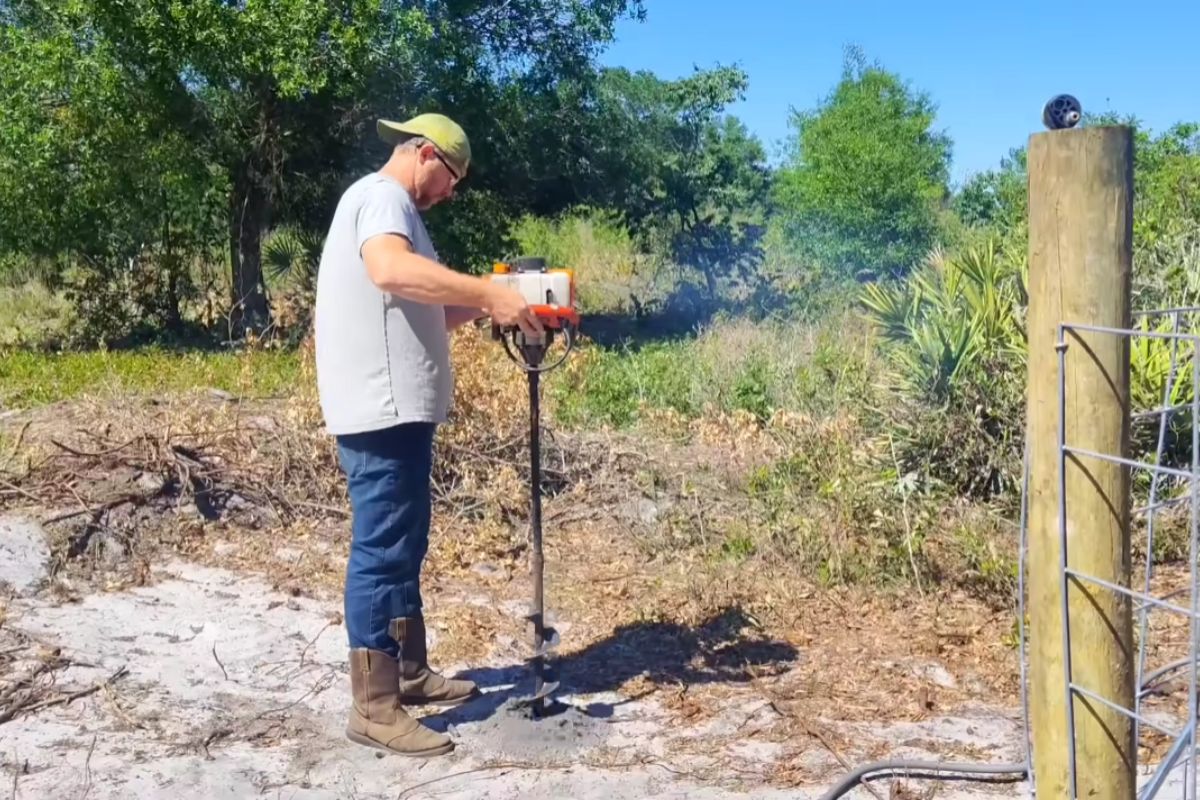


When Trying to Dig a Well with Common Tools, a Rural Resident Discovers That the Real Challenge Is Not Just Reaching Water, but Dealing with Unstable Clay, Hole Collapse, Shell Rock, and Technical Decisions That Can Condemn Days of Manual, Tiring, and Emotionally Draining Work in the Process
Digging a well by oneself often begins as a promise of savings and water autonomy, especially in regions where the water bill weighs on the budget or the public system does not reliably meet demands. In practice, however, what seems like a simple hole in the yard quickly turns into an improvised engineering project, with very little margin for error.
In this specific case, the attempt to direct a well with home equipment, a pressure washer, and PVC pipes revealed the less glamorous side of this kind of undertaking. The final result was water coming from the ground, but at the cost of two weeks of continuous effort, a lost hole, buried materials, and an expensive lesson on bentonite clay and soil behavior.
When the Idea of a Well Seems Too Simple

The starting point was straightforward. On a sandy soil plot, the owner decided to dig a shallow well using a pipe driving system instead of hiring a professional drilling service.
-
Seen from space, a colossal ‘Y’ cuts through the largest desert in China, blending a jade-filled river, red and white mountains, and revealing the absurd scale of the transformation of the Taklamakan surrounded by a green wall with billions of trees.

-
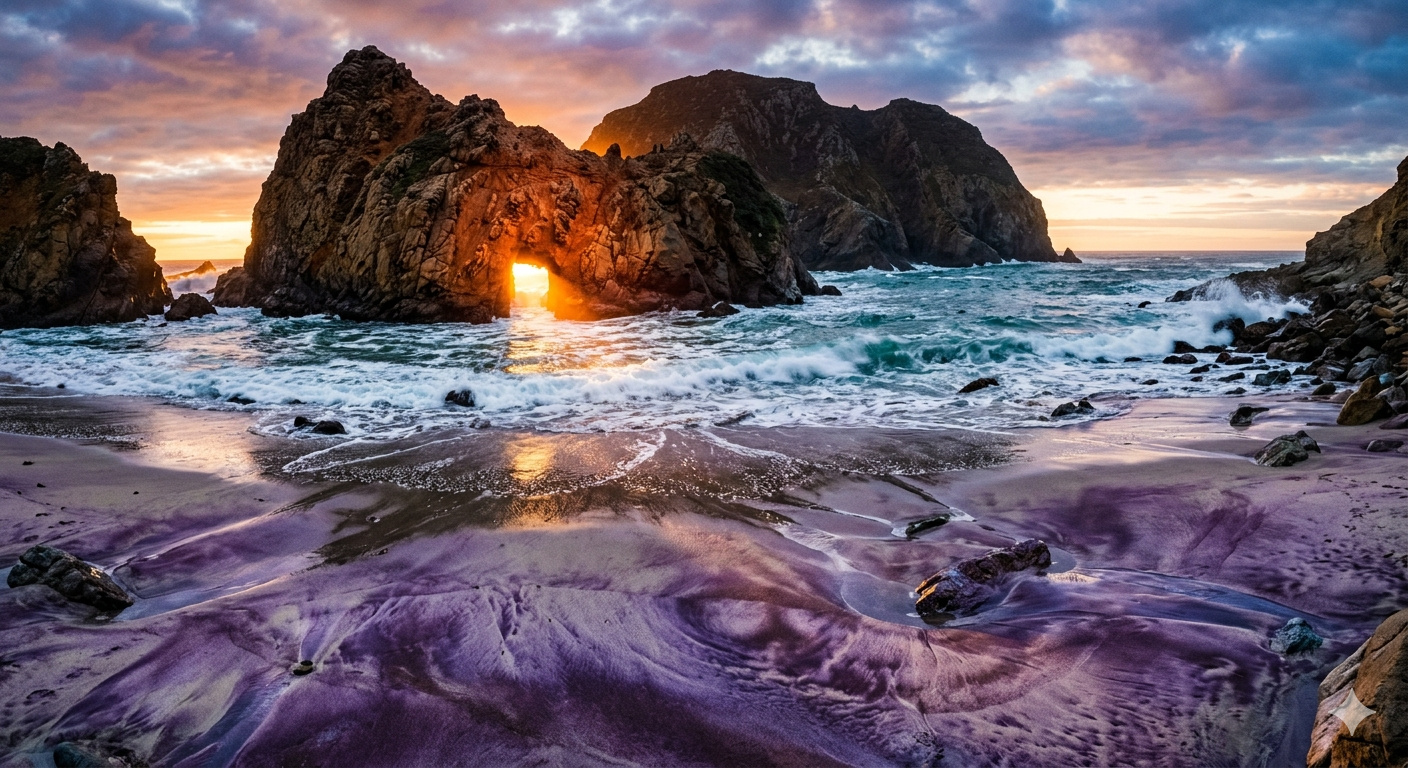
The Pacific Ocean reveals what the cliffs of Big Sur have hidden for millennia: Pfeiffer Beach, in California, features swirling purple sand formed by garnet crystals and displays a stone arch that is illuminated by the sun in winter for just a few days each year.
-
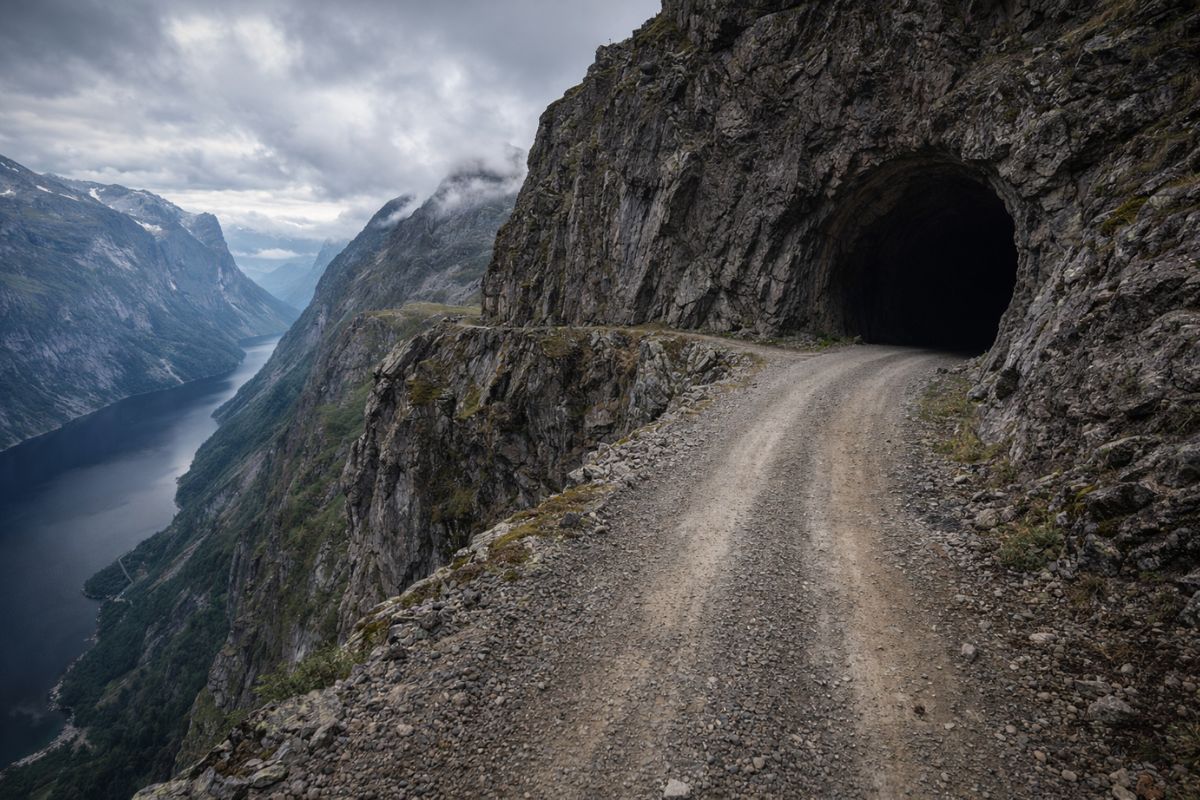
Aursjøvegen in Norway is a 100-kilometer gravel road that crosses chasms and dark tunnels carved into the rock at an altitude of 947 meters in the fjords and is only open for four months a year.
-
With about 4,000 m², the building constructed in a traditional neighborhood in France looks like a rainbow, has a colorful facade, mixes vibrant glass, and creates one of the most unusual visuals in Bordeaux.


The logic was clear: reduce costs, control the process, and gain a personal water source.
The initial plan combined a roughly four-foot pilot hole, manually made, with the use of a pressure washer and jetting water to facilitate penetration into the soil.
Next, a sequence of pipes would come into play, first a 4×10, then two-inch pipes, until reaching approximately 30 feet, or around nine meters in depth.
On paper, the well seemed like just a sum of linear, repetitive, and tiring steps, but manageable.
The initial progress confirmed the impression that the terrain would help. Sandy soil, in theory, favors penetration and washing away debris.
The first sections of pipe went down, the water jet kept the material suspended, and the hole remained seemingly stable.
The expectation was to reach the desired level in a few days, with a functional well and at a much lower cost than a specialized service.
The Day the Hole Collapsed and the Well Disappeared

The illusion of simplicity ended when the pipe neared the target depth. With something around 28 to 30 feet driven, what had been a promising well turned into a structural problem.
The hole collapsed upon itself, burying the assembly and trapping the pipe under layers of unconsolidated soil.
Moving forward meant, first, trying to save what was already buried. The owner resorted to a mini loader, hooking the end of the pipe to a tree to try to pull the assembly “carefully” out of the hole.
At first, the maneuver seemed to work, but the outcome was the worst possible. The metal coupler failed, the pipe came loose, and the shallow well, along with the entire pipe assembly, was permanently lost down there.
This moment marks the turning point of the project. What had consumed a week of work, between drilling, washing, and driving the pipe, could not be recovered.
The terrain now offered a collapsed hole, buried expensive materials, and no usable cubic centimeter of water.
The only realistic alternative was to accept the loss, abandon the first point, and start a new well a few meters away, virtually starting from scratch.
Bentonite Clay, Shell Rock, and the Forced Learning Curve

The second attempt did not repeat exactly the same errors. The experience of the collapse forced a complete review of the drilling procedure.
The critical point lay in the combination of loose sandy soil, highly unstable, and the absence of a suitable fluid to stabilize the hole walls. This is where bentonite clay entered the scene as a central element of the strategy.
This time, the process of opening the well began to include the mixing of bentonite clay into the circulating water. As the hole was washed and deepened, this clay formed a thin film along the walls, helping to support them and reducing the tendency for collapse.
The practical difference was immediate, with a more stable hole, reduced risk of collapse, and greater control during the removal of the drilling pipes when lowering the final assembly.
Even with bentonite clay, the underground was not homogeneous. At a certain point during drilling, progress encountered a layer of shell rock, much harder than the previous soil.
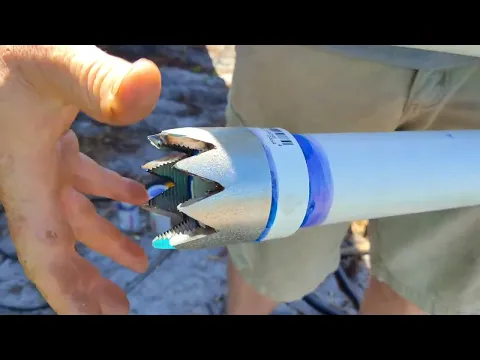
The improvised teeth on the PVC pipe, manually cut, simply wore out without being able to overcome the material.
It was necessary to adapt the tool, using a galvanized coupling of two inches and a pipe with a threaded end, also modified with “teeth,” to try to cut the rock.
This transition exposed a second limit of the approach. A well dug with homemade resources depends entirely on the ability to improvise in the face of each geological surprise.
When rock appears, effort increases, progress diminishes, and the risk of damage to the equipment grows, extending deadlines and demanding even more resilience from those in charge.
From the Second Well to the First Usable Water
After the failure of the first site, the new well was dug about 10 meters away from the original. The procedure followed the same general logic, but with two central changes: consistent use of bentonite clay during drilling and greater care in the transition between sandy soil and shell rock.
With the hole stabilized, it was time to install the well point and fill the space around the column.
The owner chose pool filter sand, coarser in grain size, to fill at least the first three meters around the filtering section, creating a draining layer around the capture area.
From that level on, the filling was completed with concrete, sealing the top and protecting the well from surface contamination.
The moment of testing came next, with the first rise of water. The liquid had a smell of iron, indicative of mineral presence in the formation, but without a strong odor of chemicals.
The coloring also drew attention: less yellowish than the previous water, indicating at least acceptable quality for everyday use upon proper evaluation.
After two weeks of exhausting work, material losses, and method adjustments, the well finally delivered the function that justified all the effort: ensuring personal water without relying on the public service network.
The Real Cost of Digging a Well by Yourself
In the final balance, opening this well took about two weeks, with one week practically lost in the first hole and another four days dedicated to the second. The workload wasn’t limited to intense physical activity.
There was a direct impact on planning, mood, and confidence of the person executing the project, especially after the initial collapse and the irreversible loss of pipes and couplers.
From a technical standpoint, the case shows that the feasibility of a “do it yourself” well depends on a delicate combination of factors.
Soil type, presence of hard layers, quality of connections, hole stability, use or not of bentonite clay, and choice of filling material can solely define whether the result will be clean flowing water or just another unusable hole on the property.
Practically every miscalculation, whether in depth or stabilization, comes at a high cost in time, money, and physical wear.
Conversely, the experience also produces intangible gains.
By understanding how the underground reacts, how bentonite clay stabilizes walls, how shell rock interrupts progress, and how filling with pool sand and concrete protects the capture, the resident gains better control over their own water system.
The feeling of turning on the faucet knowing that water comes from a well built with one’s own hands is, for many, a sufficient argument to face the process.
How Far Is It Worth Insisting on a Homemade Well
In the end, this attempt to dig a well with personal resources cannot be summed up solely by the success of getting rid of the water bill.
What is seen is a two-week process where planning, technique, improvisation, and stubbornness meet under conditions that are not always favorable underground.
The inevitable question remains for those considering following a similar path. In the face of unstable clay, shell rock, the risk of hole collapse, and the real possibility of losing entire pipes in the ground, how far would you insist on a homemade well, and what kind of mistakes would you be willing to take to secure your own water in the yard?









Muito interessante a matéria!
Sem estudo do subsolo não temos como saber o que virá pela frente. Melhor contratar um profissional!