





 English
  Francês
  Alemão
  Italiano
  Japonês
  Norueguês
  Portuguese
  Spanish
  5 min of reading
  0 comments


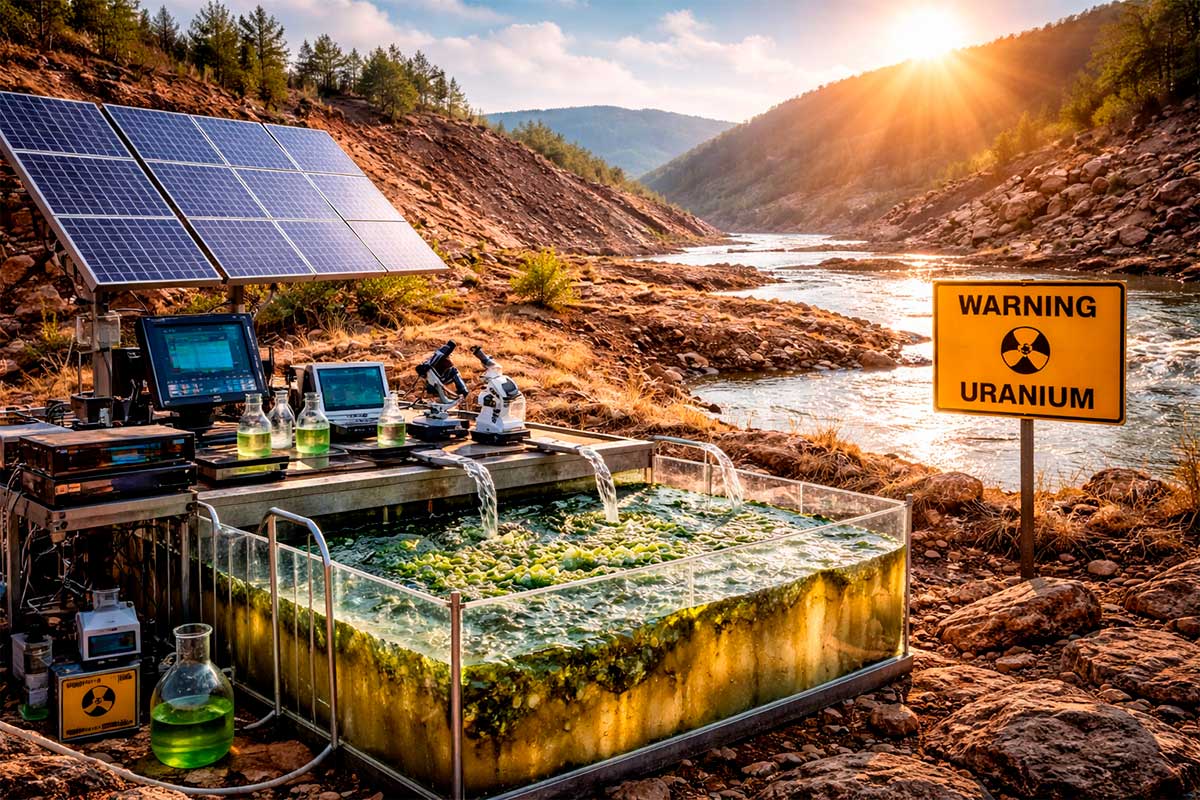
A team of researchers in China developed a biohybrid system that uses bacteria, iron sulfide, and solar light to remove uranium from contaminated water. In tests with real mine water, the technology achieved high efficiency and paved the way for a new generation of low-cost environmental solutions with less impact.
Water contamination by uranium remains one of the most challenging environmental legacies to address in mining areas. When this type of pollutant reaches water bodies, groundwater, and nearby soils, the effect can last for many years and hinder ecosystem recovery.
This is precisely where the new Chinese research gains relevance. Instead of relying on heavy, expensive, and heavily reagent-based processes, the proposal bets on a biological mechanism reinforced by a light-sensitive mineral material.
The result is noteworthy because it is not limited to an elegant theoretical idea. The system was tested in real uranium mine water and showed performance far superior to that obtained by the bacteria alone, demonstrating that the combination of microbiology and solar energy can have concrete applications in environmental remediation.
-
Archaeologists find in Mexico a sacrifice altar over 1,000 years old, surrounded by skulls, human bones, and signs of rituals from the Toltec Empire.

-
Goodbye to the traditional oven? IKEA draws attention with a 3-in-1 microwave that combines an air fryer, grill, and heating in the same compact, affordable appliance designed for small kitchens.

-
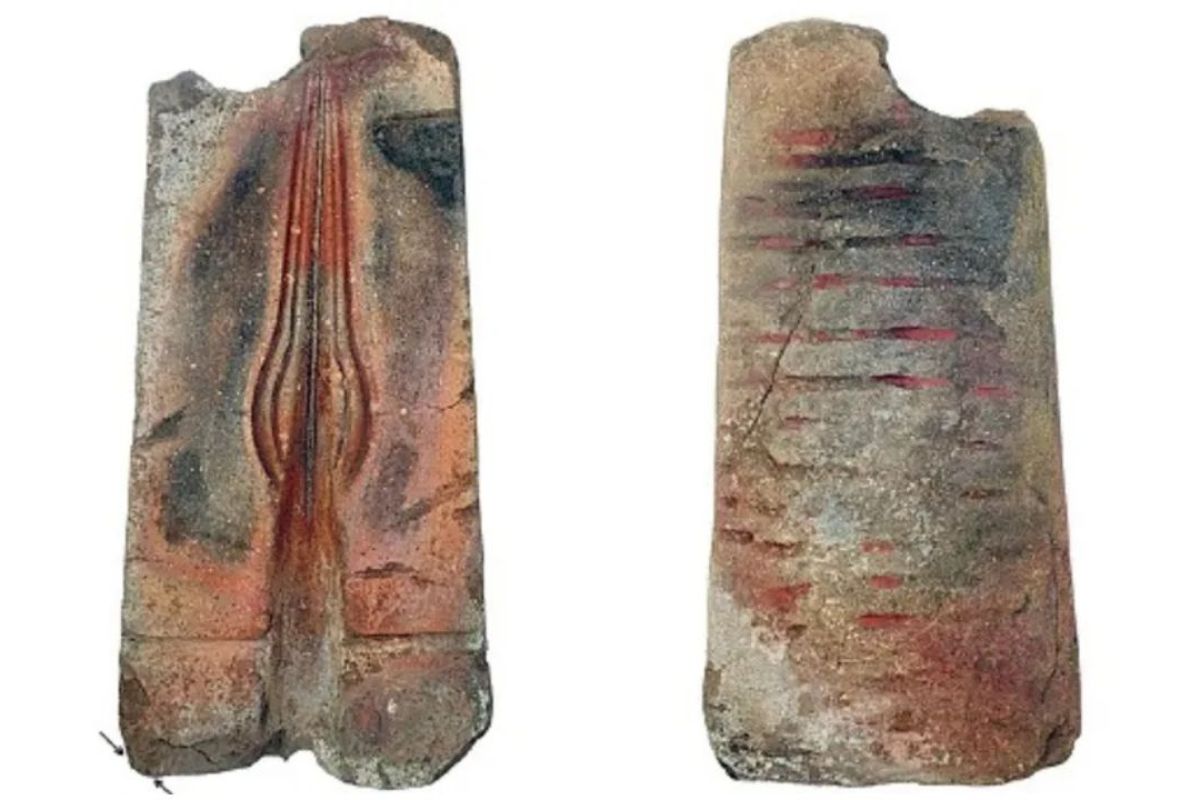
A forgotten stone in the barn hid a rare relic from the Bronze Age, and the discovery shocked archaeologists by revealing a millennia-old mold used to manufacture war spears over 3,000 years ago.
-
New technology with lights is being tested in the most dangerous stretch of Serra do Mar in Paraná to alert drivers, reduce delayed reactions, and try to curb the rise in deaths on the highway.


The advancement is of interest not only to mining but to the entire industry that deals with complex effluents. At a time when the pressure for cleaner, more efficient, and scalable solutions is increasing, the technology emerges as a promising response to an old problem.
Biohybrid system combines bacteria and active mineral to capture uranium more efficiently

The heart of the innovation lies in the union between the bacterium Shewanella putrefaciens and iron sulfide nanoparticles formed on its surface. This arrangement creates a biohybrid structure that enhances the microorganism’s ability to interact with dissolved uranium in water.
In practice, iron sulfide serves as a decisive reinforcement for the system. It improves electron transfer, increases the overall resistance to the presence of the contaminant, and transforms the bacterium into a much more efficient removal agent.
This technical detail is what moves the discovery from the realm of curiosity into the territory of serious environmental application. It is not just about using microorganisms to absorb pollutants, but about enhancing this natural behavior with a material that makes the process more stable, faster, and more robust.
The performance gain was significant. In tests with mine water, the biohybrid achieved about 94% uranium removal, while the isolated use of the bacteria was around 48%, a difference that helps explain why the study attracted so much attention.
Solar light powers the process and transforms the living filter into an autonomous solution
The role of solar light is one of the most interesting aspects of the technology. Upon receiving radiation, the iron sulfide nanoparticles come into action and produce electrons that drive the necessary reactions to transform dissolved uranium into a less mobile form in water.
This mechanism reduces the contaminant’s ability to disperse and facilitates its immobilization. Instead of remaining freely circulating in the environment, uranium tends to be retained in a more controlled manner, decreasing the risks of spreading.
At the same time, part of this energy also stimulates the metabolic activity of the bacteria themselves. This helps keep the system active and favors a continuous operating cycle, in which the mineral component and the microorganism mutually reinforce each other.
This behavior gives the technology an almost autonomous character. By relying on sunlight as the engine of the process, the system can become especially useful in remote areas, where electrical infrastructure is limited and the cost of operation often makes more complex methods unfeasible.
Mining can gain a cleaner and cheaper alternative to recover degraded areas
Mining regions often face a persistent problem. Even after mining operations have ceased, water contamination can continue to compromise rivers, aquifers, and soils, requiring constant maintenance and prolonged investments in containment and treatment.
This is why the new approach has strategic potential. By combining low energy consumption, reduced dependence on chemicals, and high removal efficiency, the biohybrid system offers a more sustainable route to address one of the most critical points of mineral activity.
Another important differentiator is the possibility of operation in hard-to-reach locations. In many areas affected by waste and contaminated drainage, bringing in heavy structures and maintaining conventional systems for long periods is costly and operationally complicated.
A solar-powered living filter changes this equation. It does not eliminate all challenges but points towards a remediation model that is more compatible with the current logic of the industry, which needs to reduce environmental impact without multiplying treatment costs.
Furthermore, the technology fits into a larger trend in environmental engineering. The sector increasingly seeks solutions inspired by natural processes, capable of recovering degraded areas with less aggressiveness and greater integration with the local ecosystem.
Advancement is real, but still needs to pass the industrial scale test
Although the results are promising, there is still a significant gap between experimental success and broad application in the real world. Every environmental technology must prove that it can maintain performance, stability, and economic viability when it leaves the controlled conditions of research.
This point deserves attention because the environment outside the laboratory is much more unpredictable. Variations in temperature, chemical composition of water, presence of other contaminants, and behavior of microorganisms can directly influence the process yield.
It will also be necessary to understand how to adapt the system to different regions and contamination scenarios. The biological basis of the technique suggests room for future adjustments, but this will require additional testing, selection of suitable strains, and performance evaluation in the field over longer periods.
Still, the message left by the study is clear. Water decontamination in mining areas can enter a new phase, where biology, mineral materials, and solar energy cease to act separately and begin to form an integrated solution.
More than a successful experiment, the research shows a shift in logic. Instead of combating pollution solely with heavy structures and intensive chemistry, the path now may involve living, intelligent systems that are more aligned with the very mechanisms of nature.
The idea of using bacteria and solar light to clean contaminated water seems revolutionary, but will mining really invest in this or continue to be stuck in traditional methods? Leave your comment and tell us if this type of technology has the strength to become standard or if it still seems too far from the reality of the sector.









Seja o primeiro a reagir!