





 Portuguese
  English
  Spanish
  4 min of reading
  0 comments



The BR-381, the Infamous “Highway of Death,” Will Have R$ 10 Billion in Investments After Federal Concession. The Signing of the Contract Generated Political Criticism of Romeu Zema, Absent from the Ceremony, and Comparisons Between State and Federal Administrations. Improvements Include Duplications, New Footbridges, and Lower Tariffs for Users.
For years, the BR-381 carried the grim nickname of “Highway of Death,” marked by winding curves, fatal accidents, and unfulfilled promises of solutions.
The hope for transformation finally took shape in January 2025, when the federal government, led by President Luiz Inácio Lula da Silva, signed the concession contract for the revitalization and management of the highway.
The event, however, was a stage for intense political debates, with criticism directed at the opposition and comparisons between state and federal management models.
-
A new Brazilian shopping center worth R$ 400 million will be built in an area equivalent to more than 4 football fields, featuring 90 stores, 5 cinemas, a supermarket, a college, and parking for 1,700 cars, potentially generating 3,000 jobs.

-
Larger than entire cities in Brazil: BYD is building a 4.6 km² complex in Bahia with a capacity for 600,000 vehicles per year, but the discovery of 163 workers in conditions analogous to slavery has shaken the entire project.

-
With an investment of R$ 612 million, a capacity to process 1.2 million liters of milk per day, Piracanjuba inaugurates a mega cheese factory that increases national production, reduces dependence on imports, and repositions Brazil on the global dairy map.
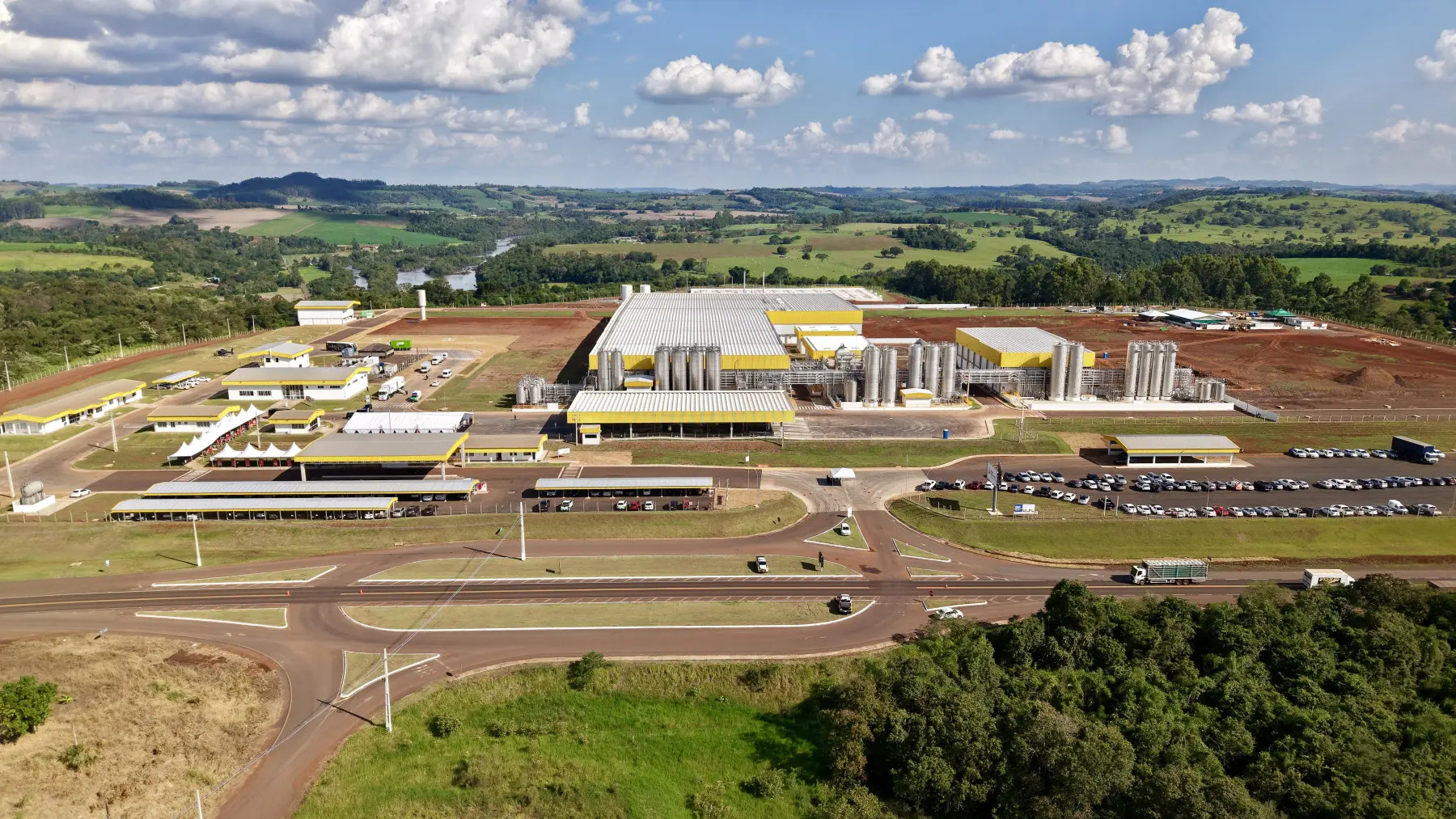
-
Brazilian city gains industrial hub for 85 companies that is equivalent to 55 football fields.


An Event Marked by Political Tensions
At the signing ceremony held at the Palácio do Planalto, President Lula took the opportunity to rebut critics from the opposition and highlight his government’s achievements.
Among the main targets of criticism were Governors Romeu Zema (Minas Gerais), Tarcísio de Freitas (São Paulo), and Eduardo Leite (Rio Grande do Sul).
Zema’s absence from the event was harshly criticized by Lula and Transportation Minister Renan Filho.
Lula did not hold back in criticizing Zema’s stance on the Propag (Full Debt Payment Program of the States), stating that the governor should recognize the benefits offered by the federal government.
“This debt agreement for Minas Gerais should be a reason for celebration. Perhaps only Jesus Christ would do something similar if he were president of this country,” said Lula.
When approached, Zema’s team justified his absence by mentioning pre-scheduled commitments, such as the inauguration of the Air Samu in Juiz de Fora and meetings with local mayors.
However, Minister Renan Filho did not spare criticism: “It’s a political prioritization against the interests of the people of Minas Gerais. When a solution for the Highway of Death is given, it’s the time to be present and acknowledge the effort.”
Concession of the Highway: What Changes in the BR-381
Known for its high accident rate, the BR-381 passes through 13 cities in Minas Gerais over a stretch of 303.4 km between Belo Horizonte and Governador Valadares.
The concession to Concessionária Nova 381 provides for R$ 10 billion in investments over 30 years, with a series of improvements planned for the layout.
Among the changes are:
- Duplication of 106 kilometers;
- Construction of 83 kilometers of additional lanes;
- Implementation of 23 pedestrian footbridges;
- Creation of escape areas and Points of Stop and Rest (PPD) for truck drivers.
The highway is traversed by an average flow of 24,700 vehicles daily, and the expectation is that the interventions will reduce the high accident rates.
According to the Federal Highway Police, between 2018 and 2023, there were 3,960 accidents on the stretch, resulting in 420 deaths.
Concession Models Under Debate
During the event, Minister Renan Filho criticized the concession models adopted in states like São Paulo, managed by Governor Tarcísio de Freitas.
According to Renan, the São Paulo model prioritizes state profit, resulting in higher toll fees.
“In São Paulo, the average cost is R$ 19 for every 100 kilometers traveled, while on federal highways the average value is R$ 10, with better infrastructure quality,” he stated.
The lower tariff concession model—adopted by the federal government—eliminates the charge for the granting, favoring lower tariffs for users.
The granting model, on the other hand, requires payment to the government, raising the tolls and allowing the use of the funds in other areas.
Response from the Opposition
Romeu Zema reacted to the criticisms via social media, emphasizing that his focus is on results and not on ceremonial events.
“When the machines are on the road and the stretches are inaugurated, I will be at your disposal. They promised this work for 188 months and did not deliver,” he wrote.
The governor also responded to charges of gratitude towards the federal government.
Eduardo Leite, Governor of Rio Grande do Sul, was also mentioned in Minister Rui Costa’s criticisms, who called for more responsibility when commenting on federal programs.
Economic Impact of the Concession
For Emir Cadar Filho, Vice President of Fiemg and President of the Institution’s Infrastructure Council, the concession is a historic milestone for Minas Gerais.
“For more than 30 years, the people of Minas have been waiting for these works. Now, we will have more comfort and safety, in addition to fostering the development of the region,” he stated.
The modernization of the BR-381 promises not only to save lives but also to boost the regional economy by facilitating the transportation of products and expanding business opportunities.
Question to the Reader: Do you believe that the concession of the BR-381 will be sufficient to resolve the historic infrastructure and safety problems of the highway? Comment below!









Seja o primeiro a reagir!