





 Portuguese
  English
  Spanish
  4 min of reading
  0 comments


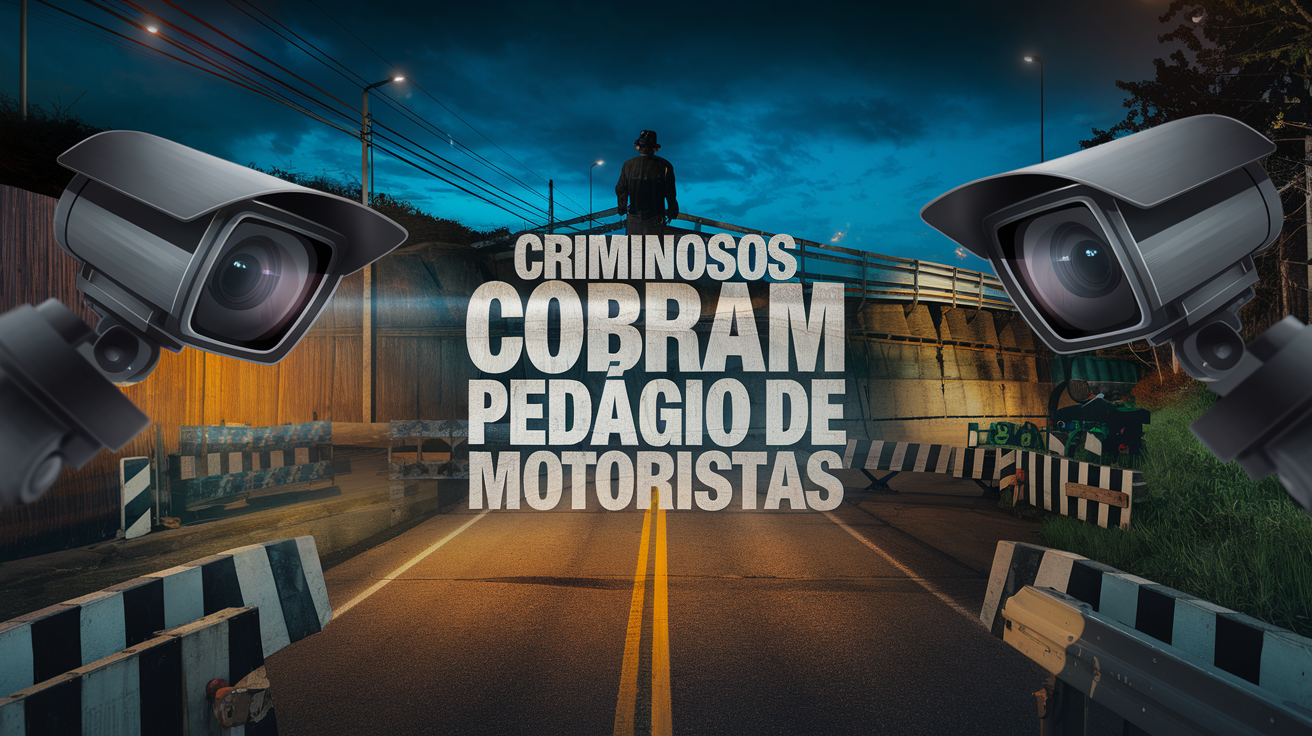
Criminals Dominate Roads at the Border! With Security Cameras and Illegal Tolls, Traffickers and Smugglers Ensure Total Control of Clandestine Routes. Even with Actions from the Authorities, Crime Reinvents Itself. Who Really Rules the Border? Find Out Now!
In the vastness of the border between Brazil and Bolivia, where deserted roads cut through poorly monitored lands, an unsettling phenomenon has been consolidating.
Organized crime has evolved and now controls strategic segments of these routes, using cutting-edge technology to monitor the territory and even charge tolls from drivers using clandestine roads.
According to an investigation by Folha MS, criminals operating in the Corumbá region have implemented a sophisticated monitoring system to ensure the safe flow of illegal goods.
-
Man finds over 200 rare cars abandoned on a lot and tries to do the impossible in 8 hours with a surprise at the end.

-
An irregular parking case gains attention after a Mercedes Classe A was removed in such a strange way that it even raised doubts about damage to the car.

-
Costing R$ 16,000, the new Yamaha features a 125 cc hybrid engine with electric assistance, delivers 8.3 hp, includes ABS, optimized fuel consumption, Y-Connect connectivity, 25 liters of storage space, and a surprising 4-year warranty in the urban segment.

-
OMODA & JAECOO grows in Europe in 2026 with an integrated strategy of sales, innovation, local production, and technological advancement in the United Kingdom, Italy, and Spain.


Drugs, weapons, food, and stolen vehicles pass effortlessly along these smuggling routes, while cameras and lookout posts ensure that inspections are avoided.
24/7 Monitoring for Crime
The alternative roads, often ignored by the government, have become true strongholds for smugglers.
The criminals have installed cameras that transmit real-time images, allowing them to maintain complete control over the area’s activity.
Thus, when any police vehicle or inspection team approaches, illegal loads simply disappear before the approach.
In addition to digital surveillance, the scheme includes lookouts strategically placed throughout the area.
Fabric dolls are used as signaling for criminals: if the doll is present, the passage is safe; if removed, it means active inspection.
This rudimentary yet effective system prevents operations from being dismantled.
Criminal Toll: Who Pays, Passes
Another alarming aspect of these organizations’ dominance is the charging of tolls on clandestine routes.
Drivers using these illegal paths are required to pay fees to the criminals to ensure trouble-free passage.
The scheme functions as a sort of “guarantee” that the goods will not be seized along the way.
According to Folha MS, in some of these roads, houses have been built along the sides to serve as support bases for crime.
In addition to toll collection, these locations provide logistical support to store smuggled products and ensure secure transportation to final destinations.


Smuggling Roads: The Trail of Crime
The so-called “Jacadigo Road,” at the border between Brazil and Bolivia, is one of the most critical points of this scheme.
In addition to being a widely used route for smuggling, criminals have appropriated Brazilian land and turned the area into a true headquarters.
Houses have been built, passages opened in fences, and the paths have become permanent routes for trafficking.
Even with authorities’ attempts to block these passages – such as building trenches to prevent vehicle traffic – criminals quickly restore the routes, ensuring the continuity of illegal activities.
Seven Clandestine Points Mapped by Criminals
An investigation by the Federal Revenue identified at least seven clandestine crossing points at the border.
Most of them are located less than two kilometers from the Esdras Post, the main official entry point for crossing between the two countries.
With the expansion of crime, some constructions have already invaded Brazilian territory, occupying areas that belong to the Union.
The survey conducted by Folha MS showed that these invasions have grown in recent years, especially after earthworks between 2021 and 2024, which eliminated natural barriers and facilitated the passage of large vehicles.
Gaúcho Trail: Another Danger Zone
In addition to the Jacadigo Road, another critical point in the region is the Gaúcho Trail, which runs parallel to the Ramão Gomez highway.
This stretch is known not only for the trafficking of illegal products but also for the clandestine entry of foreigners who avoid immigration checkpoints and enter Brazil irregularly.
With the increasing sophistication of criminal activities in the region, authorities face a constant challenge in regaining control over the borders.
Although some actions have been taken to remove illegal monitoring cameras, criminals continue to innovate and find new ways to maintain their dominance over these routes.
What Can Be Done?
Public safety experts warn that combating crime in these areas requires a broader approach.
Investments in intelligence, satellite monitoring, and increasing police presence are urgent measures to combat these organizations.
Furthermore, cooperation between Brazil and Bolivia is essential to prevent these groups from continuing to operate with such freedom.
Meanwhile, local residents and drivers traveling through the region remain captives of a criminal system that grows stronger each day, challenging the authorities and imposing its own law at the borders.







Seja o primeiro a reagir!