





 Portuguese
  English
  Spanish
 4 min of reading
  0 comments


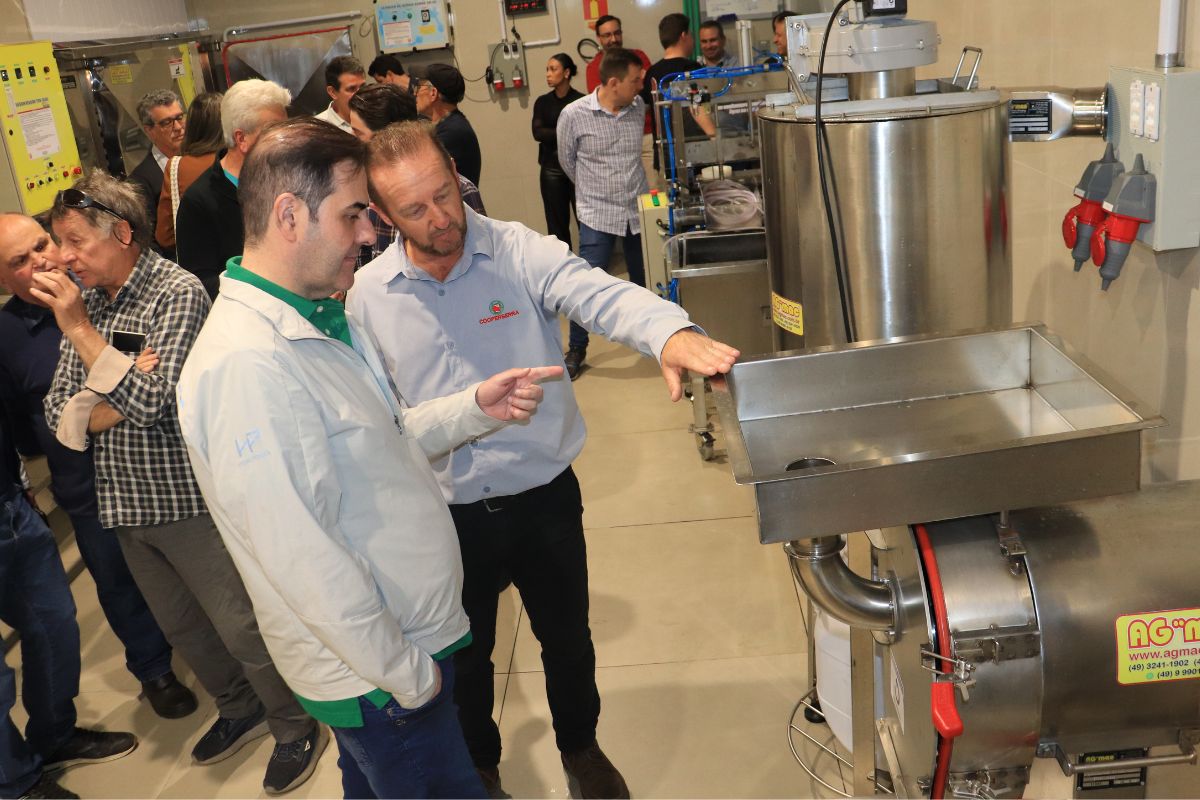
Apple-Derived Products Are Boosting the Economy of Serra Catarinense. With Support from the State, Cooperserra Transformed Waste into Flour, Bran, and Crispy Apple Chips, Consolidating New Regional Markets Sustainably
Apple-derived products are changing the reality for family farmers in São Joaquim. What was once discarded as waste from juice production has found its way into the market as flour, bran, and even crispy chips, according to an article published.
This new scenario was made possible by a project from the Cooperserra Cooperative, which opened a modern processing unit with support from the Financia Agro SC Program – Local Productive Arrangements (APL), an initiative of the State Secretariat of Agriculture and Livestock (Sape).
With funding of R$ 1 million, made available by the State Rural Development Fund (FDR), the cooperative began a transformation that now ensures the full utilization of raw material and expands the variety of products available to consumers.
-
A new Brazilian shopping center worth R$ 400 million will be built in an area equivalent to more than 4 football fields, featuring 90 stores, 5 cinemas, a supermarket, a college, and parking for 1,700 cars, potentially generating 3,000 jobs.

-
Larger than entire cities in Brazil: BYD is building a 4.6 km² complex in Bahia with a capacity for 600,000 vehicles per year, but the discovery of 163 workers in conditions analogous to slavery has shaken the entire project.

-
With an investment of R$ 612 million, a capacity to process 1.2 million liters of milk per day, Piracanjuba inaugurates a mega cheese factory that increases national production, reduces dependence on imports, and repositions Brazil on the global dairy map.

-
Brazilian city gains industrial hub for 85 companies that is equivalent to 55 football fields.

The work was conducted in partnership with Epagri, which developed the technical project, and approved by the Rural Development Council (Cederural). Three months ago, the unit began operations and is already showing results.
The State Secretary of Agriculture and Livestock, Carlos Chiodini, highlighted that transforming waste into apple-derived products generates new income opportunities and strengthens public policies aimed at rural development.
For local farmers, the change represents innovation and new market horizons.
Family Agriculture Gains Strength with Sustainability
One of the most relevant points of this advancement is the direct impact on family agriculture. Cooperserra, founded in 1977, brings together 115 members, of which 66% are family farmers.
For this group, the arrival of the new line of apple-derived products means expanding markets, better utilizing production, and adding value at each stage of the process.
According to the cooperative’s president, Mariozan Correa, the opportunity has opened doors to fully utilize the apple.
The production of flour and chips brought differentiation and consolidated a path that previously did not exist. Before, the fruit’s pulp was seen only as a waste product with no economic utility. Today, what was discarded has become a source of income.
Moreover, the work is an example of sustainability. By transforming waste into food inputs, the cooperative reduces waste and contributes to more responsible agricultural practices.
This reinforces the link between production, environmental preservation, and strengthening rural families.
Financing Boosts New Apple-Derived Products
The funding from the State Rural Development Fund was decisive for Cooperserra to establish its new unit.
The project received technical guidance from Epagri and required a detailed market study that indicated the viability of flour and bran as promising alternatives.
The regional manager of Epagri in São Joaquim, Marlon Couto, emphasized that the transformation of pulp into new apple-derived products resulted from a continuous partnership between research, rural extension, and agro-industry.
In just one year of planning and execution, the economic return has already been confirmed.
The conditions for financing are also noteworthy. Within the Local Productive Arrangements (APL) Project, groups of farmers, fishermen, or aquaculturists organized into cooperatives can request amounts of up to R$ 500,000 per project, or R$ 1 million per Epagri technical unit.
The payment term is up to five years, interest-free, and can involve a minimum of ten families in each initiative.
Income Generation and New Markets
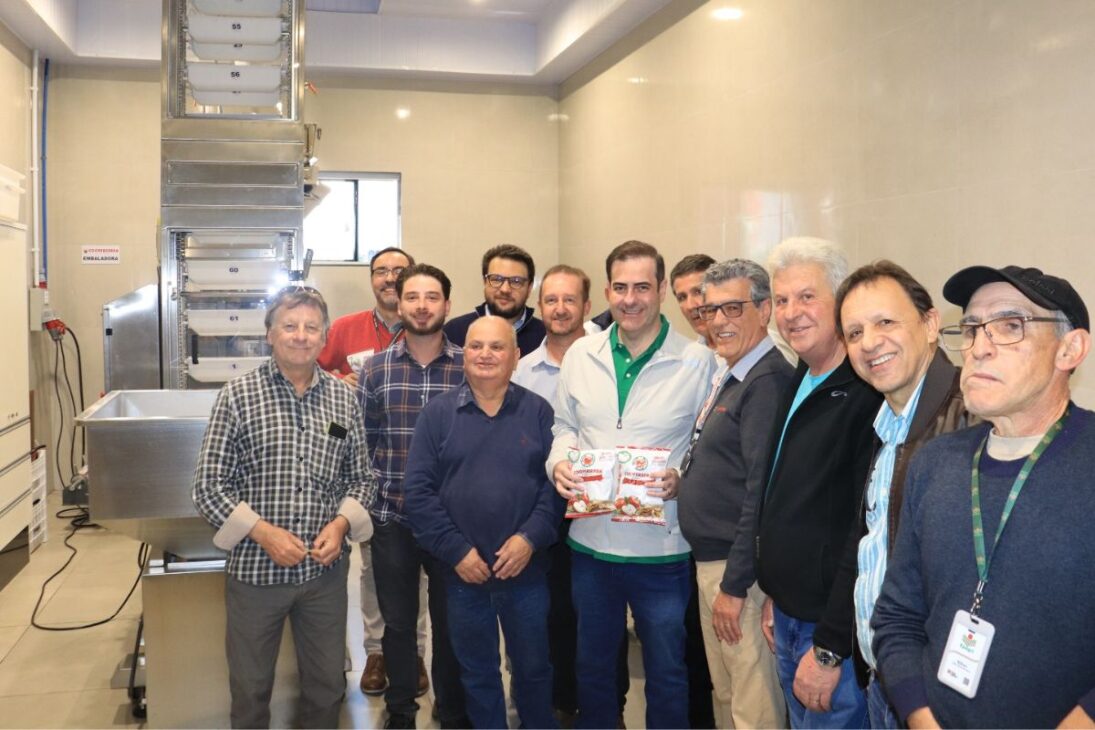
The arrival of apple-derived products such as flour, bran, and chips not only ensured the utilization of waste but also opened up space for diversification in the regional market.
This diversification expands the cooperative’s reach and strengthens competitiveness against consumers looking for sustainable and high-quality innovations.
According to data from Cooperserra, the investments are already increasing the income of members and consolidating new marketing strategies.
The goal is to continue expanding sales channels and demonstrating that the partnership between research, public financing, and cooperative initiative can transform challenges into concrete opportunities.
The Financia Agro SC Program shows, with this example, that public policies can reduce production, logistical, and commercial bottlenecks faced by local chains.
By supporting collective projects, the State strengthens not only the agricultural sector but also the economies of the involved regions.








Seja o primeiro a reagir!