





 Portuguese
  English
  Spanish
  4 min of reading
  1 comment


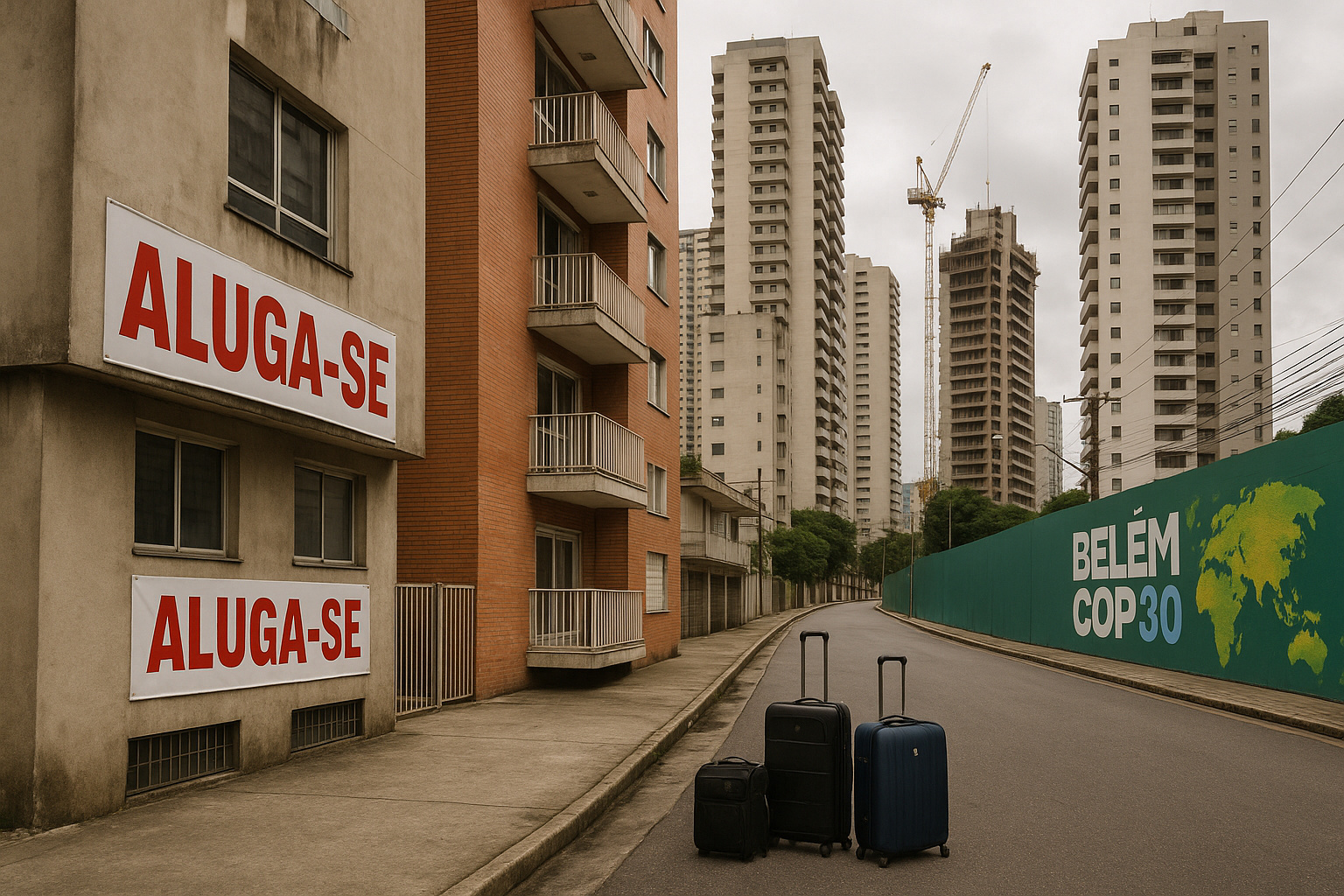


Rising Value of Properties for Accommodations During COP30 Forces Residents to Leave Their Homes, Highlights Loopholes in the Tenancy Law, and Raises Concerns About Social Exclusion at the World’s Largest Environmental Event
Belém’s preparation to host the COP30, which will gather around 50,000 people in November, has triggered a wave of evictions of tenants in the Pará capital. Property owners have been breaking rental contracts or refusing to renew agreements to make the properties available for temporary accommodations, in light of the skyrocketing real estate prices during the event.
Evictions and Broken Contracts
According to a report by O Globo, English teacher Ana Carolina, 27, who has lived in downtown Belém since 2020, received notice to leave the apartment she was living in while she was traveling abroad. With no affordable alternatives, she saw prices surge to R$ 4,000 or more. “We are being removed from our spaces because of an event,” she reported. Unable to find new housing, she decided to stay abroad.
-
A new law being voted on in Brazil proposes a minimum fare of R$ 10 per trip and R$ 2.50 per kilometer for Uber and 99 drivers, and promises to ensure they earn as well as taxi drivers did during the golden age of taxis in the country.

-
Bauer Group collapses after failed judicial recovery: 25 years, 800 vehicles, and a network of gas stations leave a debt of R$ 50 million and 100 layoffs, exposing costs, tight margins, and expensive credit in Brazil.

-
Premium Brazilian brand born during the pandemic brings fine cocoa from Bahia to Switzerland, Germany, and France, has won 9 awards, and claims to have the 2nd best milk chocolate in the world: meet Luz Cacau.

-
Júnior Friboi has just purchased one of the largest feedlots in all of Brazil, located in Goiás, with the capacity to produce 180,000 cattle per year, and the manager has already come forward to reassure employees about layoffs.


Another case was that of advertising professional Juliana Braga, who had only 14 days to leave the property. The landlord had renewed the contract for another year but backtracked, citing renovations. “She requested the apartment of two other tenants in the building and also tried to buy the apartment of a third. She wanted to renovate and furnish it to rent it again,” Juliana said.
Both situations reveal a growing trend of replacing long-term tenants with temporary accommodations, directly affecting the lives of long-time residents.
Limited Reaction from Authorities
In response to the complaints, the Belém City Hall stated that eviction without a judicial decision is a crime, but acknowledged that rental contracts are private agreements. The government of Pará emphasized the freedom of negotiation between the parties.
According to lawyer Gabriel Barreto, the Tenancy Law ensures that tenants with active contracts can only be removed in specific situations, such as defaulting. “The tenant has the right to remain until the end of the contract,” he highlighted. Even after the contract ends, the landlord must respect the legal notice period of 30 days for eviction.
In Ana Carolina’s case, her absence from the country would not authorize the arbitrary reclaiming of the property. “The right to property is guaranteed, but it must be exercised within legal limits and with respect for the resident’s dignity,” Barreto concluded.
Accommodations Crisis and Excessive Prices
The shortage of accommodations in Belém had already been pointed out by organizations such as the Climate Observatory, which accused federal and state governments of “negligence” in the preparations. The issue is considered one of the main logistical bottlenecks of the conference.
Local hotels have been charging high rates, which led the National Consumer Secretariat (Senacon) to notify the hotel network about possible abusive practices. Foreign delegations warned that they may reduce their delegations due to the high costs, increasing the risk of an exclusive COP.
According to information released by O Globo, a letter signed by heads of delegations from 27 countries expressed concern about the lack of affordable accommodations. The international NGO network stated that 80% of its members still have nowhere to stay.
Government Position and Risk of Change
Despite the criticisms, President Lula maintains the holding of COP30 in Belém as a “personal issue.” The president of COP, André Corrêa do Lago, reiterated that “the only Plan B is Belém, B for Belém.”
However, behind the scenes, diplomats and organization members do not rule out the possibility of transferring part of the agenda to cities like Rio de Janeiro or Brasília, especially for business meetings and panels.
The proximity of the event increases pressure for quick solutions. The Minister of Tourism, Celso Sabino, has been sent to the Pará capital to discuss alternatives. The extraordinary secretary for COP30, Valter Correia da Silva, advocated for increasing UN funding to finance the participation of delegations.
Political and Social Impact
The impasse also affects Brazil’s image on the international stage. Foreign authorities stated that the accommodations crisis is diverting focus from climate negotiations. Delegations are already considering sending fewer representatives, which may jeopardize environmental commitments.
At the same time, residents of Belém are facing abrupt evictions, inflated rents, and loss of housing, revealing the social effects of the conference. “Tenants are not obstacles to the city’s progress; they are part of it,” lawyer Barreto warned.
Comprehensive coverage of the accommodations crisis, the broken contracts, and the social and diplomatic impacts of COP30 will continue to be followed in future updates.
And you, do you believe that holding COP30 in Belém will manage to balance the international interests of the event with the rights of local residents?









No país da esquerda 🤣