





 Portuguese
  English
  Spanish
  5 min of reading
  0 comments


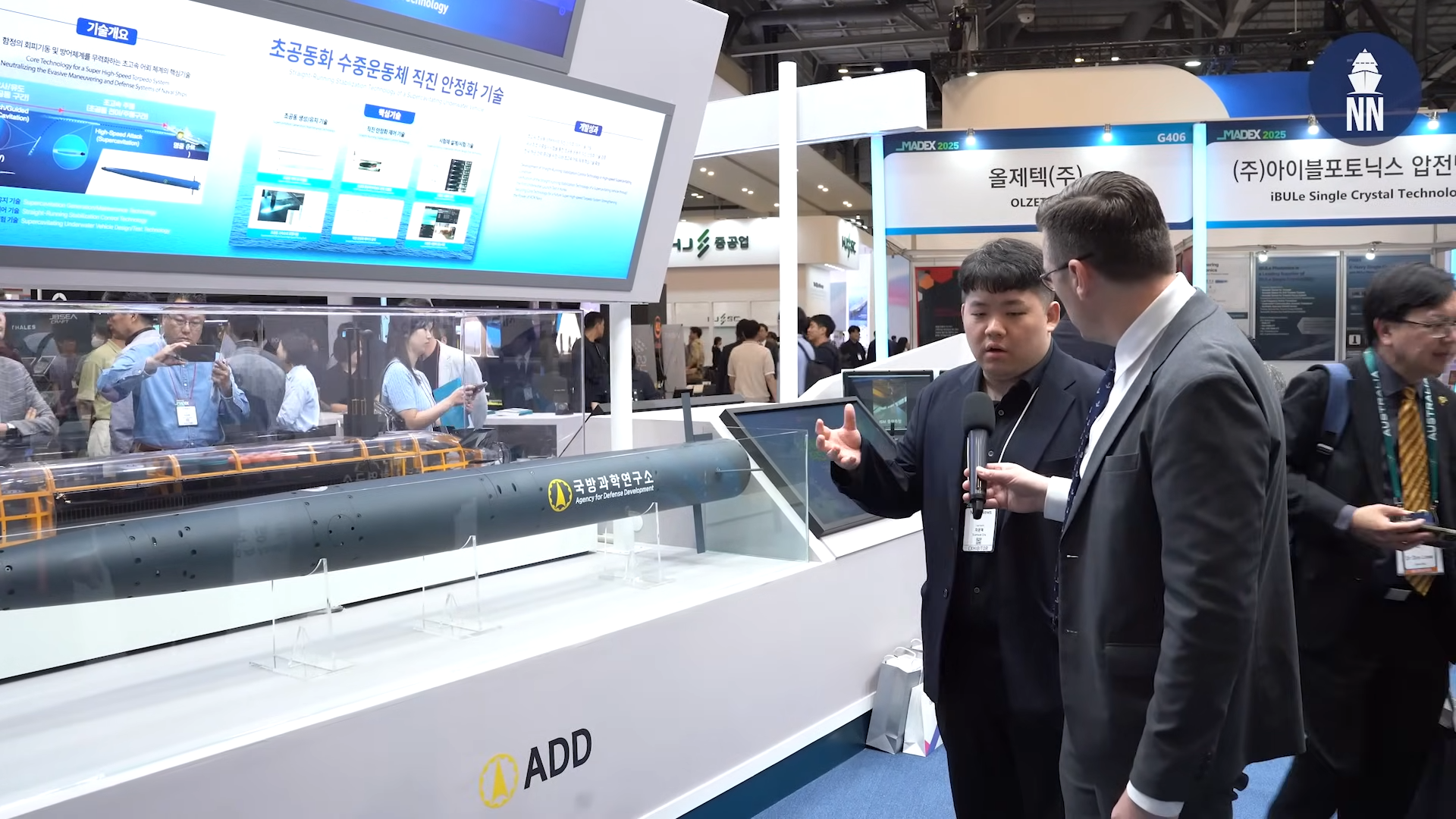
The New Supercavitating Torpedo from South Korea, Unveiled at MADEX 2025, Reaches Speeds of Up to 370 km/h and Revolutionizes Naval Warfare. Understand Why No Ship Could Escape This Weapon.
South Korea stunned the world during the MADEX 2025 — the largest naval defense fair in Asia — by presenting a new underwater weapon that promises to redefine the standards of speed and lethality in maritime warfare. The absolute highlight of the event was the guided supercavitating torpedo developed by the Agency for Defense Development (ADD), a South Korean agency dedicated to research and defense innovation. This development is not just a technological evolution: it marks a watershed moment in the concept of submerged naval weaponry.
While conventional torpedoes operate at speeds between 50 and 70 km/h, the new supercavitating torpedo from South Korea has been designed to reach up to 370 km/h (200 knots) — a feat that makes it, in theory, impossible to be avoided by any ship currently in operation.
What Is a Supercavitating Torpedo?
Supercavitation is a hydrodynamic phenomenon in which a moving object creates a gas bubble around it, drastically reducing friction with the water. This allows the object, like a torpedo, to achieve speeds far greater than those possible with conventional propulsion.
-
NASA issues a warning for the feared Godzilla El Niño that could change the planet’s climate in 2026 with extreme warming of the Pacific capable of causing devastating droughts in some regions and historic floods in others simultaneously.

-
Archaeologists discover a 100-meter ship graveyard in a submerged Greek city, and what has appeared on the seabed of Libya could change what was known about this ancient port.
-
You buy the refrigerator and still have to see ads: Samsung starts displaying advertising on appliances and generates negative reactions among consumers.

-
What can really trigger large volcanic eruptions? Research suggests that gas returning to the magma may be more dangerous than gas escaping from it.

By operating within this gas bubble, the torpedo practically “flies” underwater, overcoming the limitations imposed by the drag of liquid water.
How Does the New Supercavitating Torpedo from South Korea Work?
According to information from the ADD, the prototype presented at MADEX 2025 follows a two-stage acceleration strategy:
Pursuit Phase: the torpedo moves at a subcavitating speed of up to 130 knots (about 240 km/h), using its sensors to detect and accurately pursue the target.
Supercavitating Mode: as it approaches the target, the torpedo enters total supercavitation mode, reaching up to 200 knots (370 km/h), making it virtually impossible to intercept.
This model addresses one of the main limitations of previous supercavitating torpedoes, such as the Russian Shkval, which, despite its speed, was incapable of performing complex maneuvers or tracking targets in real time.
Why Is This Technology from South Korea Considered a Revolution?
The South Korean innovation combines high speed, guidance capability, and depth autonomy. This is something that no Western or Eastern system has been able to successfully implement until now.
Unlike the Shkval torpedo, which was guided only by heading (without onboard intelligence), the new South Korean torpedo is fully guided during its initial trajectory, with potential for dynamic route adjustments even at high speeds.
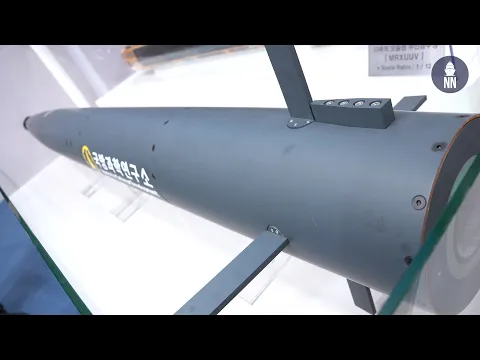

As a result, it represents a real threat to any surface vessel — destroyers, cruisers, aircraft carriers, or merchant ships — that lack a response time compatible with a weapon that moves at nearly 370 km/h underwater.
Comparison: Conventional Torpedo vs South Korean Supercavitating Torpedo
| Feature | Conventional Torpedoes | South Korean Supercavitating Torpedo |
|---|---|---|
| Average Speed | 50 to 70 km/h | 240 to 370 km/h |
| Manoeuvrability | High (low speed) | Moderate (tracking mode) |
| Supercavitating Mode | No | Yes |
| Guidance | Active/passive | Active with dynamic updates |
| Possible Interception | Yes | Virtually Impossible |
Who Is Behind the Development?
The project is led by the Agency for Defense Development (ADD) of South Korea, in collaboration with technical universities and companies specializing in underwater engineering.
This same agency has been responsible for significant advances in the area of hypersonic missiles, next-generation radar systems, and unmanned vehicles for naval applications.
According to the ADD director, the supercavitating torpedo project began development in 2021 with testing in hydrodynamic tanks and advanced computational simulations. The current phase already includes controlled tests in real maritime environments.
Export Potential and Geopolitical Impact
South Korea, which is already among the largest arms exporters in the world, sees this project as a strategic opportunity to dominate the next-generation underwater weapons market.
Experts consulted by publications such as Naval News and Janes believe that the country could potentially offer this weapon in the future to strategic alliances, such as the United States, NATO countries, and Asian partners such as the Philippines, Vietnam, and Indonesia — all seeking more effective maritime deterrence means.
This could alter the regional naval balance, especially in areas of tension such as:
- South China Sea
- Strait of Taiwan
- Sea of Japan
What Makes This Torpedo Practically “Unstoppable”?
There are three central factors that make the new supercavitating torpedo from South Korea a unique weapon:
Engagement Speed
At 370 km/h, the torpedo covers the distance of 5 km in just 48 seconds. This eliminates any practical chance of evasive maneuvering by the target.
Active Guidance During the Initial Phase
By tracking the target in its subcavitating approach phase, the torpedo reduces the risk of trajectory error — something that hindered previous generations of supercavitating torpedoes.
Relative Silence in the Initial Phase
As the supercavitating mode is only activated in the final phase, the torpedo maintains a low noise level throughout most of its trajectory, increasing the chance of a surprise attack.
What Do International Experts Say?
According to a report from Naval News, the South Korean torpedo represents the first successful effort to combine extreme speed with onboard intelligence in a realistic underwater weapon.
Janes Defence Weekly, a leading publication in global defense, highlighted that the South Korean system “puts the country ahead of similar projects from Russia, China, and the United States,” which still face technical limitations regarding the maneuverability of supercavitating torpedoes.
When Will It Be Ready for Operational Use?
According to the ADD, tests in a real marine environment are expected to occur in 2025, with more advanced prototypes already in experimental production. The expectation is that a military version ready for deployment will be available by 2027.
Mass production will depend on integration with the naval platforms of the South Korean Navy, such as:
- Daegu-class Frigates
- KSS-III Submarines
- Submarine drone systems and autonomous vehicles
The Future of Underwater Warfare Begins Now
The presentation of the guided supercavitating torpedo at MADEX 2025 shows that South Korea is willing to take the technological lead in the field of naval warfare.
More than just a new weapon, this torpedo represents a new operational paradigm, where speed and intelligence combine to create a system against which no current vessel has effective defense.
If development continues at the current pace, it is not an exaggeration to say that South Korea may have created the first inescapable torpedo in modern history — a title that, until now, no other country has successfully achieved with proven technical capabilities.








-

Uma pessoa reagiu a isso.