





 Portuguese
  English
  Spanish
  4 min of reading
  0 comments


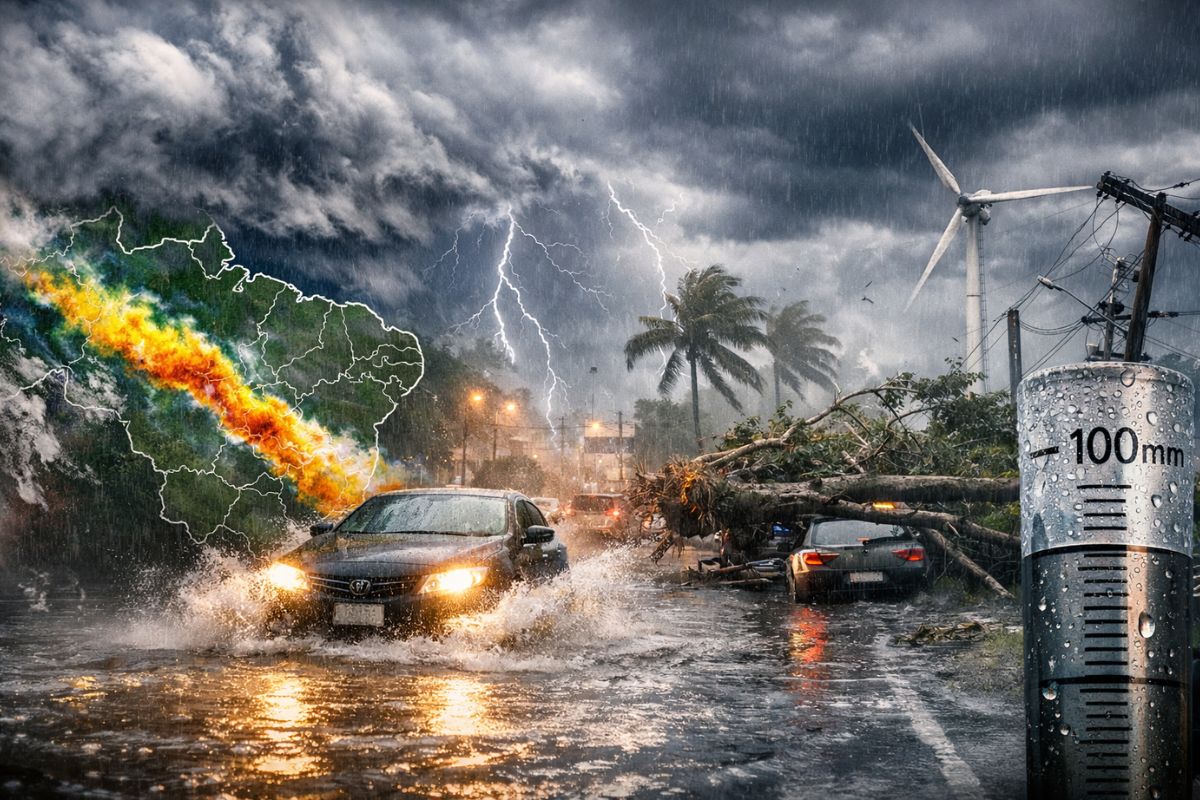
With Heavy Rains Predicted for Almost the Entire Country, Friday Will Have Two Alerts from Inmet in Effect, Volumes That Can Reach 100 mm Per Day and Gusts of Up to 100 km/h, Scenario That Raises the Chance of Flooding, Overflows, and Landslides in Sequence, in Different Regions Along.
The heavy rains this Friday (6) enter the national radar with broad reach: 20 states and the Federal District are under attention, in a combination of high precipitation, intense wind, and risk of urban and rural impacts. The situation affects everything from capitals to transition areas between the interior and coast, with the possibility of rapid disturbances.
At the center of this dynamic is a corridor of moisture connecting the North Region to the Southeast, favoring the formation of heavy clouds and maintaining an unstable atmosphere for several hours. This pattern explains why the risk is not concentrated in a single point on the map and why accumulations may advance in sequence throughout the day.
Moisture Corridor Expands Instabilities’ Persistence
The moisture corridor acts as a transport strip for water vapor, sustaining the formation of deep clouds and maintaining heavy rains at different times of the day. Instead of an isolated event, the scenario tends to occur in successive blocks of precipitation, with periods of apparent truce and quick resumption of downpours.
-
Mercado Livre has started selling medications in Brazil with delivery in up to 3 hours, and the project that launches in São Paulo may expand to the entire country, transforming the way millions of Brazilians buy medicines.

-
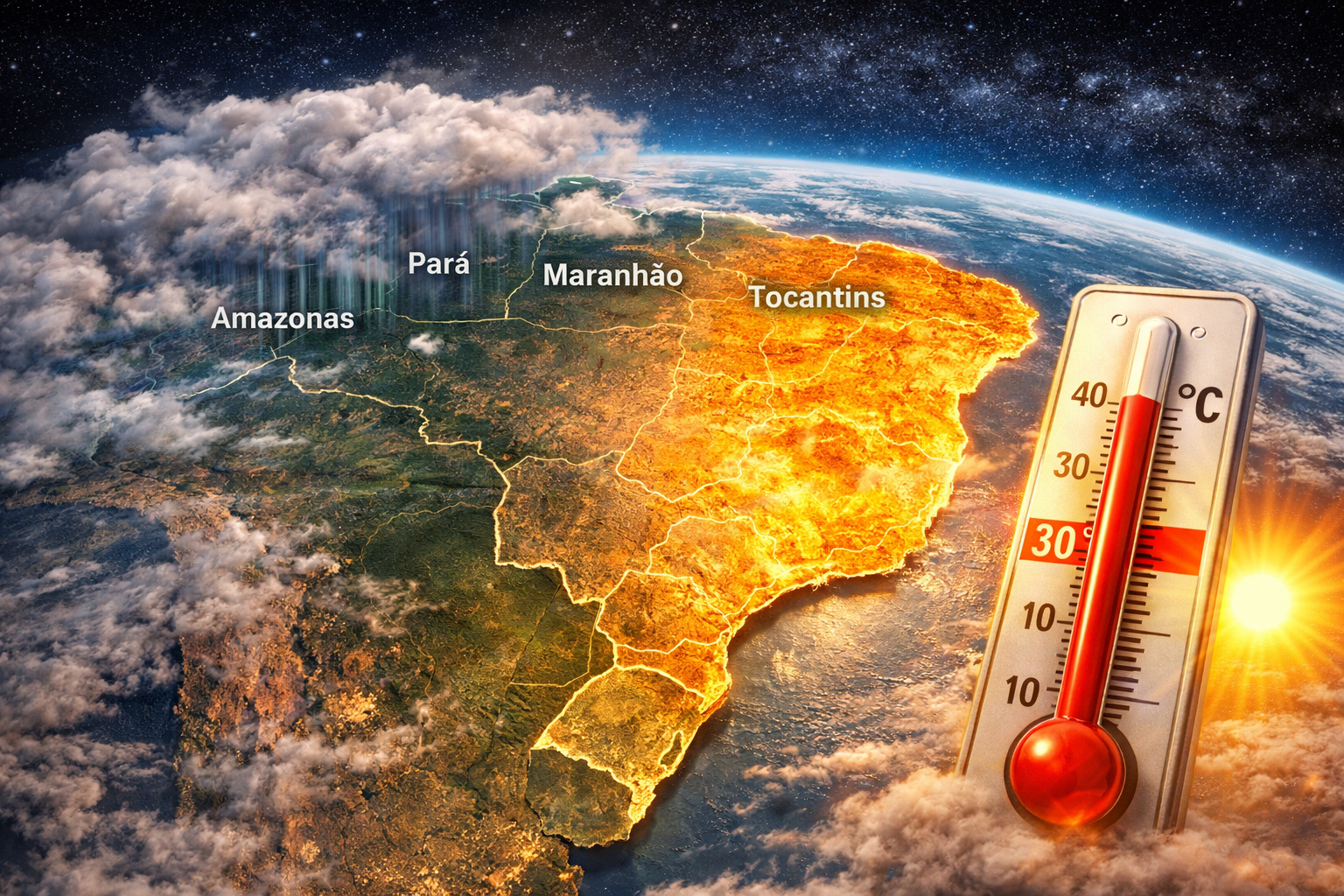
While the South begins April with sun and heat, a change in the weather already has a defined scenario in Brazil, and forecasts indicate heavy rain in the North and a sharp drop in temperature in the coming days.
-
Elon Musk wants to place humanoid robots in roles currently occupied by people, leading alongside giants like Amazon, Nvidia, and Figure in a race to replace human labor with machines, and advocates for a future where working would cease to be an obligation and become a choice.

-
A US company creates a facade that looks like stone or wood but generates energy: “invisible” solar panels for walls, easy installation, up to 130 W, and an off-grid YouTuber showcases it and raises funds for a battery.

This behavior helps to understand the potential for worsening impacts. When rain repeats over already soaked areas, the risk is no longer just meteorological but also hydrological and geotechnical, increasing the chance of flooding, rising river levels, and pressure on urbanized slopes.
Where Rain Intensifies and How Risk Is Distributed
In the early hours of this Friday, the forecast already indicates heavy rains in eastern Amazonas, western Pará, and areas of Mato Grosso.
Throughout the day, downpours also reach the Northeast, maintaining the pattern of instability across an extensive area of the country and raising the level of attention in municipalities with a history of overloaded drainage.
During the afternoon, precipitation gains strength in the Southeast. São Paulo, with an emphasis on the Vale do Paraíba and the capital, as well as Rio de Janeiro, Espírito Santo, and southern and eastern portions of Minas Gerais, enter a high risk zone for more intense events. The combination of high volume in a short interval and already moist soil is the critical point of Friday.
In the Midwest, Mato Grosso, Goiás, and eastern Mato Grosso do Sul remain under attention due to accumulations from recent days. This means that new episodes of heavy rains can produce more severe effects even without prolonged duration, precisely because the ground has already received a lot of water recently.
What Inmet Alerts Signal in Practice
With yellow and orange alerts in effect, Inmet indicates two levels of concern within the same synoptic context, reinforcing the notion of variable risk by region and time.
In practice, this requires constant local monitoring, as severity can change significantly within the same state.
The warnings point to the possibility of up to 100 millimeters of rain per day and winds of up to 100 km/h, depending on the area. This level is sufficient to cause disruptions in mobility, energy, and urban routine, as well as putting pressure on drainage systems in neighborhoods with a history of flooding and slow drainage pathways.
The simultaneous presence of intense rain and gusts also increases operational complexity for public services. Response teams often deal simultaneously with accumulated water on the roads, falling branches, localized interruptions, and the need to divert traffic in critical corridors.
Why Impacts May Grow Even Without Absolute Records
The biggest problem does not always come from a single extreme peak. In many cases, the sum of moderate to heavy events over several days creates a cumulative effect, reducing the soil’s absorption capacity and accelerating surface runoff.
It is in this context that heavy rains repeatedly gain damage potential above expectations.
This mechanism explains why riverside areas, valley bottoms, and slopes with dense occupation enter an expanded alert.
With rivers close to the limit and drainage under pressure, any new round of intense precipitation may anticipate localized overflows and landslide episodes in vulnerable spots.
Unequal rainfall distribution within the same municipality also matters. One neighborhood may experience severe impact while another, nearby, only has moderate precipitation. Therefore, the most useful assessment for the population is hyperlocal and in real-time, following official warnings and rapid changes in weather behavior.
Friday brings together the main ingredients of a meteorologically sensitive day: active moisture corridor, heavy rains over a broad area, dual alerts from Inmet, and potential chain disruptions. The scenario is not uniform, but the risk is concrete where there is a history of insufficient drainage, pressured rivers, and weakened slopes.
In your city, what was the first sign of deterioration today: flooded street, blocked traffic, strong wind, or rising river level? And, looking at your neighborhood, which preventive measure really worked and which still fails when the rain gets heavy?







-

-

-

-

-

12 pessoas reagiram a isso.