





 Portuguese
  English
  Spanish
  5 min of reading
  0 comments


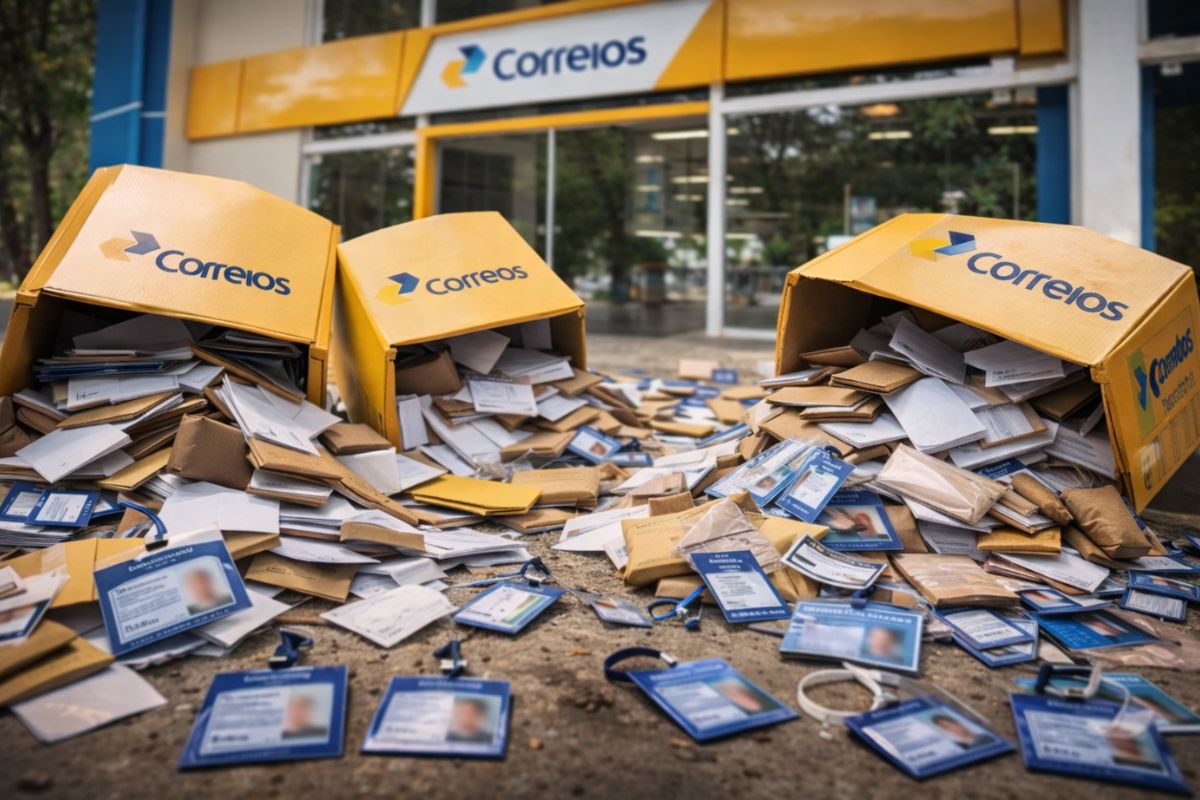
The mass dismissal at Correios ended with 3,075 adhesions to the Voluntary Dismissal Plan, just 30.7% of the target of 10 thousand dismissals, but the state-owned company projects savings of R$ 1.4 billion in 2027 while facing a deficit of R$ 4 billion per year and plans to close a thousand own agencies and sell idle properties
Correios registered a mass dismissal of more than 3 thousand employees after the end of the Voluntary Dismissal Plan of 2026. In total, 3,075 employees joined the program, equivalent to only 30.7% of the target of 10 thousand dismissals that the state-owned company expected to achieve this year. The deadline for adhesion ended this Tuesday (8) and will not be extended. The dismissal is part of an effort to contain the financial crisis of a company that has accumulated losses exceeding R$ 6 billion and a negative net worth of R$ 10.4 billion.
According to the portal ndmais, despite the adhesion being far below the projection, the state-owned company treats the 3,075 dismissals as a relevant impact on expense reduction. With this stage of voluntary dismissal, Correios estimate savings of about R$ 1.4 billion by 2027, in addition to R$ 508 million annually with other measures implemented in the first quarter. The PDV is just one piece of a restructuring plan that includes closing a thousand agencies, selling properties, and auctions that could raise up to R$ 1.5 billion. The remaining question is whether all this will be enough to save a company that loses R$ 4 billion a year.
Why did Correios need a mass dismissal of 3 thousand employees

The Voluntary Dismissal Plan is part of the 2025-2027 Restructuring Plan, created to face a crisis that has been worsening since 2016. Correios operate with a structural deficit exceeding R$ 4 billion per year, a gap that no isolated measure can fill.
-
Latin America is stagnant, and Brazil is part of the problem, says the World Bank in a report that highlights Argentina as the main positive exception in the region thanks to fiscal adjustment and Milei’s reforms.

-
Germany is investing in the interior of São Paulo to test the production of green hydrogen and aviation fuel made from sugarcane in a partnership with Cocal and Siemens that could change the Brazilian energy sector.

-
France takes 129 tons of gold from New York, profits $15.1 billion, and raises alarms in Europe fearing to leave reserves under U.S. control.

-
35 medical entities criticize the MP that automatically renews driver’s licenses without fitness exams: they say that diseases do not show up in fines; Congress analyzes RNPC after 38,253 deaths and a cost of R$ 400 million directly to SUS.

The accumulated loss has already surpassed R$ 6 billion by September 2025, and the negative net worth of R$ 10.4 billion means that the company owes more than it owns.
The reasons for the crisis are well-known and have accumulated over a decade. The decline in letter sending due to digitalization eliminated one of the main sources of revenue. The advancement of competition in e-commerce with increasingly efficient private carriers has compressed margins in package logistics, which should compensate for the loss of letters.
And the increased operational pressure in the logistics sector requires investments that a debt-ridden state-owned company simply cannot make. The dismissal of 3 thousand employees is the symptom; the cause is a business model that has stopped evolving.
What Correios plan to do besides the voluntary dismissal
The reduction of personnel is just one front of the restructuring plan. Correios intend to close about a thousand own agencies across the country, which represents almost 10% of the 10.3 thousand existing service units.
The decision aims to eliminate deficit units that operate with costs higher than the revenue they generate, something common in small towns and in places where customer flow has drastically decreased due to digitalization.
In addition to closing agencies, the state-owned company plans to sell idle properties through auctions that could raise up to R$ 1.5 billion. In February, Correios already held the first auction with 21 properties in 11 states.
The combination of voluntary dismissal, agency closures, and asset sales forms a tripod of austerity that seeks to reduce fixed expenses and generate cash in a relatively short time. But R$ 1.5 billion in auctions and R$ 1.4 billion in savings from personnel add up to less than R$ 3 billion in a scenario where the annual deficit exceeds R$ 4 billion.
Why did only 30% of employees adhere to the voluntary dismissal of Correios
The target of 10 thousand dismissals was ambitious for a company with about 80 thousand direct employees, meaning cutting 12.5% of the workforce. The adhesion of only 3,075 employees, 30.7% of the target, indicates that most employees did not find the PDV conditions attractive enough to leave the state-owned company.
Factors such as the age of employees, proximity to retirement, difficulty in re-employment in the market, and the relative stability of public employment weigh in the decision.
For Correios, the result below expectations in the voluntary dismissal means that the projected savings will be smaller and that the restructuring will take longer. If the state-owned company needed 10 thousand dismissals to balance the accounts and obtained only 3 thousand, the deficit will continue to pressure the numbers even with the other measures underway.
The possibility of new voluntary dismissal programs or even more drastic restructurings cannot be ruled out, especially if the losses continue to accumulate at the current pace.
What the future holds for Correios and its 80 thousand employees
Even in crisis, Correios maintain a national presence that no private carrier comes close to replicating: 10.3 thousand service units, 1.1 thousand distribution and processing centers, and about 80 thousand direct employees spread across Brazilian territory.
It is an infrastructure that reaches communities where no private company has an interest in operating and, for that reason, has a social function that goes beyond the financial balance.
The question is whether this social function justifies maintaining a state-owned company that loses R$ 4 billion a year. The dismissal of 3 thousand employees in 2026 is the beginning of a restructuring that will test whether Correios can transform into a viable company or if it will continue as a fiscal burden that the government needs to sustain.
With a negative net worth of R$ 10 billion, the margin for error is practically nonexistent; every decision counts, and time is running against one of Brazil’s oldest institutions.
Do you think Correios will be able to recover or is the crisis irreversible? Was the voluntary dismissal the right decision?










Seja o primeiro a reagir!