





 Portuguese
  English
  Spanish
  4 min of reading
  0 comments


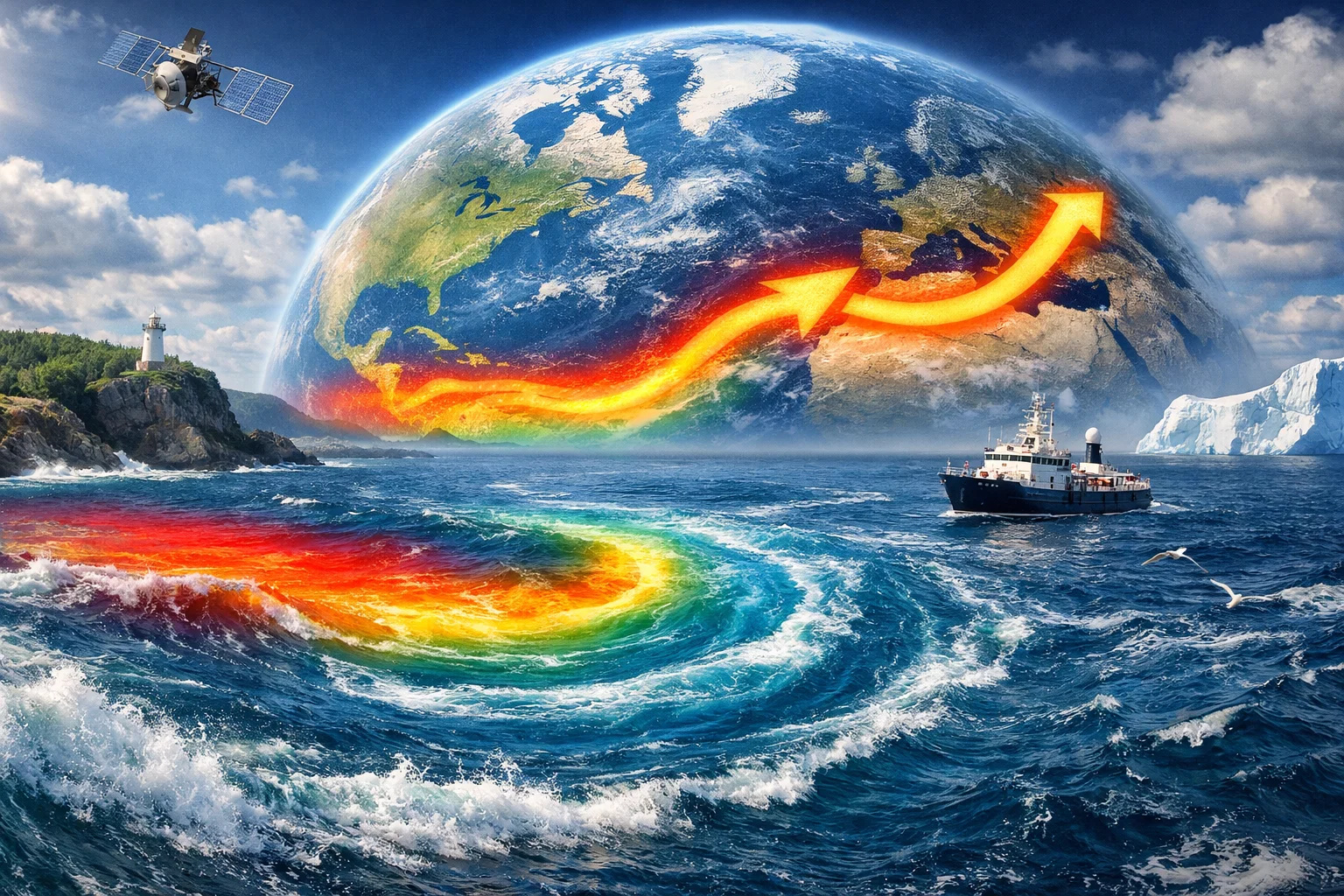
Researchers Analyze Satellite Data and Climate Models and Identify That One of the Most Important Currents in the North Atlantic Is Shifting North, a Movement That Could Indicate Deep Changes in the System That Distributes Heat Around the Planet
A massive ocean current that helps regulate the Earth’s climate has started to move differently. The shift was detected by scientists who have been analyzing satellite data for decades. Known as the Gulf Stream, it acts as a kind of “conveyor belt” of heat in the Atlantic Ocean. It carries warm water from tropical regions to cooler areas of the planet.
Now, new studies indicate that this current is slowly changing position. And this movement could serve as an important warning that something larger is happening in the depths of the ocean.
The alert is drawing the attention of researchers because the Gulf Stream is part of a much larger system that influences the climate of Europe, North America, and various regions around the globe.
-
China is building a city in Brazil: a complex with an investment of R$ 5.5 billion comes to light, but allegations involving workers draw attention.

-
While Argentina buys old war equipment, Brazil is keeping an eye open and joins the select group of nations with advanced military technology by investing $5.2 billion, producing 36 Gripen fighters in the country, and reducing operational costs.

-
Brazil on alert? Why invading Brazil is a NIGHTMARE for the USA: 8.5 million km², 213 million inhabitants, Amazon covering 60% of the territory, trillion-dollar war, and resistance that even 13,000 aircraft could not control.

-
How to build a floating island from scratch with reeds, giant blocks, and stakes in the lake in a process that needs to be repeated almost every day.


The Massive Oceanic System That Distributes Heat Around the Planet May Be Weakening
The Gulf Stream does not operate alone. It is part of a much larger system called the Atlantic Meridional Overturning Circulation, known to scientists as AMOC.
This system is often compared to a huge natural conveyor belt of the ocean. It moves warm water northward and sends cold water back southward, maintaining a thermal balance that influences global climate.
According to experts, there are signs that this system has lost about 15 percent of its strength since the 1950s.
The most likely reason involves two factors that have been intensifying over the past few decades. Ocean warming and the increased melting of ice in Greenland.
When large volumes of freshwater enter the North Atlantic, the balance of this system can be affected.
And it is at this point that the behavior of the Gulf Stream begins to draw attention.
The Shift of the Gulf Stream Could Be a Silent Warning from the Depths of the Ocean
Researchers from the University of Utrecht in the Netherlands decided to investigate whether the position of the Gulf Stream could reveal something about the health of this massive ocean system.
To do this, scientists combined satellite data with computer simulations that analyze the behavior of ocean currents over decades.
The results indicate that the Gulf Stream is already showing clear signs of change.
Since the early 1990s, data shows that the current has started to shift further north from the area near Cape Hatteras, North Carolina.
According to experts involved in the research, this movement may be linked to the gradual weakening of the greater Atlantic circulation.
In other words, the Gulf Stream may be responding to deep changes occurring throughout the ocean system.
Simulations Show a Curious Scenario That Could Happen in the Coming Centuries
The models used by scientists also projected what could happen in the future if the weakening continues.
In one of the analyzed scenarios, the current would slowly advance about 133 kilometers northward over several centuries.
After this gradual movement, the models indicate something unexpected.
The current could make a rapid leap of approximately 219 kilometers northward in just two years.
This abrupt change would be much larger than the natural variations normally observed in the positioning of the current.
Therefore, researchers have started to consider the movement of the Gulf Stream as a possible early warning sign.
What Could Happen to the Climate If This System Loses Strength
The hypothesis of a total collapse of this oceanic system still divides the scientific community.
Some studies suggest that this could drastically alter climate patterns in various regions of the planet.
One of the most discussed effects would be the reduction of heat reaching Europe.
Without this constant flow of warm water, parts of the continent could experience lower temperatures and significant changes in rain and wind patterns.
This does not mean that an extreme scenario, like those shown in fiction films, would occur.
Even so, experts believe that monitoring the behavior of the Gulf Stream could help detect important changes in the planet’s climate before they become more intense.
Monitoring This Current Could Become One of the Keys to Predicting Future Climate Changes
Researchers emphasize that keeping track of the position of the Gulf Stream could serve as an early indicator of alterations in the ocean system.
Small shifts in the current, when observed over time, could reveal larger changes happening in the North Atlantic.
Therefore, scientists continue to expand monitoring with satellites, sensors, and increasingly detailed climate models.
The more data analyzed, the greater the ability to understand how this massive natural mechanism responds to global warming.
The study with these results was published in the scientific journal Communications Earth and Environment.
The shift of the Gulf Stream drew attention because it involves one of the most important natural engines of the Earth’s climate. Small changes in such a large oceanic system can influence temperatures, winds, and rainfall patterns in various regions of the planet.
And that is exactly why scientists are observing every movement of this current with heightened attention.
What do you think about this discovery regarding the Atlantic current? Could this type of change be concerning, or is it part of the ocean’s natural behavior? Share your thoughts in the comments.







Seja o primeiro a reagir!