





 Portuguese
  English
  Spanish
  4 min of reading
  5 comments


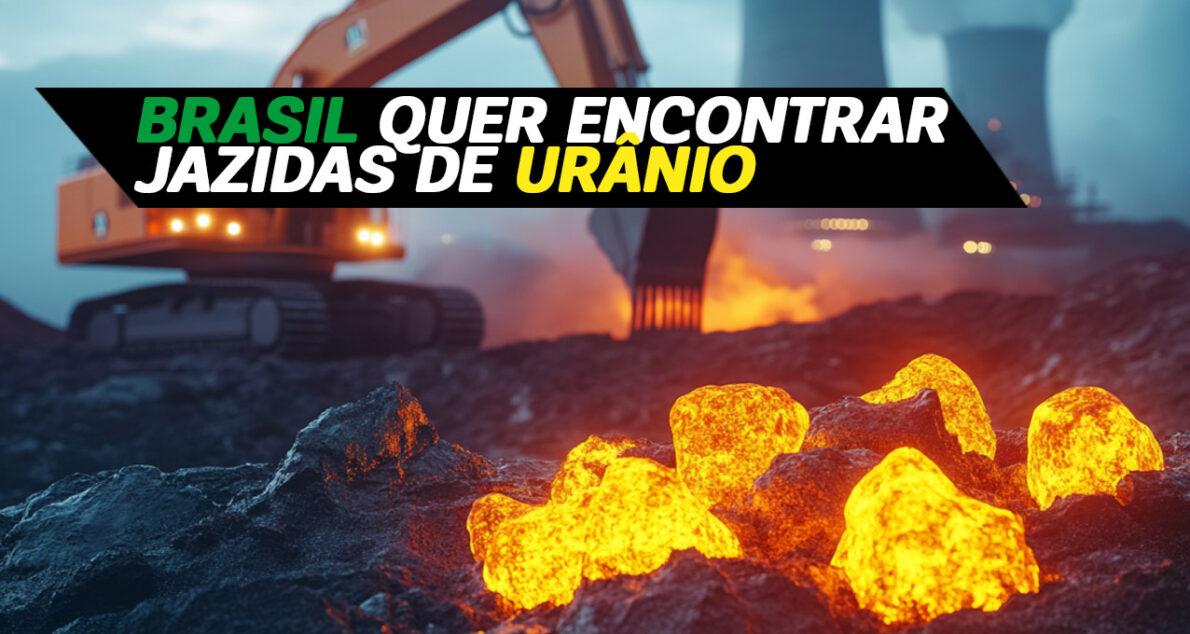

In An Unexpected Turn, Brazil Has Resumed Uranium Research After 40 Years Of Inactivity. With The Promise Of New Deposits, The INB Launches Strategic Partnerships To Secure The Nuclear Future Of The Country. Are We Ready For The Global Nuclear Race?
When thinking about nuclear energy, Brazil is not the first country that comes to mind. However, behind the Angra dos Reis plants, an audacious strategy is unfolding away from the public eye.
After four decades of inactivity, the Brazilian Nuclear Industries (INB) have resumed the search for new uranium deposits, the vital substance for the operation of nuclear plants. But why this resumption now? And what does this mean for the country’s energy future?
The INB, a public company responsible for producing nuclear fuel in Brazil, recently announced the launch of the Uranium Exploration and Mining Partnerships Program.
-
With an investment of R$ 612 million, a capacity to process 1.2 million liters of milk per day, Piracanjuba inaugurates a mega cheese factory that increases national production, reduces dependence on imports, and repositions Brazil on the global dairy map.

-
Brazilian city gains industrial hub for 85 companies that is equivalent to 55 football fields.

-
Peugeot and Citroën factory in Argentina cuts production by half and opens a layoff program for more than 2,000 employees after Brazil drastically reduced purchases of Argentine vehicles.

-
A Brazilian city gains a factory worth R$ 300 million with the capacity to process 200 thousand tons of wheat per year, a mill of 660 tons/day, silos for 42 thousand tons, and an industrial area of 276 thousand m².

The objective is clear: to identify and explore new uranium reserves, essential for supplying the Angra I, II, and, eventually, Angra III nuclear plants. This move marks an important turnaround, considering that Brazil has gone 40 years without conducting such studies. But what motivated this change in approach?
The Strategic Return To Exploration
According to specialists, the resumption of research is due to the growing concern about national energy security.
Although Brazil has vast uranium reserves, its current production is still not sufficient to meet domestic demand. The Angra I and II plants, which use this fuel, consume more uranium than the country can produce.
With the completion of Angra III expected in the coming years, the need to increase the supply of this resource becomes even more urgent.
Additionally, according to data from the Ministry of Mines and Energy, Brazil has the sixth-largest uranium reserve in the world.
However, much of this potential remains unexplored, with national production concentrated only in the Caetité mine in Bahia. With the reopening of exploration, new areas with significant mineral potential can be identified and explored, elevating the country’s position on the global stage.
Public-Private Partnership: A New Era In Uranium Mining?
To achieve this ambitious goal, the INB is not acting alone. The Uranium Exploration and Mining Partnerships Program aims to attract companies from the mining sector to collaborate in the search for new deposits.
This innovative initiative represents a significant shift in how Brazil approaches uranium mining, traditionally controlled by the state.
According to information released by the INB itself, these partnerships will enable the exchange of expertise and the use of cutting-edge technologies, accelerating the exploration process and increasing efficiency in discovering new reserves.
In return, partner companies will have access to extracted uranium, which can be highly profitable, given the rising value of this resource in the global market.
The Future Of Nuclear Energy In Brazil
The INB’s announcement comes at a crucial moment for the global energy sector. With the growing demand for clean energy and the pressure to reduce carbon emissions, nuclear energy has gained prominence as a viable alternative.
In Brazil, the expansion of the use of this energy source is seen as a strategic step to diversify the energy matrix and ensure supply security.
According to experts, increasing uranium production will not only ensure the supply of existing plants but also open doors for future expansions in the sector.
Projects for the construction of new nuclear plants are already being discussed, and the discovery of new uranium deposits will be crucial to making them viable.
Challenges And Controversies
Despite the optimism, the resumption of uranium exploration in Brazil is not without challenges. Uranium mining is a complex and highly regulated activity, with significant environmental and social implications.
Environmental groups and local communities have expressed concerns about the potential impact of expanding mining in their regions.
According to experts, ensuring the sustainability and safety of the process will be crucial for the success of the INB’s program.
This includes adopting responsible mining practices, mitigating environmental risks, and respecting the rights of affected communities.
A New Nuclear Era?
The resumption of uranium exploration by Brazil may indicate that the country is preparing for a future in which nuclear energy will play a central role in its energy matrix.
However, this future still depends on many factors, including the discovery of new reserves, the success of public-private partnerships, and the ability to address the environmental and social challenges involved.
Is Brazil ready to fully enter the global nuclear race? With the completion of Angra III and the possible construction of new plants, the country could become a nuclear power, but the road ahead is complex and filled with challenges.
Found a mistake? Get in touch with us!







Simples de achar, é só perguntar aos USA onde estão, eles já sabem a décadas !
Chinoca leva todo embora. Estão tomando conta das principais empresas distribuidoras de energia do país, imagina se já não estão com as mãos no “nosso” uranio…
Projeto Braschina a todo vapor
Parceria= se descobrirem reservas vão dar de mãos beijadas pra empresas estrangeiras,fora q pra área militar nunca teremos essa capacidade, até poderia mas esquecem que os q têm obriga os pais a não terem pra ficar a mercê deles