





 Portuguese
  English
  Spanish
  6 min of reading
  0 comments



Donation of Solar Energy Credits Helps Reduce Costs at Cora Hospital in Goiás and Shows How Clean Energy Can Transform Public Health with Sustainability.
As renewable energy advances in Brazil, new possibilities for social use arise. A clear example of this comes from the state of Goiás, where solar energy credits have begun to be used strategically.
In this case, part of a public oncology hospital’s energy consumption will be offset by credits donated by a partner entity. Consequently, this initiative is not limited to resource savings; it expands the social impact of solar energy.
As a result, the use of these credits becomes a true act of citizenship. Furthermore, it demonstrates that technology can directly benefit public health.
-
Seagri’s headquarters invests in solar energy with Neoenergia Coelba and promises to cut electricity costs, highlighting a strategic advance in sustainability and energy efficiency within state public administration.

-
Solar Pyramid draws attention by converting solar energy into million-dollar savings and repositioning the City Hall of Curitiba as an example of innovation, sustainability, and intelligent use of public resources.

-
Europe records strong euro economy with solar energy in March and sparks curiosity about which country leads growth that redefines the energy market and reduces costs.

-
Piauí reaches a historic milestone in energy transition: State records nearly 160,000 households powered by solar energy and leads growth in the Northeast.
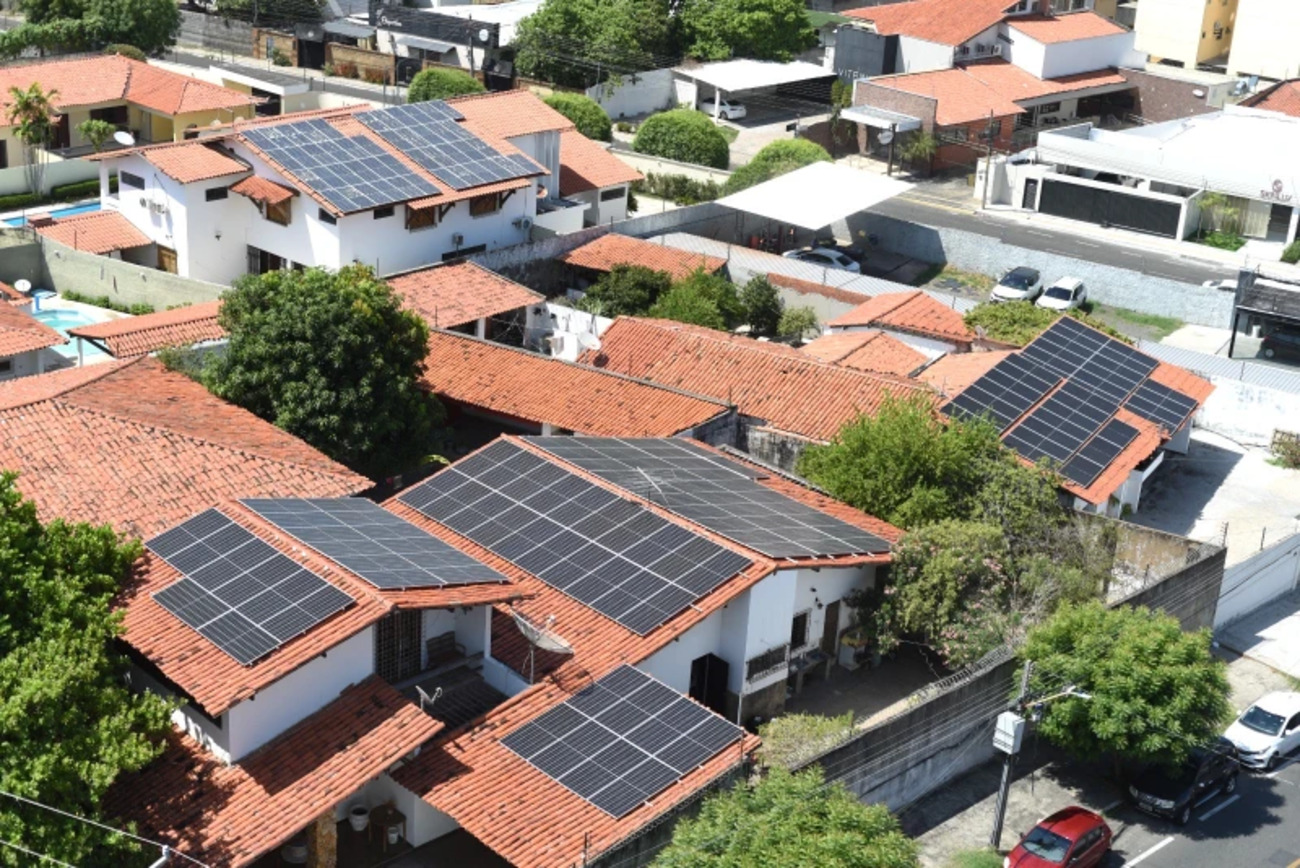
By establishing this partnership, Cora (Oncology Reference Complex of the State of Goiás) was chosen to receive the credits. In this sense, the donation is made possible through the work of Aced (Civil Association Democratic Energy), which manages distributed generation projects and coordinates the transfer of credits to the hospital.
Therefore, the measure adopted by the Goiás Secretary of Health represents a more conscious public management. By reducing electricity expenses, the State can invest in priority areas such as patient care and the purchase of medications.
What Are Solar Energy Credits?
Before fully understanding the impact of this measure, it is essential to grasp the concept of solar energy credits. Since 2012, when Aneel implemented Normative Resolution No. 482, consumers have been able to generate energy from renewable sources.
As a result, by injecting excess energy into the grid, they receive equivalent credits in kWh. Consequently, these credits can be used to offset consumption on future bills, either at the same property or at other properties registered under the same CPF or CNPJ.
For this reason,the adoption of solar energy has grown rapidly in recent years. In addition to allowing savings, these credits provide environmental benefits.
Since solar energy is clean, it prevents the emission of greenhouse gases. Thus, by adopting the compensation system, Brazil also advances in meeting its climate goals.
In this context, solar energy credits gain relevance as versatile tools. They positively impact both the consumer’s wallet and the environment. Thus, they represent a sustainable and strategic solution for the present and future.
Solar Energy Reduces Costs and Expands Access to Health
Not by chance, the decision to apply the solar energy credits in the health sector reveals sensitivity and administrative intelligence. In the case of Cora hospital, electricity costs are among the highest.
This is mainly due to the constant use of air conditioners and radiation therapy equipment. For this reason, using the credits to offset energy consumption represents a significant savings.
The institution can then redirect the saved resources toward purchasing medications, hiring professionals, and expanding access to care. Additionally, this strategy strengthens the financial sustainability of the hospital.
By ensuring predictability in energy expenses, management can better plan expenditures and avoid budgetary surprises. Moreover, the benefits directly reach the patients.
With more funds available, the hospital will be able to offer quicker services, expand its physical structure, and invest in new technologies. Thus, solar energy transforms into effective public health.
The Strategic Role of Cora Hospital
Founded with the mission of providing free and humane care to cancer patients, Cora has become a reference in oncology in the Central-West region.
Since its foundation, the hospital has partnered with the Pio XII Foundation, also responsible for the renowned Barretos Cancer Hospital. In light of this, the hospital not only conducts complex exams and treatments but also provides comprehensive care to patients.
Given this reality, the savings generated by the credits represent a significant operational gain. In addition to reducing wait times, the hospital will be able to invest in infrastructure and acquire new equipment.
All of this reinforces the unit’s commitment to quality care. In other words, less paid energy means more lives attended.
In this scenario, the arrival of solar energy credits symbolizes much more than a technical action. It reflects a modern public policy aligned with the principles of sustainability and social justice.
A National Trend: Solar Energy and Social Transformation
Although this action occurs in Goiás, it relates to a national trend. In various parts of Brazil, institutions have begun to use solar energy as an instrument of social transformation.
Thus, schools, health clinics, and community centers have been investing in distributed generation. According to Absolar (Brazilian Association of Photovoltaic Solar Energy), Brazil surpassed 2 million photovoltaic systems connected to the grid in 2023.
This number represents over 25 GW of installed capacity — an advancement that positions the country among the largest solar energy producers in the world. Thus, solar energy has ceased to be merely an option to reduce bills and has become a tool for social inclusion.
When combined with public policies, it transforms into a powerful instrument for combating inequality. Therefore, Cora hospital’s example inspires other institutions to seek similar models.
After all, it is possible to use technology collaboratively, bringing clean energy to those who need it most.
Partnerships Enable Sustainable Solutions
The implementation of this model was only possible thanks to the union of efforts. The Secretary of Health, the Pio XII Foundation, and Aced worked together to enable the donation of the credits.
Each institution played an essential role in bringing the project to life. This demonstrates that collaboration between the public sector and civil society strengthens the development of sustainable solutions.
Moreover, this type of alliance helps disseminate good practices and encourages new projects with social impact. Aced, in turn, plays an important role in promoting democratic access to clean energy.
By sharing the generated credits, it stimulates a model of energy solidarity that can be replicated in other regions. In this way, partnerships like this demonstrate that the energy transition can occur in a fair, collaborative, and effective manner.
With organization and planning, it is possible to expand the reach of solar energy and make it an ally of public service.
A Replicable Model for Brazil
Based on this example from Goiás, many other states can adopt similar measures. After all, several public entities already generate their own energy through solar panels.
However, not all fully utilize the generated credits. In this sense, the donation of credits becomes an efficient way to take advantage of excess energy.
The impact is direct, measurable, and, above all, sustainable. Furthermore, the model can involve the private sector and even popular cooperatives.
Thus, public schools, health units, daycare centers, and philanthropic institutions can benefit. With proper regulation and government incentives, Brazil has all the conditions to lead this type of initiative.
Therefore, it is not just about savings but about transforming energy into quality of life. The country possesses solar potential, technical resources, and now, ready models to be followed.
The donation of solar energy credits to the oncology hospital in Goiás represents an important milestone in the history of sustainability in Brazil.
More than just saving, the project shows how it is possible to apply clean energy to save lives. Additionally, the case demonstrates that well-crafted public policies can align environmental responsibility and social justice.
The energy that comes from the sun transforms into care, attention, and dignity. It is up to governments, institutions, and civil society to expand initiatives like this.
The more we integrate technology and solidarity, the closer we will be to a fair, sustainable, and illuminated future for all.











Seja o primeiro a reagir!