





 Português
  Inglês
  Espanhol
  5 min de leitura
  3 comentários


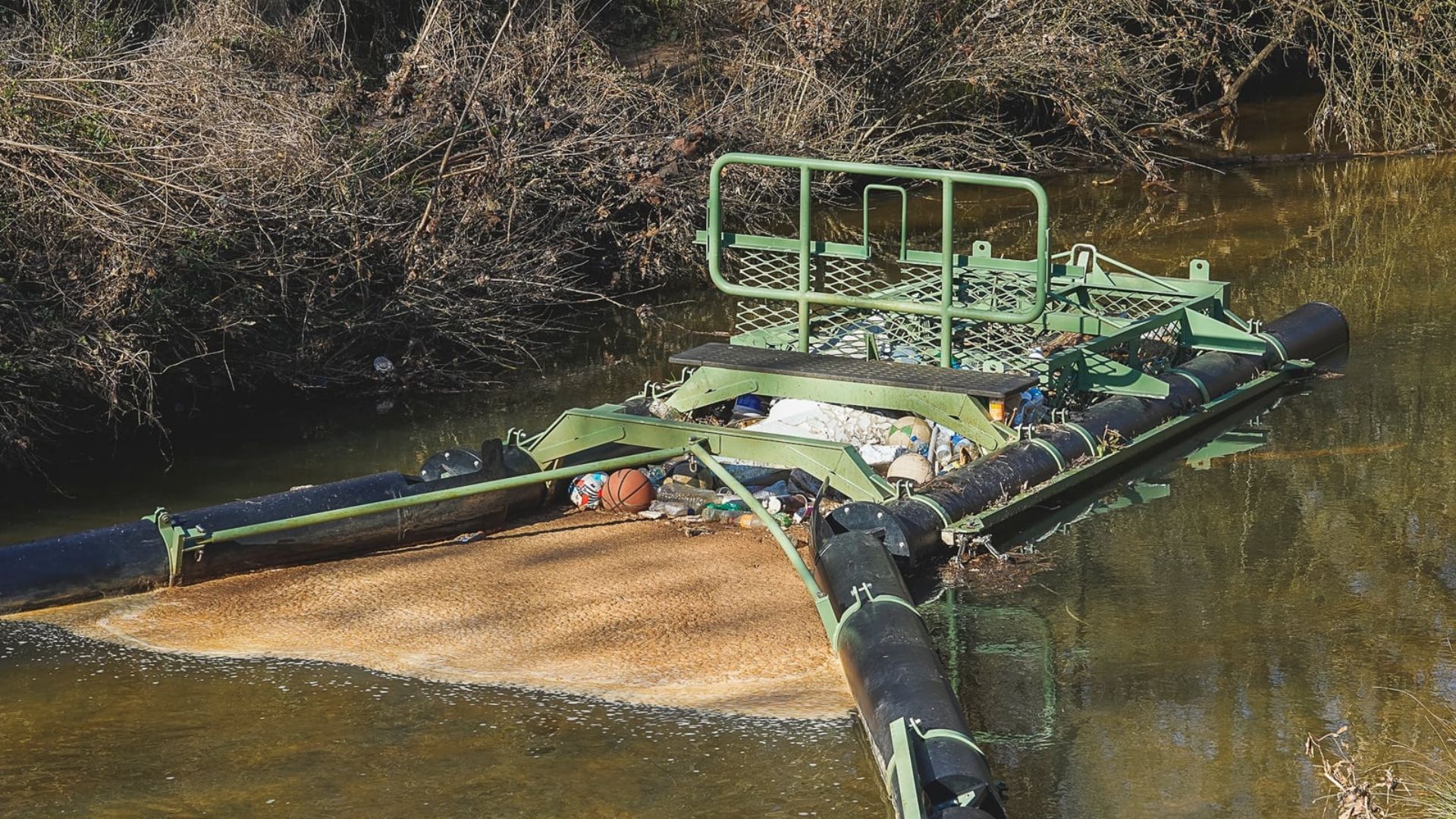


Floating Structure Installed In Urban Rivers Operates Without Engine, Uses Only The Current To Retain Solid Waste And Already Collects An Annual Average Of 13 Tons Per Unit, By Concentrating Up To 30 Thousand Pounds Of Garbage At A Strategic Point Of Continuous Collection.
A floating structure installed in urban waterways has been used to retain solid waste carried by rain, operating continuously and without an engine, with the current itself guiding the material to a containment compartment, where removal occurs on a scheduled basis.
In experiences reported by operators who have adopted the equipment, a single unit is described as capable of collecting an average of about 30 thousand pounds of garbage per year, a volume that amounts to approximately 13.6 tons, by concentrating packaging, bottles, styrofoam, and other items in a controlled point.
By intercepting what escapes from streets, gutters, and storm drains, the device aims to reduce the advance of this waste to larger rivers and then to coastal areas, especially during periods when flow increases and carries materials that were stationary on banks and channels.
-
The world’s first octopus farm wants to open in the Canary Islands and is already provoking an international reaction: the plan aims to produce 3,000 tons per year.

-
Drought may be creating stronger superbugs in the soil and helping antibiotic resistance reach hospitals, warns a study highlighting a problem that could grow alongside extreme weather.

-
The biggest scam in history: Napoleon’s France deceived the United States by selling them a territory that was Spanish.

-
Why is the Danakil Desert so dangerous? It has unstable terrain and how extreme temperatures and toxic gases turn the region into one of the most hostile environments on Earth.


How The Floating Trap Works Without Using Energy
Instead of “sucking” or pumping anything, the technology uses buoys and floating guides to form a corridor in the water, creating a preferential path that directs the trash already being transported by the current to the so-called capture zone.

At the entrance of the retention compartment, a passing mechanism helps maintain the flow of material inside, while reducing the chance of return to the watercourse, keeping the waste trapped until removed by cleaning crews.
Since it is anchored and adjusted to the water level, the structure follows normal variations of the course and continues operating day and night, a feature highlighted by institutional materials that describe the continuous operation without mechanical assistance or fuel consumption.
This design shifts the focus of fieldwork, as cleaning stops relying solely on extensive sweeps along edges and scattered points, focusing instead on a defined area where the volume is accounted for and removed as it accumulates.
Impact Of Rains On Garbage Volume In Rivers
The dynamics of floods explain the search for interception barriers, as rainwater increases flow, mobilizes waste that was trapped in grates and galleries, and quickly pushes lightweight materials, amplifying dispersion and increasing recovery costs.
When garbage spreads along the bed, it tends to mix with vegetation and sediments, as well as fragment, making collection more difficult and increasing the effort required to recover smaller items, especially in areas with limited access.
On the other hand, by concentrating what would be distributed along the route, continuous capture transforms a diffuse problem into a fixed point of management, allowing the response to be intensified right after heavier rains, when volume increases quickly.
The operation usually involves trucks and containers, with disposal defined by the local waste structure, and the practice reported by managers is to adjust the frequency of removal according to the historical accumulation, preventing containment from reaching operational limits.
Types Of Retained Waste And What They Reveal About Urban Disposal
Reports of use point to a predominance of lightweight and bulky items, such as food packaging, bags, disposable cups, plastic bottles, and fragments of styrofoam, as well as damaged pieces that indicate prior exposure to friction and water.

Larger objects also appear, including rigid containers and materials associated with illegal disposal, which reinforces that the equipment does not eliminate the source of the problem, but highlights the type of waste that reaches urban drainage and escapes the collection system.
With the weighing and recording of what is removed, some managers use the data as an indicator of disposal behavior and pressure on the infrastructure, linking peaks in volume to rainy periods and areas where runoff converges.
By transforming waste into numbers and removed volumes, capture creates an operational reading of what was previously seen only as scattered dirt, allowing the identification of patterns and guiding urban cleaning actions, oversight, and changes to collection routes.
Operational Efficiency And Limits Of Recycling
The main practical justification is usually efficiency, as collecting dispersed waste requires more time and labor, in addition to depending on access to the banks, while containment at a point facilitates equipment use and reduces the search area.
Nonetheless, maintenance does not disappear, as branches, leaves, and organic matter can accumulate along with garbage, requiring frequent inspections and separation of what is solid waste from what is natural debris, to avoid obstructions and preserve operation.
In waterways with a large vegetative load, the operation needs to balance capturing waste with ensuring flow continuity, treating the equipment as part of a drainage system and not as an isolated solution that removes the need for teams and planning.
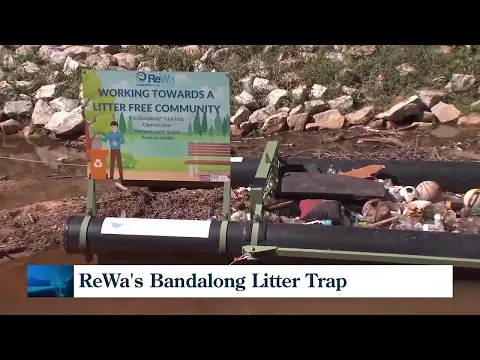

Another limit appears in recycling, as interception in rivers and streams often gathers dirty, mixed, and degraded material, which reduces the feasibility of sorting and reuse, even when there is local infrastructure to separate part of the items.
Therefore, the use of the device is often presented as a mitigation measure, capable of preventing waste from advancing downstream, but insufficient to replace policies for reducing disposables, regular collection in vulnerable areas, and enforcement against illegal disposal.
Strategic Points Increase Capture Efficiency
The choice of installation point tends to consider sections where waste naturally concentrates, such as river bends, areas under bridges, drops in level, and connections with storm drains, locations where flow creates a funnel and increases the chance of interception.
In drainage channels and urban streams with a current, the structure seeks to take advantage of the path of the waste itself, keeping the entry open for continuous capture, as long as the project respects safety conditions, stability, and any local navigation requirements.
By concentrating up to tens of thousands of pounds in a single collection point, the trap changes the logic of confrontation, as instead of chasing garbage along the course, the operation retains it where it would inevitably pass, with controlled removal.
If a motorless device can hold tons before waste reaches larger rivers, the combination of capture with consistent oversight and measures to reduce disposables can enhance control over urban waste and make public cleaning costs more predictable.







Otimo. Espalhar para o Brasil inteiro. Só não escreveram se já está sendo usado e aonde .
Excelente ideia que seja supervisionado com rigor
Exemplar!
Parabéns!!!