





 Portuguese
  English
  Spanish
  4 min of reading
  58 comments


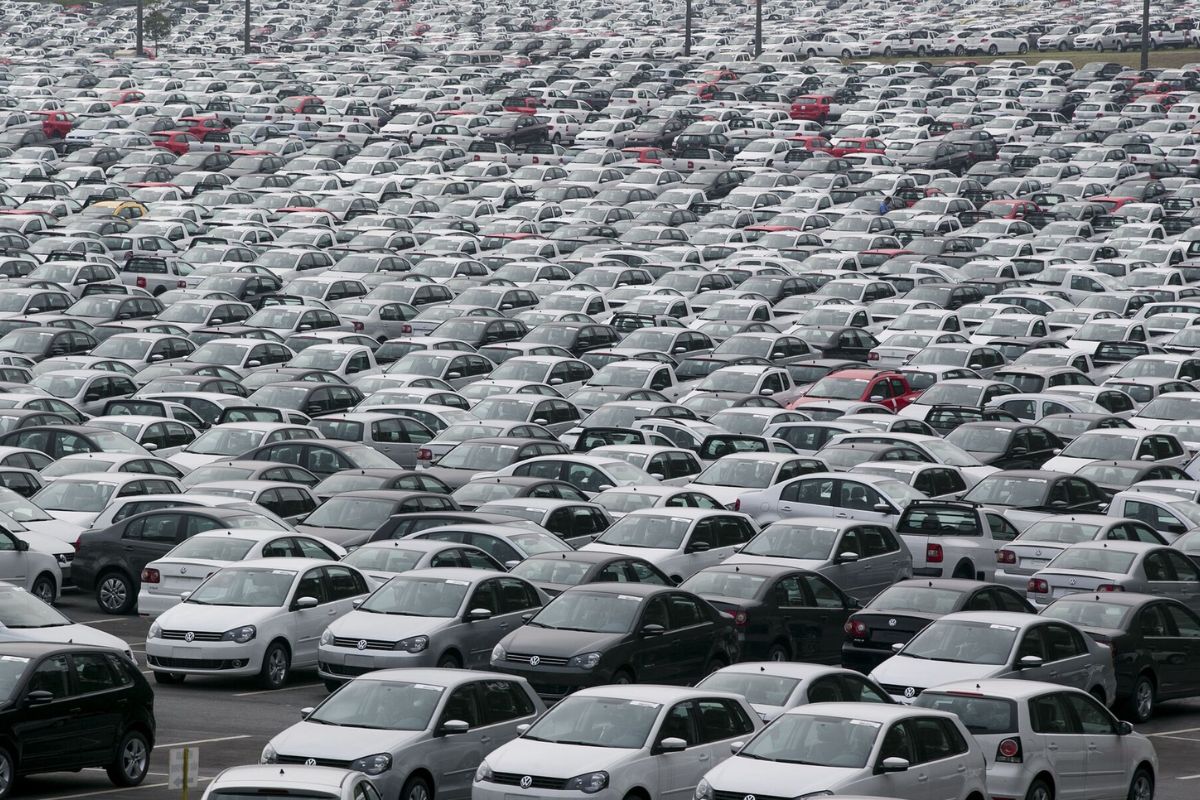


Various Brands Face Challenges with Low Sales in the Brazilian Market in 2025 Due to High Prices, Lack of Marketing and Inadequate Strategies Affecting Manufacturers.
The automotive market is driven by money. In 2025, some brands feel the weight of not being able to convert their cars into sales. The reasons vary: prices too high, low model variety, import issues or lack of marketing. Several manufacturers face serious challenges in justifying their investments in Brazil.
This includes luxury brands, Japanese, South Korean and British brands. Even some that bet everything on electric cars are having to backtrack. Here are the manufacturers with the lowest sales in 2025, the reasons behind it, and the poorly applied investment where consumers are not spending.
The 2025 Scenario in Brazil: Why Are Some Manufacturers in Crisis?
The year 2025 reveals several manufacturers in crisis in Brazil. Well-known companies struggle to justify their investments in the country. The difficulty in turning cars into sales is evident. Factors such as high prices, market strategies and lack of variety or adequate marketing directly impact results.
-
Brazilian city bets on the business environment to generate jobs and attract investments in the energy sector — secretary reveals strategy at Macaé Energy 2026.

-
50 viaducts, 4 tunnels, 28 bridges, and 40 kilometers of bike paths: BR-262 in Espírito Santo will receive 8.6 billion reais for the largest engineering project in the state’s history, inspired by the Immigrant Highway in São Paulo.

-
Brazil produces too much clean energy and doesn’t know what to do with it: over 20% of solar and wind capacity was wasted in 2025 while investors flee and 509 renewable generation projects were abandoned in the last year.

-
Piauí will produce a new fuel that replaces diesel without needing to change anything in the truck’s engine and reduces pollutant gas emissions by half: truck drivers from all over the Northeast are already celebrating the news that will arrive later this decade.

Kia and Suzuki

Kia has had more prominence in Brazil, with models like Sportage and Cerato. Today, it is experiencing a crisis of presence. There were fewer than 1,000 vehicles sold so far in 2025. Of this total, 600 units are of the small truck Bongo. In other words, Kia sold fewer than 400 passenger cars in 2025. The brand has lost the pace of renewal and heavily depends on imports, which raises its product costs. The Sportage, for example, starts at R$ 270,000, competing with more equipped SUVs. To reverse this, Kia could bring models like the electric EV6 or the K3 (replacement for the Cerato), in addition to investing more in marketing.
Suzuki is experiencing an even quieter reality. Only 430 units were registered this year. The Japanese brand operates through HPE Automotores (partner of Mitsubishi), but seems to be operating on autopilot. Today, it only offers the Jimny Sierra, with prices starting at R$ 170,000, a high price for a simple compact. Without new offerings, it is losing ground. The arrival of the new Vitara (already launched in the UK) and more publicity could change the game.
Lexus and JAC Motors
Lexus, the luxury division of Toyota, follows a discreet philosophy. In Brazil, this discretion has become almost invisibility. Only 258 units were sold in the first quarter of 2025. Its lineup (UX, NX, RX, ES) includes hybrid versions and refined finishes. The problem lies in the pricing: the UX starts at R$ 299,000 and the RX reaches R$ 670,000. The brand does not communicate its status or innovation well. The dealership network is small and its media presence is nonexistent. It would need to invest heavily in marketing and perhaps bring in more accessible models, such as the LBX crossover.
JAC Motors entered with ambitious promises in 2011. Today, the reality is different. It sold fewer than 350 vehicles in 2025, 70% of which are electric trucks. The current bet is almost exclusively on electric vehicles (E-JS1, E-IV 330, E-JS4). The cost-benefit ratio is astonishing: the E-JS1 costs over R$ 120,000. The range still leaves something to be desired, and the after-sales network is slim. The investment in electrification is not yielding returns. JAC needs to rethink its strategy, perhaps with more accessible plug-in hybrids, and strengthen technical support.
Land Rover and Subaru
Land Rover is also on the list. In February 2025, it sold only 267 units, a low number for its history. Models like Discovery Sport, Velar, Defender and Evoque are desirable, but expensive (easily surpassing R$ 500,000, reaching over R$ 1 million). The brand faces import bottlenecks, logistical difficulties and a lack of vehicles. There is also concern regarding after-sales (expensive parts and maintenance). An entry-level model, such as the plug-in hybrid Evoque, and greater media presence could help.
Subaru seems to be living in a parallel universe. Its operation in Brazil is almost comatose, with only 12 units sold in March 2025. This despite having an excellent product like the Forester (all-wheel drive, good performance). But it lacks marketing, presence and competitive pricing. Imported by Caoa, its niche has become too small. The Forester starts at R$ 240,000 and struggles in competition. Subaru needs to rebuild its image, highlight its differentiators and perhaps bring the new Crosstrek and hybrid versions, in addition to appearing more.
The Situation of Major Manufacturers Like Volkswagen

It is important to note that although this article focuses on brands with critically low sales volumes in 2025, challenges such as high stock levels (as occasionally reported about Volkswagen) can also occur even with market leaders. However, the nature of the problem is different.
For a giant like VW, which produces and sells on a large scale, full yards usually indicate a temporary mismatch between high production and the current speed of sales, or logistical issues. This may require production adjustments or promotional campaigns to manage inventory, but it does not reflect the struggle for survival or the almost absence of sales that characterizes the “manufacturers in crisis” of low volume detailed here (like Suzuki, Subaru, JAC, etc.). The scale and market position of Volkswagen place it in a distinct category from these more critical cases discussed.
The Brazilian Automotive Market is Demanding and Ruthless
Manufacturers that do not update or do not understand the local consumer fall behind. Money drives the market, but the perception of value is fundamental. Brazilians think a lot before investing in a car and want returns in technology, comfort, design, after-sales and status. Some brands have understood and adjusted their course. Others are still trying or just surviving. The message is clear: adapt or step aside.








L@drâl e tr@uxa não pode f@de# chegou a pika dura
Com um desgoverno de **** e carros de pobre a preços de sedan de luxo la fora , não é falta de marketing, 80 mil em uma carroça com ar. Ainda tem **** que compra ! Fazueli
Más o que Vcs querem, país e composto de 60% de pobres e vem com carros para rico acima de 150mil reais. Nao vao vender mesmo. Totalmente errado o foco deste ****