





 Portuguese
  English
  Spanish
  5 min of reading
  0 comments


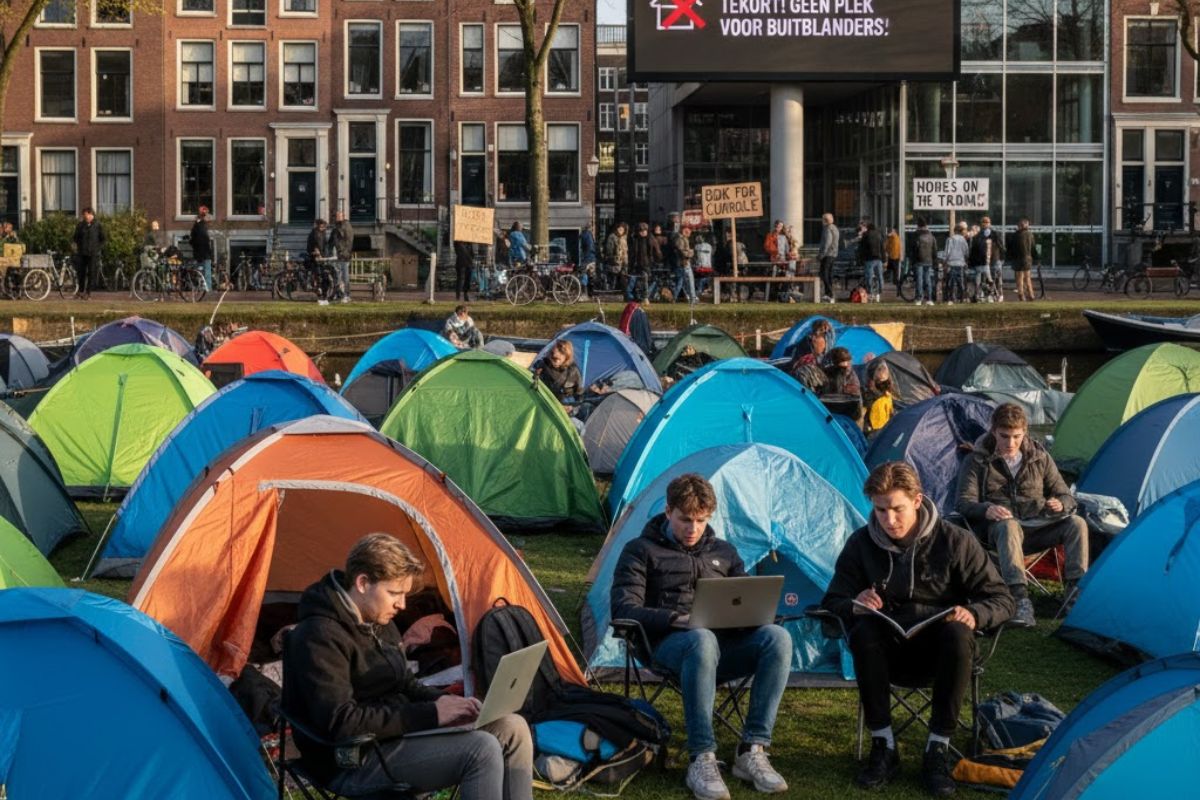
In Utrecht And Other Cities, The Housing Crisis In The Netherlands Forces Students To Camp At Stations, Share Expensive Studios Or Travel More Than Two Hours A Day While Paying Up To 800 Euros For Tiny Rooms And Facing Scams, Abusive Contracts And Political Uncertainty Due To The Lack Of Adequate Student Housing.
The Housing Crisis In The Netherlands Has Reached A Point Where Students In Utrecht And Other Cities Sleep In Tents Set Up At Train Stations, Pay Up To 800 Euros For Tiny Rooms, Or Travel More Than Two Hours A Day To Attend Classes, While The City Only Promises New Student Housing By 2026.
Amid Promises To Build 1,500 Student Spots By 2026 And An Estimated Deficit Of 400,000 Housing Units Nationwide, Universities And Student Unions Describe An Emergency Situation, In Which Some Young People Have Already Dropped Out Of Courses Because They Couldn’t Find A Decent Place To Live.
Tents At The Central Station And Daily Marathons To The University
At Utrecht Central Station, What At First Glance Seems Like A Relaxed Student Camp Hides A Harsh Reality.
-
Brazilian city bets on the business environment to generate jobs and attract investments in the energy sector — secretary reveals strategy at Macaé Energy 2026.

-
50 viaducts, 4 tunnels, 28 bridges, and 40 kilometers of bike paths: BR-262 in Espírito Santo will receive 8.6 billion reais for the largest engineering project in the state’s history, inspired by the Immigrant Highway in São Paulo.

-
Brazil produces too much clean energy and doesn’t know what to do with it: over 20% of solar and wind capacity was wasted in 2025 while investors flee and 509 renewable generation projects were abandoned in the last year.

-
Piauí will produce a new fuel that replaces diesel without needing to change anything in the truck’s engine and reduces pollutant gas emissions by half: truck drivers from all over the Northeast are already celebrating the news that will arrive later this decade.


The National Railway Company Decided To Set Up Tents To Welcome Freshmen At The Beginning Of The School Year, Offering Temporary Shelter For Those Arriving Without A Place To Sleep.
As Soon As The Orientation Week Ended, The Tents Were Dismantled And The Station Returned To Normal, But The Housing Problems Remained Exactly The Same.
Without The Makeshift Shelter, Many Students Became Dependent On Long Daily Commutes. Some Travel More Than Two Hours Just To Reach The University, Adding The Same Time On The Return Home.
This Means Journeys That Stretch From Early Morning Until Night, Just To Attend Classes And Return To A Distant Room When There Is A Room Available.
Rent Of 700 Euros For 9 Square Meters And Increase Above 5%
Born In Utrecht, Bor Zeeland Works At The National Union Of Students And Knows The Local Real Estate Market In Detail. He Himself Feels The Impact Of The Housing Crisis In The Netherlands On His Wallet: He Pays 700 Euros A Month For Just 9 Square Meters In A Shared Apartment In Amsterdam.
Rents Have Increased More Than 5% In Just One Year, Pushing Thousands Of Students To The Brink Of Financial Collapse.
Bor Reports A Sense Of Injustice Watching Landlords Profit From The Housing Shortage. According To Him, It Is Difficult To Accept That Someone Earns So Much Just For Being A Property Owner, Especially In The Current Scenario.
This Indignation Fuels His Motivation To Advocate For The Right To Housing, Helping Students To Know Their Rights And Respond To Abuses.
Once A Week, Bor Helps At The Center Created To Advise Dutch And International Students. The Most Common Question Is Simple And Devastating: How To Find A Room.
In Addition To The Shortage, Many Report Losing Their Security Deposit, Uncertainties About The Legality Of Contracts, And A Worrying Increase In Scams On Room Search Websites Where The Property Simply Doesn’t Exist.
Rooms At 800 Euros And Dependence On Parents, Loans And Extra Jobs
On One Of The Main Student Housing Websites, The Average Price Of A Room In Utrecht Is Around 800 Euros Per Month.
For Most Students, This Amount Is Only Possible With Financial Help From Parents, Through Student Loans Or With A Job Alongside Their Studies.
Balancing Work, Long Commutes And High Rent Puts The Mental Health And Academic Performance Of Many Young People At Risk.
At Utrecht University, The Academic Year Is Just Beginning, But The Pressure Is Already Visible. Students Report Fear Of Committing To A Master’s Program Without A Place To Live.
Some Peers, According To Testimonials, Have Been Forced To Abandon Classes Because They Couldn’t Find Any Place To Live That Was Minimally Affordable.
University Warns International Students And Disadvises Arrival Without Guaranteed Housing
Ramon Ellenbruk, An Employee At Utrecht University, Works Directly In Supporting The Search For Housing. He Takes Pride In The International Reputation Of The Institution, Which Attracts Talent From All Over The World.
Today, However, This Image Is Overshadowed By The Housing Crisis In The Netherlands, To The Point That The University Itself Advises Against International Students Coming To The Country Without A Guaranteed Room.
According To Ramon, Even International Students Who Have Already Secured An Academic Spot In Utrecht Are Advised To Rethink Their Trip If They Don’t Have Confirmed Housing.
The Recommendation Is Made With Regret, But Is Considered Necessary To Prevent Young People From Arriving In The Country And Ending Up Sleeping On Sofas, In Makeshift Accommodations Or Even In Tents.
The University Claims It Wants To Help, But States It Is Handed Tied. Under Dutch Law, Educational Institutions Cannot Provide Student Housing Directly.
The Responsibility For Constructing New Housing Lies With Private Companies And The Local Government, Which Creates A Gap Between The Growing Demand From Students And The Insufficient Supply Of Rooms.
3,000 Houses Per Year, 1,500 Student Spots By 2026 And A Dissolved Government
The City Of Utrecht Claims It Is Responding To The Crisis By Constructing About 3,000 New Houses Per Year.
Within This Effort, There Is A Specific Plan To Build 1,500 New Student Housing Units By 2026. Even So, Local Authorities Admit That This Effort Is Not Enough Without Consistent National Support And Coordinated Policies.
The Challenge Is Aggravated By The Political Scenario. The Dutch Government Has Disintegrated Again, And New Elections Are Approaching With The Housing Crisis Dominating The Public Agenda, Just Like In Other European Countries.
In Recent Years, Public Housing Companies Have Built Only Half Of The Promised Houses, Which Helps Explain The Current Estimated Deficit Of 400,000 Housing Units.
This Combination Of Broken Promises, An Unstable Government And Urban Growth Further Pressures Students, Families And Low-Income Workers.
The Housing Crisis In The Netherlands Has Ceased To Be A Problem Limited To Major Cities And Has Become A Central Theme In The National Political Debate.
Packed Union, Unprotected Students And Hope For A New Government


At The Student Union, The Phone Doesn’t Stop Ringing. Bor Zeeland Reports That He Can’t Help Everyone Who Seeks Assistance.
Many Are In Precarious Situations, Do Not Know Their Basic Rights And Do Not Know How To React To Threats Of Eviction, Scams Or Confusing Contracts.
Still, There Are Cases Where Guidance Makes A Difference: Students Manage To Recover Their Deposit, Renegotiate Abusive Conditions Or Identify Fraudulent Listings Before Transferring Money.
In Light Of This Scenario, Where Young People Must Choose Between Studying, Working Exhaustively, Going Into Debt Or Abandoning Their Course Due To Lack Of Shelter, One Question Remains Open And Divides Opinions In Dutch Society: In Your Opinion, Who Should Be The Main Responsible For Ensuring Affordable Housing For Students In The Netherlands?









-

-

-

-

-

-

83 pessoas reagiram a isso.