





 Portuguese
  English
  Spanish
  5 min of reading
  0 comments


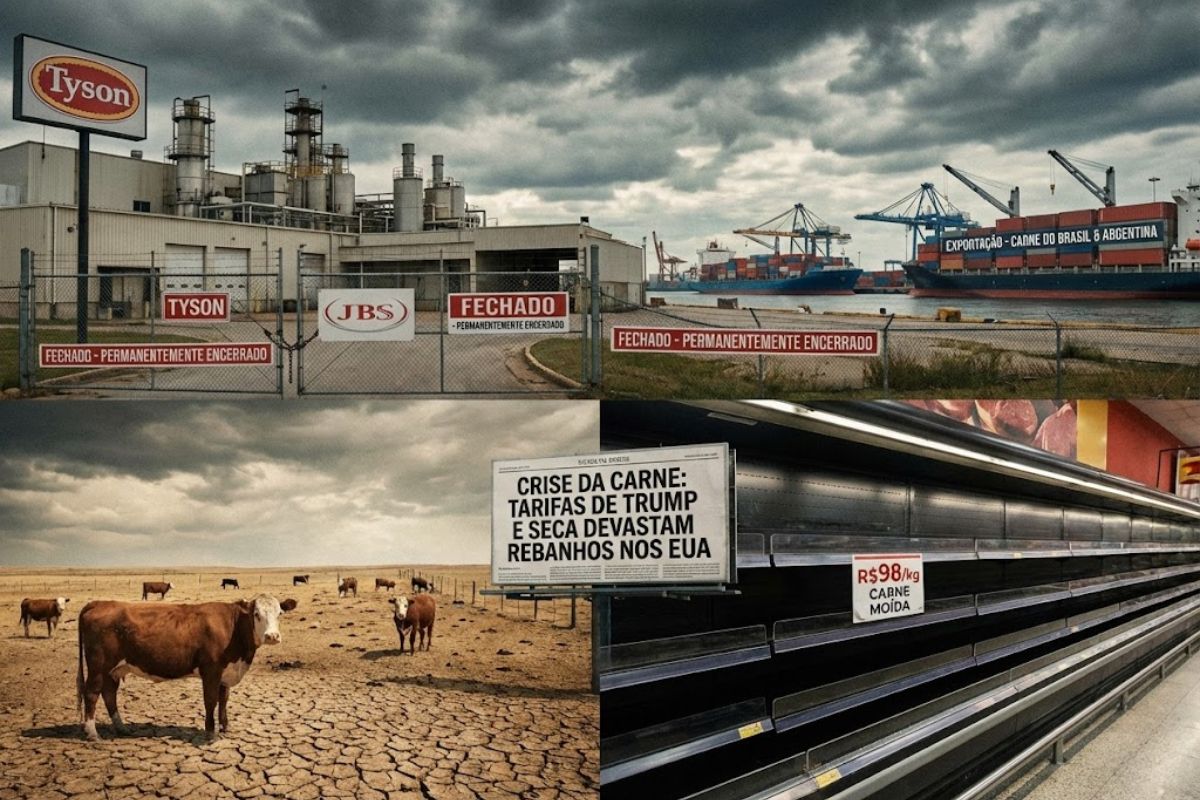
With Closed Plants in the U.S., Tyson and JBS Face Herd at Lowest Level in 75 Years, Drought, Trump’s 50 Percent Tariff on Brazilian Beef, Ban on Mexican Cattle, and Growing Space for Brazilian and Argentine Exporters, with More Expensive Hamburgers and Consumers Pressured Across the Board.
The historic cattle crisis in the U.S. has already closed plants from Tyson and JBS, raised the price of ground beef, and made hamburgers more expensive in a market that consumes about 80 percent of this protein in sandwiches. With the cattle herd at its lowest level in 75 years, processors and consumers face unprecedented pressure in the world’s largest economy.
On Friday, the 12th, JBS Foods, the U.S. subsidiary of Brazil’s JBS, announced the permanent closure of a facility near Los Angeles, while Tyson had already shut down a plant in Nebraska. The crisis has worsened since 2019, when the slaughter herd started to shrink, went through 2021, a year when the U.S. had 92.6 million head, and includes decisions such as the suspension of Mexican cattle imports in May and the end, at the end of November, of the additional 50 percent tariff on Brazilian beef.
Closed Plants Expose the Cattle Crisis in the U.S.
The most visible movement of this crisis in the U.S. is the closure of industrial units. First, Tyson Foods, the American meat processing giant, announced the closure of a factory in Nebraska.
-
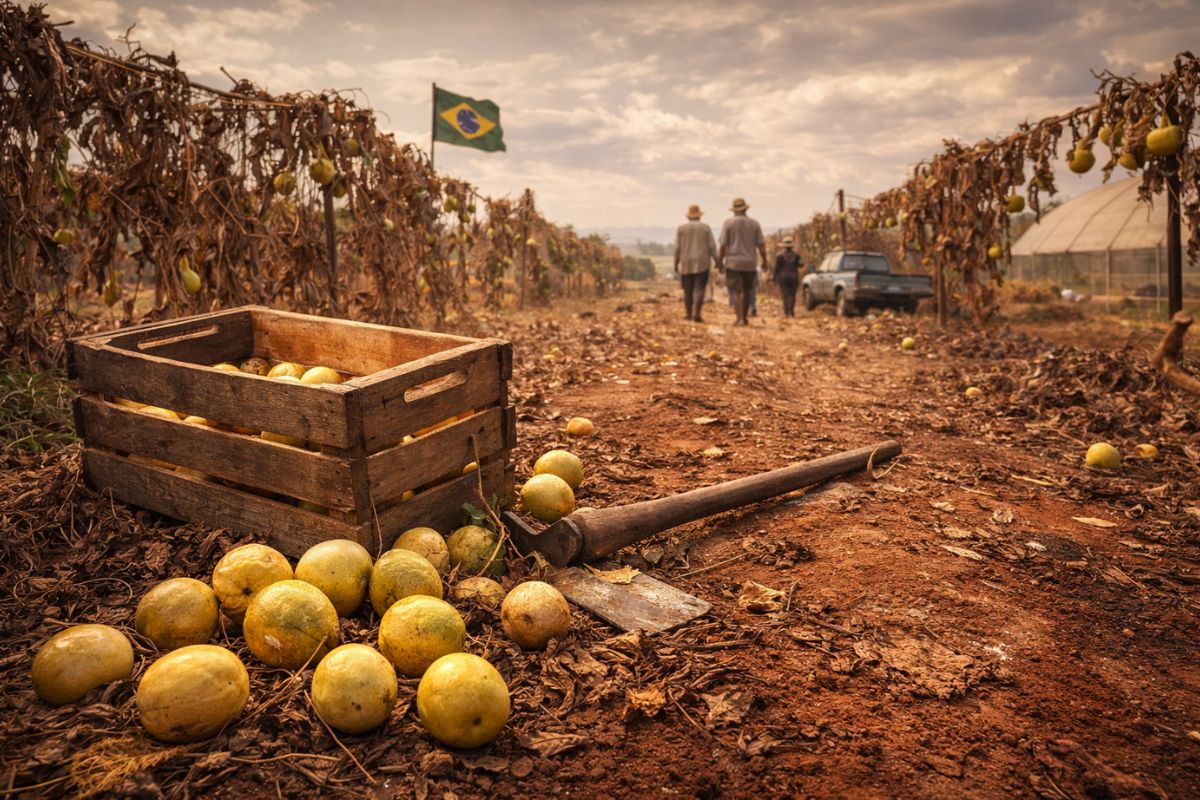
From 130 producers in the year 2000 to just 15 today: the dramatic decline of passion fruit in Araguari shows how the lack of labor in the Brazilian countryside is killing a decades-old agricultural tradition, even with Brazil being the largest producer in the world.
-
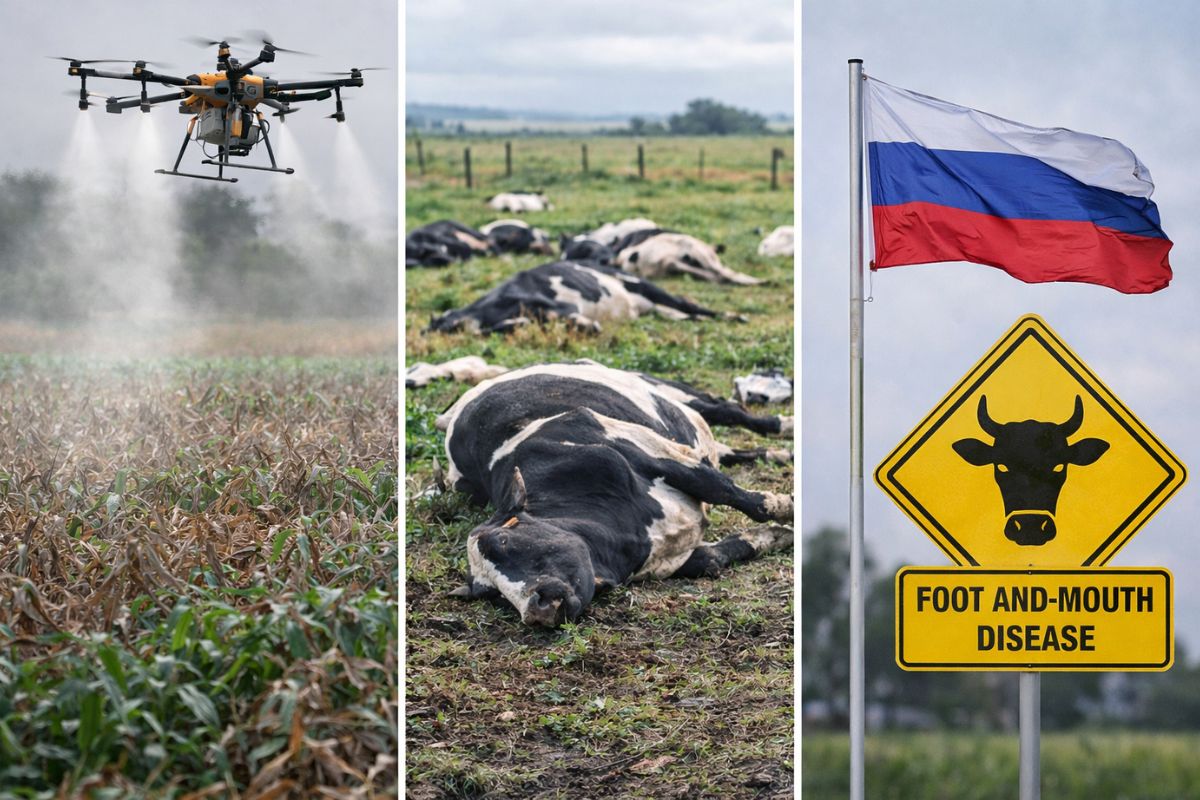
Agricultural drone sprayed poison into the air and destroyed the neighbor’s crops, causing 1 million in damages; 48 cows died from nitrite poisoning in the pasture, and Russia is hiding a possible outbreak of foot-and-mouth disease: the week was brutal for the rural sector.
-
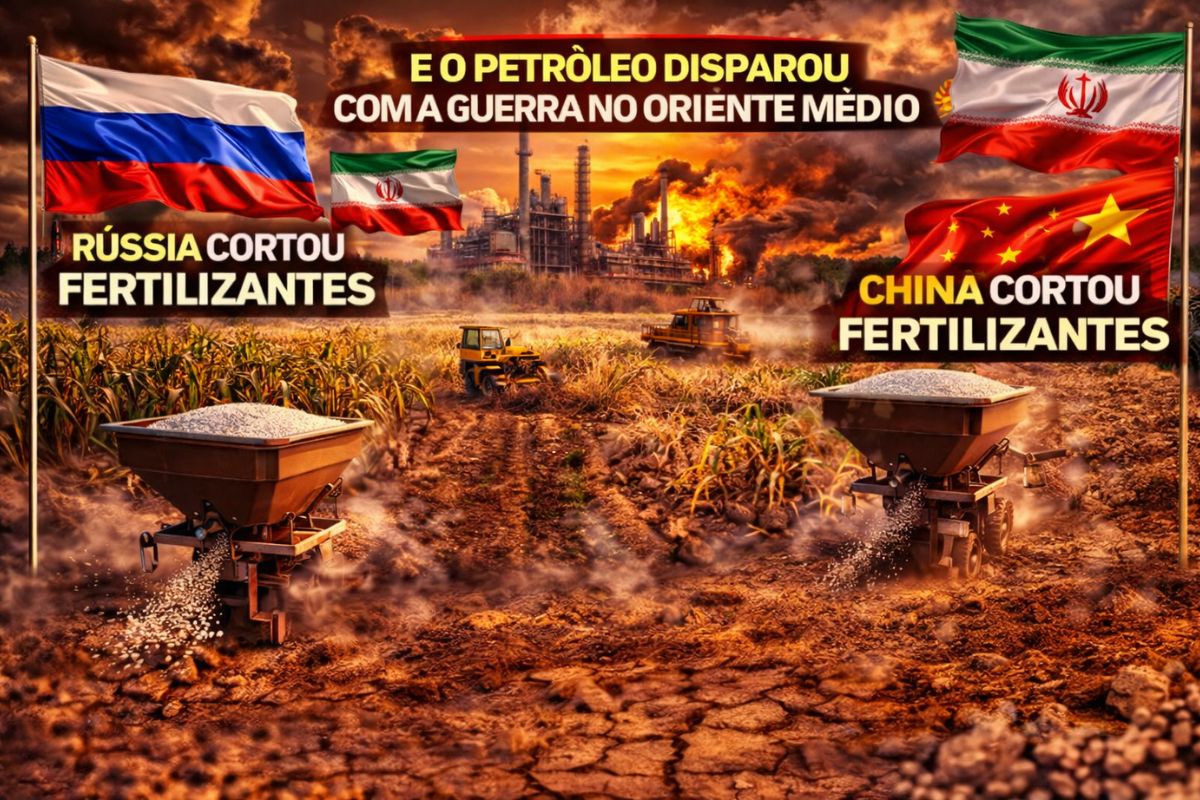
Russia cut fertilizers, China cut fertilizers, and oil prices soared with the war in the Middle East: sugarcane producers in the interior of São Paulo are seeing costs explode from all sides and warn that the effects will take months to be absorbed.
-
It does not come from flowers, is produced only every two years, and more than 90% goes straight to Europe: meet the bracatinga honeydew honey from Santa Catarina, considered one of the rarest in the world and overlooked by Brazil itself.

Then, on Friday, the 12th, it was JBS Foods’ turn to confirm the permanent closure of a facility in the Los Angeles area.
In the case of JBS, it is not a slaughterhouse but a plant focused on producing ready-to-retail food items with multiple proteins.
The company justifies the decision as part of a strategy to optimize higher value-added businesses and simplify operations across its network in the U.S., in an environment of higher costs and lower animal supply.
These closures, although isolated, symbolize how the cattle crisis in the U.S. is forcing large global groups to adjust their industrial footprint, cutting less strategic units and focusing on more efficient plants.
U.S. Herd Shrinks and Production Drops Until 2026
The U.S. meat industry is going through a contraction of the livestock cycle, marked by aggressive reductions in the herd and the supply of confined animals.
The American cattle herd is at its lowest level in 75 years, according to the U.S. Department of Agriculture.
Beef production is expected to drop 4 percent in 2025 and another 2 percent in 2026. Since 2019, the number of slaughter cattle has fallen to 27.9 million, a decrease of 13 percent, while the total inventory of cattle is at its lowest level since 1952.
The decline has intensified in recent years: in 2021, the U.S. had 92.6 million head and today it is 86.6 million.
Experts remind us that this adjustment does not happen quickly. As analyst Fernando Iglesias from Safras & Mercado highlights, it takes two to three years to raise a calf to slaughter, prolonging the phase of tight supply and keeping the U.S. market under pressure for a longer time.
Beef Prices Soar and Hamburgers Become More Expensive in the U.S.
The immediate effect of this combination of restricted supply and high costs is the increase in protein prices.
Ground beef, the main ingredient for hamburgers, has risen by 14 percent this year, according to the Bureau of Labor Statistics.
About 80 percent of the ground beef consumed in the country goes directly to hamburger production.
With fewer cattle available and rising costs, the fast food industry and supermarket chains in the U.S. feel the impact on their margins and pass part of the bill to the consumer.
The hamburger, an icon of American food, has become more expensive, reducing aggressive promotions and raising the average ticket at diners and restaurants.
For U.S. consumers, the cattle crisis is evident on supermarket shelves and drive-thrus.
Higher ground beef prices, smaller portions, and adjusted menus are some of the symptoms of this pressure that starts on the farm and ends at the checkout.
Drought, Trump’s Tariff, and Ban on Mexican Cattle Worsen the Scenario
The cattle crisis in the U.S. cannot be explained solely by the dynamics of the livestock cycle. The drought in the western part of the country has raised feed costs, reduced pastures, and forced many ranchers to shrink their herds faster than they would like.
Less pasture and feed means fewer animals are kept until finishing.
Moreover, the 50 percent tariff imposed by Donald Trump on Brazilian products, including beef, has increased import costs and driven up domestic prices in the U.S., which was purchasing protein from Brazil.
At the same time, the United States suspended Mexican cattle imports in May to contain the spread of the New World Screwworm disease, known as the New World maggot, a pest whose larvae can kill animals and, in rare cases, affect birds and humans.
This Mexican cattle was traditionally sent to the U.S. for fattening in confinement and subsequent slaughter in American slaughterhouses, a flow that is now interrupted.
With fewer cattle coming from outside and less being produced inside the U.S., the competition for animals ready for slaughter becomes even more intense, pressuring processors and driving up prices for consumers.
Window for Brazil and Argentina to Expand Their Space in the U.S. Market
Even amid the crisis, the U.S. remains a strategic market for beef exporters.
Between January and November, Brazilian beef exports to the U.S. totaled 244,500 tons, a 109 percent increase compared to the same period in 2024, according to the Brazilian Association of Meat Industries.
In an attempt to contain domestic prices, Trump announced at the end of November the end of the surcharge on Brazilian beef.
The expectation from Abiec is that shipments will accelerate in December and approach 35,000 tons, reinforcing Brazil’s role as a relevant supplier at a time when the American herd is shrinking.
On the industry side, about 50 Brazilian processors accredited for the U.S. market have already resumed receiving orders and restarted production of specific cuts for the U.S. market.
In parallel, Trump raised the beef import quota from Argentina from 80,000 to 200,000 tons, opening more space for another major competitor of Brazil in the protein market.
For Brazilian and Argentine exporters, the combination of the cattle crisis in the U.S., the end of the extra tariff on Brazilian beef, and the increase in the quota for Argentina represents a window of opportunity.
For American consumers, however, price relief is expected to be gradual, as the rebuilding of the herd and balancing of supply will take years.
And you, do you think the U.S. will use this crisis to change the way it produces and consumes beef or will everything return to normal as soon as the herd is rebuilt?








Seja o primeiro a reagir!